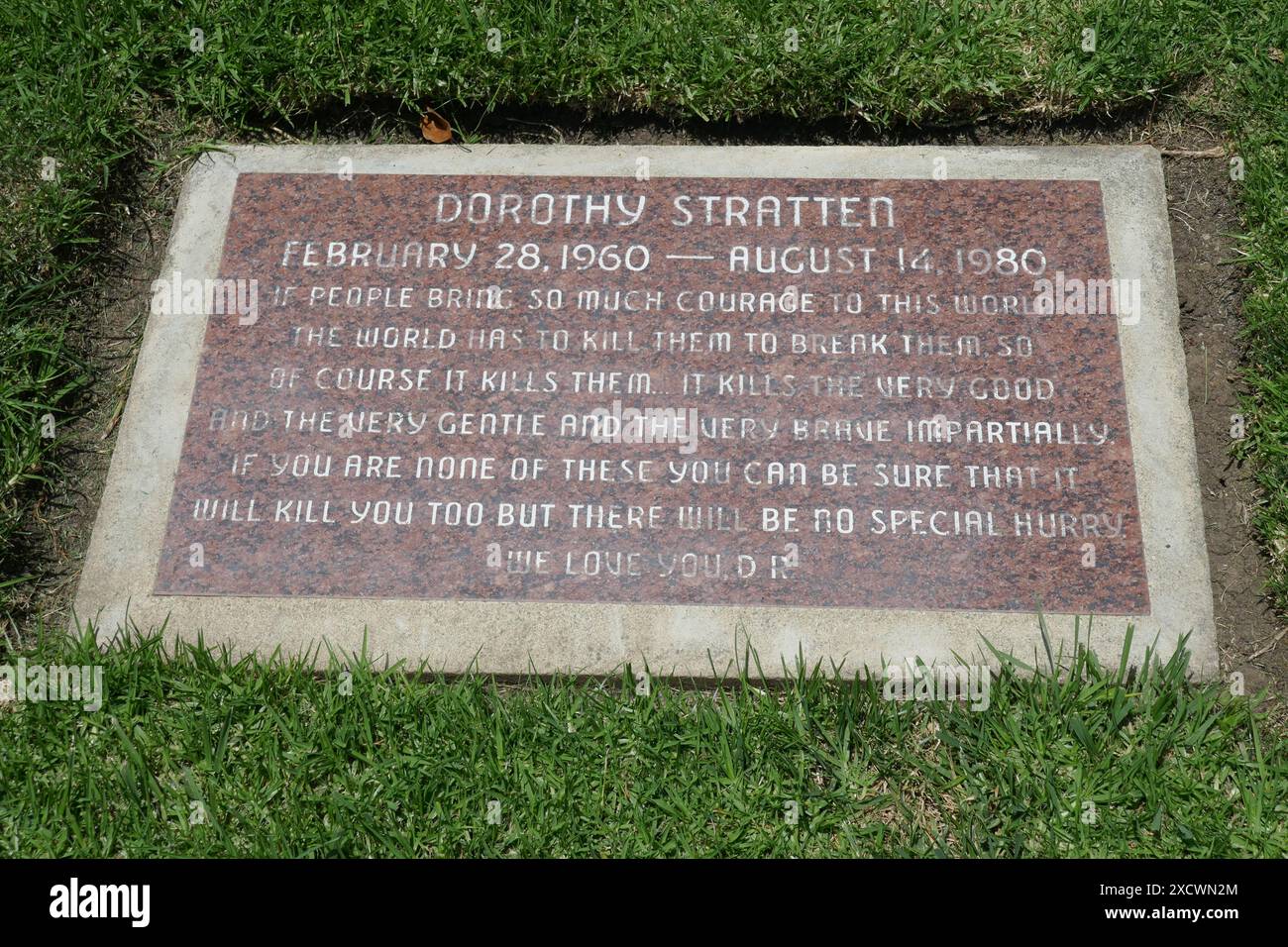
Forensic Analysis of the Dorothy Stratten Autopsy Report: Historical Findings and Case Summary
The official autopsy report for Dorothy Stratten (Case No. 80-10518) identifies her cause of death as a contact shotgun wound to the face, resulting in massive cranial-cerebral trauma. Conducted by the Los Angeles County Coroner’s offi...
The official autopsy report for Dorothy Stratten (Case No. 80-10518) identifies her cause of death as a contact shotgun wound to the face, resulting in massive cranial-cerebral trauma. Conducted by the Los Angeles County Coroner’s office in August 1980, the report confirms her death as a homicide perpetrated by her estranged husband, Paul Snider, who subsequently committed suicide.
Contents
The death of Dorothy Stratten remains one of the most documented and analyzed cases in the history of the Los Angeles County Department of Medical Examiner. As of 2026, the forensic records from this 1980 case serve as a primary reference point for criminal justice students and forensic historians studying celebrity-related homicides. The report provides a clinical look at the brutality of the event, stripping away the Hollywood glamour to reveal the stark reality of domestic violence and premeditated murder. Understanding the technical specifications of the autopsy findings requires a look into the procedural standards of the 1980s and the specific forensic markers identified by the medical examiner.
Chronology of the 1980 Forensic Investigation
The investigation began in the late hours of August 14, 1980, when the bodies of Dorothy Stratten and Paul Snider were discovered in the second-floor bedroom of Snider’s home on Cloud View Drive in West Los Angeles. The scene was processed by the Los Angeles Police Department (LAPD) before the bodies were remanded to the custody of the Coroner.
The autopsy was conducted to answer several critical questions: the exact time of death, the proximity of the firearm to the victim, and whether any pharmacological substances played a role in the events. Because Stratten was a high-profile figure—the 1980 Playboy Playmate of the Year and a rising film star—the level of scrutiny applied to the medical examiner’s findings was exceptional.
Procedural Standards of the Era The Los Angeles County Coroner in 1980 followed strict protocols for "Special Circumstances" deaths. These protocols mandated comprehensive photographic documentation, x-ray analysis of bone trauma, and a full toxicological screen. Even in 2026, these records are maintained under high-security archival standards to ensure the integrity of the historical legal record.
Technical Specifications of the Medical Report
The autopsy report (File 80-10518) provides a detailed anatomical description of the injuries sustained by Stratten. The most significant finding was the "contact" nature of the wound. In forensic terms, a contact wound occurs when the muzzle of the firearm is pressed directly against the skin or at a negligible distance.
Cranial and Facial Trauma
The report describes a devastating entry wound located on the left side of the face, specifically involving the cheek and eye area. The force of a 12-gauge shotgun at such close range resulted in:
- Immediate Decapitation/Disfigurement: The kinetic energy of the blast caused extensive fracturing of the maxillary and frontal bones.
- Cerebral Destruction: The primary cause of death was the total disruption of the central nervous system, meaning death was instantaneous.
- Soot and Stippling: The absence of wide-area stippling confirmed the "contact" nature, as the gases and particulates were injected directly into the wound tract.
Toxicological Analysis
A critical component of any autopsy, especially involving public figures, is the toxicology screen. Stratten’s report was notably "clean." There were no traces of narcotics, barbiturates, or significant levels of alcohol in her system at the time of death. This finding supported the theory that she was not under the influence and was likely caught unaware or held against her will by Snider before the final act.
Analysis of the Crime Scene and Physical Evidence
The autopsy report does not exist in a vacuum; it is supported by the Investigator’s Report regarding the scene on Cloud View Drive. Forensic experts analyzed the position of the bodies to reconstruct the final moments.
| Forensic Category | Technical Finding | Significance |
|---|---|---|
| Weapon Identified | 12-gauge Mossberg Pump-Action Shotgun | High-velocity, high-mass projectile impact. |
| Wound Type | Contact Entry (Hard) | Indicates the muzzle was pressed against the victim. |
| Body Orientation | Supine on a "Bondage Trestle" | Suggests a period of restraint prior to the homicide. |
| Post-Mortem Interval | 6 to 10 hours prior to discovery | Placed the time of death in the afternoon of August 14. |
| Secondary Injuries | Evidence of physical restraint on wrists | Confirmed the homicide was not a spontaneous argument. |
The "bondage trestle" mentioned in the investigator’s notes is a harrowing detail that differentiates this case from a standard domestic shooting. The autopsy confirmed that Stratten had been restrained, which upgraded the legal understanding of the crime from second-degree murder to a premeditated, sadistic homicide-suicide.
Comparison of Forensic Findings: Stratten vs. Snider
To confirm the homicide-suicide ruling, the medical examiner had to perform a comparative analysis of Paul Snider’s autopsy. His cause of death was also a contact shotgun wound, but the trajectory was self-inflicted, with the muzzle placed in his mouth or under the chin.
The disparity in the "execution-style" wound on Stratten versus the "suicidal" wound on Snider allowed the LAPD and the District Attorney’s office to close the case with high confidence. There was no evidence of a third party being present, and the "blowback" (blood and tissue) found on Snider’s hands and clothing matched the ballistic profile of Stratten’s injuries.
The Role of the Los Angeles County Medical Examiner in 2026
In 2026, the archive of the Dorothy Stratten case is often used as a benchmark for training new forensic pathologists. The case highlights the importance of detailed bone reconstruction and the use of photography in documenting contact wounds. While modern technology like 3D photogrammetry and virtual autopsies were not available in 1980, the manual documentation provided by the 1980 team remains sufficiently robust for modern review.
The L.A. County Department of Medical Examiner continues to handle high-profile cases, but the Stratten report remains a somber reminder of the "dark side" of Hollywood. It serves as a foundational text in the study of "intimate partner violence" (IPV) within the forensic community, illustrating how physical evidence can tell a story that the victims can no longer speak.
Historical Impact on Safety and Legislation
Following the release of the findings and the subsequent media coverage (including the film Star 80), there was a shift in how law enforcement viewed "domestic disputes" involving high-profile individuals. The autopsy report provided the empirical evidence needed to discuss the escalating nature of Paul Snider’s behavior—from stalking to restraint, and finally to murder.
Expert Insight: Forensic Significance Modern forensic psychologists and coroners analyze the Stratten report not just for the cause of death, but for the evidence of "overkill." The use of a 12-gauge shotgun at contact range on a defenseless victim is a classic marker of a perpetrator seeking total control and destruction of the victim's identity.
Common Misconceptions and Clarifications
Over the decades, several myths have circulated regarding the Dorothy Stratten autopsy report. It is essential to rely on the primary source documents rather than tabloid speculation.
- Myth: There were multiple shooters. Fact: Forensic ballistics and blood spatter patterns confirmed only one shooter, Paul Snider.
- Myth: Stratten was drugged. Fact: The toxicological report was negative for all major controlled substances.
- Myth: The report was suppressed. Fact: The summary of the autopsy report is a public record, although graphic photographs remain sealed to protect the privacy of the estate.
Procedural Guide for Accessing Historical Autopsy Records
For researchers or legal professionals in 2026 seeking to access historical records like the Stratten report, the following process is typically required:
- Identify Case Number: For Dorothy Stratten, this is 80-10518.
- Submit a Public Records Act (PRA) Request: Requests must be made to the Los Angeles County Department of Medical Examiner.
- Verification of Intent: While the cause of death is public, certain detailed forensic files may require professional credentials for access.
- Fee Payment: There is a standard administrative fee for the retrieval and digitization of microfiched or paper archives from the 1980s.
- Reviewing Redacted Documents: Expect sensitive personal information to be redacted in accordance with 2026 privacy laws.
Frequently Asked Questions
What was the official cause of death for Dorothy Stratten?
The official cause of death was a contact shotgun wound to the head. This injury resulted in immediate death due to massive trauma to the brain and skull.
The report specifically notes that the injury was non-survivable and occurred instantaneously, providing a clinical end to the speculation regarding whether she suffered for an extended period after the shot was fired.
Who performed the Dorothy Stratten autopsy?
The autopsy was conducted by the medical staff at the Los Angeles County Coroner’s Office. In 1980, this office was under the leadership of Dr. Thomas Noguchi, though the primary examination was often handled by deputy medical examiners.
Dr. Noguchi, known as the "Coroner to the Stars," oversaw many high-profile cases during this era, ensuring that the forensic standards met the high level of public and legal scrutiny expected in such a significant case.
Was there any evidence of a struggle in the autopsy report?
The report noted physical evidence consistent with restraint, particularly around the wrists. This suggests that while there may not have been a prolonged physical "struggle" in the traditional sense, Stratten was held in a position that prevented her from defending herself.
This evidence was crucial in determining that the homicide was premeditated and that Paul Snider had taken steps to incapacitate his victim before the fatal wound was delivered.
Are the Dorothy Stratten autopsy photos available to the public?
No, the graphic autopsy and crime scene photographs are not available for general public viewing. They are maintained in the confidential files of the Los Angeles County Department of Medical Examiner and are only released under specific legal or educational circumstances.
While some leaked or sensationalized images have appeared in tabloids over the years, the official, high-resolution forensic record remains protected to maintain the dignity of the deceased and comply with ethical standards in 2026.
How did the autopsy report influence the ruling of homicide-suicide?
The report played a definitive role by matching the ballistics of the weapon to the wounds on both Stratten and Snider. By analyzing the angle of entry and the presence of "blowback" on Snider’s person, the medical examiner could prove that Snider was the shooter who killed Stratten before turning the gun on himself.
The absence of any defensive wounds on Snider further supported the conclusion that he was the aggressor and that no third party was involved in the altercation.
Summary of Forensic Findings
The Dorothy Stratten autopsy report remains a somber but vital piece of forensic history. It provides an objective, scientific account of a tragedy that is often overshadowed by its cultural and cinematic retellings. By focusing on the clinical facts—the contact wound, the lack of drugs in her system, and the evidence of restraint—the report ensures that the truth of her death is preserved for legal and historical record.
As we look back from 2026, the case serves as a reminder of the evolution of forensic science and the enduring importance of thorough, unbiased medical-legal investigations.
Image Gallery