Mastering Face Shapes Cosmetology: Advanced Techniques for Modern Aesthetics
Understanding face shapes in cosmetology is the foundational technical framework required to customize haircuts, color placement, facial contouring, and makeup applications for clients. By accurately analyzing skeletal structure, hairl...
Understanding face shapes in cosmetology is the foundational technical framework required to customize haircuts, color placement, facial contouring, and makeup applications for clients. By accurately analyzing skeletal structure, hairline geometry, and proportional zones, beauty professionals can apply geometric balance to enhance natural features, correct perceived asymmetries, and achieve optimal visual harmony in 2026 salon and clinic settings.
Contents
The Anatomical Foundation of Facial Geometry
Cosmetology relies on the precise evaluation of human skeletal anatomy and soft tissue distribution. A professional assessment begins by viewing the client with their hair pulled back completely from the face, removing any visual distortions caused by styling.
To determine a client's facial shape accurately, licensed cosmetologists and estheticians measure four key reference lines:
- The Hairline: The contour and width where hair meets the forehead, ranging from rounded and heart-shaped to straight and low.
- The Cheekbones: The widest point of the upper face, measured horizontally across the zygomatic arches.
- The Jawline: The angle and length of the mandible, spanning from the corners of the jaw to the center of the chin.
- The Face Length: The vertical distance measured from the center of the hairline down to the tip of the chin.
By establishing the ratio between the width and the length of the face, practitioners categorize the bone structure into standard geometric classifications. Recognizing these underlying skeletal frameworks allows beauty professionals to move past trial-and-error styling and adopt a mathematically sound approach to client consultations.
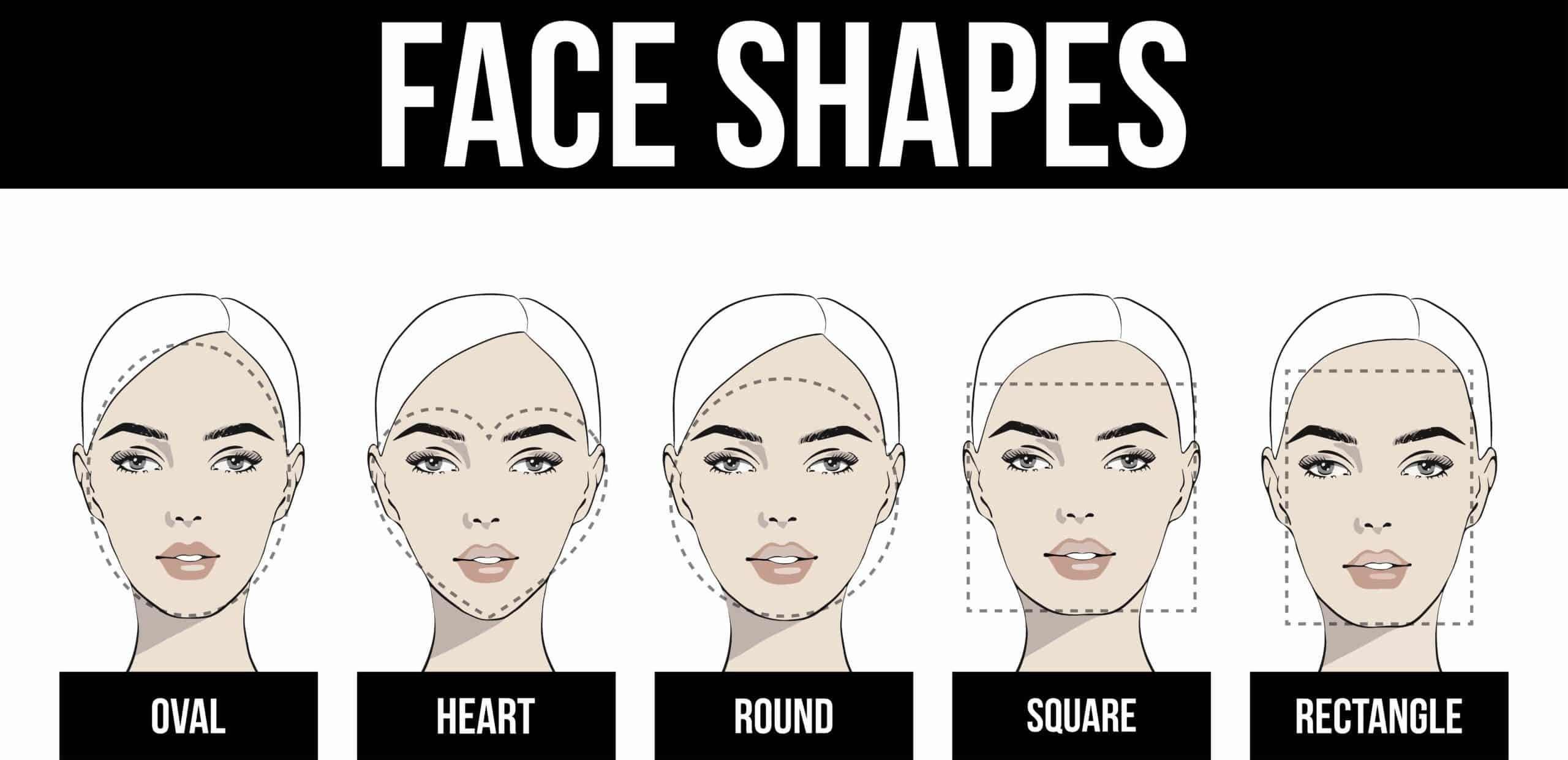
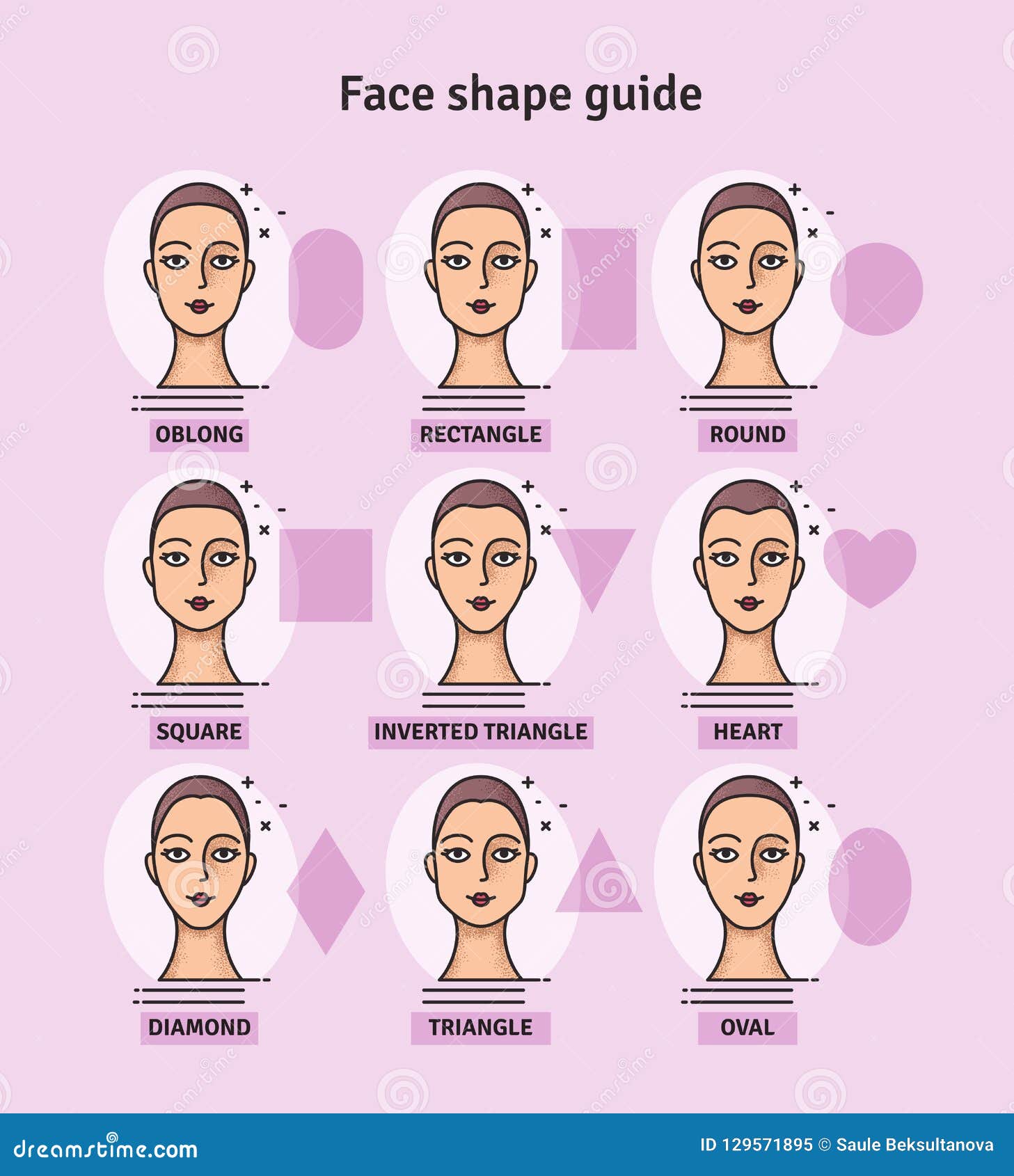
Comprehensive Classification of Primary Face Shapes
Every human face possesses a unique arrangement of angles and curves, but industry standards group these variations into distinct structural categories. Each classification requires specific corrective or balancing techniques in cosmetology.
Oval Face Shape
The oval shape is traditionally considered the most versatile and balanced in cosmetology. The length is roughly one and a half times the width, the forehead is slightly wider than the curved jaw, and the chin is softly rounded.
- Styling Objective: Preserve natural balance while experimenting with diverse cuts, textures, and makeup trends.
- Avoid: Styles that add excessive height on top without balancing the sides, as this can inadvertently elongate the appearance.
Round Face Shape
A round face features equal measurements in width and length, with soft, curved lines at the jawline and chin rather than sharp angles. The widest point is typically across the cheekbones.
- Styling Objective: Create the optical illusion of length and narrowness by drawing the eye vertically.
- Recommended Techniques: Asymmetrical cuts, long layered styles that fall below the chin, high-volume crowns, and deep side parts. Contour makeup applied heavily to the temples and jawline narrows the perceived width.
Square Face Shape
The square face is characterized by a strong, prominent, angular jawline, a flat hairline, and equal measurements across the forehead, cheekbones, and jaw.
- Styling Objective: Soften harsh structural angles and minimize the strong width of the jaw.
- Recommended Techniques: Wispy bangs, textured waves around the face, and layered cuts that break up the linear structure of the jaw. Contour makeup is applied to the corners of the jaw to diffuse hard angles.
Rectangular (Oblong) Face Shape
Similar to the square face, the rectangular shape features sharp angles, but the face length is significantly greater than the width. The forehead, cheekbones, and jawline maintain uniform width.
- Styling Objective: Shorten the perceived vertical length of the face and add horizontal width.
- Recommended Techniques: Chin-length bobs, blunt bangs that lower the visual hairline, and voluminous side curls or waves. Avoid ultra-straight, long hair that drags the eye downward.
Heart Face Shape
A heart-shaped face features a wide forehead and high cheekbones that taper down into a sharp, pointed chin.
- Styling Objective: Balance a narrower lower third by adding visual weight around the jawline.
- Recommended Techniques: Chin-length lobs (long bobs), side-swept bangs that minimize a broad forehead, and curls that flare outward at the jaw level.
Diamond Face Shape
The diamond face shape is defined by narrow foreheads and chins, with dramatic, wide cheekbones as the most prominent feature.
- Styling Objective: Soften the angular cheekbones and add width at the forehead and jawline.
- Recommended Techniques: Short crop cuts with volume at the temples, fringe bangs to widen the forehead, and styles that keep hair away from the cheek area.
Technical Comparison of Cosmetology Interventions by Face Shape
| Face Shape | Ideal Haircut / Length | Optimal Color Placement | Contouring & Makeup Strategy | Common Styling Mistake to Avoid |
|---|---|---|---|---|
| Oval | Any style (blunt bobs, pixie, long layers) | Dimensional balayage or highlights | Minimal correction; standard highlighting on high points | Over-correcting natural symmetry |
| Round | Long layers, angled bobs, high ponytails | Vertical highlights or face-framing ribbons | Contour temples and jawline; highlight center of face | Blunt bangs hitting directly at the brow |
| Square | Textured waves, soft layers below the jaw | Soft gradients to break up solid lines | Soften corners of the jaw and temples with deep contour | One-length blunt bobs cut right at the jaw |
| Rectangular | Chin-length bobs, layered cuts with volume | Highlights concentrated around the sides | Horizontal contour across the chin and high hairline | Excessively long, straight hair without layers |
| Heart | Lobs, chin-length curls, side-swept bangs | Highlights heavier from ears down to ends | Contour sides of the forehead; highlight the chin | Heavy volume at the crown |
| Diamond | Fringe bangs, textured crops with temple volume | Balayage focusing on crown and ends | Highlight forehead and jawline; contour outer cheekbones | Pulling all hair tightly back off the face |
Step-by-Step Client Facial Analysis Protocol
Executing a professional face shape analysis requires a structured, repeatable methodology during the initial consultation phase. Implementing this protocol ensures client satisfaction and aligns technical cosmetology services with anatomical realities.
- Preparation and Positioning: Seat the client upright in a well-lit styling chair. Drape a neutral cape over their shoulders and secure all hair backward using a headband or clips to expose the bare contour of the face and ears.
- Visual Proportional Inspection: Stand directly in front of the client at eye level. Observe the overall balance between the three facial zones: the hairline to the eyebrows, the eyebrows to the bottom of the nose, and the nose to the bottom of the chin.
- Measurement Verification: Use soft fabric measuring tape if necessary to verify horizontal widths (forehead, cheekbones, jawline) against vertical length (hairline to chin tip). Note which measurement is dominant.
- Identify Angles vs. Curves: Assess the perimeter of the face. Determine whether the jaw and hairline are sharp and linear or soft and rounded.
- Formulate the Technical Plan: Select cutting techniques, chemical texture services, color placements, and makeup contour maps that counteract imbalances and highlight the client's strongest structural assets.
Advanced Cosmetology Considerations: Texture, Density, and Profile
While skeletal face shape serves as the primary benchmark in cosmetology, master practitioners must integrate secondary physical characteristics to deliver flawless results. Ignoring hair density, natural growth patterns (cowlicks), and profile projections can compromise an otherwise geometrically sound cut.
Profile analysis is particularly critical in modern salon practice. A convex profile (where the forehead and chin recede) requires forward movement and volume around the jaw, while a concave profile (where the chin is prominent) benefits from softer crown volume and swept-back styles. Furthermore, hair density dictates whether a client with a round face can successfully wear a short, voluminous crop or if they require a longer, weight-reducing layered cut to prevent unwanted expansion.
Frequently Asked Questions
How do I determine my face shape at home?
Pull all your hair back away from your face, stand in front of a mirror, and use a washable marker or lipstick to trace the exact reflection of your face outline on the glass. Examine the resulting geometric outline to see whether it matches an oval, round, square, heart, diamond, or rectangle.
Can a haircut completely change my face shape?
A haircut cannot alter your skeletal bone structure, but it can completely transform visual proportions. Strategic layering, fringe placement, and volume distribution create optical illusions that draw attention toward favorable features and soften perceived structural imbalances.
What makeup technique best minimizes a wide jawline in square faces?
Applying a matte contour powder or cream that is two shades darker than your skin tone along the outer corners of the mandible helps absorb light and recede the prominent angles. Blend the product downward toward the neck to create a softer, more rounded visual transition.
Are fringe bangs recommended for round face shapes?
Heavy, blunt, straight-across fringe bangs are generally discouraged for round faces because they shorten the vertical appearance and emphasize width. Instead, side-swept or textured fringe that exposes part of the forehead creates diagonal lines that lengthen the face.
How does hair texture influence face shape styling?
Coarse or curly hair adds natural volume that can drastically widen narrow face shapes like diamonds or rectangles, while fine, limp hair can collapse against the head and accentuate the roundness of a circular face. Cosmetologists must adjust cutting techniques to control or build volume based on the client's hair texture.
Professional Consultation and Execution
Delivering exceptional cosmetology services demands a collaborative dialogue between practitioner and client. Use the anatomical insights gained from face shape analysis to guide recommendations during every appointment, ensuring that hair design and makeup artistry work in unison to celebrate natural beauty.
Image Gallery