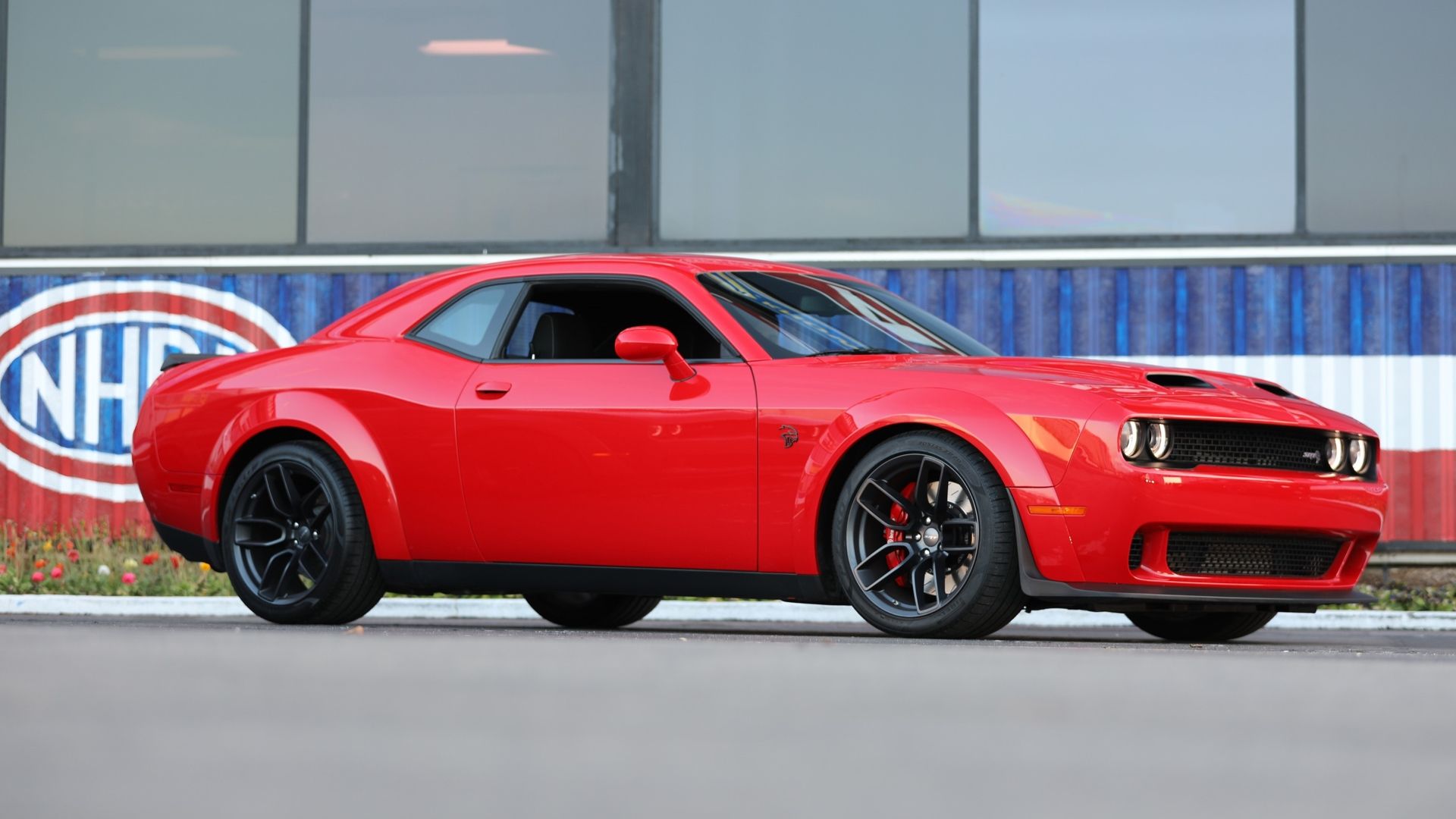
How Many Horsepower Does a Hellcat Have? The 717 HP Specification Explained
The standard Dodge Challenger and Charger SRT Hellcat models produced from the 2019 model year through the end of production in 2023 deliver exactly 717 horsepower. This figure represents a 10-horsepower increase over the original 2015...
The standard Dodge Challenger and Charger SRT Hellcat models produced from the 2019 model year through the end of production in 2023 deliver exactly 717 horsepower. This figure represents a 10-horsepower increase over the original 2015–2018 models, achieved primarily through an improved dual-snorkel air intake system that optimized airflow to the 6.2-liter supercharged HEMI V8 engine.
Contents
While the "717" figure is the most common benchmark for the modern Hellcat, the platform’s horsepower has fluctuated significantly across different trims, special editions, and model years. To understand the full scope of Hellcat performance, one must look at the evolution of the 6.2L HEMI engine, the engineering changes that enabled the 717 hp rating, and how it compares to the more extreme variants like the Redeye and the Demon 170.
The Evolution of Hellcat Horsepower: 707 to 717
When the Dodge Challenger SRT Hellcat first debuted in 2015, it sent shockwaves through the automotive industry with a certified output of 707 horsepower and 650 lb-ft of torque. At the time, it was the most powerful muscle car ever produced, surpassing exotic supercars costing three times as much.
The jump to 717 horsepower occurred in 2019. This wasn't merely a software remap; it was a result of functional design changes. For the Challenger, Dodge introduced a "dual-snorkel" hood that paid homage to classic Mopar designs from the early 1970s. This design wasn't just for aesthetics; it allowed the engine to breathe more cold air more efficiently. By reducing intake restriction, engineers were able to squeeze an additional 10 horsepower out of the existing architecture, bringing the total to 717.
In the 2026 secondary market, these 717-hp models remain the gold standard for enthusiasts seeking a "base" Hellcat that balances daily drivability with track-ready performance. They represent the final refinement of the original Hellcat formula before the platform was retired in favor of the new Hurricane-powered and electric Charger generations.
Engineering the 6.2L Supercharged HEMI V8
The heart of the Hellcat is a 6.2-liter HEMI V8 engine. While it shares a displacement similar to other Chrysler engines, nearly 90% of the Hellcat engine's internals are unique to the SRT platform to handle the immense pressures of forced induction.
The Supercharger Assembly
The standard 717-hp Hellcat utilizes a 2.4-liter twin-screw supercharger manufactured by IHI. This unit is capable of producing approximately 11.6 psi of boost. To prevent the engine from overheating under high load, Dodge employs a dedicated low-temperature cooling circuit with two air-to-unit heat exchangers integrated into the supercharger housing.
Forged Internal Components
To manage 717 horsepower reliably, the engine features:
- Forged Steel Crankshaft: Specially hardened to withstand combustion pressures of nearly 1,600 psi.
- Forged Alloy Pistons: Designed with high-strength pins and coated with carbon-based material to reduce friction.
- Powder-Forged Connecting Rods: Equipped with high-load capacity bushings and diamond-like carbon-coated piston pins.
This robust construction is why the Hellcat engine became a favorite for aftermarket tuners. The "717" rating is a conservative figure from the factory, ensuring the engine can last for 100,000 miles or more, even with the stresses of high-output performance.
Comparing Horsepower Across the Hellcat Lineup
It is a common misconception that all Hellcats have the same power output. By the time production ended in 2023, the SRT lineup had expanded into several distinct tiers of performance. The 717-hp version was the "entry-level" SRT Hellcat, but several factory-warrantied models pushed much further.
| Model Variant | Horsepower (hp) | Torque (lb-ft) | Key Feature |
|---|---|---|---|
| SRT Hellcat (2015-2018) | 707 | 650 | The original game-changer. |
| SRT Hellcat (2019-2023) | 717 | 656 | Dual-snorkel air intake update. |
| SRT Hellcat Redeye | 797 | 707 | Uses Demon internals and 2.7L supercharger. |
| SRT Super Stock / Jailbreak | 807 | 707 | Revised powertrain calibration for drag racing. |
| SRT Demon (2018) | 808 / 840 | 717 / 770 | Limited production, race gas calibration. |
| SRT Demon 170 (2023) | 1,025 | 945 | E85 ethanol blend requirement for max power. |
The Redeye variant is particularly notable because it effectively bridged the gap between the standard Hellcat and the drag-focused Demon. While the standard 717-hp Hellcat is a formidable grand tourer, the Redeye’s 797 horsepower comes from a larger supercharger (2.7 liters) and a higher redline (6,500 RPM vs 6,200 RPM), making it a much more aggressive track machine.
Transmission and Power Delivery
Having 717 horsepower is meaningless if the vehicle cannot put that power to the ground. Dodge utilized two primary transmissions for the Hellcat platform:
- TorqueFlite 8HP90 Eight-Speed Automatic: This is the most common transmission found in the 717-hp models. It is a heavy-duty version of the ZF 8HP, specifically reinforced to handle high torque. It features rev-matching and can execute shifts in as little as 160 milliseconds in Track Mode.
- Tremec TR-6060 Six-Speed Manual: Available on the Challenger (but not the Charger), this manual gearbox features a 258mm heavy-duty twin-disc clutch. While enthusiasts often prefer the engagement of the manual, the 8-speed automatic is consistently faster in 0-60 mph and quarter-mile testing.
The power is sent to the rear wheels via a limited-slip differential and asymmetrical half-shafts. These half-shafts are designed with different diameters to minimize "wheel hop," a common issue in high-horsepower rear-wheel-drive cars during hard launches.
Real-World Performance: What 717 HP Looks Like
On paper, 717 horsepower results in staggering performance figures. However, real-world results are heavily dependent on tire choice and surface conditions. The factory-issued Pirelli all-season or summer tires often struggle to find traction when the full 656 lb-ft of torque is applied from a standstill.
- 0-60 MPH: Typically achieved in 3.6 to 3.7 seconds with the automatic transmission on a prepared surface.
- Quarter Mile: The 717-hp Challenger can clear the quarter-mile in approximately 11.2 to 11.4 seconds at a trap speed of roughly 125 mph.
- Top Speed: The Challenger SRT Hellcat is aerodynamically limited to 199 mph, while the Charger variant, due to its slightly different drag coefficient, has been clocked at 203 mph.
In 2026, many owners have opted for "drag radials" to better utilize the 717 horsepower. With stickier rubber, a standard Hellcat can often dip into the high 10-second range in the quarter-mile without any additional engine modifications.
Maintenance and Operational Considerations
Owning a 717-hp vehicle requires a higher level of maintenance than a standard commuter car. The 6.2L supercharged HEMI is a high-performance precision instrument.
- Fuel Requirements: The engine requires 91 octane (Premium) fuel at a minimum, though 93 octane is recommended for peak performance. Using lower-grade fuel will trigger the knock sensors, and the ECU will retard timing, significantly reducing horsepower to protect the engine.
- Oil Consumption: The Hellcat uses 0W-40 synthetic oil (typically Pennzoil Ultra Platinum). Because of the high-pressure environment of the supercharger, it is normal for these engines to consume a small amount of oil between changes.
- The Black vs. Red Key: Every Hellcat comes with two keys. The Black Key limits the engine output to 500 horsepower for valet parking or inexperienced drivers. The Red Key unlocks the full 717 horsepower and all performance driving modes.
Frequently Asked Questions
Why do some sources say the Hellcat has 707 hp while others say 717 hp?
Both figures are correct depending on the model year. From 2015 to 2018, the standard Hellcat was rated at 707 hp. Starting in 2019, an updated air intake system increased the official rating to 717 hp.
Can a standard Hellcat reach 800 hp with simple mods?
Yes, the 717-hp engine is built with significant overhead. Many owners achieve 800+ crank horsepower by changing the supercharger pulley to increase boost and updating the engine calibration (tuning). However, this usually voids the manufacturer's powertrain warranty.
Is the 717-hp engine the same as the one in the Ram 1500 TRX?
The Ram 1500 TRX uses a version of the 6.2L supercharged HEMI, but it was factory-rated at 702 horsepower. This slight decrease was due to the more restrictive intake and exhaust paths required for a high-performance off-road truck compared to the Challenger or Charger.
How much fuel does a 717-hp Hellcat consume?
Under heavy throttle, the Hellcat can drain its fuel tank remarkably fast. According to EPA estimates, the Challenger SRT Hellcat averages about 13 mpg in the city and 21-22 mpg on the highway. In high-performance track settings, the fuel injectors are capable of flowing approximately 1.5 gallons of fuel per minute.
Does the 717 hp apply to the Widebody models?
Yes. The "Widebody" package changes the fender flares, tires, and suspension tuning to improve cornering and grip, but it does not change the engine's output. A 2023 Hellcat Widebody still produces exactly 717 horsepower.
Final Recommendations for Buyers and Enthusiasts
As we look at the automotive landscape in 2026, the 717-hp Hellcat remains a milestone in internal combustion engineering. If you are in the market for one, prioritize vehicles with documented service histories, as the longevity of these high-output engines depends entirely on regular oil changes and the use of high-quality fuel. For those seeking the purest "Hellcat" experience without the extreme price premium of a Demon or Redeye, the 2019–2023 models with the 717-hp rating offer the best balance of historical significance and modernized engineering.
Image Gallery