When is Enrollment for Medicare Part B? Deadlines and Timelines for 2026
Enrollment for Medicare Part B occurs during three specific windows: the Initial Enrollment Period (the seven-month window around your 65th birthday), the General Enrollment Period (January 1 through March 31 annually), and Special Enr...
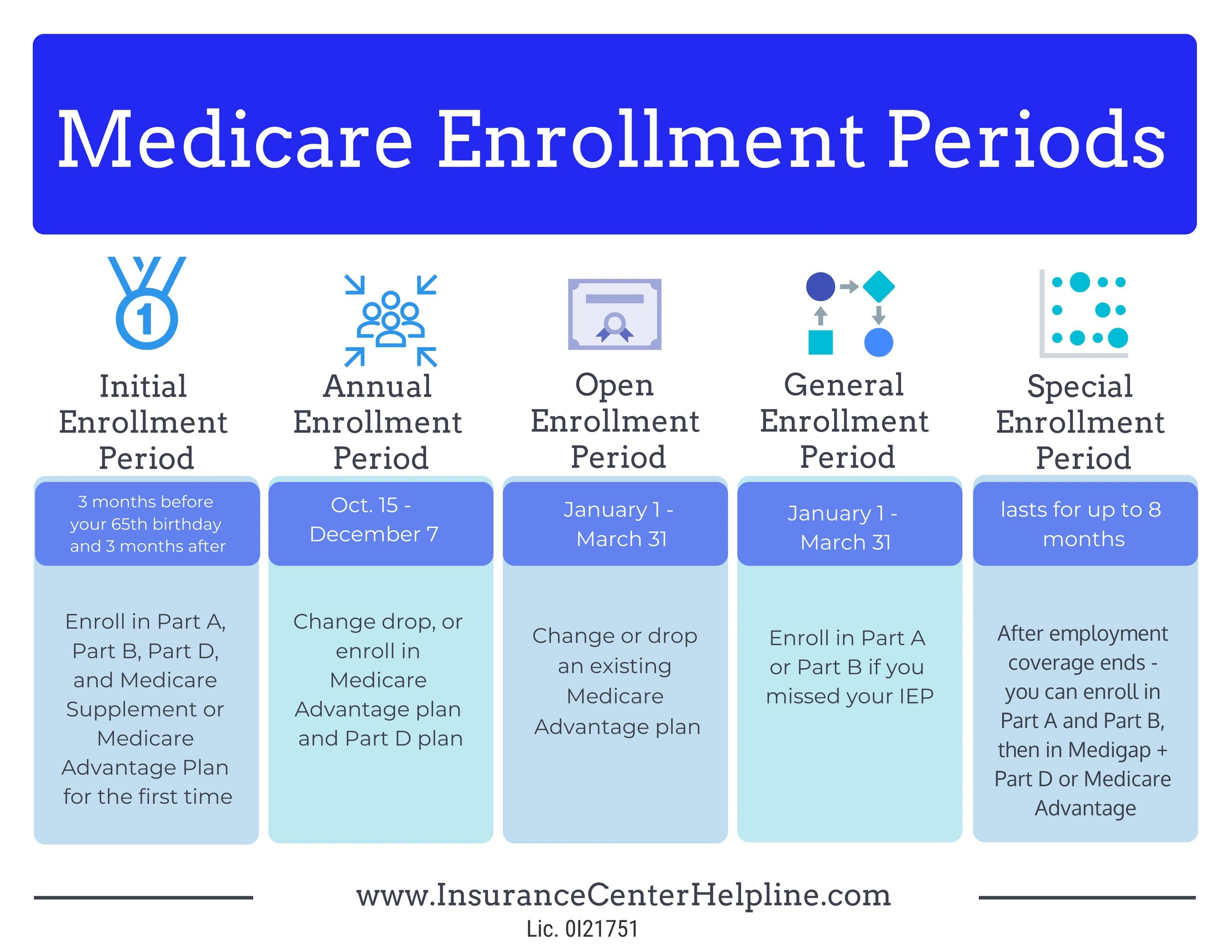
Enrollment for Medicare Part B occurs during three specific windows: the Initial Enrollment Period (the seven-month window around your 65th birthday), the General Enrollment Period (January 1 through March 31 annually), and Special Enrollment Periods for those with qualifying employer-sponsored coverage or unique life circumstances that allow for delayed entry without penalty.
Contents
Medicare Part B is a critical component of the federal health insurance program, covering medically necessary services like doctor visits, outpatient care, and durable medical equipment. Because Part B carries a monthly premium and potential late-enrollment penalties, understanding exactly when is enrollment for Medicare Part B is vital for your financial and physical health. In 2026, the rules governing these timelines remain strict, requiring beneficiaries to act within specific calendar windows to ensure continuous coverage and avoid lifetime surcharges.
The Initial Enrollment Period (IEP): Your First Opportunity
The Initial Enrollment Period is the most common time for individuals to sign up for Medicare Part B. This period is uniquely tailored to your birth month and spans a total of seven months. It is designed to give you ample time to evaluate your needs and complete the necessary paperwork through the Social Security Administration (SSA).
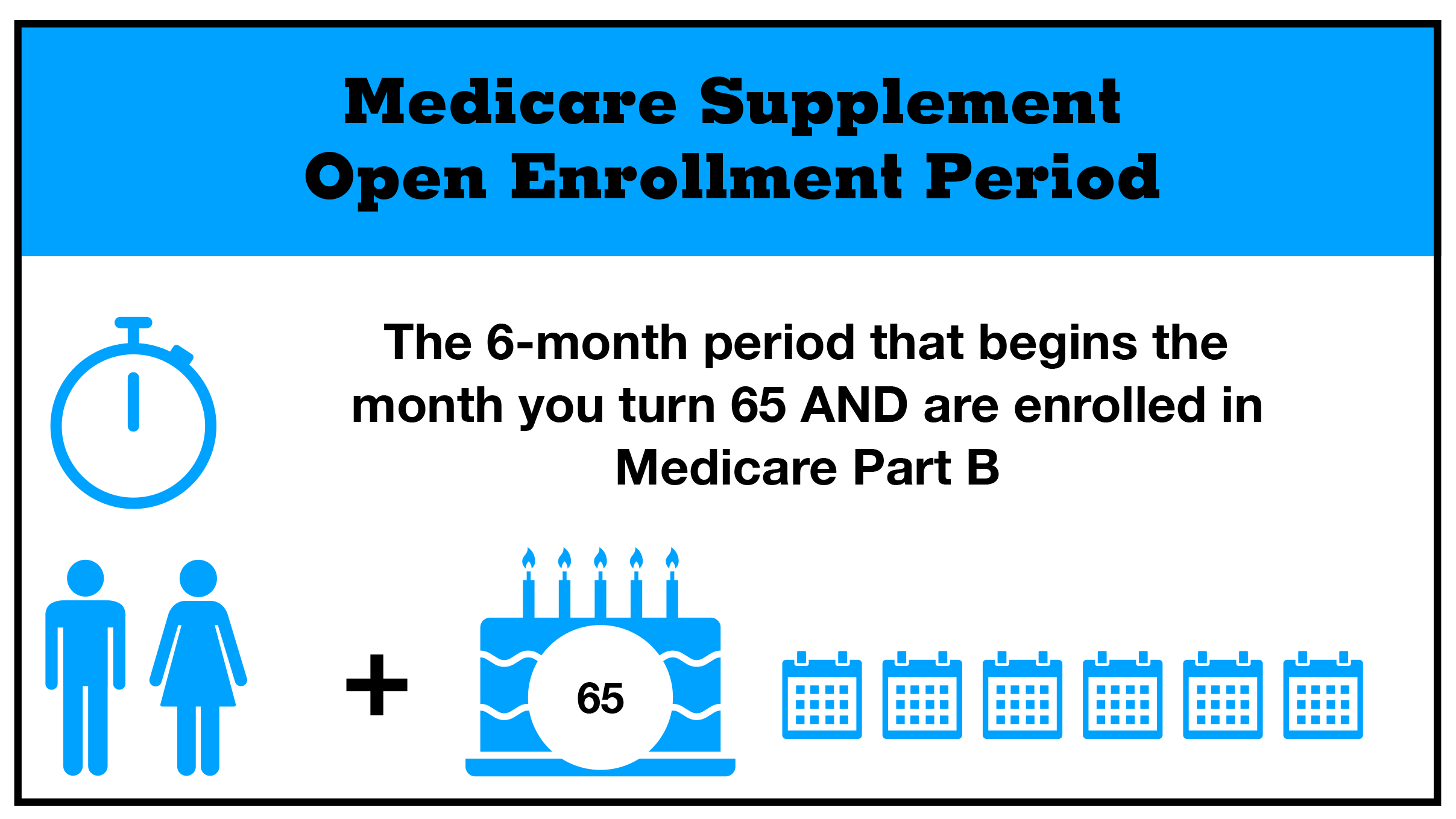
The IEP is often referred to as the "3-1-3" rule. It begins three months before the month you turn 65, includes your birth month, and extends for three months after your birth month. For example, if you turn 65 on July 15, 2026, your IEP begins on April 1 and ends on October 31. If your birthday falls on the first day of the month, your entire eligibility window shifts one month earlier; a July 1 birthday would mean your IEP starts on March 1 and ends on September 30.
Enrolling during the first three months of your IEP is generally recommended because it ensures your coverage begins on the first day of your birth month. If you wait until your birth month or the three months following it to sign up, your coverage will begin the first day of the month after you sign up. While a 2023 rule change eliminated the long "wait periods" that used to exist for late IEP enrollment, it is still best to secure coverage early to avoid any gaps in insurance during your 65th year.
The General Enrollment Period (GEP): The Annual "Catch-Up" Window
If you missed your Initial Enrollment Period and do not qualify for a Special Enrollment Period, you must wait for the General Enrollment Period (GEP). The GEP is a fixed annual window that runs from January 1 to March 31.
In the 2026 calendar year, any individual who missed their IEP can submit an application during these three months. Since the implementation of the "Beneficiary Enrollment Notification and Eligibility Simplification" (BENES) Act, coverage for those who sign up during the GEP begins the first day of the month following their enrollment. For instance, if you enroll in February 2026, your Part B coverage will be effective starting March 1, 2026.
However, using the GEP often comes with a significant downside: the Part B late enrollment penalty. Because Part B is a voluntary program with a premium, the government imposes a financial penalty on those who could have had coverage but chose not to enroll. This penalty is not a one-time fee; it is a permanent increase in your monthly premium for as long as you have Medicare. If you wait several years to use the GEP, the cost of your healthcare in retirement could be substantially higher than if you had enrolled during your IEP.
Special Enrollment Periods (SEP): Exceptions for the Employed
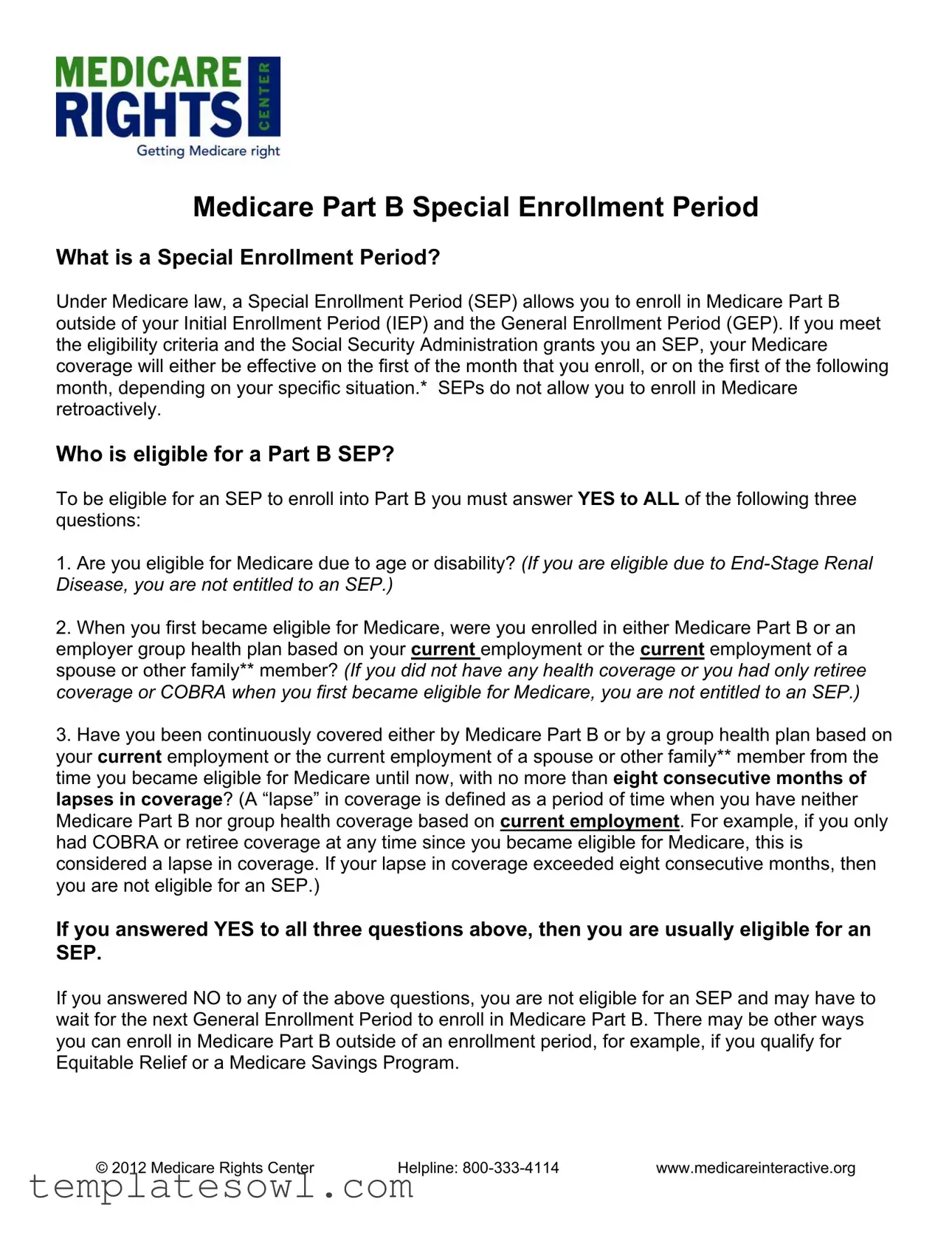
Many people continue to work past the age of 65 and have access to "creditable" health insurance through their employer or their spouse's employer. In these cases, you may be able to delay Medicare Part B enrollment without facing a penalty. This is facilitated through a Special Enrollment Period (SEP).
To qualify for an SEP in 2026, you must be covered by a group health plan based on current employment. It is a common misconception that COBRA or retiree health plans count as current employment coverage; they do not. If you rely on COBRA or a retiree plan and fail to sign up for Part B when you first become eligible at 65, you may still face penalties and be forced to wait for the GEP to enroll.
The Part B SEP is available at any time while you are covered by the group health plan or during the eight-month period that begins the month after the employment ends or the group health plan coverage ends, whichever happens first. Most experts suggest enrolling in Part B during the final month of your employer coverage to ensure a seamless transition between private insurance and Medicare. This avoids the risk of being "uninsured" for even a few weeks, which could be catastrophic in the event of an emergency.
Understanding the Part B Late Enrollment Penalty
The Part B late enrollment penalty is a lifetime surcharge added to your monthly premium. The Social Security Administration calculates this by adding 10% to the standard Part B premium for each full 12-month period that you could have had Part B but didn't sign up.
For example, if you missed your IEP and waited 24 months to sign up during a GEP, your penalty would be 20% of the current standard premium. In 2026, this extra cost would be added to your bill every single month. If the standard premium increases in future years, the 20% penalty is calculated based on the new, higher premium, meaning the dollar amount of your penalty will grow over time.
There are very few ways to waive this penalty once it has been assessed. Generally, you must prove that you had "creditable coverage" or that you were misinformed by a government representative. Because the burden of proof is high, it is far safer to understand your enrollment windows and act before the penalty triggers.
How to Enroll: Steps and Platforms
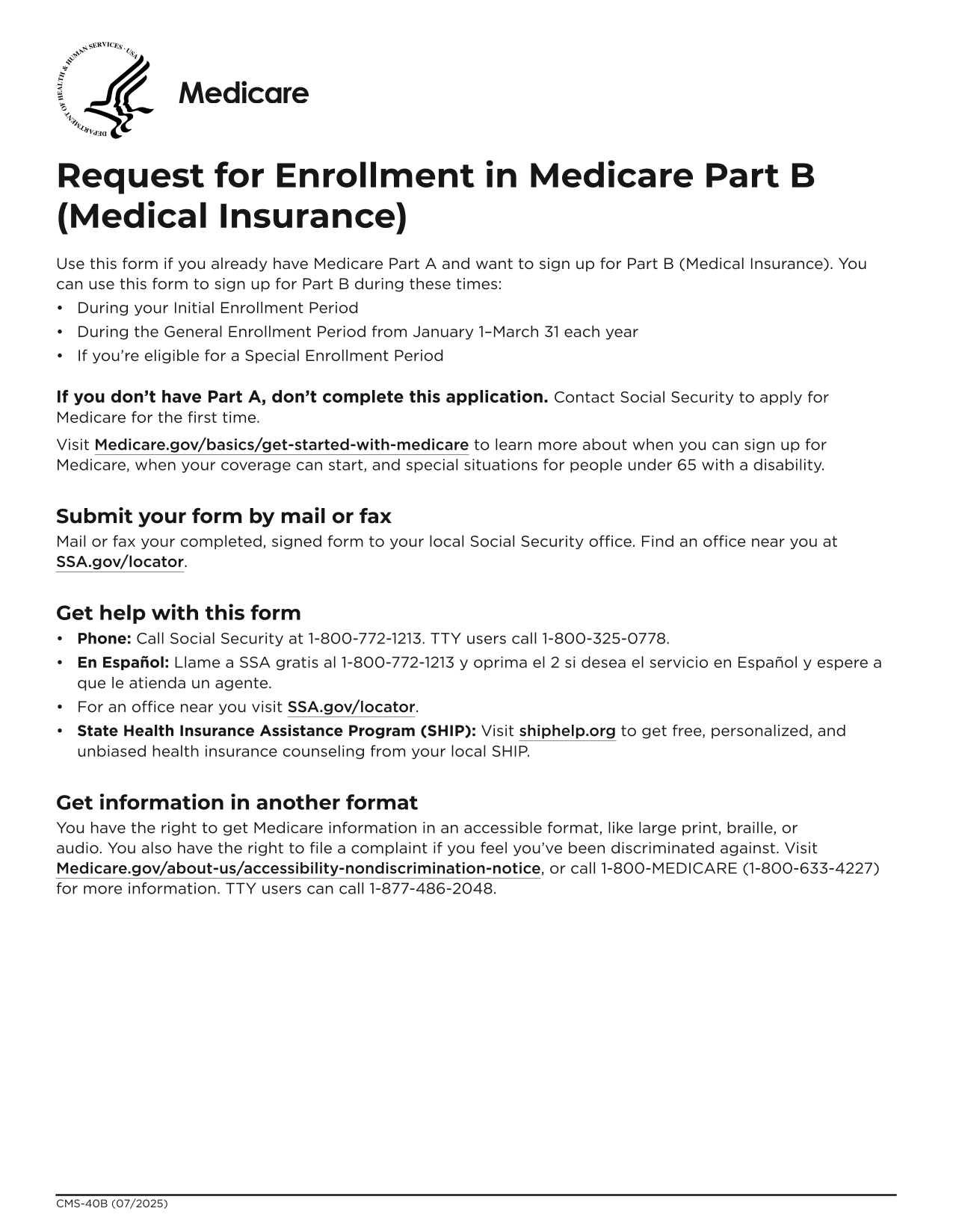
The process of enrolling in Medicare Part B is handled by the Social Security Administration (SSA), not the Centers for Medicare & Medicaid Services (CMS). There are three primary ways to submit your application in 2026:
- Online: The fastest and most efficient method is via the Social Security website. The online application typically takes about 10 to 20 minutes if you have your information ready.
- By Phone: You can call the SSA at 1-800-772-1213. This is often necessary if you have specific questions about your eligibility or if you are applying for an SEP, which requires additional forms like the CMS-L564 (Request for Employment Information).
- In Person: You can visit a local Social Security office. While this allows for face-to-face interaction, it often requires an appointment and may involve long wait times.
If you are already receiving Social Security retirement benefits or Railroad Retirement Board (RRB) benefits at least four months before you turn 65, you will likely be automatically enrolled in Part A and Part B. In this case, your Medicare card will arrive in the mail about three months before your 65th birthday. If you do not wish to keep Part B (perhaps because you are still working), you must follow the instructions on the back of the card to "opt-out" and avoid the premium charges.
Medicare Part B Enrollment Windows Comparison Table
| Enrollment Period | Timing/Dates | Who Should Use It? | Coverage Start Date |
|---|---|---|---|
| Initial (IEP) | 7-month window around age 65 | Most people turning 65 | 1st of birth month (if early) or 1st of following month |
| General (GEP) | Jan 1 – March 31 annually | Those who missed IEP and have no SEP | 1st of the month after signing up |
| Special (SEP) | During employment or 8 months after | Those with employer-based group coverage | Typically 1st of the month you enroll |
| Open Enrollment | Oct 15 – Dec 7 annually | Existing members changing plans | January 1 of the following year |
Note: The Open Enrollment Period (Oct 15 - Dec 7) is for changing Medicare Advantage or Part D plans; it is NOT the window for initial Part B enrollment.
Frequently Asked Questions
Can I enroll in Part B if I have COBRA?
While you can enroll in Part B at any time, having COBRA does not grant you a Special Enrollment Period. If you are 65 or older and lose your job, you should sign up for Part B immediately. Relying on COBRA for more than eight months after your employment ends will result in a late enrollment penalty and a delay in when you can join Medicare Part B.
Do I need Part B if I have VA benefits?
Veterans' benefits are excellent, but they are not considered "creditable coverage" for Medicare Part B. If you only have VA coverage and skip Part B at age 65, you will likely face a penalty if you decide to sign up later. Most experts recommend having both, as Part B allows you to see civilian doctors and provides more flexibility than the VA system alone.
What if I live outside the United States?
If you are a U.S. citizen living abroad when you turn 65, you may still be eligible for Medicare. However, Part B usually only covers services within the U.S. Many expats choose to delay Part B to avoid premiums, but you must be aware that a late enrollment penalty may apply if you return to the U.S. later and want to enroll then. There are specific SEPs for those who were living abroad and volunteering or working, but these are narrow.
Is Part B enrollment automatic?
Only if you are already drawing Social Security or Railroad Retirement benefits. If you have deferred your Social Security benefits to a later age (such as age 67 or 70), you must manually sign up for Medicare Part B when you turn 65, or you will miss your Initial Enrollment Period.
Can I delay Part B if I have a Health Savings Account (HSA)?
Yes, but with a warning. Once you enroll in any part of Medicare (even just Part A), you can no longer contribute to an HSA. If you plan to continue contributing to an HSA past age 65, you must delay both Part A and Part B. Ensure your employer coverage is "creditable" so you don't face penalties when you eventually stop contributing to the HSA and join Medicare.
Next Steps for 2026 Enrollment
If you are approaching age 65 in 2026, your first step is to verify your "Initial Enrollment Period" dates based on your birthday. If you plan to continue working, contact your HR department to confirm in writing that your health insurance is "creditable" according to CMS standards. For those who have already missed their window, mark January 1 on your calendar to utilize the General Enrollment Period.
For personalized assistance, you can contact the State Health Insurance Assistance Program (SHIP), which provides free, unbiased counseling to Medicare beneficiaries. Taking action early is the only way to guarantee you have the medical coverage you need without incurring unnecessary lifetime costs.
Image Gallery