B2B Market Research and Its Growing Importance in Modern Enterprise
B2B market research provides the empirical foundation for high-stakes corporate decision-making by analyzing complex buyer behaviors, competitive landscapes, and industry-specific demand signals. As global supply chains become more vol...
B2B market research provides the empirical foundation for high-stakes corporate decision-making by analyzing complex buyer behaviors, competitive landscapes, and industry-specific demand signals. As global supply chains become more volatile and sales cycles increasingly digital, this research has evolved from a periodic task into a continuous strategic imperative for identifying emerging risks and untapped revenue channels.
Contents
The Shift Toward Data-Driven B2B Strategy
In the past, business-to-business (B2B) strategy often relied on legacy relationships and historical sales intuition. However, as of 2026, the B2B landscape is defined by fragmented decision-making units (DMUs) and a proliferation of digital touchpoints. Unlike B2C research, which often tracks individual consumer sentiment, B2B research must account for multi-stakeholder approval processes, long contract lifecycles, and high-value technical requirements.
The growing importance of this field stems from the need to mitigate the high cost of misalignment. In a landscape where a single failed enterprise contract can compromise an entire fiscal quarter, organizations are increasingly turning to systematic research to validate product-market fit before scaling. This involves deeper engagement with subject-matter experts, procurement teams, and C-suite decision-makers to understand the precise friction points that prevent deal closures.
Core Objectives of Contemporary B2B Market Research
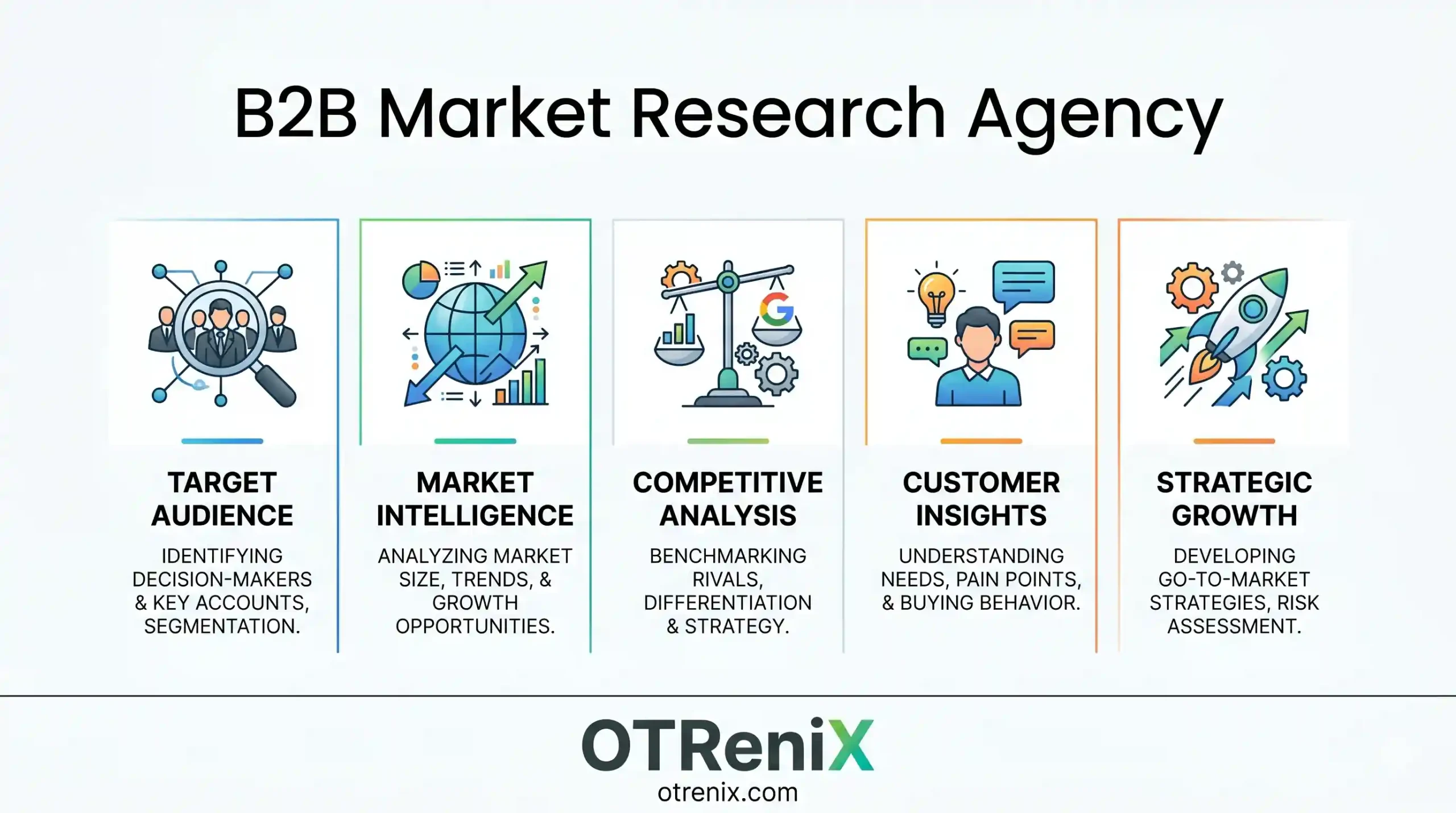
Effective research in the B2B space focuses on four primary dimensions:
- Demand Forecasting: Predicting long-term shifts in industry requirements based on macroeconomic trends and regulatory changes.
- Competitive Intelligence: Mapping the functional capabilities, pricing models, and service-level agreements (SLAs) of direct and indirect competitors.
- Customer Perception Audits: Identifying the gap between an organization’s value proposition and how it is actually perceived by prospect stakeholders.
- Technographic Profiling: Assessing the specific software stacks and operational dependencies of target accounts to tailor integration-focused marketing.
Qualitative vs. Quantitative Methodologies
Choosing the right research methodology is critical for actionable outcomes. B2B research is inherently constrained by smaller sample sizes compared to B2C, as target audiences are specialized professionals. Therefore, methodology must focus on high-quality, high-depth insights rather than volume alone.
Comparative Overview of B2B Research Methods
| Method | Best Use Case | Primary Benefit |
|---|---|---|
| In-Depth Interviews (IDI) | Strategic positioning | Uncovers nuances in executive decision-making. |
| Win/Loss Analysis | Sales cycle optimization | Identifies specific gaps in product or pricing. |
| Conjoint Analysis | New product development | Determines the value placed on specific features. |
| Social Listening (Industry-specific) | Trend identification | Captures real-time sentiment in niche forums. |
The Integration of AI and Automation
By 2026, the integration of artificial intelligence into market research workflows has enabled companies to process massive amounts of unstructured data—such as transcripts of sales calls, procurement white papers, and regulatory filings—with unprecedented speed. Automated sentiment analysis tools now allow for the continuous monitoring of buyer sentiment across thousands of industry discussions.
However, the human element remains vital. While AI can aggregate data, human analysts are required to interpret the "why" behind the trends. The danger in relying exclusively on automated tools is the risk of missing the qualitative context—such as internal corporate politics or unstated cultural barriers—that often influence B2B purchasing decisions.
Overcoming Challenges in Data Access
Accessing reliable, high-intent B2B data is a significant barrier for many organizations. Gatekeepers, non-disclosure agreements (NDAs), and the complexity of reaching senior decision-makers make data collection difficult.
Common Obstacles and Mitigation Strategies
- Response Bias: To counteract the tendency of respondents to provide socially acceptable answers, researchers often use third-party intermediaries to conduct blind surveys, ensuring honest feedback about brand performance.
- Fragmented Data Silos: Departments often hold disparate information. A successful research initiative requires integrating data from CRM systems, customer success logs, and marketing automation platforms into a unified data warehouse.
- The Complexity of DMUs: Since B2B purchases involve multiple stakeholders, research must be segmented by role. A CTO, a CFO, and an end-user all have different criteria for evaluating a vendor. A "one-size-fits-all" research approach typically yields diluted, unusable insights.
Next Steps: Building a Research-First Culture
Organizations seeking to leverage B2B market research should begin by establishing a recurring "Voice of the Customer" (VoC) program. This is not merely a survey campaign but a dedicated process for collecting and socializing feedback across all departments.
- Define the Scope: Identify the most critical business question (e.g., "Why are we losing 30% of prospects in the pilot stage?").
- Determine Feasibility: Assess whether internal data is sufficient or if external procurement of third-party datasets is required.
- Cross-Functional Socialization: Ensure that research findings are not siloed within the marketing team. Sales, Product, and Finance teams must have access to the insights to make informed, synchronized adjustments to their operations.
- Periodic Verification: In a rapidly changing economy, research should not be a one-time project. Set a quarterly review cycle to validate that previous assumptions still hold true against current market performance.
Frequently Asked Questions
What distinguishes B2B research from B2C? B2B research deals with professional buying committees, longer sales cycles, and high-stakes financial commitments. Unlike B2C, where emotional impulse may play a larger role, B2B research focuses on operational efficiency, technical compatibility, and measurable Return on Investment (ROI).
How often should an organization conduct B2B market research? A continuous approach is recommended. While major strategic shifts may require comprehensive deep-dive research annually, smaller tactical research—such as win/loss interviews—should be a permanent, ongoing part of the sales feedback loop.
How can I ensure the data collected is actually accurate? Data accuracy is maintained through triangulation. By verifying findings from multiple sources—such as comparing customer survey results against actual sales call transcripts and objective third-party industry reports—you can cross-validate your findings and reduce the impact of individual outlier responses.
Is outsourcing research better than keeping it internal? It depends on the goal. Internal teams understand the product and culture, but they often lack the objectivity to uncover deep-seated issues. Outsourcing to specialized firms often provides higher candor in respondent feedback and access to proprietary market databases that are not available to the public.
What is the minimum budget required for meaningful research? Research is scalable. You can start with low-cost, high-impact activities such as formalizing a Win/Loss process with your existing sales team. More complex initiatives, such as large-scale market penetration studies, require significant investment in specialized panels and analytics software. Focus on depth of insight rather than breadth of reach.
Image Gallery