Historically Black Colleges in North Carolina: Complete Guide to NC HBCUs
North Carolina is home to 10 accredited Historically Black Colleges and Universities (HBCUs), representing the second-largest concentration of HBCUs in the United States. These institutions comprise five public universities within the...
North Carolina is home to 10 accredited Historically Black Colleges and Universities (HBCUs), representing the second-largest concentration of HBCUs in the United States. These institutions comprise five public universities within the University of North Carolina (UNC) System and five private colleges, offering diverse academic programs ranging from STEM research and aviation to liberal arts and law.
Contents
Overview of the North Carolina HBCU Landscape
Historically Black Colleges and Universities were established primarily after the American Civil War to provide higher education to African Americans who were legally excluded from attending traditional higher education institutions. Today, North Carolina's 10 HBCUs serve as major engines of social mobility, academic innovation, and cultural heritage, enrolling tens of thousands of undergraduate and graduate students annually.
The state’s HBCU network is divided equally between public research and comprehensive universities and private liberal arts institutions. The five public universities belong to the 17-campus University of North Carolina System, benefiting from state operational support, shared administrative infrastructure, and state-backed financial aid initiatives such as the NC Promise Tuition Plan. The five private institutions operate independently, offering smaller class sizes, specialized missions, and faith-based or gender-specific learning environments.
Together, these schools award thousands of degrees each year in high-demand fields including engineering, nursing, computer science, business administration, education, and law. North Carolina HBCUs also contribute billions of dollars in economic output to the state through research funding, employment, and regional workforce development.
Public HBCUs in North Carolina (UNC System)
The five public HBCUs in North Carolina are constituent institutions of the University of North Carolina System. They receive state funding, adhere to system-wide governance, and offer competitive in-state tuition rates.
- North Carolina Public HBCU System
- Doctoral / STEM Focus
- NC A&T (Greensboro)
- Comprehensive Researched
- NCCU (Durham)
- WSSU (Winston-S)
- NC Promise Reduced-Cost
- ECSU (Elizabeth)
- FSU (Fayetteville)
- Doctoral / STEM Focus
1. North Carolina Agricultural and Technical State University (Greensboro)
Founded in 1891, North Carolina A&T State University (NC A&T) is the largest HBCU in the United States by enrollment, regularly educating over 13,000 undergraduate and graduate students. Located in Greensboro, NC A&T is a doctoral doctoral-granting research university classified as an R2 doctoral institution with high research activity.
NC A&T is national recognized for its College of Engineering, which produces more African American engineering graduates at the undergraduate level than any other university in the nation. Key academic strengths include doctoral programs in nanoengineering, computational science, and mechanical engineering, alongside prominent programs in agricultural science, supply chain management, and computer science.
- Type: Public Research University (UNC System)
- Campus Environment: Urban (Greensboro)
- Key Programs: Agricultural Sciences, Computer Science, Mechanical Engineering, Supply Chain Management, Nursing
- Official Website: ncat.edu
2. North Carolina Central University (Durham)
Established in 1910 as the National Religious Training School and Chautauqua for the Colored Race, North Carolina Central University (NCCU) became the nation’s first public liberal arts college for African American students. Situated in Durham near the Research Triangle Park, NCCU is renowned for its academic contributions to law, healthcare, and biotechnology.
NCCU houses the NCCU School of Law, one of only six law schools at HBCUs nationwide, providing affordable legal education with a strong emphasis on public interest law and clinical practice. The university also features state-of-the-art research centers, including the Julius L. Chambers Biomedical/Biotechnology Research Institute (BBRI) and the Biomanufacturing Research Institute and Technology Enterprise (BRITE).
- Type: Public Comprehensive University (UNC System)
- Campus Environment: Urban (Durham)
- Key Programs: Law (J.D.), Biotechnology, Nursing, Business Administration, Criminal Justice
- Official Website: nccu.edu
3. Winston-Salem State University (Winston-Salem)
Founded in 1892 as Slater Industrial Academy, Winston-Salem State University (WSSU) is a leader in health sciences and healthcare administration. Located in the Piedmont Triad region, WSSU consistently ranks among the top institutions in North Carolina for producing nurses and allied health professionals.
WSSU’s School of Health Sciences offers degrees in nursing (BSN, MSN, DNP), physical therapy (Doctor of Physical Therapy), occupational therapy, and clinical laboratory science. Beyond healthcare, the university offers robust programs in education, exercise science, and business, emphasizing community-engaged learning and health equity research.
- Type: Public Regional University (UNC System)
- Campus Environment: Urban (Winston-Salem)
- Key Programs: Nursing, Doctor of Physical Therapy (DPT), Health Administration, Elementary Education
- Official Website: wssu.edu
4. Fayetteville State University (Fayetteville)
Established in 1867 as the Howard School, Fayetteville State University (FSU) is the second-oldest public institution in North Carolina. Located adjacent to Fort Liberty (formerly Fort Bragg), FSU maintains strong ties to military personnel, veterans, and their dependents, offering military-friendly degree completion pathways both online and on campus.
FSU is an active participant in the NC Promise Tuition Plan, which drastically reduces tuition costs for undergraduate students. Academic priorities include business administration, intelligence studies, criminal justice, nursing, and education.
- Type: Public Regional University (UNC System)
- Campus Environment: Suburban (Fayetteville)
- Key Programs: Business Administration, Intelligence Studies, Nursing, Criminal Justice, Fire and Emergency Services Administration
- Official Website: uncfsu.edu
5. Elizabeth City State University (Elizabeth City)
Founded in 1891, Elizabeth City State University (ECSU) is located in Northeastern North Carolina's Albemarle region. ECSU is uniquely recognized for operating the only four-year Aviation Science degree program in the state of North Carolina, featuring its own flight training fleet and unmanned aircraft system (drone) laboratories.
Like FSU, ECSU participates in the NC Promise Tuition Plan, making high-quality instruction in aviation, marine environmental science, cybersecurity, and emergency management highly affordable for both in-state and out-of-state students.
- Type: Public Regional University (UNC System)
- Campus Environment: Rural/Small Town (Elizabeth City)
- Key Programs: Aviation Science, Unmanned Aircraft Systems, Marine Environmental Science, Cybersecurity, Business Administration
- Official Website: ecsu.edu
Private HBCUs in North Carolina
The five private HBCUs in North Carolina offer focused learning environments, faith-based founding traditions, and distinctive institutional missions ranging from single-gender liberal arts education to urban professional training.
6. Shaw University (Raleigh)
Founded in 1865, Shaw University is the oldest HBCU in the Southern United States. Located in downtown Raleigh, Shaw was established shortly after the Civil War by Henry Martin Tupper. The university played a pivotal role in the Civil Rights Movement; notably, the Student Nonviolent Coordinating Committee (SNCC) was founded on Shaw's campus during a conference in 1960.
Shaw offers undergraduate and graduate degrees focused on allied health, religion, mass communications, criminal justice, and business administration. Its urban campus provides students with direct access to government agencies, technology firms, and non-profit organizations in Raleigh.
- Type: Private Liberal Arts University (Affiliated with American Baptist Churches)
- Campus Environment: Urban (Downtown Raleigh)
- Key Programs: Mass Communications, Kinesiology, Criminal Justice, Religion & Divinity
- Official Website: shawu.edu
7. Saint Augustine’s University (Raleigh)
Established in 1867 by the Episcopal Diocese of North Carolina, Saint Augustine’s University (SAU) is a private, four-year liberal arts institution situated in Raleigh. SAU has a rich history of developing leaders in education, public service, and communications.
The university was among the first HBCUs to own and operate its own commercial television station (WAUG-LD) and radio facility. Academic offerings center on exercise science, business management, criminal justice, and visual arts.
- Type: Private Liberal Arts University (Episcopal affiliation)
- Campus Environment: Urban (Raleigh)
- Key Programs: Exercise Science, Business Administration, Communications, Criminal Justice
- Official Website: st-aug.edu
8. Johnson C. Smith University (Charlotte)
Founded in 1867 as the Biddle Memorial Institute, Johnson C. Smith University (JCSU) is an independent, private urban university located near center-city Charlotte. JCSU integrates liberal arts education with practical technical and professional preparation.
Supported by substantial philanthropic partnerships within Charlotte’s corporate sector, JCSU offers innovative coursework in data analytics, computer science, social work, and sport management. The campus features modern academic facilities, such as the Arts Factory and the Science Center.
- Type: Private Liberal Arts University (Presbyterian heritage)
- Campus Environment: Urban (Charlotte)
- Key Programs: Computer Science, Business Analytics, Social Work, Sport Management
- Official Website: jcsu.edu
9. Bennett College (Greensboro)
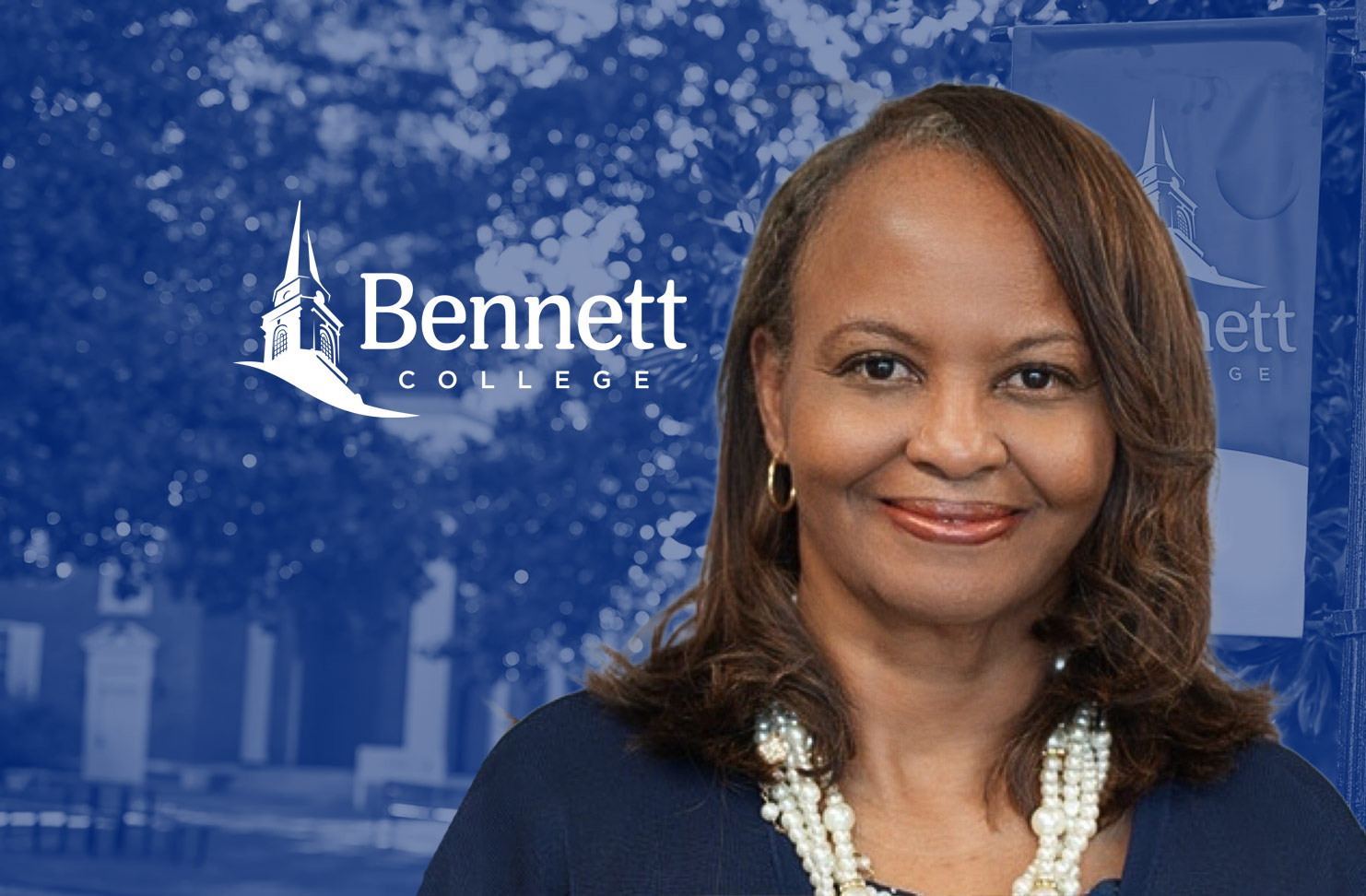
Founded in 1873 and reorganized in 1926 as a college for women, Bennett College is one of only two historically Black colleges in the nation dedicated exclusively to educating women (alongside Spelman College). Located in Greensboro, Bennett focuses on leadership development, global engagement, and social justice.
Bennett College awards Bachelor of Arts and Bachelor of Science degrees across fields such as journalism, biology, psychology, business, and political science. Small class sizes foster individualized mentorship and personal academic growth.
- Type: Private All-Women’s Liberal Arts College (United Methodist Church affiliation)
- Campus Environment: Urban (Greensboro)
- Key Programs: Journalism and Media Studies, Biology, Psychology, Political Science
- Official Website: bennett.edu
10. Livingstone College (Salisbury)
Founded in 1879 by the African Methodist Episcopal Zion (AME Zion) Church, Livingstone College is a private liberal arts institution located in Salisbury, North Carolina. The college emphasizes holistic education, blending academic rigor with moral and spiritual development.
Livingstone offers undergraduate degree programs in business administration, culinary arts, hospitality management, education, and social work. The college operates specialized training modules in hospitality through its School of Hospitality Management and Culinary Arts.
- Type: Private Liberal Arts College (AME Zion affiliation)
- Campus Environment: Small Town (Salisbury)
- Key Programs: Culinary Arts, Hospitality Management, Business Administration, Social Work
- Official Website: livingstone.edu
Comparison of North Carolina HBCUs
The following table provides a structural comparison of all 10 North Carolina HBCUs, outlining institutional type, setting, primary research or program focus, and estimated tuition framework.
| Institution | Control / Affiliation | Location | Undergraduate Enrollment (Approx.) | Primary Academic Specialties | Key Financial / Tuition Designation |
|---|---|---|---|---|---|
| NC A&T State University | Public (UNC System) | Greensboro | 12,000+ | Engineering, Agriculture, Supply Chain, Computer Science | Standard Public UNC Tuition |
| NC Central University | Public (UNC System) | Durham | 6,000+ | Law (J.D.), Biotechnology, Nursing, Criminal Justice | Standard Public UNC Tuition |
| Winston-Salem State University | Public (UNC System) | Winston-Salem | 4,500+ | Nursing, Physical Therapy, Health Sciences, Education | Standard Public UNC Tuition |
| Fayetteville State University | Public (UNC System) | Fayetteville | 6,000+ | Business, Military Studies, Nursing, Criminal Justice | NC Promise Campus ($500/sem in-state tuition) |
| Elizabeth City State University | Public (UNC System) | Elizabeth City | 2,000+ | Aviation Science, Drone Tech, Marine Science, Cybersecurity | NC Promise Campus ($500/sem in-state tuition) |
| Shaw University | Private (Baptist) | Raleigh | 1,000+ | Mass Communications, Divinity, Allied Health, Justice Studies | Independent Private Rates |
| Saint Augustine's University | Private (Episcopal) | Raleigh | 800+ | Communications, Exercise Science, Business Administration | Independent Private Rates |
| Johnson C. Smith University | Private (Presbyterian) | Charlotte | 1,100+ | Data Analytics, Computer Science, Social Work, Sport Mgmt | Independent Private Rates |
| Bennett College | Private (All-Women / UMC) | Greensboro | 300+ | Biology, Journalism, Psychology, Political Science | Independent Private Rates |
| Livingstone College | Private (AME Zion) | Salisbury | 800+ | Culinary Arts, Hospitality Management, Social Work, Business | Independent Private Rates |
Understanding Tuition, NC Promise, and Financial Aid
Navigating the costs associated with attending an HBCU in North Carolina requires understanding the distinctions between state-supported public universities and private institutions.
- Higher Education Funding in NC
- Public UNC System HBCUs
- Standard UNC In-State & NC Promise Plan ($500/sem tuition)
- Private HBCUs
- Institutional Grants, UNCF, Federal Pell, Endowment Aid
- Public UNC System HBCUs
The NC Promise Tuition Plan
The NC Promise Tuition Plan is a state legislative program designed to increase access to affordable higher education. Under this plan, undergraduate tuition at participating UNC System campuses is fixed at:
- $500 per semester for in-state undergraduate students.
- $2,500 per semester for out-of-state undergraduate students.
Two of North Carolina's five public HBCUs—Elizabeth City State University and Fayetteville State University—are official NC Promise institutions. This reduced rate applies automatically to all enrolled undergraduate students during fall and spring semesters, significantly reducing student loan debt. Fees, room, and board are assessed separately at standard campus rates.
Private HBCU Funding & UNCF Scholarships
Private HBCUs do not receive direct state operational appropriations to reduce tuition rates. However, students attending private HBCUs in North Carolina can leverage several key funding sources:
- United Negro College Fund (UNCF): Offers dozens of merit-based and need-based scholarships specifically earmarked for students attending member institutions like Saint Augustine's, Shaw, Johnson C. Smith, Bennett, and Livingstone.
- North Carolina Need-Based Scholarship: North Carolina residents attending eligible independent non-profit colleges within the state may qualify for state-funded need-based grants administered through the State Education Assistance Authority (SEAA).
- Institutional Aid: Private institutions often provide merit scholarships, legacy awards, and institutional endowment grants to offset tuition costs for incoming freshmen.
Admissions Guidelines and Preparation Strategies
Applying to a North Carolina HBCU requires meeting distinct institutional criteria depending on whether the school is part of the UNC System or operates privately.
UNC System Minimum Admissions Standards
For public HBCUs (NC A&T, NCCU, WSSU, FSU, ECSU), applicants must satisfy minimum high school course requirements set by the UNC Board of Governors:
- 4 units of English
- 4 units of Mathematics (Algebra I, Geometry, Algebra II, and an advanced math beyond Algebra II)
- 3 units of Science (including a life science, a physical science, and a laboratory course)
- 2 units of Social Studies (including U.S. History)
- 2 units of the same World Language
Note on Standardized Testing: The UNC System periodically reviews test-optional policies for SAT/ACT submission. Prospective students should verify the specific test score minimums or waivers active for their intended term of entry.
Private HBCU Application Processes
Private institutions evaluate prospective students holistically using the Common Application or direct institutional applications. Key components include:
- Official high school transcripts demonstrating solid academic progression.
- Letters of recommendation from teachers or guidance counselors.
- Personal essay highlighting leadership potential, community service, and career goals.
- Resume of extracurricular activities, athletics, and volunteer service.
Frequently Asked Questions
Which North Carolina HBCU is the largest?
North Carolina A&T State University in Greensboro is the largest HBCU in North Carolina and the largest nationwide, enrolling over 12,000 undergraduate and graduate students.
How many HBCUs are located in North Carolina?
There are 10 accredited HBCUs in North Carolina. Five are public universities governed by the University of North Carolina System, and five are private colleges and universities.
What is the NC Promise program, and which HBCUs participate?
The NC Promise program caps undergraduate tuition at $500 per semester for in-state students and $2,500 per semester for out-of-state students. The two HBCUs participating in NC Promise are Elizabeth City State University and Fayetteville State University.
Is there an all-women's HBCU in North Carolina?
Yes, Bennett College, located in Greensboro, North Carolina, is a private liberal arts college for women. It is one of only two historically Black women's colleges in the United States.
Which NC HBCU has a law school?
North Carolina Central University (NCCU) in Durham houses the NCCU School of Law, which offers Juris Doctor (J.D.) and dual-degree programs.
Which North Carolina HBCU offers aviation degrees?
Elizabeth City State University (ECSU) offers the state's only four-year Bachelor of Science degree in Aviation Science, with specializations in flight education, aviation management, and unmanned aircraft systems (drones).
Practical Recommendations for Prospective Students
When choosing among North Carolina's 10 HBCUs, consider taking the following structured actions:
- Identify Academic Priorities: Determine whether your intended major requires specialized accreditation or research infrastructure (e.g., Engineering at NC A&T, Law at NCCU, Health Sciences at WSSU, or Aviation at ECSU).
- Calculate Total Net Price: Compare total costs including tuition, campus housing, dining plans, and mandatory fees. Utilize the Net Price Calculator on each university’s financial aid webpage.
- Explore NC Promise Savings: If minimizing debt is a primary priority, evaluate Fayetteville State University and Elizabeth City State University to take advantage of the state-subsidized $500/semester tuition rate.
- Schedule On-Campus Visits: Attend open-house events or schedule guided tours during the academic semester to experience each campus's distinct culture, faculty engagement, and student life.
- Apply Early for Financial Aid: Complete the Free Application for Federal Student Aid (FAFSA) as early as possible after it opens to maximize eligibility for federal grants, state funding, and UNCF scholarships.
Image Gallery