How to Make a Great Manhattan: The Definitive Guide to Crafting Classic Cocktail Perfection
A great Manhattan is made by stirring two parts whiskey—traditionally rye—with one part sweet vermouth and two dashes of aromatic bitters over ice until ice-cold, then straining it into a chilled coupe or martini glass and garnishing i...
A great Manhattan is made by stirring two parts whiskey—traditionally rye—with one part sweet vermouth and two dashes of aromatic bitters over ice until ice-cold, then straining it into a chilled coupe or martini glass and garnishing it with a brandied cherry.
Contents
The Manhattan stands alongside the Martini and the Old Fashioned as a foundational pillar of classic cocktail culture. Originating in the late 19th century, this timeless libation relies on simplicity, demanding that every component pull its own weight. Because the drink contains no fruit juices, heavy syrups, or dairy to mask flaws, its quality depends entirely on the bartender’s choice of ingredients, precise measurements, and temperature control. Achieving perfection requires an understanding of structural balance, glassware selection, ice physics, and technique.
The Anatomy of a Manhattan: Ingredients and Selection
Every component in a Manhattan plays a vital chemical and sensory role. Understanding how whiskey, vermouth, and bitters interact ensures that your final pour achieves a harmonious balance of strength, sweetness, and bitterness.
Whiskey: Rye vs. Bourbon
The choice of base spirit dictates the character of the drink.
- Rye Whiskey: Historically and traditionally used in a Manhattan, rye brings a spicy, high-grain profile featuring notes of black pepper, clove, and baking spice. This assertive backbone cuts through the syrupy sweetness of the vermouth, creating a crisp, dry finish.
- Bourbon: Substituting bourbon for rye shifts the profile dramatically. Bourbon must be at least 51% corn, introducing forward notes of vanilla, caramel, and heavy oak. While a bourbon Manhattan is sweeter and rounder on the palate, it lacks the structural edge that rye provides.
Sweet Vermouth
Sweet vermouth is a fortified, aromatized wine infused with herbs, roots, and barks. It provides the necessary counterweight to the aggressive proof of the whiskey.
- Oxidation and Storage: Vermouth is wine-based and begins to oxidize immediately upon opening. An open bottle left at room temperature turns flat and vinegary within weeks. Always store opened sweet vermouth in the refrigerator, where it will maintain optimal flavor for up to two months.
- Style: Standard Italian rosso (red) vermouths offer rich notes of cooked fruit, vanilla, and rhubarb. For a drier, more bitter profile, some bartenders prefer French sweet vermouths or robust botanical vermouths like Carpano Antica Formula.
Bitters
Aromatic bitters act as the seasoning salt of the cocktail world. They tie disparate flavors together, adding aromatic complexity and a drying bitterness that prevents the drink from tasting cloying.
- Angostura Bitters: The undisputed industry standard, featuring a proprietary blend of gentian, herbs, and spices.
- Orange Bitters: Frequently added as a split dash alongside Angostura to brighten the drink with citrus oils.
The Master Recipe and Specifications
Precision is the hallmark of professional cocktail making. While casual pours can lead to inconsistent drinks, standardizing your measurements guarantees repeatable success.
- Rye Whiskey: 2 oz (60 ml)
- Sweet Vermouth: 1 oz (30 ml)
- Angostura Bitters: 2 dashes
- Garnish: 1 brandied cherry (such as Luxardo) or expressed lemon peel
| Component | Standard Measure | Primary Function | Flavor Profile Contribution |
|---|---|---|---|
| Rye Whiskey | 2 oz | Base Spirit | Alcohol backbone, spice, dryness |
| Sweet Vermouth | 1 oz | Modifier | Sweetness, body, botanical complexity |
| Aromatic Bitters | 2 dashes | Seasoning | Spice, drying astringency, aromatic lift |
| Garnish | 1 Cherry/Peel | Presentation & Aroma | Fruit finish or bright citrus oil |
Step-by-Step Preparation Guide
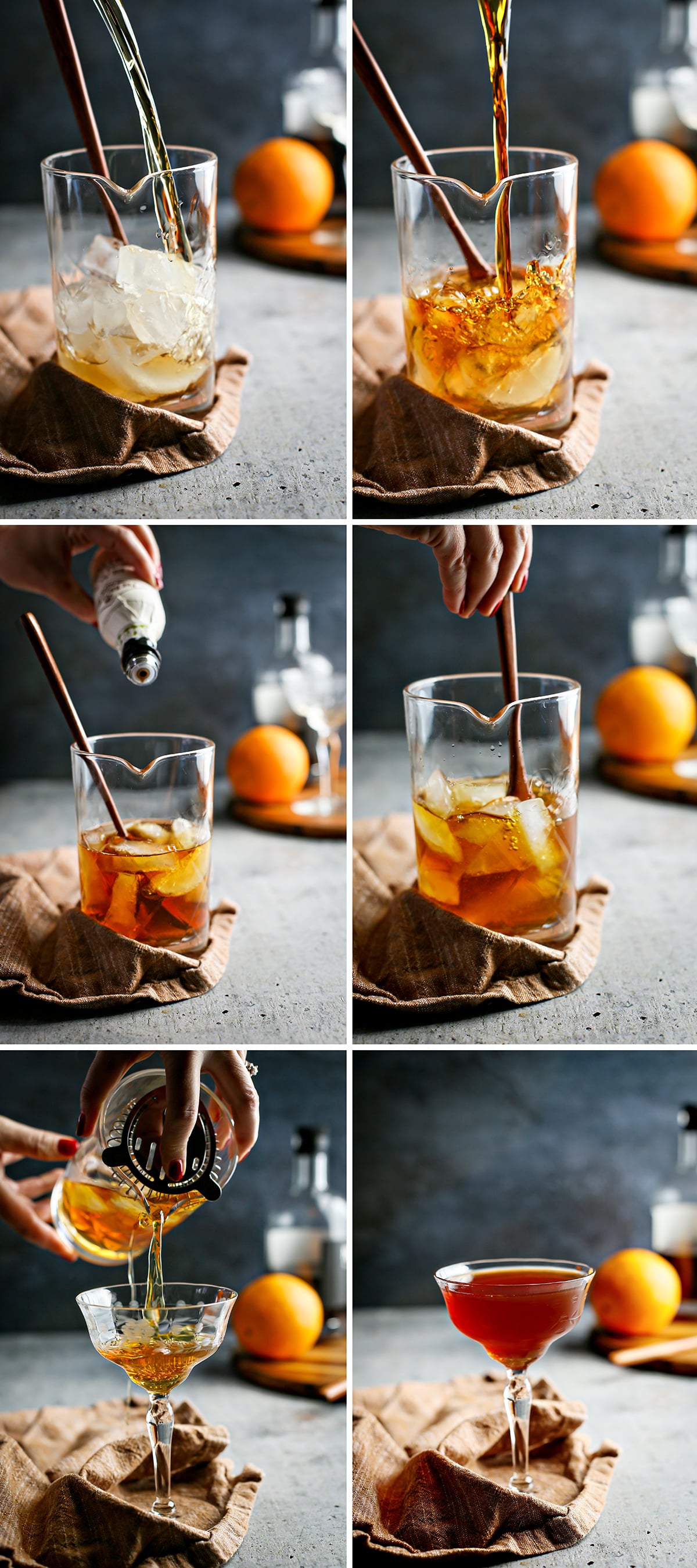
Making a Manhattan requires a mixing glass, a bar spoon, and a strainer. Never shake a Manhattan; shaking introduces excessive aeration and micro-ice chips that dilute and cloud a drink that is meant to be crystal clear and silky smooth.
1. Chill the Glassware
Place a coupe or Nick and Nora glass into the freezer for at least ten minutes before serving. A freezing cold vessel prevents the cocktail from warming up too quickly as you drink it.
2. Add Ice to the Mixing Glass
Fill a heavy-bottomed mixing glass three-quarters full with large, dense ice cubes. Large cubes melt slower than crushed or small ice, allowing you to chill the liquid thoroughly without over-diluting it.
3. Measure and Pour
Add the 2 ounces of rye whiskey, 1 ounce of sweet vermouth, and 2 dashes of aromatic bitters directly onto the ice. Measuring with a jigger ensures the 2:1 ratio remains intact.
4. Stir with Purpose
Insert your bar spoon against the inside wall of the mixing glass and stir smoothly in a circular motion for 30 to 45 seconds. Keep the back of the spoon gliding smoothly against the glass to minimize ice fracture. Proper stirring chills the liquid down to approximately 28°F (-2°C) while achieving roughly 20% to 25% dilution, which opens up the whiskey’s volatile compounds.
5. Strain and Serve
Remove your chilled glass from the freezer. Using a Hawthorne or Julep strainer, pour the liquid from the mixing glass into the prepared glass, leaving behind the spent ice.
6. Garnish
Drop a high-quality brandied cherry gently into the bottom of the glass. If you prefer a citrus accent, take a wide strip of fresh lemon peel, hold it skin-side down over the surface of the drink, and squeeze it briskly to express the bright essential oils across the top of the cocktail before dropping it in or discarding it.
Variations and Modern Twists
Once you have mastered the standard build, exploring classic variations allows you to tailor the cocktail to specific preferences or dinner menus.
- The Perfect Manhattan: Replaces half of the sweet vermouth with dry vermouth, resulting in a lighter, crisper drink profile.
- The Black Manhattan: Replaces the sweet vermouth entirely with Amaro Averna or another dark Italian amaro, adding deep notes of caramel, citrus peel, and cola.
- The Rob Roy: Swaps the rye whiskey for blended or single malt Scotch whisky, shifting the flavor profile toward peat, smoke, and heather honey.
Common Mistakes to Avoid
Even experienced home bartenders occasionally fall into traps that compromise the quality of their drinks.
- Using Bad Ice: Cloudy ice made from tap water contains trapped air and impurities that impart off-flavors and melt too quickly. Use filtered, clear ice whenever possible.
- Shaking Instead of Stirring: Shaking a whiskey-forward cocktail agitates the liquid too violently, creating a cloudy appearance and a frothy texture that ruins the silky mouthfeel of a proper Manhattan.
- Neglecting Vermouth Storage: Serving a Manhattan made with a warm, un-refrigerated bottle of vermouth that has been sitting on a shelf for six months will impart a stale, oxidized, vinegary taste that ruins even the most expensive rye whiskey.
- Skipping the Jigger: Eyeballing pours leads to an unbalanced drink. A heavy-handed pour of vermouth makes the cocktail cloying, while too much whiskey burns the palate.
Frequently Asked Questions
Should a Manhattan be served up or on the rocks?
A traditional Manhattan is served "up"—meaning it is chilled with ice in a mixing glass and strained into a stem glass without ice. Serving it on the rocks in a lowball glass is acceptable if you prefer a slower-drinking experience, but the melting ice will dilute the cocktail over time.
Why is my Manhattan cloudy?
Cloudiness usually occurs for two reasons: either the cocktail was shaken instead of stirred (which shears ice crystals into the liquid) or the vermouth used was old and oxidized. Stick to stirring and fresh vermouth to maintain a brilliant amber clarity.
Can I batch Manhattans for a party?
Yes. Manhattans scale up exceptionally well because they contain no perishable juices or dairy. Combine your whiskey, vermouth, and bitters in a glass bottle at a 2:1:dash ratio, add 20% pure water by volume to account for stirring dilution, and store the bottle in the freezer until ready to serve.
What is the best garnish for a Manhattan?
A premium brandied cherry—such as a Luxardo cherry—is the gold standard. Avoid neon-red, artificially flavored cocktail cherries, as their cloying sugar syrup overpowers the sophisticated balance of the drink.
Do I need an expensive whiskey to make a good Manhattan?
While a high-end whiskey can elevate the drink, you do not need top-shelf bottles. A reliable, high-rye whiskey bottled around 90 to 100 proof provides enough structure and punch to stand up to the vermouth without getting lost.
Next Actions
To craft your first exceptional Manhattan, inventory your home bar for a reliable rye whiskey, a fresh bottle of refrigerated sweet vermouth, and a bottle of Angostura bitters. Secure a proper mixing glass and a chilled coupe, measure with exact precision, and practice stirring for a full 30 seconds to master the ideal chill and dilution.
Image Gallery