Navigating Life Insurance Insurtech for Impaired Risk in 2026
In 2026, obtaining life insurance with an impaired risk profile is no longer a guaranteed rejection. Insurtech platforms leverage real-time medical data, AI-driven predictive modeling, and accelerated underwriting to provide coverage f...
In 2026, obtaining life insurance with an impaired risk profile is no longer a guaranteed rejection. Insurtech platforms leverage real-time medical data, AI-driven predictive modeling, and accelerated underwriting to provide coverage for individuals with chronic conditions. By shifting from manual reviews to data-rich algorithmic assessments, technology enables more granular, fair, and accessible pricing for high-risk applicants.
Contents
Understanding Impaired Risk in the Modern Life Insurance Landscape
In the context of life insurance, impaired risk refers to applicants who have a higher-than-average probability of filing a claim due to existing health conditions, past medical history, or high-risk lifestyle factors. Historically, these individuals faced "substandard" ratings, which resulted in significantly higher premiums, or were outright denied coverage. Common impairments include cardiovascular disease, Type 2 diabetes, obesity, history of cancer, or chronic respiratory issues.
By 2026, the definition of impaired risk has shifted. Rather than being categorized by a single diagnosis, applicants are evaluated on their disease management. For example, a person with well-managed diabetes who uses a continuous glucose monitor (CGM) may now receive more favorable rates than a "healthy" individual with no recent medical checkups. This shift is driven by insurtech, the fusion of insurance and technology, which allows carriers to see a more complete picture of an individual's mortality risk.
The legacy approach to impaired risk relied on the Attending Physician Statement (APS), a manual process where insurers requested paper records from doctors. This often took 30 to 60 days. Today, insurtech streamlines this through digital data pipes, reducing the time to offer from months to minutes, even for those with complex medical backgrounds.
How Insurtech Transforms Underwriting for High-Risk Individuals
The core of the insurtech revolution lies in Accelerated Underwriting (AUW). While AUW was initially reserved for the healthiest "preferred" applicants, in 2026, it has expanded to include many impaired risk categories. This is made possible through several key technological pillars.
1. Electronic Health Records (EHR) and API Integration
Insurtech companies now utilize secure API integrations to access an applicant's Electronic Health Records (EHR) instantly. With the applicant's consent, the insurer’s algorithm can scan years of lab results, prescription histories, and clinical notes. For an impaired risk applicant, this means the insurer can see the stability of their condition over time. If a person with a history of heart disease has maintained consistent blood pressure and cholesterol levels for five years, the algorithm recognizes this stability as a lower risk factor compared to someone whose data shows volatility.
2. Predictive Analytics and Machine Learning
Machine learning models are trained on vast datasets—millions of life insurance claims and clinical outcomes. These models identify patterns that human underwriters might miss. For instance, an AI might find that individuals with a specific combination of a mild heart murmur and a high-activity lifestyle (verified via wearable data) have a mortality risk equivalent to a standard healthy individual. This allows insurtech firms to offer "Standard" rates to people who would have previously been rated as "Substandard."
3. Prescription and Medical Information Bureau (MIB) Data
Real-time access to the Medical Information Bureau (MIB) and prescription databases (such as Milliman IntelliScript or LexisNexis Risk Solutions) provides a safety net for underwriting. By 2026, these databases are more integrated than ever. If an applicant forgets to mention a medication for a chronic condition, the insurtech platform identifies it instantly, allowing for an immediate "reflex" question to clarify the condition rather than a flat denial later in the process.
The Role of Wearables and Real-Time Data
One of the most significant advancements for impaired risk applicants in 2026 is the use of dynamic pricing based on wearable technology. Devices like the Oura Ring, Apple Watch, and specialized medical sensors provide a continuous stream of "lifestyle data."
For a high-risk applicant, this is a powerful tool for risk mitigation. If you have a high BMI or hypertension, you can opt into a program where you share your activity levels, heart rate variability (HRV), and sleep patterns with the insurer. High engagement in healthy behaviors can lead to premium credits or a re-classification of your risk tier. This transforms the life insurance policy from a static contract into a proactive health partnership.
Carriers like John Hancock and newer insurtech entrants have perfected these "Vitality" models, where the "impaired" label is temporary and can be improved through verified lifestyle choices. This is particularly beneficial for those with metabolic syndrome or early-stage lifestyle-related conditions.
Comparing Traditional vs. Insurtech Approaches for Impaired Risk
To understand the value of insurtech, it is helpful to compare the applicant experience and outcomes against traditional brokerage methods in 2026.
| Feature | Traditional Life Insurance (Manual) | Insurtech Life Insurance (Algorithmic) |
|---|---|---|
| Data Collection | Manual APS, physical exams, fluid samples. | EHR APIs, prescription databases, wearables. |
| Time to Decision | 4 to 8 weeks. | Minutes to 48 hours. |
| Risk Categorization | Broad "Substandard" tables (Table 1-16). | Granular, personalized risk scoring. |
| Medical Exam | Almost always required for impaired risk. | Often waived (Fluidless) if data is sufficient. |
| Pricing Flexibility | Static premiums for the term duration. | Potential for "Dynamic" discounts via health apps. |
| Transparency | Black-box underwriting decisions. | Real-time feedback on risk factors. |
Steps to Secure Coverage with a Health Condition
If you are seeking life insurance in 2026 and have a medical impairment, follow these steps to maximize your chances of approval and minimize your costs.
Step 1: Pre-Submission Preparation
Before applying, ensure your medical records are up to date. Insurtech algorithms favor recency and consistency. If you haven't seen your specialist in two years, the "data gap" may cause the algorithm to default to a more conservative (expensive) risk rating. A recent checkup with favorable lab results provides the fresh data the AI needs to justify a lower rate.
Step 2: Choose the Right Insurtech Platform
Not all insurtechs are the same. Some specialize in specific impairments. For example, some platforms have proprietary models specifically designed for diabetics, while others might be more lenient toward mental health histories (such as treated anxiety or depression). Research "impaired risk niche" providers who utilize predictive underwriting for your specific condition.
Step 3: Opt-In to Data Sharing
To get the best rates as a high-risk individual, you must be willing to share data. This includes granting access to your EHR and potentially linking your fitness tracker. While privacy is a concern, the "data discount" for impaired risk can be as high as 20-30% compared to a "blind" application where the insurer assumes the worst-case scenario.
Step 4: Review the "Reflexive" Questionnaire
Insurtech applications use reflexive questioning. If you check "Yes" for a heart condition, the system will immediately ask follow-up questions about the date of diagnosis, specific medications, and recent symptoms. Answer these with precision. Vague answers often trigger a manual review, which slows down the process and removes the "accelerated" benefit.
Challenges and Privacy Considerations
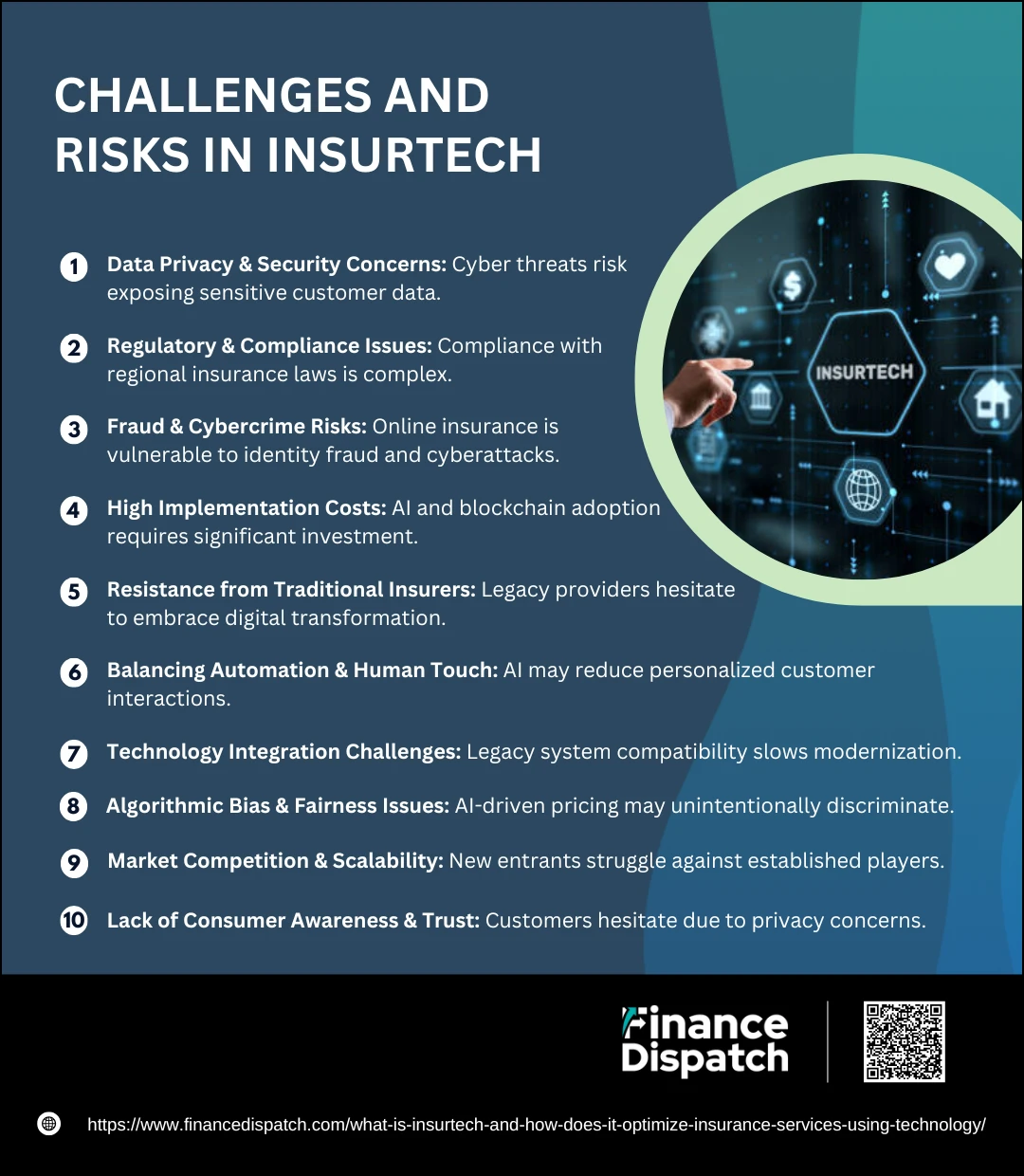
While insurtech has democratized access to life insurance for the impaired risk market, it is not without challenges. The primary concern in 2026 remains data privacy and algorithmic bias.
Applicants must be aware of how their data is used. In the United States, the Health Insurance Portability and Accountability Act (HIPAA) protects medical records, but once you authorize an insurer to access that data for underwriting, the rules change. Most reputable insurtechs use "clean room" data environments where your data is used only for the specific risk assessment, but it is vital to read the privacy policy regarding whether your data will be used to train future models.
Furthermore, there is the risk of "algorithmic exclusion." If an applicant’s medical history is so complex that it falls outside the training data of the AI, the system may automatically "kick" the application to a human underwriter. For those with extremely rare diseases, the traditional manual process—supported by a specialized impaired risk broker—remains the most effective route, as AI may not yet have the nuance to interpret rare clinical outcomes.
Cost Considerations for Impaired Risk Policies
Pricing for impaired risk is still higher than for the general population, but the "spread" has narrowed. In 2026, premium loading is often applied as a percentage of the base rate.
- Standard Rates: The baseline for a healthy individual.
- Table Ratings: Each "Table" (usually labeled A through P or 1 through 16) typically adds a 25% increase to the standard premium.
- Flat Extras: A specific dollar amount added per $1,000 of coverage, often used for temporary risks (like a recent surgery) or high-risk hobbies.
Insurtech reduces these costs by finding "credits" in your medical data. An AI might see that while you have a "Table B" blood pressure reading, your "Table A" cholesterol and "Preferred" exercise habits should result in a net "Table A" or even "Standard" rating.
FAQs
Can I get life insurance immediately if I have Type 2 diabetes?
Yes, in 2026, many insurtech platforms offer "instant-decision" policies for Type 2 diabetics. The key is having a stable HbA1c level (typically under 7.0 or 7.5) and a history of medication compliance. If your data is accessible via EHR, the algorithm can verify this and issue a policy in minutes without a physical exam.
What happens if the insurtech AI denies my application?
A denial from an automated system is not the end of the road. Most states require insurers to provide a reason for the adverse underwriting decision. You can take this reason to a traditional "high-risk" broker who can manually shop your case to carriers that specialize in manual underwriting for difficult cases.
Does insurtech use my social media data for underwriting?
As of 2026, most major life insurance carriers and insurtechs avoid using social media data for medical underwriting due to regulatory scrutiny from the National Association of Insurance Commissioners (NAIC). Underwriting is primarily focused on verified medical, prescription, motor vehicle, and lifestyle (wearable) data.
Is "No-Exam" life insurance more expensive for impaired risks?
Not necessarily. While traditional no-exam policies (Simplified Issue) were once much more expensive, modern Accelerated Underwriting uses your digital data to replace the exam. If the data shows you are managing your impairment well, your "no-exam" rate through an insurtech could be lower than a "with-exam" rate from a traditional carrier that lacks sophisticated data modeling.
Can I lower my premiums later if my health improves?
Yes. Many insurtech policies in 2026 include "re-rating" options or wellness incentives. If you lose weight, quit smoking, or show improved clinical markers over a 12-to-24-month period, you can often request a premium review. Some policies even automate this process through integrated health apps.
Practical Recommendation for Applicants
For those classified as impaired risk, the best course of action in 2026 is to leverage the transparency of technology. Begin by using an insurtech aggregator to get "soft-quote" estimates. These tools use a few data points to tell you which carriers are most likely to accept your specific condition.
Once you identify a likely carrier, ensure your digital health footprint is clean—meaning your prescriptions are filled on time and your recent doctor visits reflect a managed condition. If you are offered a policy with a "rating" (extra cost), ask if the carrier has a wellness-integration program. Joining these programs can often offset the cost of the impairment rating through monthly or annual premium credits, effectively rewarding you for the work you do to stay healthy despite your diagnosis.
Image Gallery