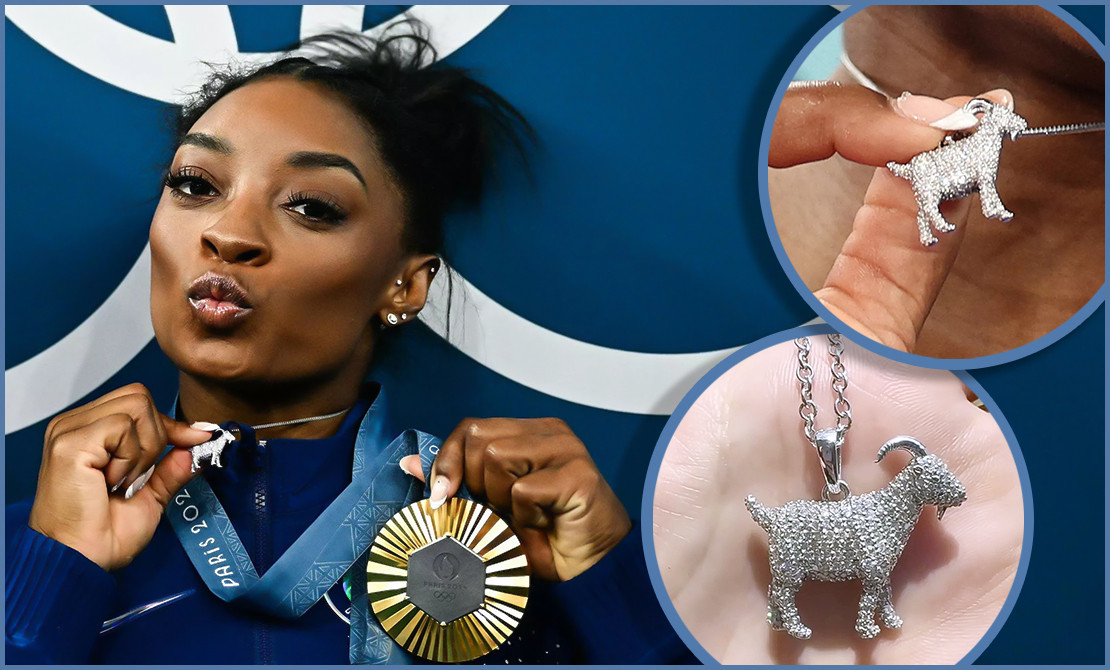
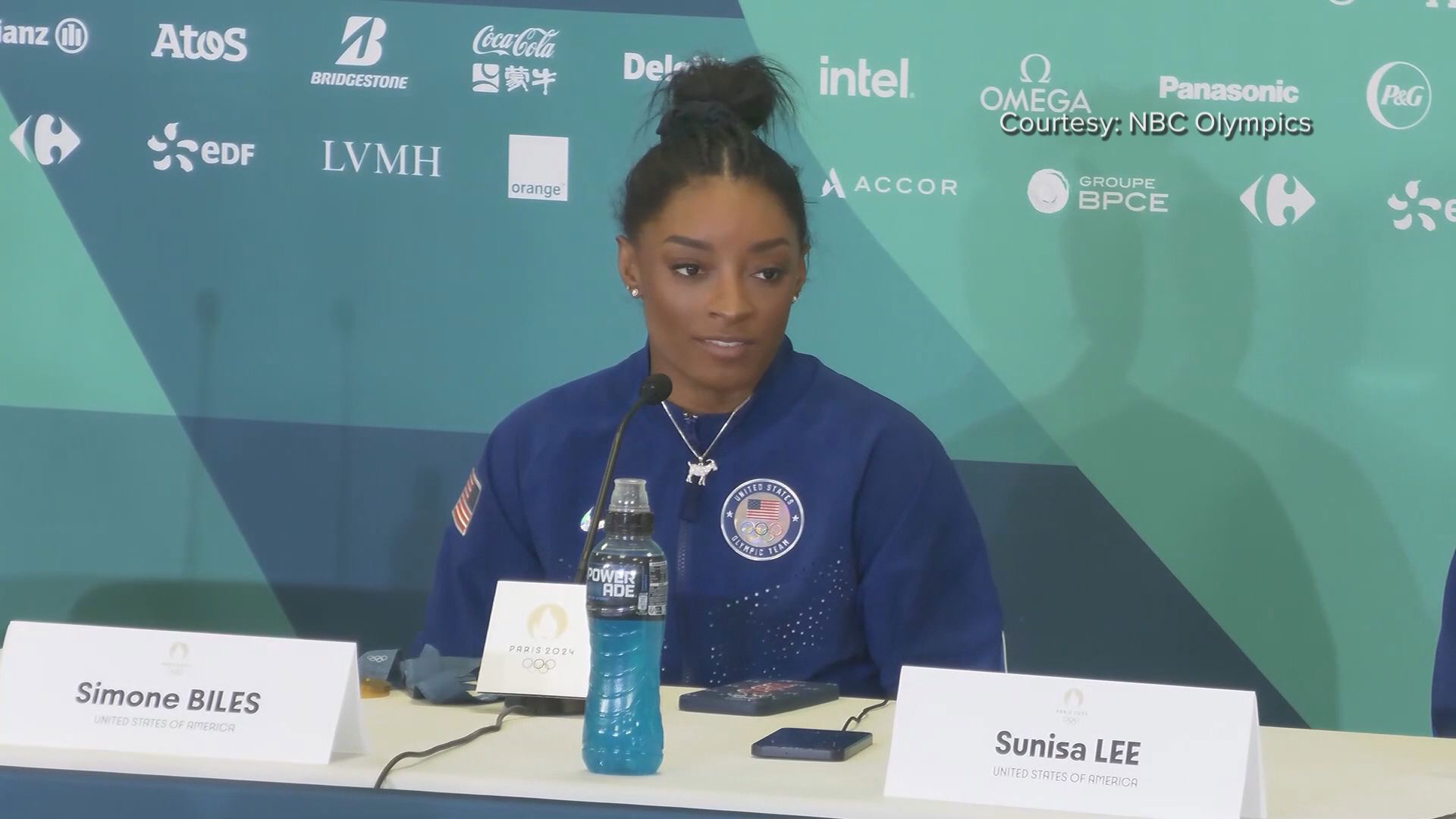
Why Simone Biles Is Called the GOAT: The Science, Stats, and Legacy of Gymnastics' Greatest
Simone Biles is widely called the GOAT (Greatest of All Time) because she holds an unprecedented 41 combined Olympic and World Championship medals, features five distinct skills named after her in the official gymnastics rulebook, and...
Simone Biles is widely called the GOAT (Greatest of All Time) because she holds an unprecedented 41 combined Olympic and World Championship medals, features five distinct skills named after her in the official gymnastics rulebook, and maintains an unmatched difficulty gap over her competitors that redefined what human biomechanics can achieve in elite sport.
Contents
The Numerical Reality: Unmatched Medal Count and Record Breakdown
To understand why the acronym GOAT—Greatest of All Time—is routinely assigned to American gymnast Simone Biles, one must first examine the sheer quantitative gap between her achievements and those of every other gymnast in history. Gymnastic excellence was historically measured across discrete Olympic quadrenniums, where athletes typically peaked for a single Games before physical toll or changing scoring codes forced their retirement. Biles shattered this operational standard by dominating across more than a decade of international competition.
Across her career, Biles has accumulated 41 international medals across the Olympic Games and the World Gymnastics Championships. Her collection includes 30 World Championship medals (23 gold, 4 silver, 3 bronze) and 11 Olympic medals (7 gold, 2 silver, 2 bronze). This makes her the most decorated gymnast in the history of the sport, surpassing Soviet legend Vitaly Scherbo (33 combined medals) and Belarusian star Svetlana Khorkina.
Total Combined International Medals (World Championships + Olympics): 1. Simone Biles (USA): 41 medals (30 World, 11 Olympic) 2. Vitaly Scherbo (USSR/CIS/Belarus): 33 medals (26 World, 7 Olympic) 3. Larisa Latynina (USSR): 32 medals (14 World, 18 Olympic)
Biles’s dominance is particularly apparent in the All-Around (AA) event—the ultimate test of athletic versatility across all four women's apparatuses: Vault, Uneven Bars, Balance Beam, and Floor Exercise. Between 2013 and 2021, Biles remained undefeated in every individual all-around competition she entered, a continuous multi-year streak unprecedented in modern gymnastics history. Her victories spanned two distinct scoring eras under the International Gymnastics Federation (FIG) Code of Points, proving that her dominance was not an artifact of a specific judging preference or era-bound set of regulations.
The "Biles" Skills: Rewriting the Physics of Gymnastics
In elite gymnastics, an athlete earns the immortalizing distinction of having an element named after them in the official FIG Code of Points by successfully performing a original, previously unexecuted skill at a major international competition (such as a World Championship or Olympic Games). Most Hall-of-Fame gymnasts consider themselves fortunate to introduce a single named skill during their career. Simone Biles has introduced five distinct skills bearing her surname across three different apparatuses.
These elements are not incremental variations; they represent quantum leaps in rotational speed, spatial orientation, and force production.
Summary of the Five Named "Biles" Elements in the FIG Code of Points: - Biles I (Floor Exercise): Double layout with a half twist (Value: G) - Biles II (Floor Exercise): Triple-twisting double tuck (Value: J) - Biles I (Vault): Yurchenko half-on with double-twisting layout off (Value: 6.0 D-score) - Biles II (Vault): Yurchenko double pike (Value: 6.4 D-score) - Biles (Balance Beam): Double-twisting double tuck dismount (Value: H)
1. The Biles I on Floor Exercise
First landed in 2013, this element consists of a double layout (two complete backward flips in a straight-body position) with a half twist added at the very end. The landing is executed blind—meaning the gymnast cannot see the mat until the moment of contact—requiring extraordinary spatial awareness and lower-body force absorption.
2. The Biles II on Floor Exercise
Landed at the 2019 World Championships, the Biles II on floor is a triple-twisting double tuck (often called a "triple-double"). It requires the athlete to complete two backward flips while simultaneously rotating three full times on a longitudinal axis before landing. The height required to generate these rotations requires an explosive takeoff force nearly unmatched in female athletics.
3. The Biles I on Vault
Introduced in 2018, this vault involves a half-twist entry onto the vaulting table (a "Cheng" entry style) followed by a stretched body layout off the table featuring two full twists.
4. The Biles II on Vault (The Yurchenko Double Pike)
Landmarked at the international level during the 2023 World Championships and solidified at the Paris 2024 Olympic Games, the Yurchenko double pike involves a roundoff onto the springboard, a back handspring onto the vaulting table, and two complete flips in a tucked body position off the table. Historically performed only by top-tier male elite gymnasts due to the enormous entry speed and rotational torque required, Biles became the first woman to land it in international competition. The FIG awarded it a massive Difficulty (D) score of 6.4.
5. The Biles on Balance Beam
Executed as a dismount from the 4-inch-wide balance beam, this skill features a double-twisting double back tuck dismount. Landed internationally in 2019, the skill carries an H-rating, making it one of the highest-rated dismounts in the history of women's gymnastics.
Technical Comparison: Simone Biles' Named Elements
The table below outlines the five elements named after Simone Biles in the FIG Code of Points, detailing their respective apparatus, structure, and open-ended difficulty evaluation.
| Element Name | Apparatus | Structural Description | FIG Code Value / Rating | Year First Landed Internationally |
|---|---|---|---|---|
| Biles I (Floor) | Floor Exercise | Double layout body position with 1/2 twist | G (0.7 points) | 2013 (World Championships) |
| Biles II (Floor) | Floor Exercise | Double tuck back flip with 3 full twists (Triple-Double) | J (1.0 point) | 2019 (World Championships) |
| Biles I (Vault) | Vault | Yurchenko 1/2-on with layout 2/1 twist off | 6.0 Difficulty Base | 2018 (World Championships) |
| Biles II (Vault) | Vault | Yurchenko entry with double backward pike flip | 6.4 Difficulty Base | 2023 (World Championships) |
| Biles (Beam) | Balance Beam | Double-twisting double tuck dismount | H (0.8 points) | 2019 (World Championships) |
Strategic Dominance: Understanding the Difficulty Gap
Prior to 2006, gymnastics relied on the famous "Perfect 10" system. However, following judging controversies at the Athens 2004 Games, the FIG replaced the system with an open-ended scoring structure comprising two distinct metrics:
- The D-Score (Difficulty): Calculates the base value of the skills, connections, and requirements packed into a routine.
- The E-Score (Execution): Starts at 10.0 points, with deductions taken for flaws in technique, height, form, landing steps, and balance.
The final score is simple addition: Final Score = D-Score + E-Score.
Modern FIG Scoring Formula: Routine Final Score = Difficulty Score (D-Score) + Execution Score (E-Score) - Penalties
Biles revolutionized the sport by exploiting the theoretical maximum of the D-Score. In typical elite gymnastics, top contenders might differ in their total routine difficulty by a few tenths of a point (0.2 to 0.4). Biles frequently presented start values that were 1.0 to 1.6 points higher than her closest competitors.
To put this structural advantage into perspective: stepping completely off the floor exercise mat incurs a 0.3-point penalty, and fall onto the mat incurs a 1.0-point deduction. Because Biles's difficulty baseline was so much higher than the rest of the field, she possessed a built-in mathematical cushion. She could suffer a full fall during an All-Around final—an error that normally eliminates an athlete from podium contention—and still win gold by a comfortable margin.
Her mastery of execution matched her difficulty. Rather than sacrificing form to throw high-risk skills, Biles consistently scored near the top of the field in E-Scores due to her tight body lines, incredible elevation off apparatuses, and firm landings.
Historical Context: Biles Compared to Gymnastics Legends
Calling any athlete the "GOAT" requires evaluating their standing relative to the icons of prior eras. Gymnastics has produced several transformative figures, but Biles's resume stands apart across key performance metrics.
Generational Comparison: - Larisa Latynina (1950s-1960s): Highest Olympic medal count (18 total), dominated early structural era. - Nadia Comăneci (1970s): Perfection era; first to score an official Perfect 10.0 at the Olympics. - Svetlana Khorkina (1990s-2000s): Longevity and apparatus innovation; 20 World Championship medals. - Simone Biles (2010s-2020s): Total athletic dominance; highest total medal count (41), open-ended scoring leader.
Nadia Comăneci (Romania)
Comăneci captured the world's imagination at the 1976 Montreal Olympics by earning the first recorded "Perfect 10.0" under the old closed scoring code. While Comăneci achieved absolute precision within the technical limits of the 1970s, the sport was structurally simpler. The difficulty ceiling was capped, meaning athletes could not win purely by performing skills that surpassed existing physical parameters.
Larisa Latynina (Soviet Union)
Latynina held the record for the most Olympic medals by any gymnast (18 medals: 9 gold, 5 silver, 4 bronze) for over half a century. While Latynina's total Olympic medal tally remains higher than Biles's due to the format of 1950s and 1960s team and event competitions, Biles completely outpaces Latynina when factoring in World Championships (which were held less frequently in Latynina's era). In total international gold medals, Biles is unrivaled.
Svetlana Khorkina (Russia)
Khorkina was celebrated for her longevity and innovative artistry, amassing 20 World Championship medals across three quadrenniums. However, Khorkina never achieved the absoluteAll-Around dominance seen during Biles's run, nor did she maintain an execution standard that kept her essentially undefeated in peak condition.
Official historical archives maintained by the International Olympic Committee (IOC) document Biles's statistical position as the most decorated gymnast of all time.
Resilience, "The Twisties," and the Historic Paris 2024 Return
An athlete's GOAT status is defined not only by their peak physical performances, but also by their resilience under pressure and their impact outside the arena. Biles's narrative took a monumental turn during the Tokyo 2020 Olympic Games (held in 2021).
During the Team Final in Tokyo, Biles experienced a psychological phenomenon known in gymnastics as "the twisties." The twisties involve a dangerous disconnect between the brain and muscular memory, where an athlete loses spatial awareness in mid-air. For an athlete twisting and flipping 10 to 15 feet above a mat, losing spatial orientation carries a severe risk of catastrophic head or neck injury.
Recognizing that competing while compromised posed physical hazards to herself and threatened her team's medal standings, Biles withdrew from the team final and several subsequent individual event finals. Her decision sparked an international dialogue regarding mental health, athlete welfare, and the psychological pressure placed on elite performers.
Rather than stepping away permanently, Biles underwent intensive physical retraining and therapy, returning to competition in late 2023. At the Paris 2024 Olympic Games, Biles staged one of the greatest comebacks in modern sports history, leading the U.S. team to Gold and securing individual Gold medals in the All-Around and Vault, along with a Silver on Floor Exercise.
Her ability to return to the top of the sport after addressing mental health challenges expanded her legacy from a purely physical champion to a resilient cultural icon.
Frequently Asked Questions
What does "GOAT" mean when referring to Simone Biles?
"GOAT" is an acronym for Greatest of All Time. In the context of Simone Biles, sports analysts, fellow athletes, and governing bodies use the title because she holds the record for the most international gymnastics medals in history and has mastered skills previously thought to be physically impossible for female athletes.
How many total medals has Simone Biles won?
As of 2026, Simone Biles has won 41 total combined international medals:
- 30 World Championship Medals: 23 Gold, 4 Silver, 3 Bronze.
- 11 Olympic Medals: 7 Gold, 2 Silver, 2 Bronze.
What are the "Biles" skills in gymnastics?
There are five skills officially named after Simone Biles in the FIG Code of Points:
- Biles I (Floor Exercise): Double layout with a half twist.
- Biles II (Floor Exercise): Triple-twisting double tuck back flip.
- Biles I (Vault): Yurchenko half-on with a double-twisting layout off.
- Biles II (Vault): Yurchenko double pike.
- Biles (Balance Beam): Double-twisting double tuck dismount.
Why is the Yurchenko Double Pike vault so famous?
The Yurchenko double pike (Biles II on vault) is famous because of its extreme difficulty and risk profile. It requires an athlete to sprint toward the vaulting table, execute a roundoff onto the springboard, complete a back handspring onto the table, and push off high enough into the air to flip backwards twice in a tucked position before landing. Long considered exclusive to top men's competition, Biles is the first and only woman to land it in international competition.
Why did Simone Biles pull out of the Tokyo 2020 Olympics?
Biles withdrew from several events at the Tokyo 2020 Games due to "the twisties," a psychological phenomenon where a gymnast loses spatial awareness during mid-air rotations. Competing with the twisties carries extreme risks of catastrophic landing injuries. Her decision prioritized long-term health and safety, and she subsequently returned to win multiple gold medals at the Paris 2024 Games.
How does Simone Biles compare to Nadia Comăneci?
While Nadia Comăneci achieved historic fame by scoring the first "Perfect 10" in Olympic history under the old closed scoring code in 1976, Simone Biles has dominated under the modern open-ended scoring system. Biles has won significantly more overall medals, introduced far more high-difficulty original skills, and maintained an undefeated multi-year streak in the individual All-Around across two decades.
The Legacy of Simone Biles: Summary and Impact
Simone Biles’s status as the GOAT is rooted in verifiable data, technical innovation, and historical endurance. She did not merely win titles; she fundamentally raised the ceiling of human physical potential in gymnastics.
For followers, aspiring athletes, and analysts observing elite sports, evaluating Biles’s career provides crucial insights into modern athletic performance:
- Difficulty Matters: In open-ended scoring systems, pushing the boundaries of difficulty creates a strategic cushion that changes how competitions are contested.
- Safety and Longevity: Prioritizing longevity, physical mechanics, and mental well-being allows elite athletes to peak across multiple quadrenniums rather than retiring prematurely.
- Innovation Redefines the Rulebook: True greatness in sports is defined not just by performing existing routines well, but by creating skills so advanced that rulebooks must be rewritten to accommodate them.
To follow ongoing changes to gymnastics scoring rules and athlete safety protocols, consult updates published directly by official governing institutions like USA Gymnastics and the International Gymnastics Federation.
Image Gallery