What the YouTube Video Ads Cost Means for Marketers
YouTube video ads costs represent the financial investments required to place promotional content across the platform's vast inventory, typically measured through metrics like Cost Per View or Cost Per Thousand Impressions. Understandi...
YouTube video ads costs represent the financial investments required to place promotional content across the platform's vast inventory, typically measured through metrics like Cost Per View or Cost Per Thousand Impressions. Understanding these pricing mechanics allows media buyers to evaluate campaign efficiency, allocate budgets effectively, and forecast return on investment in a competitive digital ecosystem.
Contents
Decoding the Financial Mechanics of YouTube Advertising
The financial landscape of YouTube advertising is governed by a real-time auction system managed through Google Ads. When marketers evaluate what YouTube video ads cost, they are looking at a dynamic variable shaped by targeting parameters, bidding strategies, audience competition, and ad format choices. Unlike traditional media buys with fixed rate cards, YouTube operates on a bidding model where advertisers specify the maximum amount they are willing to pay for a specific user action.
At its core, the cost is not a static price tag but a reflection of supply and demand within a designated audience segment. When multiple brands target the exact same demographic, geography, or keyword grouping, the auction price rises. Conversely, broader or less competitive niches often yield lower acquisition costs. For modern digital marketers, understanding this pricing structure is essential for moving beyond surface-level spending figures and analyzing the true unit economics of video acquisition channels.
Core Pricing Models and Metrics
To interpret YouTube advertising expenses accurately, marketers must master the foundational metrics that govern billing and performance evaluation. Google charges for video ads based on user interaction, which varies significantly depending on the format chosen.
Cost Per View (CPV)
The Cost Per View model is primarily associated with skippable in-stream ads and in-feed video ads. Under this framework, an advertiser only pays when a viewer watches at least 30 seconds of the video (or the duration if it is shorter) or interacts with the ad by clicking a call-to-action overlay, card, or companion banner. If a user skips the ad before the 30-second mark, the advertiser incurs no charge. This performance-based safeguard makes CPV an efficient metric for brand awareness and top-of-funnel engagement campaigns.
Cost Per Thousand Impressions (CPM)
The Cost Per Thousand Impressions model charges advertisers based on the sheer visibility of the ad, regardless of whether the user engages with it. This is standard for non-skippable in-stream ads, bumper ads, and masthead placements. CPM is calculated by dividing the total advertising spend by the number of total impressions, then multiplying by one thousand.
| Ad Format | Primary Pricing Model | Billing Trigger | Typical Use Case |
|---|---|---|---|
| Skippable In-Stream | CPV (Cost Per View) | 30 seconds viewed, full video watched, or ad interaction | Lead generation, conversions, comprehensive storytelling |
| Non-Skippable In-Stream | CPM (Cost Per Thousand) | Every 1,000 impressions delivered | High-impact announcements, guaranteed reach |
| Bumper Ads | CPM (Cost Per Thousand) | Every 1,000 impressions delivered | Brand reinforcement, mobile-first frequency capping |
| In-Feed Video Ads | CPV (Cost Per View) | When a user clicks the thumbnail to watch | Content promotion, subscriber growth, discovery |
Key Drivers That Influence Campaign Expenses
Advertising costs on YouTube fluctuate based on several strategic and operational variables. Recognizing these drivers helps campaign managers diagnose budget inefficiencies and optimize spending configurations.
Audience Targeting and Competition
The specificity and commercial value of your target audience dictate auction pressure. Targeting broad demographics like adults aged 18-34 across a general region is relatively inexpensive. However, layering in custom intent audiences, precise in-market segments, or high-intent search history narrows the inventory pool. As fewer users match these precise criteria, the competition among advertisers increases, driving up the required bid to win ad placements.
Geographic Location and Market Maturity
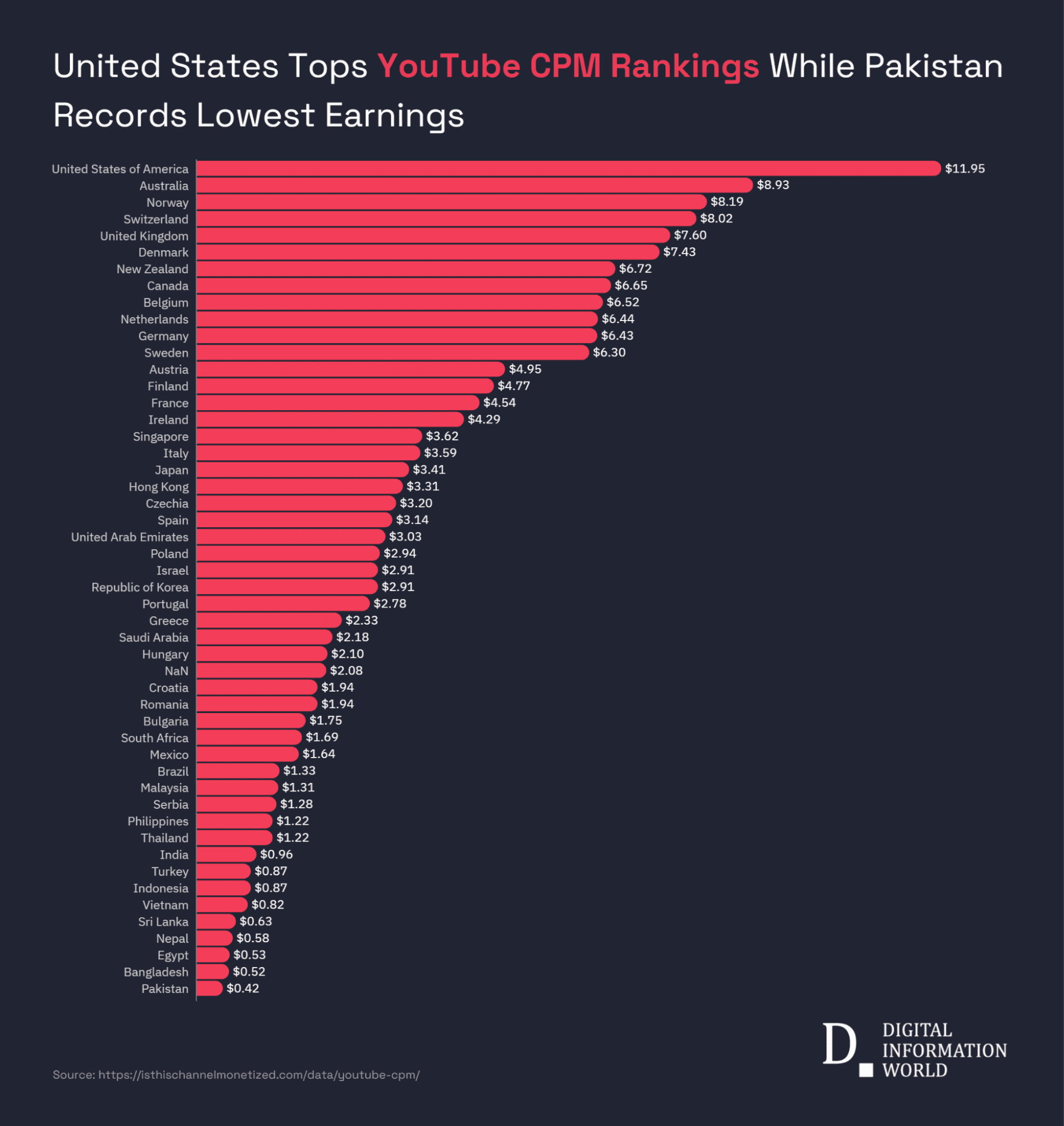
Economic factors and regional internet penetration heavily influence pricing. Campaigns targeting developed economies such as the United States, United Kingdom, or Australia command significantly higher CPVs and CPMs due to higher household disposable income and intense domestic brand competition. Conversely, running identical creative assets in emerging markets often yields lower costs per impression, though conversion rates and average order values may differ proportionally.
Ad Format Selection
The choice of format dictates both user experience and financial outlay. Non-skippable ads and masthead placements require substantial capital because they guarantee uninterrupted screen time or prime platform real estate. Bumper ads offer a cost-effective alternative by delivering brief, memorable messages under a CPM structure, while skippable ads balance cost control by tying expenses directly to engagement milestones.
Seasonality and Bidding Strategies
Digital advertising is cyclical. Q4 traditionally sees a surge in marketing budgets due to holiday shopping seasons, driving up CPMs and CPVs across nearly every vertical. Bidding strategies—such as Target CPV, Maximum CPV, or Target ROPS (Return on Ad Spend)—also dictate how aggressively Google’s algorithm spends your budget to secure auctions.
| Factor | Low-Cost Environment | High-Cost Environment |
|---|---|---|
| Geography | Emerging markets, regional areas | Major metropolitan hubs, high-GDP nations |
| Audience | Broad demographics, lookalike lists | Niche in-market buyers, custom intent keywords |
| Seasonality | Q1 post-holiday lulls, summer months | Q4 holiday retail push, major political cycles |
| Ad Format | Skippable in-stream, in-feed discovery | Non-skippable in-stream, homepage mastheads |
Strategic Implications for Marketing Budgets
Evaluating what video advertising costs mean for marketers requires shifting focus from raw expenditure to efficiency metrics like Customer Acquisition Cost (CAC) and Lifetime Value (LTV). A higher initial CPV is justifiable if the audience segment demonstrates superior conversion quality and long-term retention.
Marketers must establish realistic daily and lifetime budgets that allow Google's machine learning algorithms adequate data to optimize delivery. Severely restricted budgets can bottleneck ad delivery, preventing the algorithm from testing various audience segments effectively. Furthermore, creative quality acts as a financial multiplier. Engaging video content that reduces drop-off rates and encourages interaction naturally lowers effective CPVs, as more users choose to watch rather than skip.
Common Pitfalls in Cost Management
Even experienced media buyers can mismanage YouTube advertising expenditures if they overlook foundational operational rules.
- Ignoring Frequency Capping: Failing to limit how often a unique user sees your ad leads to ad fatigue, wasted impressions, and inflated costs without incremental conversions.
- Over-Reliance on Broad Targeting: Targeting overly broad categories dilutes message relevance, resulting in low view rates and wasted budget on disinterested viewers.
- Neglecting Negative Placements: Allowing ads to appear on irrelevant or low-quality partner channels can drain budgets on accidental clicks and poor-quality impressions.
- Failing to Optimize Creative Length: Using mismatched formats for the message length—such as stretching a weak hook over a non-skippable placement—destroys campaign ROI.
Frequently Asked Questions
What is the average cost of YouTube video ads for small businesses?
While minimum daily budgets can be set as low as $10 to $50, average CPVs typically range from $0.10 to $0.30 depending on the industry, target audience, and geographic location. Total monthly spend scales according to business goals and conversion targets.
Why are my YouTube ad costs suddenly increasing?
Sudden cost spikes are usually caused by increased seasonal competition, audience saturation, bidding strategy adjustments, or a decline in creative engagement that forces the algorithm to work harder to secure views.
How does the 30-second view rule affect my ad spend?
The 30-second rule ensures you only pay for skippable ads when a user watches a meaningful portion of your video or interacts with it. If a viewer skips at 5 seconds, your brand receives free top-of-funnel exposure without any financial charge.
Can I set a strict limit on how much I spend per day?
Yes, Google Ads allows you to set a daily budget for every campaign. While daily spend can fluctuate slightly above your target to capitalize on high-traffic days, Google ensures your monthly spend never exceeds your daily budget multiplied by the average number of days in a month.
Are non-skippable ads more cost-effective than skippable ads?
Not necessarily. Non-skippable ads guarantee full message delivery under a CPM model, but they carry a higher financial risk if the creative fails to resonate, as you pay for every impression regardless of user sentiment. Skippable ads provide better cost control by tying expenses directly to verified engagement.
Next Actions for Media Buyers
To optimize your YouTube advertising performance, begin by auditing your current campaign settings, audience overlap, and placement reports. Eliminate low-performing placements and establish strict frequency caps to protect your budget from waste. Next, refine your creative hooks to drive higher engagement rates, lowering your effective CPV and maximizing your overall marketing return on investment.
Image Gallery