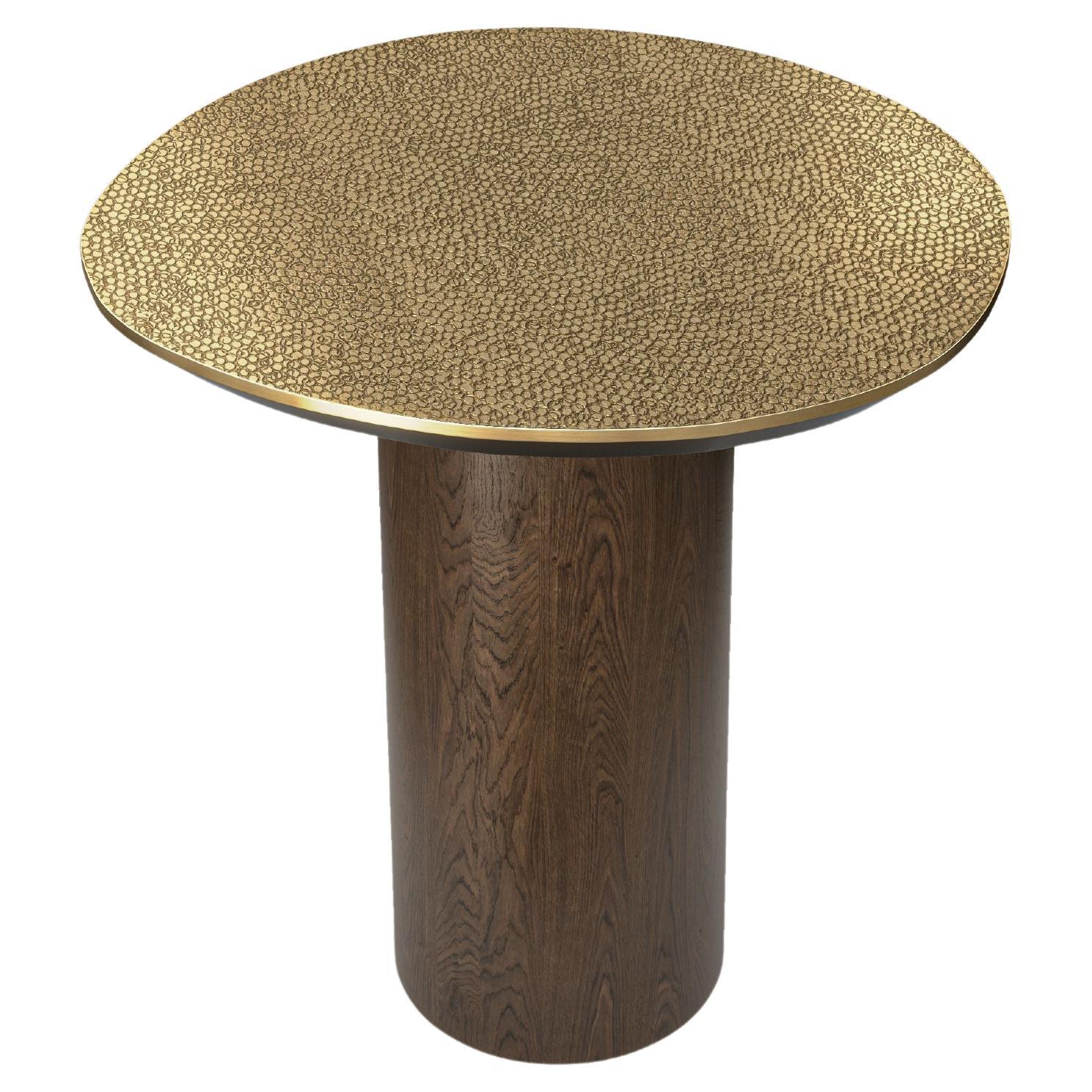
Round Side Table Brass for Modern Living: Design, Materials, and Styling Guide
A round side table in brass introduces material warmth, sculptural elegance, and visual balance to modern living spaces. Its circular geometry softens rigid architectural lines, while metallic finishes—ranging from brushed satin to dee...
A round side table in brass introduces material warmth, sculptural elegance, and visual balance to modern living spaces. Its circular geometry softens rigid architectural lines, while metallic finishes—ranging from brushed satin to deep antique patina—reflect natural light and elevate contemporary upholstery. Selecting the ideal piece involves evaluating solid versus plated brass construction, proportional scaling, and protective clear-coat finishes.
Contents
Why Round Brass Side Tables Define Modern Interiors
Modern interior design relies heavily on clean lines, neutral color palettes, and open floor plans. However, spaces dominated exclusively by right angles—such as boxy sofas, rectangular coffee tables, and linear media consoles—can quickly feel clinical or monotonous. Integrating a round brass side table disrupts this linearity, creating a harmonious balance between structured architecture and organic form.
The Softening Effect of Curved Geometry
In spatial composition, circles act as visual pauses. A round tabletop lacks sharp corners, allowing human eyes to move smoothly across a room. This fluid geometry makes round accent tables particularly effective in tight seating arrangements or high-traffic pathways. By eliminating protruding corners, circular tables reduce physical bump hazards and create seamless transitions between seating elements like sectionals, accent chairs, and reading nooks.
Reflective Qualities and Light Diffusion
Unlike matte wood or painted surfaces, brass interacts dynamically with both natural sunshine and ambient indoor lighting. Depending on the surface finish, a brass table can softly diffuse warm light across a seating area or crisp reflections that make small living rooms feel airier. Polished brass yields bright, mirror-like highlights, whereas brushed or satin brass offers a lower-glare, understated sheen that complements modern minimal aesthetics.
Brass as a Warm Neutral Metal
While cool-toned metals like chrome and polished nickel dominated late 20th-century minimalism, contemporary interior architecture leans toward tactile warmth. Brass functions as a metallic neutral, bridging the gap between cold industrial elements and organic materials like wool, bouclé, white oak, and natural stone. Its golden undertones inject rich character without overpowering surrounding furnishings.
Material Guide: Solid Brass vs. Brass Finishes
Not all brass furniture is constructed equally. Understanding the structural differences between solid brass, brass plating, and metal alloys helps ensure you select a side table that matches your budget, durability expectations, and maintenance preferences.
Solid Brass Construction
Solid brass is an alloy primarily composed of copper and zinc. Furniture crafted from solid brass offers exceptional weight, structural integrity, and longevity.
- Pros: Highly durable, resistant to rust, and capable of being refinished or polished repeatedly over decades.
- Cons: Higher price point and significant weight, making frequent rearrangement less convenient.
- Best For: Heirloom-quality investment pieces and heavy-use living environments.
Electroplated and Brass-Veneer Options
Many modern side tables feature a core made of steel, aluminum, or medium-density fiberboard (MDF) coated with a thin layer of genuine brass through electroplating or metal vapor deposition.
- Pros: Significantly more affordable, lighter weight, and highly accessible across various modern design styles.
- Cons: Deep scratches can penetrate the thin outer brass layer, exposing the underlying base metal, which cannot be polished out in the same manner as solid brass.
- Best For: Budget-conscious interior projects, seasonal decor updates, or low-impact accent areas.
Finish Variations and Surface Treatments
The final appearance and maintenance routine of a round brass side table depend on its surface finish and protective treatment:
- Polished Brass: High-shine, reflective surface with a golden brilliance. It demands frequent wiping to prevent fingerprint smudges unless treated with a durable clear lacquer.
- Brushed / Satin Brass: Characterized by subtle, parallel directional lines created through mechanical abrasion. It dampens glare, masks minor smudges, and aligns seamlessly with warm modern design.
- Antique / Burnished Brass: Artificially aged using chemical oxidation processes to yield deep brown, bronze, or muted golden tones. It delivers rich visual texture suited for industrial or mid-century modern spaces.
- Lacquered vs. Unlacquered (Living Finish): Lacquered brass is sealed with a clear protective coat that prevents oxygen exposure, maintaining its initial appearance indefinitely without tarnishing. Unlacquered brass lacks a protective barrier, allowing it to oxidize naturally over time and develop a unique, localized patina based on environment and handling.
Key Dimensions and Proportion Guidelines
Achieving visual harmony requires matching your round side table's physical dimensions to adjacent furniture pieces. Proper sizing ensures both aesthetic cohesion and everyday functionality.
- Proportional Placement
- Sofa Armrest to Table: 0 to 2 inches height difference
- Clearance Zone: Maintain 18–24 inches to surrounding walkways
Height Alignment with Seating
The standard height for a living room side table ranges between 20 and 26 inches. Ideally, the top surface of the table should sit within 2 inches above or below the height of the adjacent sofa or armchair's armrest.
- Equal Height: Provides the most comfortable reach for placing down beverages, books, or remote controls.
- Low-Profile Seating: If your modern sofa features a low-slung, Italian-style silhouette (arm height around 16–18 inches), opt for a shorter pedestal or drum side table to preserve structural proportions.
Table Diameter and Footprint
Round side tables typically feature top diameters ranging from 14 to 24 inches:
- Compact (14–16 inches): Ideal as a drink table tucked beside a slender reading chair or between two narrow accent seats.
- Standard (18–20 inches): The most versatile footprint, accommodating a table lamp, decorative tray, and small personal accessories.
- Generous (22–24 inches): Works best at the end of deep-seated sectionals or as a standalone focal piece in spacious living rooms.
Clearance and Traffic Flow
Ensure a clear walking clearance of at least 18 to 24 inches between the side table and adjacent coffee tables or walls. Because round tables lack sharp corners, they allow for tighter clearance tolerances than square tables without compromising physical movement.
Comparative Overview of Brass Side Table Styles
Selecting the structural design of your table shapes both the room's visual weight and storage capabilities. The table below outlines common modern round brass side table configurations.
| Table Design Style | Visual Weight | Maintenance Level | Common Companion Materials | Ideal Placement & Use Case |
|---|---|---|---|---|
| Solid Brass Drum | Heavy / Grounded | Low to Medium | Brushed brass sheet, patinated metal | Open-concept living rooms; pairs well with leggy, elevated sofas. |
| Brass Pedestal | Light to Medium | Low | Cast brass base, white marble or brass top | Small nooks and reading corners; maximizes floor visibility. |
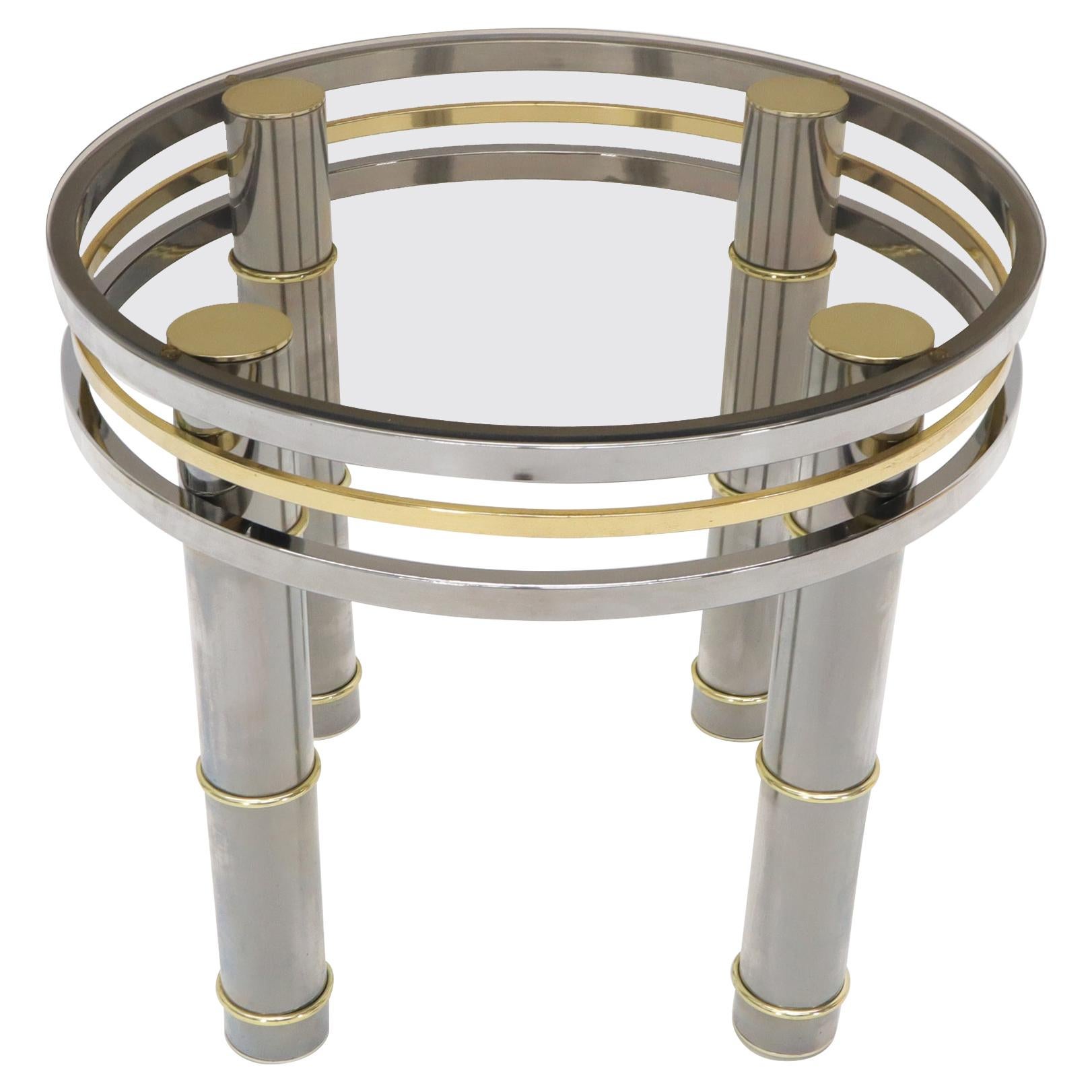
| Tiered Glass & Brass | Air-like / Minimal | Medium (Glass cleaning) | Tempered glass, slender brass framing | Compact living rooms; provides dual storage surfaces without crowding. |
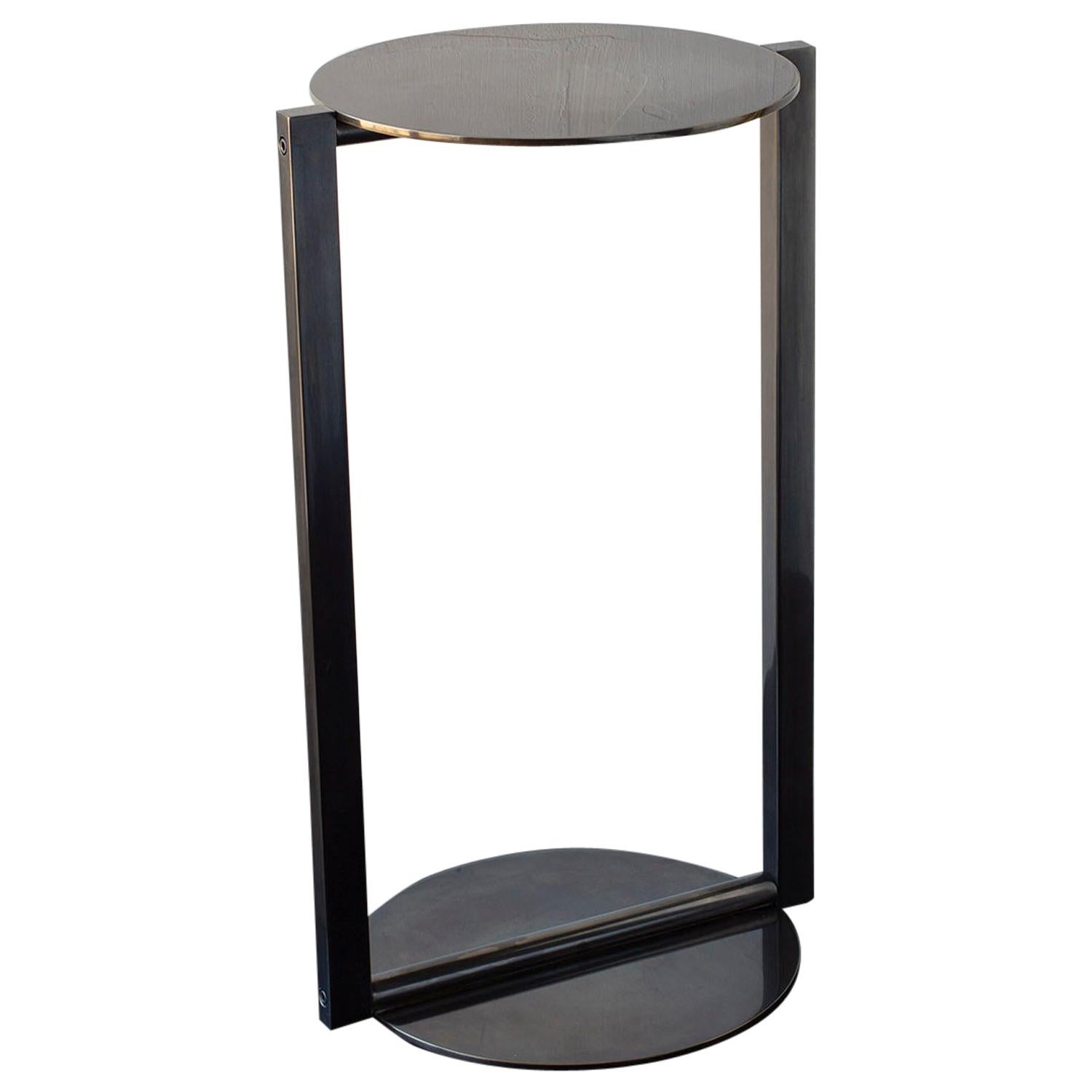
| Sculptural Wireframe | Moderate / Graphic | Low | Formed brass rods, geometric iron | Eclectic or mid-century seating zones needing spatial transparency. |
| Hybrid Marble Top | Medium to Heavy | High (Stone protection) | Carrara/Nero Marquina marble, brass legs | High-end modern lounges; adds organic texture and weight contrast. |
Functional Placement and Styling Strategies
A round brass side table serves as both a practical surface and an artistic accent. Thoughtful placement and curated styling enhance its contribution to your home.
Living Room Seating Arrangements
Position the round brass table immediately alongside sofa arms or between paired accent chairs. When pairing brass with upholstered furniture:
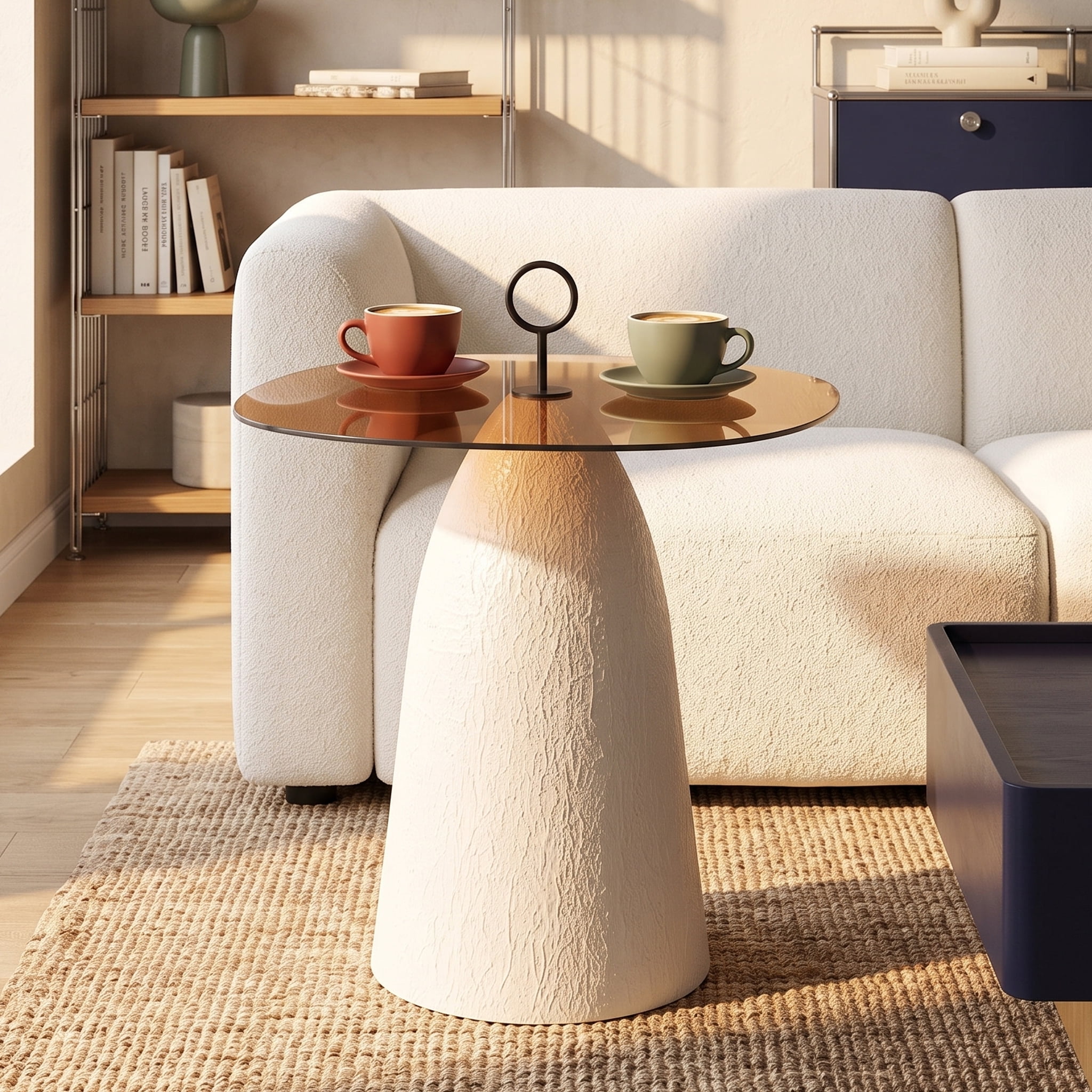
- Textural Contrast: Contrast polished or brushed brass against matte, highly textured fabrics like bouclé, linen, velvet, or slubby canvas.
- Visual Balance: If your sofa features heavy timber block legs, choose a brass side table with a slender pedestal or open frame to avoid visual bulk at floor level. Conversely, if your sofa rests on slim metal legs, a solid brass drum table grounds the area effectively.
Bedroom Nightstand Alternative
In modern bedrooms prioritizing minimalist architecture, a 20-inch round brass side table can replace bulky wooden nightstands.
- Styling Tip: Mount wall sconces directly above the table to keep the small brass surface free for personal items, a glass of water, and a small ceramic dish.
Styling the Tabletop
Avoid overcrowding circular surfaces. Apply the interior design "rule of three" to create balanced compositions:
- Vertical Element: A slim table lamp, tall brass candleholder, or single-stem vase to draw the eye upward.
- Horizontal Element: A small stack of hardcover art or architecture books lying flat to anchor the surface.
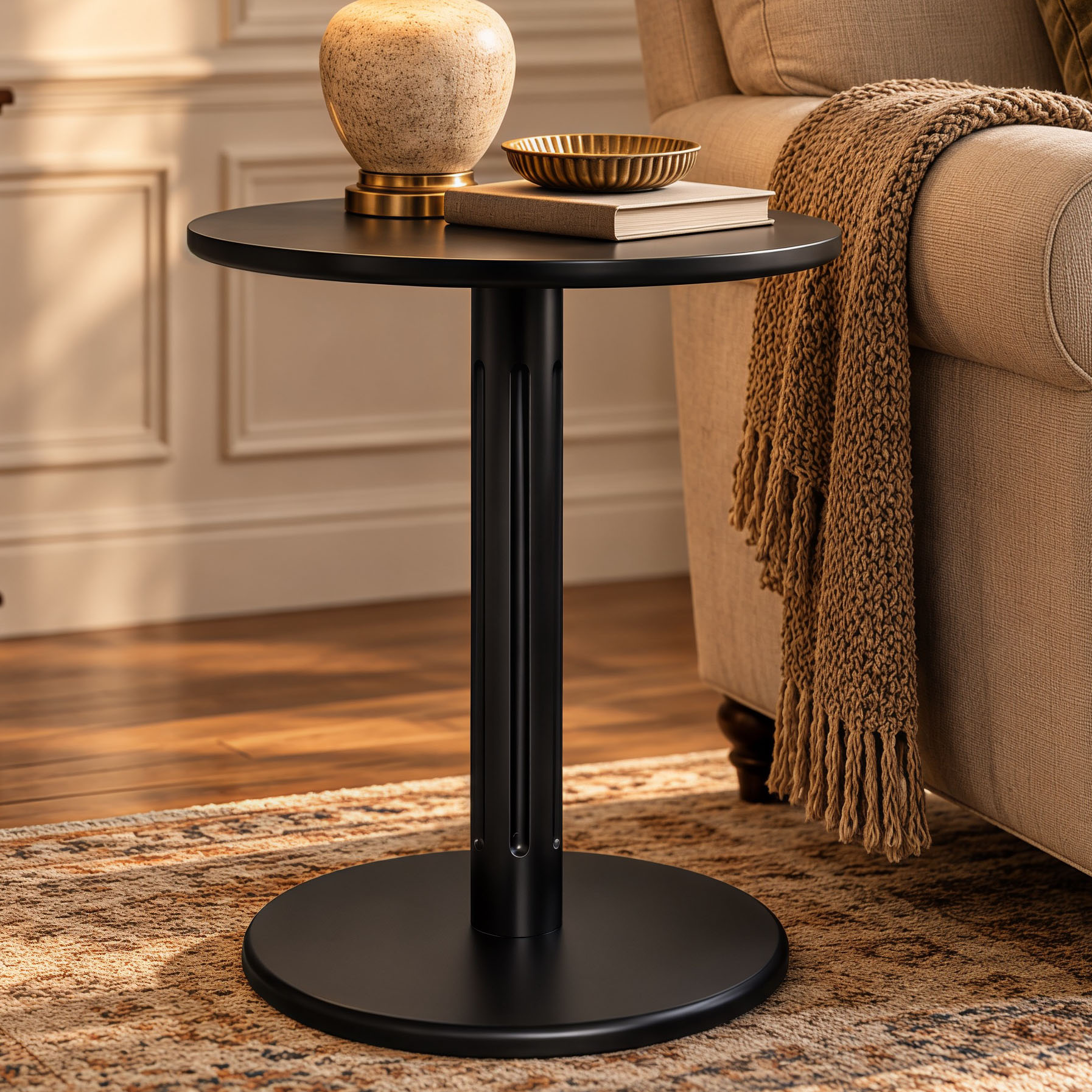
- Sculptural Element: A small ceramic bowl, stone sphere, or brass tray placed atop the books to add textural variety.
Maintenance, Cleaning, and Long-Term Care
Preserving the finish of a brass side table requires routines tailored to whether the metal is lacquered or unlacquered.
Caring for Lacquered Brass
Lacquered brass features a clear protective seal that isolates the metal from moisture and air.
- Daily Cleaning: Dust regularly with a dry, lint-free microfiber cloth.
- Deep Cleaning: Wipe with a soft cloth slightly dampened with warm water and mild dish soap. Dry immediately with a clean towel.
- Cautions: Never use abrasive pads, chemical solvents, ammonia-based cleaners, or brass polishes on lacquered surfaces, as these strip away the clear protective coat and cause patchy discoloration.
Caring for Unlacquered (Living Finish) Brass
Unlacquered brass oxidizes naturally over time, reacting to oxygen, humidity, and skin oils.
- Preserving Natural Patina: If you prefer an aged look, simply dust the table regularly and wipe up spills immediately. Allow the natural darkening to evolve unevenly for authentic character.
- Restoration to High Shine: To remove oxidation and restore a bright golden luster, apply a specialized brass polish using a soft cotton pad. Work in gentle circular motions, then buff away residue completely.
- Protective Waxing: Applying a thin layer of microcrystalline wax (such as Renaissance Wax) to unlacquered brass slows down the oxidation process while protecting against fingerprint oils and light water spots.
Key Considerations Before Purchasing
Before finalizing your selection, review this practical checklist to ensure long-term satisfaction:
- Measurement Check: Is the table height within 2 inches of your sofa or chair arm?
- Scale Verification: Does the table diameter leave at least 18 inches of clearance for walking paths?
- Finish Alignment: Does the chosen finish (brushed, polished, antique) complement existing hardware, light fixtures, or room accents?
- Surface Protection: If selecting a living-finish brass or marble-topped table, are you prepared for regular maintenance or natural patina progression?
- Stability Assessment: For households with pets or young children, is the table base sufficiently weighted to prevent tipping?
Frequently Asked Questions
How high should a round brass side table be relative to a sofa arm?
A round side table should ideally sit at the same height as the adjacent sofa armrest, or within 2 inches above or below it. This ensures easy reach when placing down drinks or items while keeping the room's visual lines balanced.
What is the difference between lacquered and unlacquered brass side tables?
Lacquered brass features a clear protective finish that prevents oxygen exposure, maintaining a consistent appearance without tarnishing. Unlacquered brass is a "living finish" that oxidizes over time, developing a natural, aged patina based on handling and atmospheric conditions.
Can you mix a brass side table with other metal finishes in the same room?
Yes, mixing metals adds depth and intent to modern interiors. To execute this successfully, establish brass as either the dominant accent metal or the secondary accent, pairing it with contrasting finishes like matte black iron or warm oil-rubbed bronze rather than competing close matches like chrome.
How do you clean and preserve a modern brass side table without damaging the finish?
For lacquered brass, wipe with a dry microfiber cloth or a warm, damp cloth with mild soap; avoid abrasive chemicals. For unlacquered brass, use dedicated brass polish to maintain shine, or apply microcrystalline wax to slow down natural oxidation.
Are round brass side tables suitable for small living rooms?
Round brass side tables are exceptionally well-suited for compact spaces. Their lack of sharp corners improves traffic flow, while their reflective surface qualities bounce light around the room, creating an illusion of greater open space.
Final Recommendations for Modern Living
Integrating a round brass side table into a modern living environment balances functional utility with elevated material design. For high-use living rooms, select a brushed or lacquered finish to minimize maintenance and prevent water rings. If your goal is to create a dynamic, evolving space with rich character, choose solid, unlacquered brass that ages gracefully over time. Always verify armrest proportions and walking clearances prior to purchase to achieve a seamless, professional layout.
Image Gallery