The Comprehensive Guide to Open Source Self-Hosted CRM in 2026
Open source self-hosted CRM software provides organizations with full ownership of their customer data and the flexibility to customize workflows without the recurring per-user fees of proprietary SaaS models. By hosting the applicatio...
Open source self-hosted CRM software provides organizations with full ownership of their customer data and the flexibility to customize workflows without the recurring per-user fees of proprietary SaaS models. By hosting the application on private servers or virtual private clouds, businesses achieve superior data sovereignty, enhanced security, and deep integration capabilities tailored to specific operational needs.
Contents
The landscape of Customer Relationship Management (CRM) has shifted significantly by 2026. While the convenience of Software-as-a-Service (SaaS) remains popular for startups, established enterprises and privacy-conscious small businesses are increasingly returning to self-hosted, open-source solutions. This movement is driven by "subscription fatigue," more stringent global data protection regulations, and the need for specialized AI integrations that proprietary vendors often gate behind expensive premium tiers.
Choosing to deploy an open-source CRM is no longer just a cost-saving measure; it is a strategic decision to control the most valuable asset a company owns: its customer intelligence.
Why Businesses Choose Self-Hosted Open Source CRM
In 2026, the primary motivations for selecting a self-hosted open-source CRM revolve around three pillars: data autonomy, unlimited customization, and long-term cost predictability.
Data Sovereignty and Compliance
With the evolution of data privacy laws globally, keeping customer information within a specific jurisdiction or behind a corporate firewall is often a legal necessity rather than a preference. Self-hosting allows IT departments to implement their own encryption standards, access logs, and backup protocols. Unlike SaaS providers, where data resides in a shared multi-tenant environment, a self-hosted CRM ensures that your database is physically and logically isolated from other companies.
Customization and API Freedom
Proprietary CRMs often limit API calls or charge for "advanced" integration features. Open-source platforms provide access to the underlying source code, allowing developers to build bespoke modules, unique automation triggers, and deep-level integrations with legacy ERP or inventory systems. In 2026, this is particularly relevant for businesses deploying local Large Language Models (LLMs) that need to interact with CRM data without sending that data to third-party AI processors.
Financial Predictability
While SaaS vendors frequently update their pricing models—often resulting in significant cost increases for growing teams—open-source software remains free to use under various licenses (such as GPL or Apache). The costs associated with open source are shifted from "renting" software to "owning" the infrastructure and support. For a company with 100+ users, the annual savings on licensing alone can fund an entire internal DevOps position.
Leading Open Source CRM Platforms in 2026
Several projects have emerged as the gold standard for self-hosted CRM. Each caters to different business sizes and technical requirements.
SuiteCRM
SuiteCRM remains one of the most popular alternatives to Salesforce. As an evolution of the original SugarCRM open-source core, it offers a massive feature set including lead management, quotes, contracts, and a robust workflow engine. In 2026, its "Suite8" architecture provides a modern, responsive UI that bridges the gap between classic enterprise functionality and contemporary user expectations.
Odoo (Community Edition)
Odoo is more than just a CRM; it is a modular suite of business apps. The Community Edition is a powerful, LGPL-licensed platform that handles lead tracking and sales cycles with ease. Its greatest strength is its extensibility—if a business needs to add accounting, manufacturing, or e-commerce later, they can do so within the same ecosystem. However, users should note that certain "Enterprise" features are withheld from the open-source version.
EspoCRM
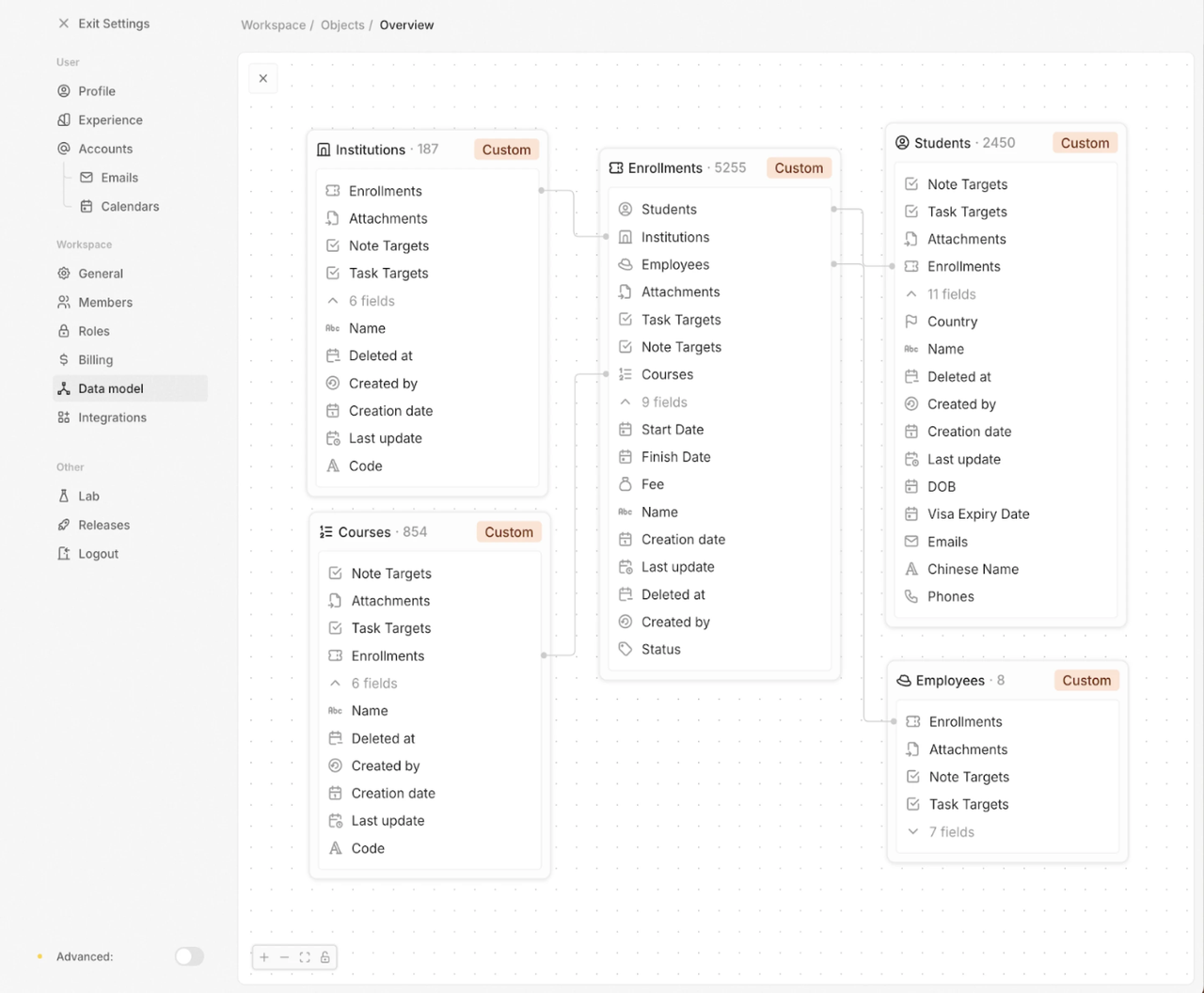
EspoCRM has gained significant traction by 2026 due to its lightweight nature and incredibly fast performance. It is designed for businesses that want a clean, modern interface without the bloat of older enterprise systems. Its "Relationship" engine is highly flexible, making it ideal for non-traditional CRM uses, such as tracking students in education or patients in healthcare.
Vtiger CRM
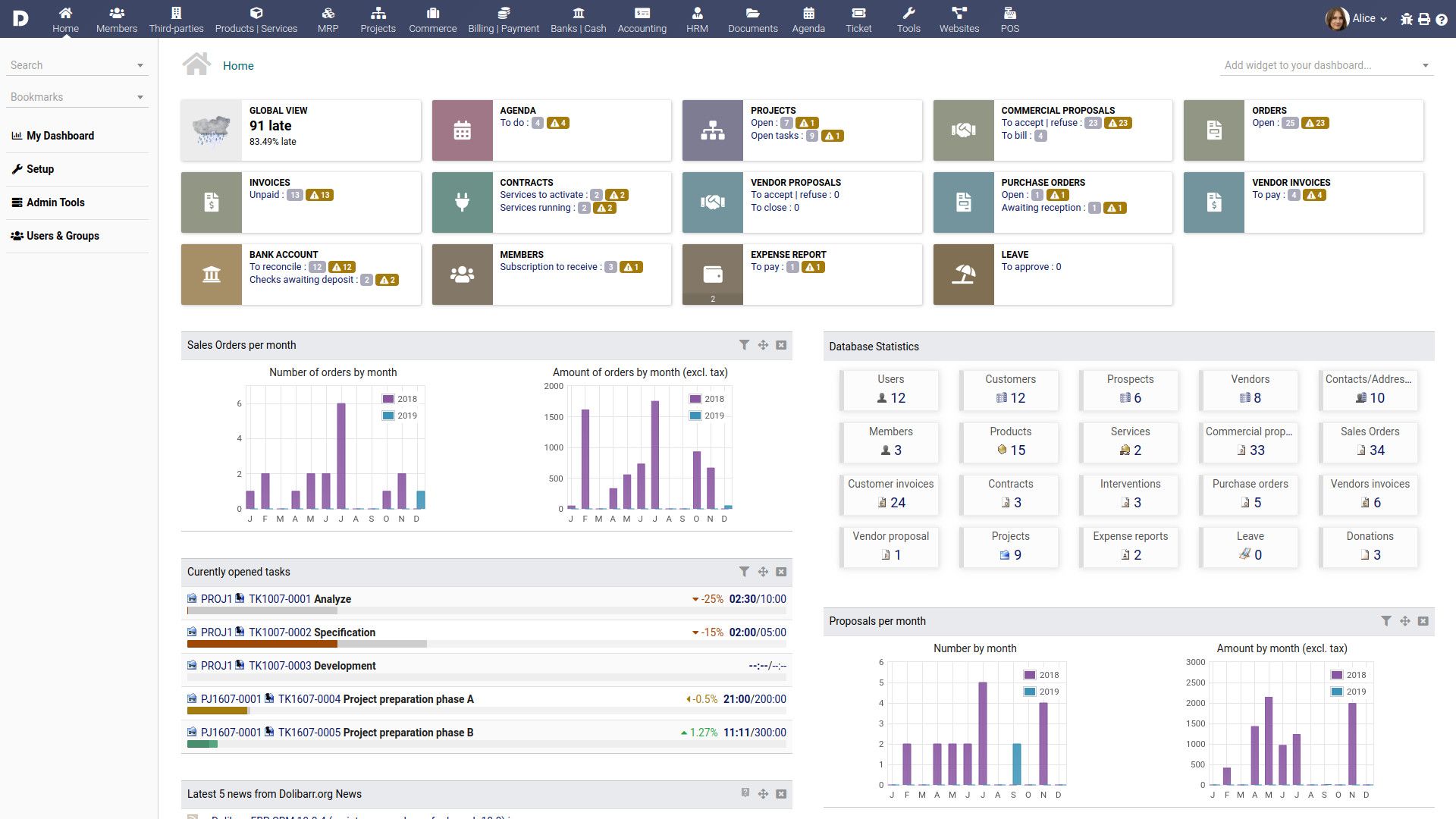
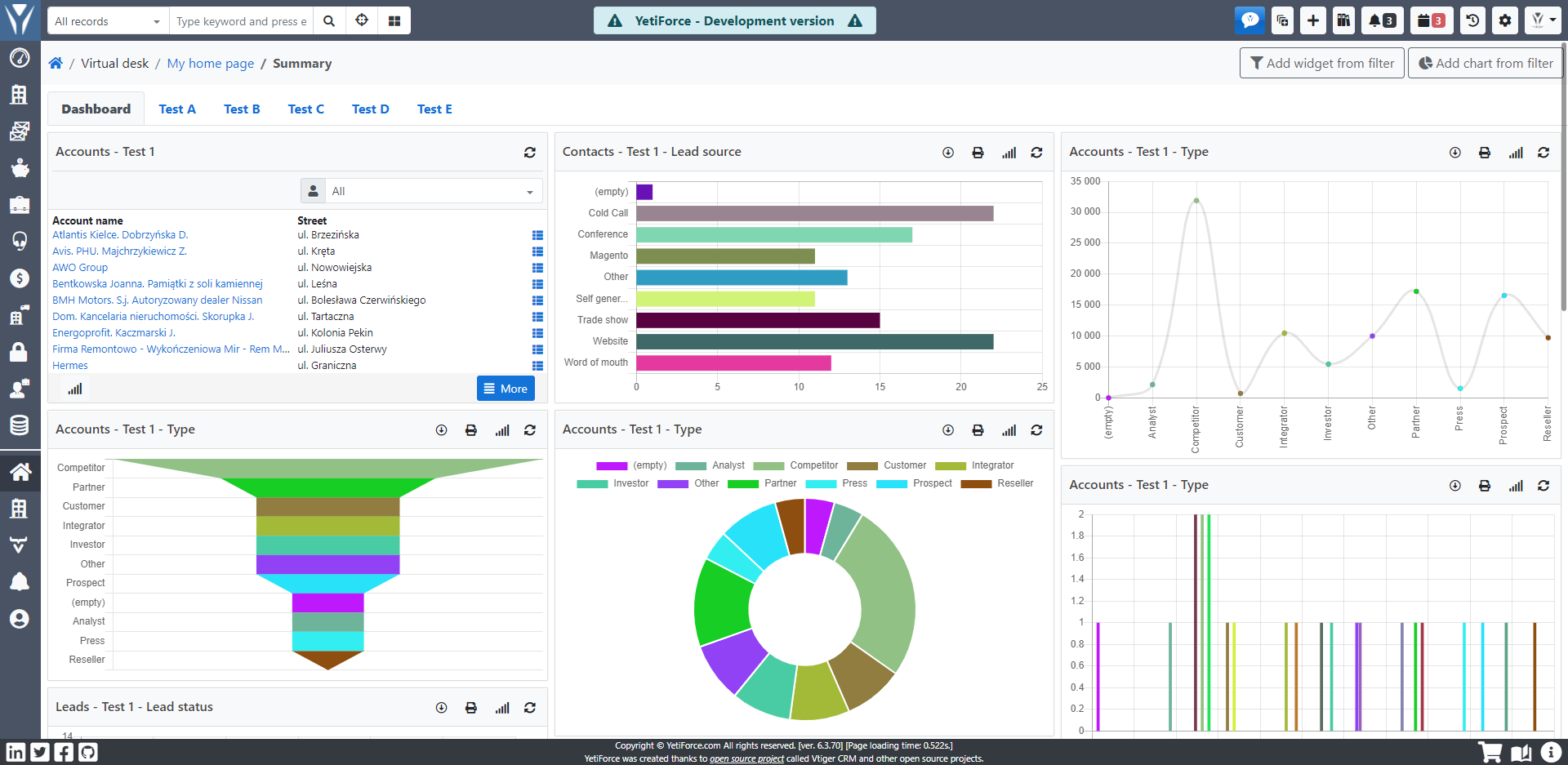
Vtiger has long been a staple in the open-source community. It provides a comprehensive set of tools covering sales, support, and marketing. The open-source version is particularly noted for its integrated inventory management and calendaring features, which are often separate add-ons in other systems.
Technical Requirements and Deployment Models
Successfully running a self-hosted CRM requires a stable infrastructure. In 2026, the standard deployment methods have moved away from manual "LAMP" stack installations toward containerization.
Infrastructure Options
- On-Premise Servers: The highest level of control, where the software runs on hardware located within the company's physical office or data center.
- Virtual Private Servers (VPS): Services like Linode, DigitalOcean, or AWS EC2 allow businesses to maintain control of the software environment while outsourcing hardware maintenance.
- Private Cloud: Utilizing Kubernetes or Docker Swarm to manage CRM instances across a distributed private network for high availability.
Hardware Prerequisites
While requirements vary by user count, a standard 2026 baseline for a medium-sized deployment (20-50 users) typically includes:
- CPU: 4 to 8 Cores (Modern high-frequency processors).
- RAM: 16GB to 32GB (CRM applications are increasingly memory-intensive due to real-time analytics).
- Storage: NVMe SSDs are highly recommended for database performance, with at least 100GB of space depending on document storage needs.
- Network: 1Gbps uplink with a dedicated static IP and SSL/TLS certificates (Let's Encrypt is the standard).
| Feature | SuiteCRM | Odoo (Community) | EspoCRM | Vtiger (Open Source) |
|---|---|---|---|---|
| Primary Focus | Enterprise Sales | Modular Business ERP | Lightweight/Speed | Sales & Support |
| License | AGPLv3 | LGPLv3 | GPLv3 | VPL (Based on MPL) |
| UI Modernity | High (Suite8) | Very High | High | Moderate |
| Complexity | High | High (Modular) | Medium | Medium |
| Mobile App | Yes (Community) | Limited | Web-Responsive | Yes |
Implementation Strategy and Best Practices
Deploying an open-source CRM is a project that requires careful planning beyond the initial installation. Following a structured roadmap ensures long-term stability and user adoption.
1. Requirements Discovery
Before selecting a platform, document the specific "must-have" workflows. Do you need automated lead scoring? Do you require integration with a specific VoIP provider? Open source allows you to build these, but choosing the platform that is closest to your needs out-of-the-box reduces development time.
2. Environment Configuration
In 2026, the recommended approach is using Docker Compose. This allows you to define the web server (Nginx/Apache), the database (MariaDB/PostgreSQL), and the application logic in a single configuration file. This makes upgrades and migrations significantly easier and more reliable.
3. Security Hardening
Since a self-hosted CRM is a high-value target for data breaches, security is paramount.
- Reverse Proxy: Use a reverse proxy to handle SSL termination and hide the application server.
- Two-Factor Authentication (2FA): Enable 2FA for all users. Most open-source CRMs support TOTP or WebAuthn.
- Database Encryption: Implement encryption at rest for the database files.
- Regular Audits: Schedule quarterly security audits and dependency updates to patch vulnerabilities in the underlying framework (PHP, Python, etc.).
4. Data Migration and Cleaning
Moving from a spreadsheet or a legacy SaaS CRM requires careful data mapping. Use this transition to "clean" your data—removing duplicates and verifying email addresses. Most open-source CRMs provide robust CSV or JSON import tools, but complex migrations may require custom SQL scripts.
The Challenges of Self-Hosting
While the benefits are substantial, it is important to acknowledge the responsibilities that come with self-hosting.
Maintenance Overhead: Unlike a SaaS product where the vendor handles updates, you are responsible for applying security patches. In 2026, automated CI/CD pipelines can mitigate this, but they require initial setup expertise.
Technical Debt: Excessive customization can lead to difficulties when upgrading to newer versions of the software. It is always best to use the platform’s "hook" system or API rather than modifying the core source code directly.
Internal Support: You will need an internal point of contact or a third-party consultant to handle user troubleshooting and system downtime. For many organizations, this cost is still lower than SaaS licensing, but it must be factored into the Total Cost of Ownership (TCO).
Frequently Asked Questions
Is an open-source CRM really "free"?
The software license is free, meaning you do not pay per user or per month for the right to use the code. However, you will have costs associated with server hosting, backup storage, and the time (or salary) of the person maintaining the system. For small teams, it is significantly cheaper; for large teams, it is an investment in infrastructure rather than a recurring expense.
Can I migrate my data from Salesforce or HubSpot to an open-source CRM?
Yes. Most major open-source CRMs have migration tools or plugins designed specifically for importing data from major SaaS providers. The process usually involves exporting your data to CSV or using an API-based migration service.
How do I handle mobile access with a self-hosted CRM?
Most modern open-source CRMs like EspoCRM and SuiteCRM use responsive web design, meaning they work perfectly in a mobile browser. Additionally, projects like SuiteCRM and Vtiger have community-developed or official mobile apps that connect to your self-hosted instance via an API.
What happens if the project is abandoned by its developers?
This is the "forking" advantage of open source. If a primary developer stops maintaining a project, the community can (and often does) fork the code to continue its development. Because you have the source code, your instance will continue to run indefinitely, giving you ample time to transition if ever necessary.
Do open-source CRMs support AI and Automation?
By 2026, most leading open-source CRMs have integrated AI capabilities. Because you have access to the code, you can integrate with open AI models (like Llama or Mistral) locally, ensuring that your customer data never leaves your server while still benefiting from automated lead summaries, email drafting, and predictive analytics.
Final Recommendation
For organizations that prioritize data privacy, require deep system integration, or wish to eliminate scaling costs, an open-source self-hosted CRM is the most robust solution available in 2026. Start by evaluating SuiteCRM if you need a feature-rich enterprise platform, or EspoCRM if you prefer a modern, high-performance interface. Begin with a pilot program on a cloud-based VPS to test the workflows before committing to a full on-premise deployment.
Image Gallery