Do Life Insurance Companies Drug Test for Marijuana? What You Need to Know in 2026
Most life insurance companies require a medical exam that includes a drug test for THC, the psychoactive component in marijuana. While a positive result rarely leads to an outright denial, it heavily influences your risk classification...
Most life insurance companies require a medical exam that includes a drug test for THC, the psychoactive component in marijuana. While a positive result rarely leads to an outright denial, it heavily influences your risk classification. Depending on the insurer’s specific underwriting guidelines, users may be assigned smoker or non-smoker rates.
Contents
The landscape of life insurance underwriting has shifted significantly as of 2026. With the continued evolution of state and federal regulations regarding cannabis, insurance carriers have had to refine their approach to risk assessment. For many applicants, the primary concern is no longer whether they will be "caught," but rather how their consumption habits will affect their long-term financial commitments. Understanding the mechanics of the life insurance drug test and how insurers interpret the results is essential for securing the most affordable coverage.
The Standard Paramedical Exam and Drug Screening
When you apply for a traditional term or whole life insurance policy, the insurer typically requests a paramedical exam. This is a brief medical check-up conducted by a licensed professional, often in your home or office. As of 2026, the standard protocol for these exams almost universally includes the collection of blood and urine samples.
The urine sample is the primary tool used for drug screening. Insurers utilize a "full panel" test that looks for various substances, including cocaine, opiates, amphetamines, and THC metabolites (specifically THC-COOH). Because THC is fat-soluble, its metabolites can remain detectable in urine for several days to several weeks, depending on the frequency of use and the individual’s metabolism.
Blood tests are also standard but are more frequently used to check for cholesterol levels, glucose, liver enzymes, and indications of nicotine or cotinine (a byproduct of nicotine). While THC can be detected in blood, it leaves the bloodstream much faster than it leaves the urine, making the urine test the more reliable metric for insurers looking to identify regular cannabis use.
How Life Insurance Companies Categorize Marijuana Users
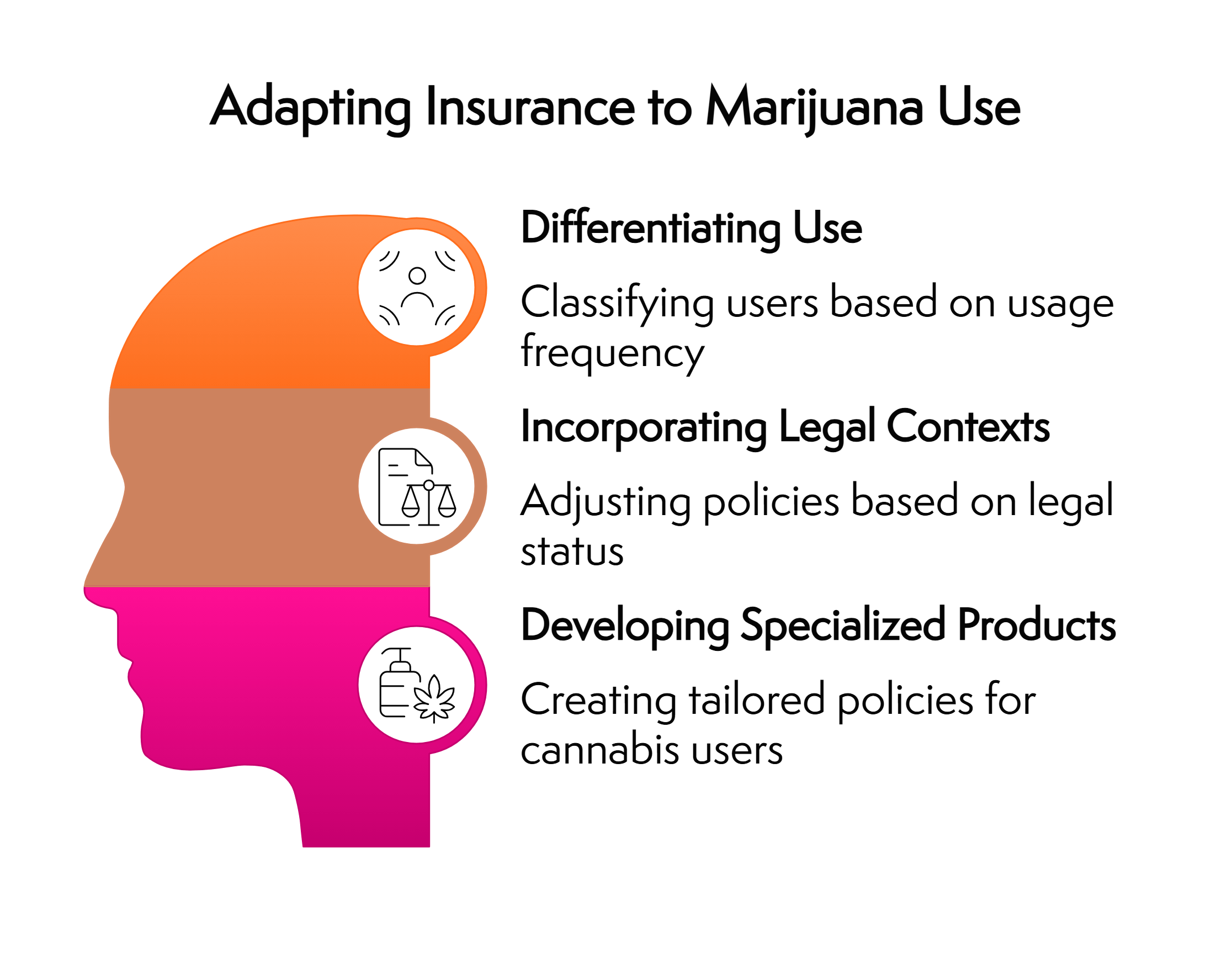
In 2026, life insurance companies generally categorize marijuana users into three distinct buckets. Your placement in these categories determines your "rating," which is the formula used to calculate your premium.
1. The Recreational Occasional User
If you use marijuana infrequently—perhaps once or twice a month—many modern "cannabis-friendly" carriers may still offer you "Preferred" or "Standard Non-Smoker" rates. These insurers have recognized through actuarial data that occasional use does not necessarily correlate with a significantly higher mortality risk. However, you must be honest about this frequency during the application process to avoid discrepancies with the lab results.
2. The Regular or Daily User
Daily or heavy recreational users are almost always classified as "Smoker" or "Tobacco" risks. This classification can double or even triple the cost of a life insurance policy. The rationale used by underwriters is twofold: the potential respiratory risks associated with frequent inhalation and the statistical correlation between heavy substance use and other lifestyle risks. Even if you consume cannabis via edibles or tinctures, many companies still default to the tobacco rate for daily users due to the difficulty of verifying the consumption method.
3. The Medicinal User
Medical marijuana users face a unique underwriting challenge. In these cases, the insurance company is often less concerned about the THC itself and more concerned about the underlying condition the marijuana is being used to treat. For example, if you use medical marijuana for chronic pain, the insurer will evaluate the cause of that pain. If it is used for a condition like PTSD or epilepsy, those diagnoses will carry more weight in the final decision than the cannabis use itself.
The Smoker vs. Non-Smoker Rate Distinction
The single most impactful result of a positive marijuana test is whether you are assigned a tobacco rating. Historically, any marijuana use triggered a tobacco rate because most users smoked the flower. In 2026, the distinction has become more nuanced, but it remains a primary point of contention in underwriting.
| Frequency of Use | Likely Rating Classification | Impact on Premiums |
|---|---|---|
| Infrequent (1-2 times/month) | Preferred Non-Smoker | Lowest cost; no "marijuana penalty" |
| Occasional (1-2 times/week) | Standard Non-Smoker | Moderate cost; regular health pricing |
| Frequent/Daily (Recreational) | Preferred Smoker / Tobacco | High cost; 2x to 3x higher than non-smoker |
| Medicinal (Prescribed) | Depends on underlying health | Varies; based on the medical condition |
If your drug test returns a positive result for THC and you did not disclose your use on the application, the insurer will almost certainly default you to a "Smoker" rating. In some cases, they may even decline the application due to "material misrepresentation"—a formal term for providing false information on a legal document.
Detection Windows and Test Sensitivity
A common question among applicants is how long marijuana stays in the system. While every individual’s biology is different, insurers use highly sensitive tests. For a "one-time" user, THC might be undetectable after 3 to 5 days. However, for regular users, the detection window in a urine screen can extend to 30 days or longer.
As of 2026, laboratory technology has improved to the point where "cleansing" products or heavy water consumption are easily detected. Lab technicians check the creatinine levels and specific gravity of the urine sample. If the sample is too diluted, the insurance company will flag it as a "dilute" result and likely require a re-test, which can delay your application and raise red flags with the underwriter.
The Impact of Legalization on Insurance Underwriting
It is a common misconception that because marijuana is legal in many jurisdictions, life insurance companies cannot penalize you for using it. Life insurance is a private contract based on actuarial risk, not just legal compliance.
Insurers are concerned with mortality risk—the likelihood that you will pass away during the term of the policy. Even if a substance is legal (like alcohol or tobacco), insurers still charge more for heavy use because data shows a statistical link between that use and shorter life expectancies. Therefore, even in a state where recreational use is fully legal, you are still subject to the insurer's internal risk guidelines.
Strategies for Marijuana Users Applying for Life Insurance
If you use marijuana and need life insurance in 2026, you have several paths forward to ensure you get the best possible rate.
Be Completely Transparent
The most important rule in life insurance is honesty. If you disclose your use and it matches the lab results, you maintain your credibility. Underwriters are much more lenient with a "Standard" rating for an honest user than they are with an applicant who attempts to hide their habits. If you lie and the lab finds THC, you may be blacklisted from that carrier for several years.
Choose a "Cannabis-Friendly" Carrier
Not all insurance companies treat marijuana the same way. Some companies have stayed in the 1990s mentally, while others have updated their 2026 guidelines to be very progressive. Working with an independent agent who knows which carriers offer non-smoker rates to occasional users can save you thousands of dollars over the life of the policy.
Consider No-Exam Life Insurance
In 2026, "accelerated underwriting" or "no-exam" policies have become much more common. These policies use big data, prescription history, and motor vehicle records to approve you without a blood or urine test. However, be aware that you are still asked questions about drug use on the digital application. While there is no drug test to "fail," lying on the application is still considered insurance fraud and could lead to a denial of a death benefit claim later.
Potential Risks: The Contestability Period
Every life insurance policy has a contestability period, which typically lasts for the first two years of the policy. If you pass away within this window, the insurance company has the right to investigate the original application for any inaccuracies.
If you claimed to be a non-user of marijuana to get a lower rate, but you die in a way that reveals you were a regular user (such as a car accident where a toxicology report is filed), the insurance company may legally refuse to pay the death benefit to your beneficiaries. They would instead refund the premiums paid, leaving your family without the intended financial protection. This makes the drug test and the disclosure process critical for the security of your estate planning.
Frequently Asked Questions
Does life insurance test for CBD?
Standard insurance drug panels in 2026 generally do not screen for CBD (cannabidiol). However, many CBD products contain trace amounts of THC. If those traces are high enough to trigger a positive result on a THC screen, the insurer will treat it as marijuana use, regardless of the source.
What happens if I test positive but didn't list it on my application?
This is considered "non-disclosure." Most companies will either offer you a much higher "Smoker" rate or decline your application entirely. It is much harder to negotiate a lower rate after you have been caught in a non-disclosure situation.
Can I re-apply later if I stop using marijuana?
Yes. Most insurers will allow you to apply for a "rate reduction" if you have been clean for at least 12 to 24 months. You will likely have to undergo a new drug test at that time to prove the substance is no longer in your system.
Do "guaranteed issue" policies require a drug test?
No. Guaranteed issue policies do not require medical exams or drug tests. However, these policies usually have much lower coverage limits and much higher premiums than traditional term or whole life insurance. They are typically reserved for individuals with serious health issues.
Will the insurance company report my positive test to the police?
No. Life insurance companies are not law enforcement agencies. Your medical results are protected by privacy laws (such as HIPAA in the United States). They will share the results with the Medical Information Bureau (MIB), which is a database used by other insurance companies, but they do not share it with the government or the police.
Practical Recommendation
If you are a marijuana user seeking life insurance in 2026, your first step should be to consult with an independent insurance broker rather than applying directly to a single company. An independent broker has access to the internal underwriting manuals of dozens of different carriers. They can "shop" your profile anonymously to find the carrier that will provide a "Non-Smoker" rating based on your specific consumption frequency and method. Always prioritize honesty on the application to ensure that your policy remains valid and your beneficiaries are protected.
Image Gallery