Insurance Adjuster Mold Remediation: Navigating Coverage Shifts and Ongoing Claims Disputes
Property insurance policy language governing mold remediation has evolved from broad coverage for consequential water damage into a highly restricted framework defined by strict sub-limits, absolute exclusions, and complex causation ru...
Property insurance policy language governing mold remediation has evolved from broad coverage for consequential water damage into a highly restricted framework defined by strict sub-limits, absolute exclusions, and complex causation rules. Insurance adjusters, public adjusters, property managers, and legal professionals must navigate frequent disputes surrounding water loss causation, scope of work under standardized remediation protocols, post-remediation verification costs, and bad faith exposure.
Contents
Disclaimer: Policy terms, statutory frameworks, and judicial interpretations vary by jurisdiction and specific contract language. This article provides technical guidance based on standard industry practices and does not constitute formal legal or underwriting advice.
The Evolution of Mold Remediation Coverage
Historically, standard commercial and residential property insurance policies treated mold growth as a covered consequential damage whenever it resulted from an underlying covered peril, such as an accidental pipe burst or storm-related roof breach. Following a surge in high-profile toxic mold litigation and catastrophic claim payouts in the late 1990s and early 2000s, global reinsurers and primary carriers systematically restructured property policy forms to limit mold-related liabilities.
Today, standard Insurance Services Office (ISO) policy forms, including the HO-3 homeowners policy and CP 00 10 commercial property policy, incorporate explicit mold exclusions and sub-limited endorsement options. Understanding this structural transition is essential for insurance adjusters evaluating modern property damage claims.
- Pre-2000s: Full policy limits applied to mold as a consequential loss.
- Post-2000s: ISO introduced absolute exclusions & sub-limited endorsements.
- Current: Strict $5,000-$10,000 sub-limits, ACC clauses, 14-day seepage rules.
The Shift to Sub-Limits and Endorsements
Rather than providing open-ended coverage under the main building property limit, most modern policies restrict recovery for fungi, wet or dry rot, or bacteria through standardized endorsements (such as ISO form HO 04 32). These endorsements typically impose an aggregate annual sub-limit—frequently $5,000 or $10,000—covering all loss, remediation costs, testing, and debris removal combined.
This sub-limit applies regardless of the total property damage limit purchased for the dwelling or commercial structure. If a policyholder maintains a $1,000,000 commercial property limit, mold remediation expenses resulting from a covered water event remain capped at the sub-limit unless a higher endorsement limit was explicitly purchased and underwritten prior to the loss.
Anti-Concurrent Causation Clauses
One of the most consequential legal shifts in property insurance claims handling is the introduction of Anti-Concurrent Causation (ACC) language. Under traditional concurrent causation principles applied in several judicial jurisdictions, if an excluded peril (such as long-term humidity or mold growth) and a covered peril (such as a sudden plumbing break) combined to produce a loss, the entire loss was frequently ruled covered.
To counter this precedent, insurers integrated ACC lead-in clauses into Policy Section I Exclusions. An ACC clause stipulates that if an excluded cause contributes to a loss—either directly, indirectly, concurrently, or in any sequence with a covered peril—the entire portion of the loss attributable to the excluded cause is excluded, unless specifically restored by an endorsement. Adjusters must carefully parse whether mold arose strictly as a direct, immediate outcome of an isolated covered peril or involved antecedent, excluded mechanisms.
The Role of the Insurance Adjuster in Mold Claims
When responding to a property loss involving microbial contamination, the field or desk adjuster functions as the primary fact-finder responsible for establishing loss chronology, identifying covered mechanisms, and evaluating proposed remediation protocols.
- INITIAL LOSS REPORTING
- CAUSE & ORIGIN (C&O) INVESTIGATION
- Moisture Mapping & Thermal Imaging
- Sudden Burst vs. 14-Day Seepage
- POLICY APPLICATION & SCOPE DEFINITION
- Check Sub-Limits & ACC Clauses
- Compare S520 vs. Estimate Scopes
- RESERVATION OF RIGHTS / DETERMINATION
Investigating Cause and Origin (C&O)
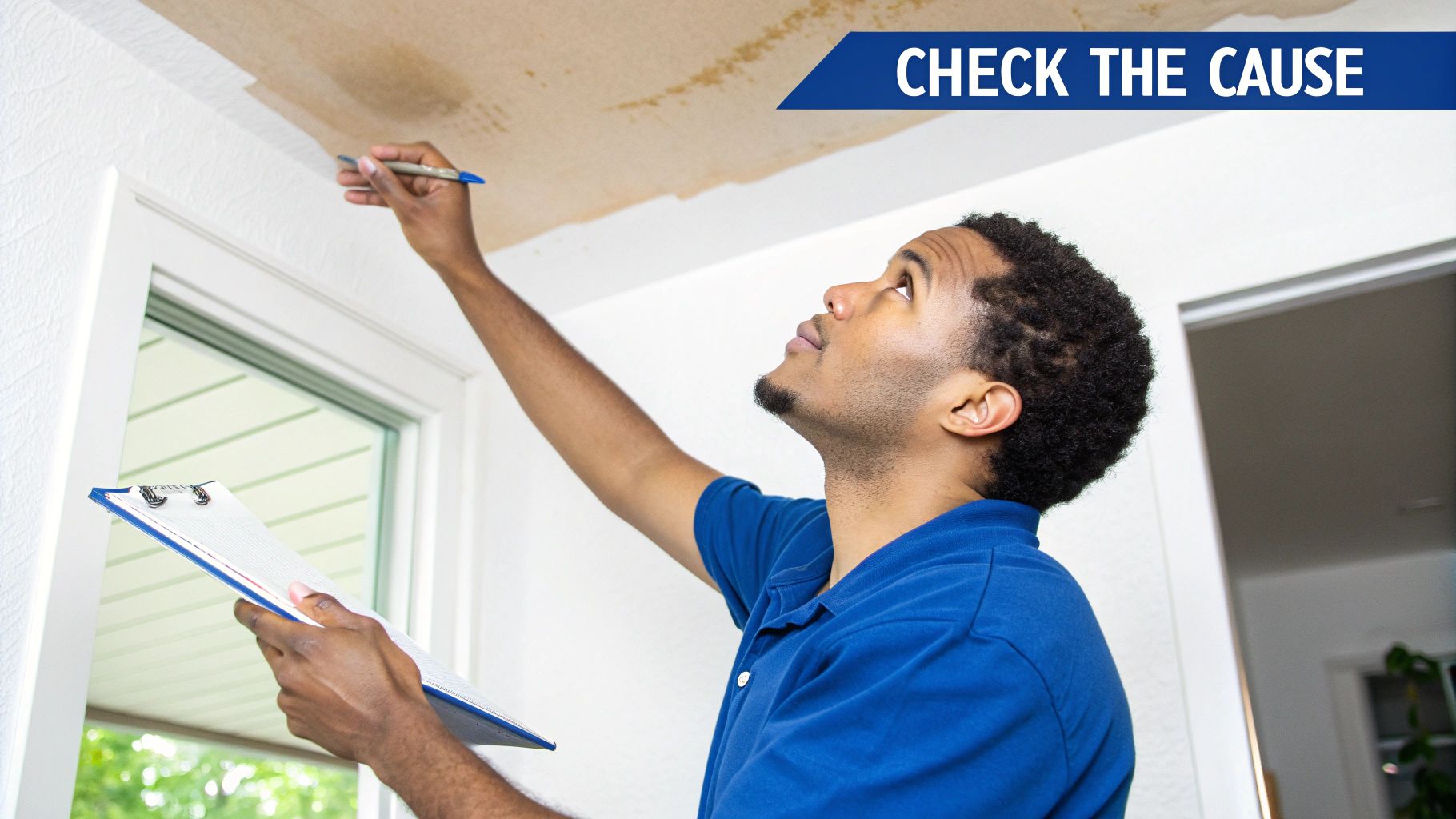
The central operational task for an adjuster is differentiating between a sudden and accidental water event and long-term, repeated seepage or high humidity.
- Sudden and Accidental Events: Include a pressurized supply line rupture, appliance hose failure, or storm-created opening in a building envelope.
- Continuous or Repeated Seepage: Most policies feature an explicit exclusion for water damage or resulting mold occurring over a period of 14 days or longer, whether known or unknown to the insured.
Adjusters rely on specialized investigative tools during the initial site assessment, including pin-type and pinless moisture meters, infrared thermal cameras, and destructive exploration within wall cavities to document decay, wood rot, and multi-generational mold colonies that indicate long-term exposure.
Documenting Moisture and Environmental Conditions
Accurate documentation requires establishing an objective baseline of affected building materials. The adjuster must verify:
- Psychrometric Readings: Relative humidity (RH), ambient air temperature, and dew point measurements inside and outside the structure.
- Moisture Mapping: Clear delineation of dry standard baseline materials versus elevated moisture levels across drywall, subflooring, structural framing, and cabinetry.
- Chronology of Mitigation: Verification of when emergency water mitigation commenced relative to the initial discharge event.
Major Points of Dispute in Mold Remediation Claims
Disagreements between insurance adjusters, public adjusters, policyholders, and restoration contractors frequently stem from structural gaps between insurance policy provisions and professional environmental standards.
1. IICRC S520 Standards vs. Carrier Scope Guidelines
Restoration contractors follow the Institute of Inspection, Cleaning and Restoration Certification (IICRC) S520 Standard for Professional Mold Remediation. The S520 classifies indoor environments into three distinct conditions:
- Condition 1 (Normal): An indoor environment that may contain normal background mold spores, but no active growth or abnormal contamination.
- Condition 2 (Settled Spores): An indoor environment contaminated with settled spores or fungal fragments that were dispersed from an active growth source, but where active growth is absent on the surface.
- Condition 3 (Actual Growth): An indoor environment presence of active, visible fungal growth and associated contamination on structural elements or materials.
Disputes arise when an insurer’s scoping guidelines limit structural tear-out strictly to visible Condition 3 surfaces, whereas the IICRC S520 protocol may demand extensive containment isolation, negative air pressure scrubbing, and removal of adjacent porous materials exposed to Condition 2 settled spores. Adjusters must reconcile whether the policy pays for full S520 compliance or only direct, visible physical loss.
2. Pre-Remediation Assessment and Post-Remediation Verification (PRV)
Another contentious issue centers on indoor air quality (IAQ) sampling, surface tape lifts, and post-remediation verification (clearance testing) conducted by an independent Certified Industrial Hygienist (CIH) or Council-certified Indoor Environmental Consultant (CIEC).
Insurer adjusters often argue that routine air testing is unnecessary for small-scale residential water losses, or that testing expenses must consume part of the policy's finite $5,000 mold sub-limit. Conversely, policyholders and public adjusters contend that baseline environmental testing and independent PRV clearance are essential to confirm structural safety and establish that the loss has been restored to pre-loss condition, particularly in commercial, healthcare, or multi-family residential environments.
3. Allocation of Mitigation vs. Remediation Expenditures
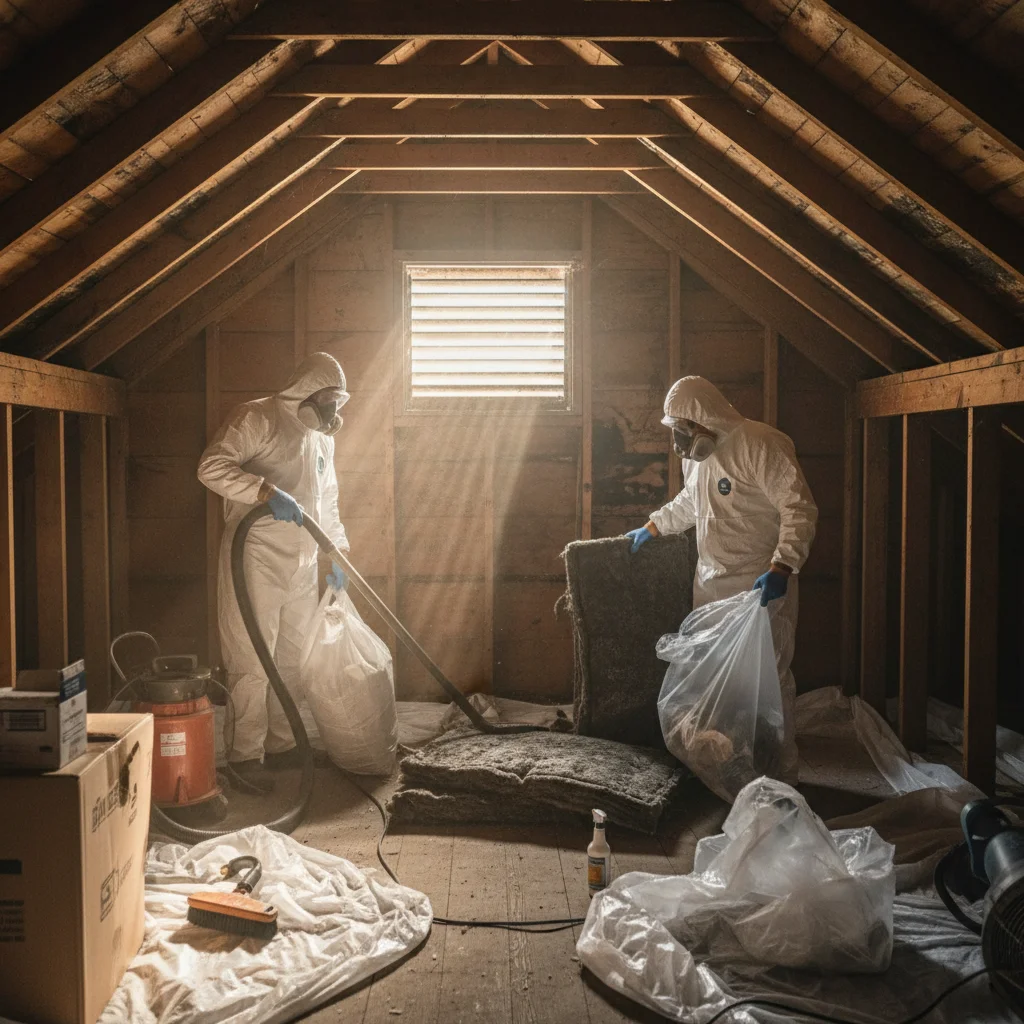
Because standard water mitigation (drying structural elements under broad policy coverage) is distinct from mold remediation (containment, HEPA sanding, media blasting, micro-cleaning under sub-limited coverage), dispute frequently centers on how line items are classified on billing invoices.
For instance, if a restoration firm installs dehumidifiers and air movers in an area where mold is subsequently discovered:
- Insurers may reclassify all drying, equipment rental, and containment setup costs from the main water damage claim section into the limited mold sub-limit bucket.
- Policyholders and Contractors argue that initial structural drying conducted to mitigate active water damage remains covered under primary Coverage A (Dwelling) or Coverage B (Building), leaving the mold sub-limit available strictly for specialized fungal containment and removal procedures.
Comparative Matrix: Coverage Frameworks & Claims Scenarios
The table below outlines common real-world property claims scenarios, how standard policy terms apply, key adjuster determination factors, and primary dispute grounds.
| Claim Scenario | Primary Policy Trigger | Coverage Cap / Exclusion Standard | Key Adjuster Determination Factor | Primary Point of Dispute |
|---|---|---|---|---|
| Sudden Pipe Rupture Behind Drywall | Direct physical loss from accidental discharge | Mold Sub-Limit (e.g., $5,000–$10,000 aggregate) applied to fungal cleanup | Elapsed time between pipe burst, mitigation start, and mold spore bloom | Reclassification of initial drying costs into the sub-limit vs. main policy limits |
| Long-Term Sink Leak (30+ Days) | Excluded: Continuous or repeated seepage | Absolute Exclusion (0% coverage under 14-day rule) | Physical evidence of rotted studs, multi-stage fungal growth, structural decay | Whether leakage was hidden and unobservable to reasonable policyholder inspection |
| Roof Tear-Off During Storm Event | Windstorm / Hail peril damage to building envelope | Direct physical loss covered; mold subject to endorsement cap | Documented storm path, immediate water intrusion point, tarpaulin deployment speed | Distinguishing storm water intrusion mold from pre-existing attic ventilation condensation |
| HVAC Condensate Line Overflow | Maintenance neglect vs. accidental mechanical failure | Excluded under routine maintenance unless endorsement buy-back exists | System maintenance logs, drain pan corrosion level, line blockage cause | Determination of sudden mechanical failure vs. preventable long-term maintenance failure |
| Sewer / Drain Backup into Basement | Water Backup and Sump Overflow Endorsement | Separate Water Backup Limit; Mold sub-limit may apply concurrently | Verification of back-pressure origin vs. surface groundwater intrusion | Intersecting sub-limits (Water Backup Cap vs. Mold Cleanup Cap) under ACC language |
Best Practices for Adjusters, Policyholders, and Counsel
Resolving mold remediation claims efficiently while mitigating legal bad-faith risk requires rigorous procedural compliance, clear communication, and adherence to objective data collection standard practices.
- Issue Prompt Reservation of Rights (ROR) when causation timing is unclear.
- Retain Independent Third-Party Hygienists (CIH) for scope determination.
- Maintain Segregated Line-Item Invoicing (Water Mitigation vs. Mold Cleanup).
- Adhere strictly to statutory state-level claims handling response deadlines.
1. Issue Reservation of Rights (ROR) Letters Early
When an adjuster suspects that mold growth stemmed from a long-term leak, unobservable seepage, or unmitigated pre-existing conditions, an initial Reservation of Rights (ROR) letter should be issued immediately. The ROR explicitly preserves the insurer's right to deny coverage for excluded perils while the investigation into cause, origin, and duration proceeds. Failure to issue a timely ROR can lead to judicial findings of coverage waiver or estoppel.
2. Retain Independent Third-Party Experts
To prevent conflicts of interest, the scope of mold remediation should not be established unilaterally by the remediation contractor executing the work, nor should it be arbitrarily dictated by an insurer’s Xactimate estimate templates.
- A certified, independent third-party professional—such as a Certified Industrial Hygienist (CIH)—should conduct the initial protocol assessment and the final clearance inspection.
- The remediation firm executes the defined scope of work within established containment parameters.
3. Maintain Clear Line-Item Segregation in Estimates
Contractors and adjusters should split estimates and billing statements into distinct categories:
- Category 1/2 Water Extraction & Structural Drying: Scoped under primary property coverages.
- Category 3 / Mold Remediation (Condition 3): Scoped under applicable mold sub-limits, explicitly detailing containment construction, negative air machines, HEPA vacuuming, and antimicrobial application.
This separation prevents improper exhaustion of mold sub-limits on basic water drying tasks and simplifies audit trails during claims review.
Frequently Asked Questions
How do anti-concurrent causation (ACC) clauses affect mold claims?
Anti-concurrent causation (ACC) clauses stipulate that if an excluded peril (such as long-term fungal growth or maintenance neglect) contributes to a loss alongside a covered peril (such as a sudden pipe failure), the portion of the loss caused by the excluded peril is excluded from coverage entirely. In practice, adjusters use ACC language to restrict payout exclusively to the direct, immediate physical damage caused by the sudden water release, denying coverage for broader mold growth that developed alongside pre-existing high humidity or moisture.
Are indoor air quality testing and clearance reports covered under standard mold sub-limits?
Yes, in most cases where a mold endorsement sub-limit (such as $5,000 or $10,000) applies, the policy language explicitly defines the sub-limit as encompassing all expenses related to testing, monitoring, evaluation, remediation, containment, and post-remediation verification (PRV). If pre-testing and post-remediation clearance testing costs $2,500, that amount is deducted directly from the available sub-limit cap, leaving the remainder for physical remediation work.
What distinguishes a sudden water discharge from continuous seepage in mold claims?
A sudden water discharge is an acute, unintended event occurring instantaneously—such as a ruptured supply line or snapped valve—where water enters the structure within hours. Continuous or repeated seepage refers to moisture migration occurring over a prolonged duration, typically defined in policy exclusions as 14 days or longer. Adjusters differentiate the two by inspecting building materials for structural rot, deep wood moisture saturation, rust on structural fasteners, and mature mold colony development.
Can policyholders purchase additional coverage limits for mold remediation?
Yes. Many commercial property insurers and residential carriers offer policy buy-back endorsements that increase standard $5,000 or $10,000 mold sub-limits to higher thresholds, such as $25,000, $50,000, or $100,000. These endorsements require additional premium payments and underwriting approval prior to a loss. Once a loss event occurs, coverage is bound strictly by the policy limits active on the date of loss.
What standard governs the professional mold remediation scope in property claims?
The primary recognized industry standard for mold remediation is the ANSI/IICRC S520 Standard for Professional Mold Remediation. The S520 outlines definitions for indoor environmental conditions (Condition 1, 2, and 3), worker safety standards, containment setup rules, and post-remediation verification standards. While standard policies may not explicitly mention the S520 by name, courts, public adjusters, and restoration experts rely on it as the authoritative benchmark for proper remediation.
Strategic Next Actions for Industry Professionals
To minimize exposure to coverage disputes and ensure equitable claim settlements, stakeholders should implement targeted procedural workflows:
- For Claims Adjusters: Document loss sites immediately using moisture mapping, thermal imaging, and detailed photo logs. Issue reservation of rights letters promptly whenever cause or duration is uncertain, and verify whether initial drying tasks are correctly segregated from mold containment billing.
- For Property Managers & Policyholders: Review property policies prior to loss events to identify exact mold sub-limits and anti-concurrent causation language. In the event of a water loss, initiate professional structural drying immediately to prevent secondary fungal growth within the critical 24- to 48-hour window.
- For Restoration Contractors: Prepare transparent, itemized estimates separating general Category 1/2 water damage drying line items from Condition 3 mold containment and remediation tasks. Coordinate with independent certified industrial hygienists to secure objective clearance testing.
Image Gallery