New York Life Whole Life Insurance Brochure: Policies, Features, and Analysis
A New York Life (NYL) whole life insurance brochure outlines permanent life insurance coverage combining a guaranteed death benefit, fixed premiums, and tax-deferred cash value growth. As a mutual insurance company, New York Life offer...
A New York Life (NYL) whole life insurance brochure outlines permanent life insurance coverage combining a guaranteed death benefit, fixed premiums, and tax-deferred cash value growth. As a mutual insurance company, New York Life offers participating whole life policies, which allow policyholders to earn annual non-guaranteed dividends that can enhance total policy cash value or purchase additional paid-up coverage.
Contents
Professional Disclaimer
This article provides educational analysis of whole life insurance products, policy structures, and standard contractual features typical of New York Life product literature. It does not constitute formal financial, legal, or tax advice. Insurance product availability, policy terms, and riders vary by state and individual underwriting qualifications. Consult a licensed life insurance professional or credentialed tax advisor for guidance tailored to your individual circumstances.
Understanding New York Life Whole Life Insurance
When reviewing a New York Life whole life insurance brochure or product summary, the core emphasis is on permanent financial protection. Unlike term life insurance, which provides coverage for a set duration (such as 10, 20, or 30 years), whole life insurance remains active for the insured's entire lifetime, provided premiums are paid as agreed.
New York Life operates as a mutual life insurance company. Because mutual insurers are owned by their participating policyholders rather than public shareholders, eligible policyholders share in the company's financial success through policy dividends. While dividends are not guaranteed by law, New York Life has declared annual dividends every year since the mid-19th century.
Official product literature generally groups New York Life whole life products into distinct policy designs tailored to different funding timelines, cash value growth trajectories, and estate planning objectives.
New York Life Mutual Structure:
- Participating Policyholder
- Guaranteed Death Benefit
- Fixed Premium Schedule
- Guaranteed Cash Value Growth
- Annual Dividend Allocation (Non-guaranteed, declared annually)
- Paid-Up Additions
- Premium Reduction
- Cash Out / Deposit
Key Whole Life Policy Options
Product brochures published by New York Life detail several variations of permanent life insurance. Understanding the structural differences between these policy designs helps applicants select an option aligned with their financial plan.
1. Standard Whole Life (Pay-to-Age-100)
Standard Whole Life is the flagship participating policy design. Premiums are scheduled to be paid continuously until the insured reaches age 100 (or age 121 under modern actuarial tables).
- Premium Mechanics: Payments remain level throughout the lifetime of the policy.
- Cash Value Build-Up: Cash accumulation starts slower in the initial policy years due to upfront acquisition costs and administrative fees, but grows steadily over time according to a fixed policy schedule.
- Best Suited For: Individuals seeking lower annual premium outlays for a given face amount compared to shorter-pay options, while establishing lifetime protection.
2. Custom Whole Life
Custom Whole Life allows policyholders to select a customized premium-paying period. Instead of paying premiums for life, policyholders can structure payments to cease after a set number of years (e.g., 10-Pay or 20-Pay) or at a specific milestone, such as age 65.
- Accelerated Funding: Because total policy costs are compressed into a shorter payment window, annual premiums are significantly higher than Standard Whole Life.
- Faster Cash Accumulation: Higher early premium payments build guaranteed cash value faster, allowing the policy to reach a fully "paid-up" status sooner.
- Best Suited For: High-earning individuals seeking to complete policy funding during peak working years before entering retirement.
3. Value Whole Life
Value Whole Life is designed for consumers seeking permanent coverage at a lower baseline premium cost. It maintains the core guarantees of whole life insurance while altering dividend distribution scales and early surrender cash values.
- Cost Structure: Offers lower initial premium obligations than standard participating policies.
- Dividend Integration: Offers lower baseline growth schedules, offsetting the lower premium requirement.
- Best Suited For: Cost-conscious buyers who want permanent protection with basic accumulation features.
Core Pillars of New York Life Policy Brochures
Every New York Life whole life product summary highlights three foundational components: guaranteed financial protections, tax-advantaged cash accumulation, and dividend participation.
NYL Whole Life Foundation:
- Guaranteed Death Benefit
- Tax-Deferred Cash Value Accumulation
- Mutual Dividend Participation
1. Guaranteed Death Benefit and Fixed Premiums
The primary mandate of whole life coverage is the guaranteed death benefit. As long as policy premiums are paid, the policy face amount will be paid to designated beneficiaries upon the insured's death, generally exempt from federal income tax under Section 101(a) of the Internal Revenue Code. Premium rates are locked at policy issuance and cannot be increased by the insurer due to advancing age or changes in health status.
2. Guaranteed Cash Value Accumulation
A portion of each premium payment is directed into a cash value account that accumulates on a tax-deferred basis under IRS Code Section 7702. The policy contract includes an explicit schedule of guaranteed cash values for every policy year. This guaranteed cash value serves as policyholder equity that can be accessed during the insured's lifetime.
Policyholders can access accumulated cash value through:
- Policy Loans: Borrowing against the policy's cash value using the contract as collateral. Loans accrue interest, and unpaid loan balances reduce the final death benefit payable to beneficiaries.
- Partial Surrenders: Withdrawing cash directly up to the policy basis (total premiums paid) tax-free.
- Full Surrender: Canceling the policy to receive the total surrender value minus any applicable early surrender charges or outstanding policy loans.
3. Mutual Dividends and Distribution Options
While policy dividends are not contractually guaranteed, they represent a significant financial element of participating whole life policies. New York Life determines its annual dividend scale based on corporate investment performance, underwriting mortality gains, and operational expense management.
Brochures outline four standard dividend options:
- Paid-Up Additions (PUA): Dividends automatically purchase small, single-premium increments of fully paid-up whole life insurance. Each addition increases both the total death benefit and the contract's overall cash accumulation, creating a compounding growth effect.
- Premium Reduction: Dividends are applied directly toward the upcoming policy premium, reducing out-of-pocket costs.
- Cash Payout: Dividends are sent directly to the policyholder via check or electronic deposit.
- Accumulate at Interest: Dividends remain on deposit with New York Life in an account that earns a set interest rate. Interest earned on this account is taxable annually.
Policy Riders and Customization Options
New York Life policy brochures describe supplemental contract options known as riders. Riders allow policyholders to customize coverage to address specific risks, such as long-term care events or disability.
| Rider Type | Operational Mechanism |
|---|---|
| Chronic Care Rider | Accelerates death benefit for qualifying long-term illness expenses. |
| Waiver of Premium | Covers policy premiums during qualifying total disability periods. |
| Paid-Up Additions Rider | Accepts extra unscheduled funds to speed up cash value growth. |
| Option to Purchase Additional Insurance | Guarantees rights to buy additional insurance at set future dates without underwriting. |
Chronic Care Rider
The Chronic Care Rider allows policyholders to access a portion of the policy's death benefit living benefits while still alive if diagnosed with a qualifying chronic illness. To qualify, a licensed healthcare practitioner must certify that the insured cannot perform at least two of the six Activities of Daily Living (ADLs)—such as bathing, dressing, or eating—or requires substantial supervision due to severe cognitive impairment.
Waiver of Premium Rider
If the insured experiences a total disability lasting longer than a specified elimination period (typically six months), the Waiver of Premium rider waives all upcoming premium payments for the duration of the disability. The policy remains fully active, continuing to build guaranteed cash value and earn dividend eligibility as if the policyholder were paying premiums out of pocket.
Option to Purchase Additional Insurance (OPAI)
This rider gives younger policyholders the right to purchase specified amounts of additional whole life insurance at scheduled future dates (such as marriage, the birth of a child, or specific ages) without undergoing additional medical exams or demonstrating insurability.
Paid-Up Additions Rider (PUAR)
For policyholders focused on rapid liquidity, the Paid-Up Additions Rider allows optional, extra funding above the base policy premium. These extra payments directly fund paid-up insurance, accelerating cash value growth during the initial years of the contract.
Comparing New York Life Whole Life Policy Variations
The following matrix compares the core features, funding dynamics, and typical applications across New York Life's primary whole life policy options:
| Feature / Dimension | Standard Whole Life | Custom Whole Life | Value Whole Life |
|---|---|---|---|
| Payment Duration | Lifetime (to age 100/121) | Limited Pay (10, 20 Years, or Age 65) | Lifetime (to age 100/121) |
| Relative Premium Cost | Moderate | Higher (Compressed timeline) | Lower baseline cost |
| Early Cash Value Growth | Moderate | High | Lower baseline growth |
| Dividend Participation | Yes (Full scale eligibility) | Yes (Full scale eligibility) | Yes (Adjusted scale) |
| Policy Loans Supported | Yes | Yes | Yes |
| Primary Suitability | Lifetime baseline protection | Funding during peak working years | Lower upfront premium target |
Evaluating Policy Illustrations vs. Marketing Brochures
While an initial brochure provides a high-level overview of available products and options, it does not detail specific personal costs. To evaluate actual costs, applicants must review a policy illustration provided by a licensed insurance agent.
| Column Category | Information Provided |
|---|---|
| Guaranteed Values | Minimum cash values and death benefits calculated using baseline policy rates. |
| Non-Guaranteed Values | Projected outcomes based on current dividend scales (subject to annual adjustment). |
| Tax Basis Limits | Tracks funding against Modified Endowment Contract (MEC) regulatory thresholds. |
When reviewing an official New York Life policy illustration alongside product literature:
- Examine Guaranteed vs. Non-Guaranteed Columns: The illustration breaks projections into two sections: guaranteed values and non-guaranteed values. Guaranteed columns display the absolute minimum performance if no dividends are declared. Non-guaranteed columns reflect projected outcomes based on the insurer's current dividend interest rate, which fluctuates over time.
- Check for Modified Endowment Contract (MEC) Status: If a whole life policy is funded too quickly with excess capital, it may violate the IRS "Seven-Pay Test" under IRC Section 7702A. If classified as a MEC, tax-free distributions are lost; policy loans and surrenders are taxed on a gain-first basis and may trigger a 10% tax penalty if accessed before age 59½.
- Review Loan and Surrender Assumptions: Confirm whether the illustration assumes dividend distributions will buy paid-up additions or be used to pay policy premiums. Also check the contract's policy loan interest rate structure (fixed vs. variable).
Independent Financial Strength Ratings
When evaluating a long-term contract like whole life insurance, the financial strength of the issuing carrier is a central consideration. Independent insurance rating agencies evaluate an insurer's balance sheet, capital reserves, and ongoing ability to honor claims decades into the future.
New York Life holds strong financial strength ratings across major independent credit rating agencies:
- A.M. Best: A++ (Superior)
- Fitch Ratings: AAA (Exceptionally Strong)
- Moody’s Investors Service: Aaa (Highest Quality)
- Standard & Poor’s (S&P): AA+ (Very Strong)
Detailed agency assessment frameworks and historical carrier rating histories can be verified directly through the National Association of Insurance Commissioners (NAIC).
Important Considerations and Potential Drawbacks
While New York Life whole life insurance provides strong guarantees and permanent protection, prospective buyers should evaluate several potential trade-offs:
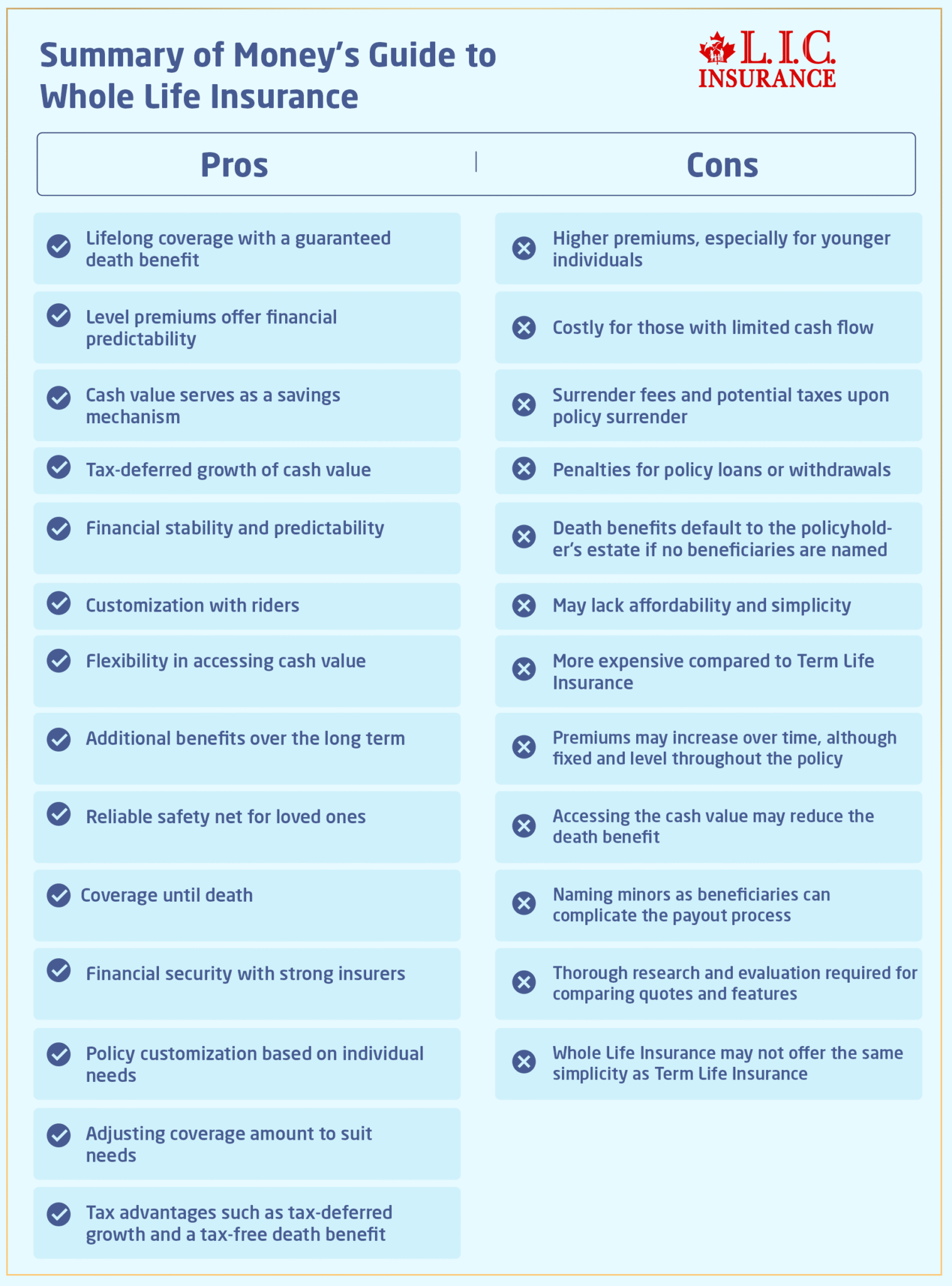
- Higher Premiums Than Term Insurance: Whole life premiums are substantially higher than term insurance for the same death benefit amount, because payments fund permanent protection, operational reserves, and guaranteed cash values.
- Surrender Charges and Early Liquidity Constraints: Surrendering a whole life policy within the first 5 to 10 years often results in financial loss. Early premium payments cover upfront administrative and underwriting expenses, leaving limited cash surrender value in the policy's initial years.
- Non-Guaranteed Dividends: Although New York Life has a long history of paying dividends, dividend payouts depend on economic conditions, investment yields, and mortality performance, and are not guaranteed.
- Opportunity Cost: Capital directed into whole life premiums may yield different returns if invested directly in traditional market portfolios like low-cost index funds. Whole life is structured for safety, tax-deferred preservation, and permanent legacy planning rather than aggressive equity growth.
Practical Steps to Get Started
If you are reviewing New York Life whole life brochure materials and evaluating permanent coverage, follow these practical steps:
- Determine Your Primary Financial Goal: Clarify whether your primary objective is basic income replacement (where term life may suffice), estate planning, tax-deferred cash accumulation, or funding a paid-up policy before retirement.
- Request a Complete In-Force or Sales Illustration: Ask a licensed agent for a formal, multi-page policy illustration. Request options showing both full premium funding and scenarios utilizing Paid-Up Additions Riders.
- Compare Standard vs. Custom Pay Schedules: Review side-by-side illustrations comparing Standard Whole Life (pay-to-100) against Custom Whole Life (e.g., 20-pay or pay-to-65) to evaluate out-of-pocket costs against cash accumulation timelines.
- Review Underwriting Requirements: Understand the medical underwriting process, which typically includes a detailed health history questionnaire, a paramedical exam (blood pressure, blood/urine samples), and an evaluation of lifestyle factors.
- Consult an Independent Financial Advisor: Before signing an application, review the policy illustration with a fee-only financial planner or tax advisor to ensure the premium fits comfortably within your long-term budget.
Frequently Asked Questions
What is the difference between a New York Life product brochure and a policy illustration?
A product brochure provides a general, high-level overview of a policy’s structure, available options, and available riders. A policy illustration is a personalized document displaying exact premium amounts, guaranteed cash value growth, projected dividends, and death benefits tailored to your specific age, gender, coverage amount, and health rating class.
Are dividends guaranteed on New York Life whole life insurance policies?
No. Dividends are not contractually guaranteed by law or by the insurer. They are declared annually at the discretion of New York Life's Board of Directors based on the company's financial performance, mortality experience, and investment returns. However, New York Life has paid dividends to policyholders for over 170 consecutive years.
How do policy loans affect the death benefit of a New York Life policy?
Borrowing cash value through a policy loan does not require liquidating policy assets, but the outstanding loan balance accrues interest over time. If the insured passes away while a loan balance is outstanding, the remaining loan amount plus accumulated interest is deducted directly from the total death benefit paid to beneficiaries.
What happens if I stop paying premiums on my Custom Whole Life policy?
If you stop paying premiums before a policy reaches its scheduled paid-up date, the policy will utilize its non-forfeiture options. Depending on your contract and accrued cash value, the policy may automatically convert to reduced paid-up insurance (a smaller lifetime death benefit with no future premiums due), extended term insurance, or lapse entirely if insufficient cash value exists to cover policy costs.
Can I access cash value tax-free from a New York Life whole life policy?
Generally, yes. Cash value grows on a tax-deferred basis, and withdrawals up to your cost basis (the total amount of premiums paid into the policy) are considered a tax-free return of capital. Policy loans are also non-taxable events, provided the policy remains active and does not lapse or trigger Modified Endowment Contract (MEC) status under IRS rules.
Editorial Category Metadata:
Image Gallery