Should I List a BA as Life Insurance on My Resume?
You should absolutely list your Bachelor of Arts (BA) degree on your resume when applying for life insurance positions. A BA demonstrates critical thinking, communication skills, and the foundational discipline required for professiona...
You should absolutely list your Bachelor of Arts (BA) degree on your resume when applying for life insurance positions. A BA demonstrates critical thinking, communication skills, and the foundational discipline required for professional licensing. While not a substitute for a state-issued insurance license, it is a significant credential that strengthens your candidacy.
Contents
In the competitive 2026 job market, the insurance industry continues to evolve from simple transactional sales to complex financial planning. Whether you are applying for a role as a life insurance agent, an underwriter, or a claims adjuster, your academic background provides a signal of competence to hiring managers. However, there is often confusion regarding how to present academic degrees versus professional designations, and whether "BA" might be mistaken for "Business Analyst" or "Broker Agent" in certain technical contexts.
The Strategic Importance of a Bachelor of Arts in Life Insurance
A Bachelor of Arts degree, regardless of the specific major, is highly valued in the life insurance sector. Life insurance is fundamentally a relationship-driven and compliance-heavy business. Employers look for candidates who can digest complex information—such as policy riders, actuarial tables, and tax implications—and communicate them clearly to clients.
A BA degree often emphasizes humanities, social sciences, or liberal arts, which fosters high-level interpersonal skills. In 2026, as AI handles more of the administrative and basic underwriting tasks, the "human element" of life insurance becomes the primary value proposition. Your ability to navigate the emotional nuances of legacy planning and beneficiary designations is bolstered by a broad academic background.
Furthermore, many corporate-level positions in major firms like Northwestern Mutual, New York Life, or Prudential require a four-year degree as a prerequisite for management tracks. Listing your BA ensures you meet the automated screening requirements of Applicant Tracking Systems (ATS) that filter for educational benchmarks.
Distinguishing Between Academic Degrees and Professional Designations
One of the most common points of confusion for those entering the insurance field is how to list their BA alongside industry-specific certifications. In the life insurance world, professional designations like the Chartered Life Underwriter (CLU) or Fellow, Life Management Institute (FLMI) carry immense weight.
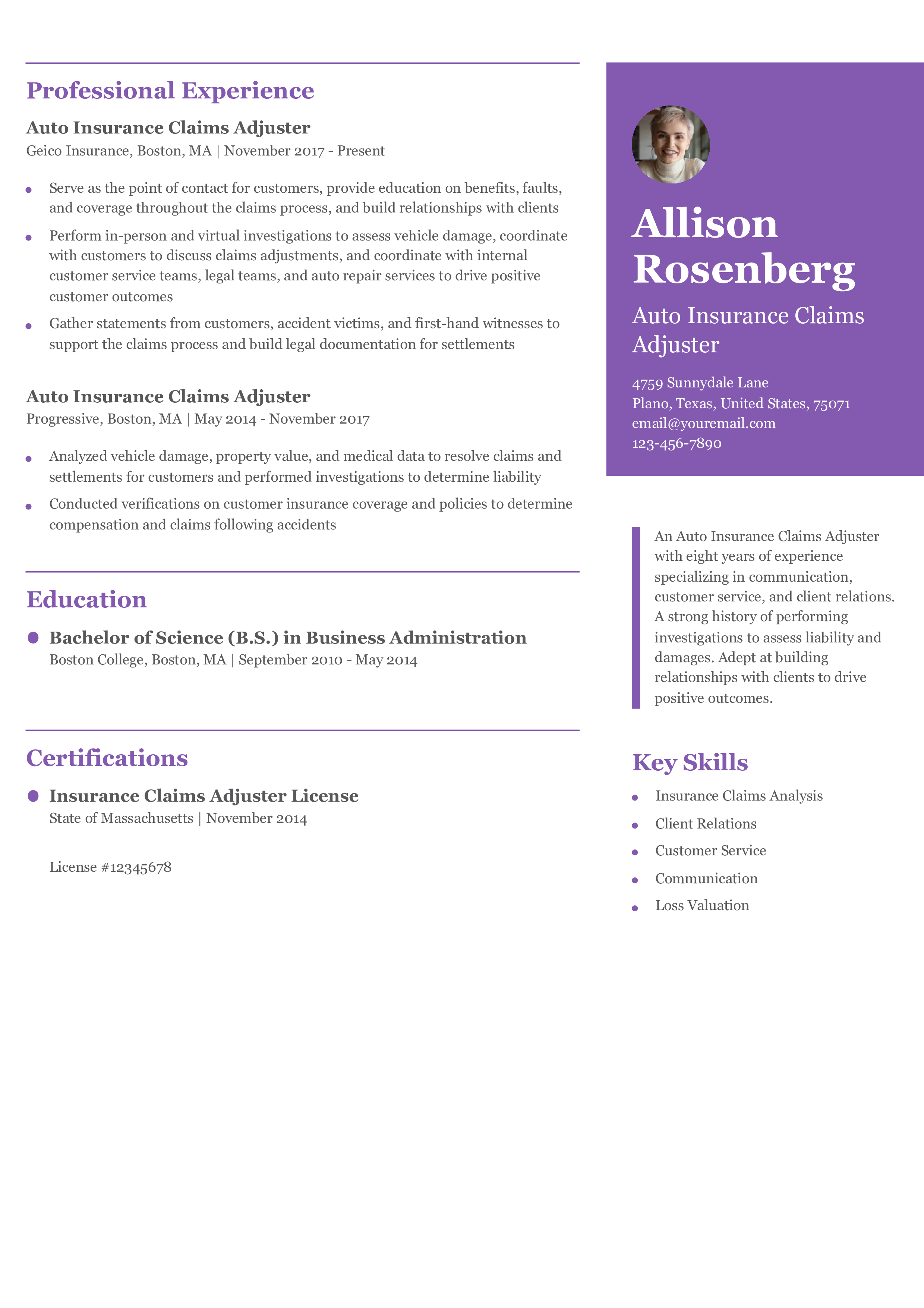
Your BA is an academic credential, while these designations are professional certifications. You should never list "BA" as a suffix after your name (e.g., John Doe, BA) unless the specific employer or regional culture traditionally encourages it. Instead, academic degrees belong in the Education section, while insurance-specific designations are listed in a separate Certifications or Professional Designations section.
Comparing Academic Degrees and Insurance Credentials
The following table outlines the differences in how these should be presented and perceived on a resume in 2026:
| Feature | Bachelor of Arts (BA) | Insurance Designations (CLU, ChFC, FLMI) |
|---|---|---|
| Primary Category | Academic Education | Professional Certification |
| Resume Location | Education Section | Certifications / Post-nominal Titles |
| Focus Area | Broad logic, research, and communication | Specialized life insurance & financial law |
| Verification | University Registrar / Transcripts | Issuing Body (e.g., The American College) |
| Impact on Hiring | High for entry-level and management | High for specialized and senior advisory roles |
| Renewal Requirement | Permanent | Often requires Continuing Education (CE) |
Strategic Placement: Where and How to List Your BA
To maximize the impact of your degree, you must place it correctly within the hierarchy of your resume. The 2026 standard for resume design prioritizes clarity and the "F-pattern" of reading used by recruiters.
The Education Section
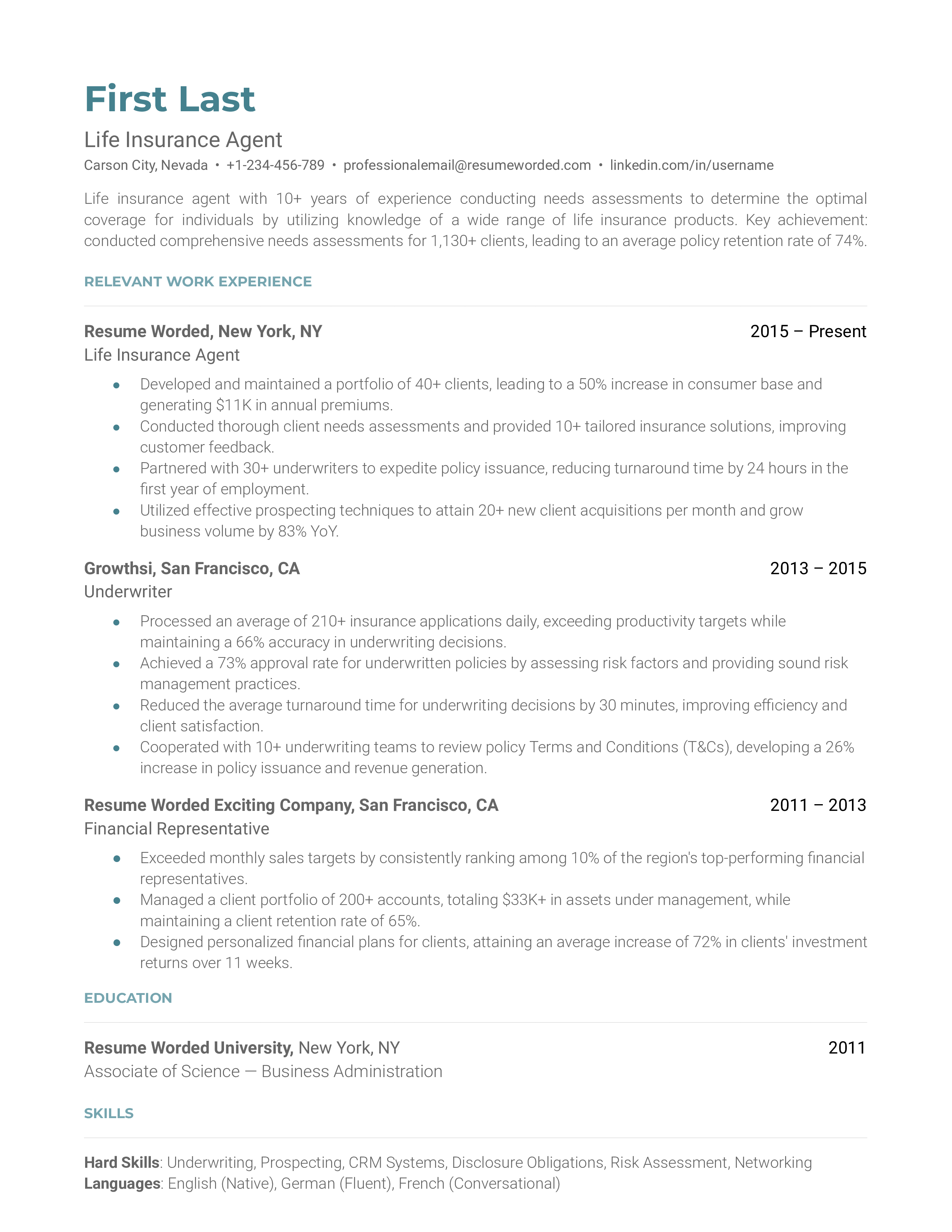
For most applicants, the Education section should be placed near the bottom of the resume if you have more than two years of relevant experience. If you are a recent graduate, it may be placed closer to the top. When listing your BA, include the following details:
- The Institution Name: The full, formal name of the college or university.
- The Degree: Bachelor of Arts in [Your Major].
- Graduation Year: In 2026, listing your graduation year is standard, though some mid-career professionals omit it to avoid age bias.
- Relevant Coursework: If your BA is in a field like Psychology, Communication, or Economics, highlight courses that relate to sales, behavioral finance, or statistical analysis.
The Summary Statement
If your BA is in a field directly relevant to life insurance—such as Business Administration or Economics—you should mention it in your professional summary. For example: "Results-oriented professional with a BA in Economics and 5 years of experience in risk assessment and client relationship management within the life insurance sector."
Addressing Ambiguity: Is "BA" a Job Title or a Degree?
In some technical insurance environments, "BA" is a common shorthand for Business Analyst. If you are applying for a corporate role in an insurance company's IT or operations department, simply listing "BA" might lead to confusion.
If your primary goal is to indicate your education, always write out "Bachelor of Arts." If you are actually a Business Analyst applying for a life insurance operational role, ensure that your job title is clearly defined under your Professional Experience.
In the context of "Broker Agent," this term is less commonly abbreviated as "BA" in formal documentation, but it is still safer to use full terminology. Precision is a trait highly valued by insurance underwriters and compliance officers; demonstrating that precision on your resume is a subtle way to prove your fitness for the industry.
Enhancing Your Resume with Insurance-Specific Skills
While the BA provides the foundation, a successful life insurance resume in 2026 must also highlight specific competencies. If you are listing your BA to prove your intellectual capacity, complement it by highlighting these "hard" insurance skills:
- State Licensing: Clearly list your Life, Accident, and Health license status. This is the most critical "must-have" for any producer role.
- Product Knowledge: Mention familiarity with Whole Life, Term, Universal Life (UL), and Variable Universal Life (VUL) products.
- Regulatory Compliance: Demonstrate an understanding of FINRA and SEC regulations if you are dealing with variable products, or general knowledge of state-level Department of Insurance (DOI) mandates.
- CRM Proficiency: Mention specific software like Salesforce, Zoho, or industry-specific tools like AgencyBloc or Applied Epic.
Common Mistakes to Avoid
When listing educational credentials on an insurance resume, many candidates fall into traps that can undermine their professionalism.
- Including High School Information: Unless you are a current student or very recent graduate (within 6 months), your high school diploma should be removed once you have a BA. It takes up valuable space that could be used for listing your sales achievements or underwriting experience.
- Over-Focusing on an Unrelated Major: If your BA is in a completely unrelated field, such as Fine Arts or Music, do not dedicate significant space to your senior thesis or unrelated extracurriculars. List the degree to show you are a college graduate, but pivot the focus to your professional insurance training.
- Neglecting Continuing Education (CE): The insurance industry is heavily regulated. In 2026, listing recent CE credits shows that you are up-to-date with the latest tax law changes (such as those affecting IRC Section 7702) and consumer protection acts.
Frequently Asked Questions
Does a BA satisfy the educational requirements for a life insurance license?
In most jurisdictions, a BA is not a legal requirement for obtaining a life insurance license. State licenses generally require a specific number of pre-licensing education hours (usually 20–40 hours) and passing a state-administered exam. However, a BA is often a prerequisite for the more advanced designations mentioned earlier, like the CLU.
Should I list my GPA on my insurance resume?
In 2026, GPA is generally only included if you are a recent graduate (less than one year out) and your GPA was 3.5 or higher. For experienced professionals, your sales volume, persistency rate, or underwriting accuracy are far more important metrics than your college grades.
Can I list "BA" if I haven't finished my degree yet?
If you are currently enrolled, you should list the degree with an "Expected Graduation" date. For example: "Bachelor of Arts in Communication, [University Name], Expected May 2027." Never list a degree as completed if it is not, as insurance companies conduct thorough background checks and any discrepancy is grounds for immediate disqualification.
What if my BA is from a foreign university?
If your degree was earned outside the United States or the country where you are applying, it is still highly valuable. You may want to include a brief note if the institution is highly ranked or if you have had the degree evaluated by a service like World Education Services (WES) for local equivalency.
Is a BA better than a BS for life insurance?
In the insurance industry, there is virtually no difference in how a Bachelor of Arts (BA) and a Bachelor of Science (BS) are perceived. A BS might suggest a slightly stronger background in mathematics or statistics, which is helpful for underwriting or actuarial tracks, while a BA might suggest stronger communicative or ethical training, which is helpful for sales and advisory roles. Both are equally respected.
Practical Recommendation for Your Next Action
If you are currently updating your resume for a life insurance position, your first step should be to move your Bachelor of Arts degree to a dedicated "Education" section at the bottom of the document. Ensure it is written out as "Bachelor of Arts" rather than just the abbreviation "BA" to improve ATS readability and avoid confusion with "Business Analyst."
Once the degree is listed, focus your attention on your Life Insurance License. If you do not yet have one, indicate that you are "In pursuit of State Life & Health Licensing" to show proactive intent. For those already in the industry, prioritize your production numbers and professional designations (like CLU or ChFC) above your academic history, as these demonstrate your direct impact on a firm's bottom line.
Image Gallery