Understanding the Format: Why Echo Valley Is a Movie Not a Series
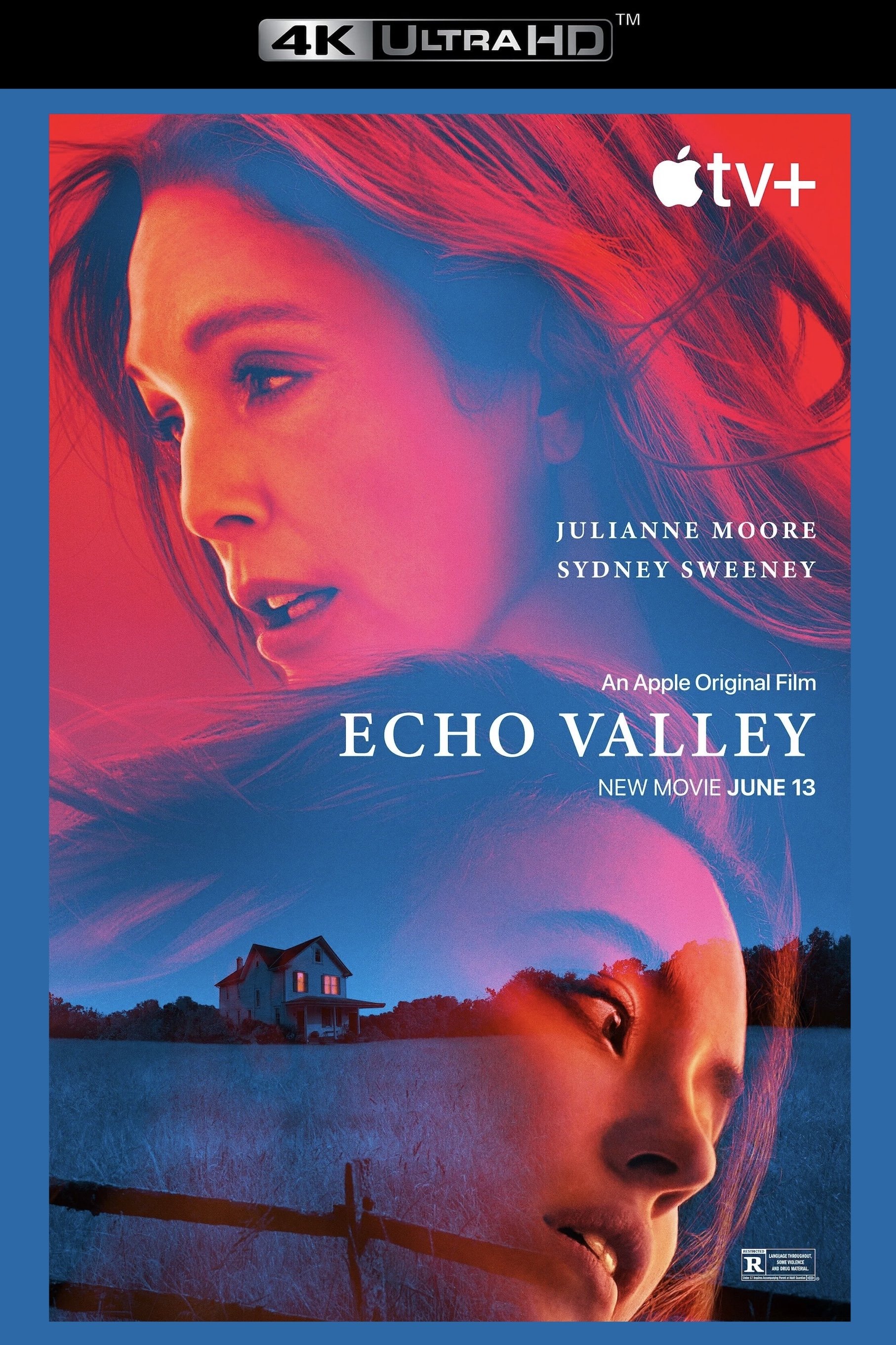
Echo Valley is a feature-length cinematic production, not a television series or a limited serial drama. While the nature of modern episodic storytelling often leads to confusion regarding project formats, this specific production is a...
Echo Valley is a feature-length cinematic production, not a television series or a limited serial drama. While the nature of modern episodic storytelling often leads to confusion regarding project formats, this specific production is a standalone film written by Brad Ingelsby and directed by Michael Pearce. It follows a singular, contained narrative arc typical of theatrical or feature-length streaming releases, rather than the multi-chapter structure associated with episodic television.
Contents
Clarifying the Format: Film Versus Series
In the current landscape of entertainment, the distinction between a movie and a limited series has become increasingly blurred. High-budget production values, A-list talent, and serialized distribution methods often lead audiences to misidentify standalone features as "prestige" television series. Echo Valley falls firmly into the category of a feature film—a self-contained story designed to be consumed in one sitting.
The confusion often stems from the way projects are announced and distributed. When a production is helmed by high-profile creators or features ensemble casts, viewers frequently search for episode counts or season renewals. However, Echo Valley does not possess these attributes. Its narrative structure is dictated by a traditional three-act screenplay, focusing on the development and resolution of a specific protagonist’s conflict within a constrained timeframe.
By defining the project as a movie, it becomes easier to understand the pacing and narrative goals. While a television series is designed to sustain tension over several hours or days of viewing, a feature film must establish stakes, develop characters, and provide a resolution within approximately 90 to 120 minutes.
Defining Feature-Length Production
To understand why Echo Valley is categorized as a movie, one must look at the structural requirements of film production versus episodic content. A feature film requires a definitive beginning, middle, and end that must be resolved without the promise of a cliffhanger or a second season.
Key Differences Between Feature Films and Episodic Series
| Feature | Feature Film (Movie) | Episodic Series |
|---|---|---|
| Duration | Fixed (typically 90–150 minutes) | Variable (per episode) and aggregate |
| Narrative Arc | Singular, closed-ended | Ongoing or multi-chapter |
| Distribution | Theatrical or single-release streaming | Seasonal, weekly, or "binge" drop |
| Pacing | Condensed, high-impact | Cumulative, world-building focused |
| Resolution | Final at the end of the runtime | Episodic or seasonal finale |
The project is built around these film-specific constraints. The script, authored by Brad Ingelsby—known for his work on contained, high-tension dramas—focuses on the psychological and physical journey of a central character, reflecting the efficiency and focused thematic depth characteristic of a motion picture.
The Role of Creative Intent
When considering why an audience might search for "Echo Valley" as a series, it is often due to the involvement of creators who have previously moved between both mediums. Creators who have succeeded in the "limited series" space are often assumed to be working on similar projects. However, the decision to produce Echo Valley as a movie reflects a specific creative choice to prioritize a singular, immersive experience.
A film allows for a specific aesthetic and tonal consistency that is often interrupted by the episodic breaks of a television series. For Echo Valley, the environmental atmosphere—a critical component of the title—is maintained through uninterrupted cinematography and sound design, tools that are most effectively utilized in a cinema setting.
How to Verify Production Formats
For viewers interested in distinguishing between upcoming productions, there are several reliable methods to confirm whether a project is a movie or a series before it is released.
- Production Credits: Consult official trade publications that document the development phase of a film. These reports specify whether a project is being developed for "theatrical release," "feature streaming," or "television production."
- Screenplay Sources: A movie will always be associated with a singular screenplay document, whereas a television series will have a "showrunner" and a "writers' room" producing scripts for multiple episodes.
- Platform Categorization: Streaming platforms often categorize content into "Movies" and "Series" tabs. If a project is listed under the "Movies" section during early press cycles, it indicates a single-part production.
Evaluating Narrative Density
The assumption that a project is a series often arises when a premise sounds complex or involves an ensemble cast. However, a feature film is capable of delivering deep character study and high narrative density without needing six to ten hours of screen time. In Echo Valley, the focus is on a high-stakes, localized conflict that is suited to the rapid escalation possible in a two-hour film.
Audiences should not confuse the "prestige" nature of the production—which often involves high-budget cinematography and acclaimed acting—with the requirement for episodic format. The industry has seen a resurgence in high-budget, high-concept dramas that rely on the movie format to deliver singular, impactful stories rather than expanded serials.
Common Misconceptions in Modern Viewing
Modern viewers are accustomed to "binge-watching," which has shifted the perception of what constitutes a "serious" story. Because many complex dramas are now serialized, there is a natural, though often incorrect, tendency to assume that any substantial drama must be a series.
- The Length Assumption: Just because a project has a "big" story does not mean it needs a series format to tell it.
- The Talent Assumption: The presence of a known actor or director does not signify a series; many creators move between film and TV, and their latest project may return to the film format.
- The Release Pattern: While some streaming platforms drop movies and episodes similarly, the fundamental script structure remains the primary identifier.
By acknowledging that Echo Valley is a movie, viewers can manage their expectations regarding the runtime and the definitive nature of the conclusion. There is no waiting for "the next episode" or "the next season" because the artistic goal of the movie is to resolve the narrative trajectory within the initial release.
Frequently Asked Questions
Is Echo Valley available to watch in episodes? No, Echo Valley is not divided into episodes. It is a single feature-length film. The entire story is presented in one continuous narrative from beginning to end.
Why was there confusion about it being a series? The confusion likely stems from the high-profile nature of the production and the tendency for prestige dramas to be produced as limited series in recent years. Additionally, fans of the screenwriter’s past work in episodic television often conflate his previous formats with his current projects.
Does a movie mean the story is less detailed than a series? Not necessarily. A movie focuses on depth and intensity within a compressed timeframe, whereas a series focuses on breadth and long-form development. Echo Valley uses its runtime to build intensity, which is a hallmark of high-quality film storytelling.
Will there be a sequel or a part two? There is no indication that Echo Valley is designed as a multi-part saga. It is categorized as a standalone feature film, meaning the story presented in the movie is intended to be complete.
Where can I verify the status of new movie projects? The most accurate way to verify the format of a production is to check the entry on industry-standard databases or the official press releases provided by the production studios or distribution companies. These sources explicitly label projects as either "feature films" or "series."
Moving Forward with Your Viewing Experience
When you approach Echo Valley, do so with the mindset of a viewer prepared for a feature film experience. This means setting aside the time for a full-length, self-contained story. Unlike a series that allows for a "pause and return" mentality over several weeks, the impact of this film is best captured by experiencing the narrative progression in its entirety. As of 2026, the industry remains committed to the feature film format as a vital tool for delivering concise, powerful storytelling that differs fundamentally from the episodic nature of television. By understanding these distinctions, you can better appreciate the craft behind the production and align your expectations with the artistic intentions of the creators.
Image Gallery