How to Choose the Best Credit Repair Software for Business Growth in 2026
Selecting the best credit repair software for business growth involves balancing automated dispute processing with robust CRM capabilities and client transparency. In 2026, the priority is finding a platform that offers high-volume sca...
Selecting the best credit repair software for business growth involves balancing automated dispute processing with robust CRM capabilities and client transparency. In 2026, the priority is finding a platform that offers high-volume scalability, integrated AI-driven letter generation, and strict adherence to data security standards to ensure long-term profitability and regulatory compliance.
Contents
Defining the Role of Software in Scalable Credit Repair
The credit repair industry has evolved significantly by 2026, moving away from manual data entry toward sophisticated ecosystem management. For a business to grow, the software cannot merely be a document generator; it must act as the operational backbone of the entire enterprise. High-growth firms require tools that minimize the "time-per-file" while maximizing the "success-per-dispute."
Growth in this sector is fundamentally tied to throughput. If an individual consultant can manage 50 clients manually, a robust software suite should allow that same consultant to manage 250 to 500 clients by automating the pulling of credit reports, the identification of negative items, and the generation of localized dispute letters. This efficiency directly impacts the bottom line by reducing the need for administrative hiring during the early stages of scaling.
Essential Features for Scaling a Credit Repair Enterprise
When evaluating software for a growing business, the feature set must move beyond basic templates. You are looking for a comprehensive business management suite tailored to the specific legal and operational hurdles of the credit industry.
Automated Dispute Management and AI Integration
In 2026, standard dispute templates are often flagged by automated screening systems at major credit bureaus like Equifax, Experian, and TransUnion. The best software now utilizes AI-assisted engines to vary the language, structure, and reasoning of dispute letters. This ensures that every letter sent appears unique and is based on specific consumer protection laws such as the Fair Credit Reporting Act (FCRA) and the Fair Debt Collection Practices Act (FDCPA).
Client and Affiliate Portal Functionality
Transparency is a major driver of client retention. A dedicated client portal allows customers to track their progress in real-time, upload necessary identification documents, and communicate securely with their counselors. Furthermore, a growth-oriented platform must include an Affiliate Portal. This allows mortgage brokers, real estate agents, and car dealers to refer clients to your business and track the status of those referrals, creating a symbiotic lead-generation network that scales without direct advertising spend.
Integrated CRM and Sales Pipeline
Growth requires a steady influx of leads. Software that integrates a Customer Relationship Management (CRM) system allows you to manage the entire lifecycle of a lead—from the initial consultation and credit audit to the final successful deletion and graduation from the program. Look for features like automated follow-up emails, SMS notifications, and lead scoring to ensure your sales team focuses on the highest-probability conversions.
Compliance and Security Standards in 2026
Regulatory scrutiny by the Consumer Financial Protection Bureau (CFPB) and the Federal Trade Commission (FTC) remains at an all-time high in 2026. Choosing software that ignores compliance is a recipe for business failure.
- CROA Compliance: The software must facilitate compliance with the Credit Repair Organizations Act (CROA). This includes providing mandatory disclosures, ensuring contracts have the required three-day right-to-cancel language, and preventing the billing of clients before services are fully rendered (where applicable by state law).
- Data Security (SOC 2 and GDPR): Since you are handling sensitive Personal Identifiable Information (PII) including Social Security numbers and financial histories, the software must utilize bank-level encryption. Verify that the provider follows SOC 2 Type II compliance standards to protect your business from data breaches and subsequent legal liability.
- Audit Logs: For internal quality control and regulatory defense, the software should maintain a permanent, unalterable audit log of every action taken on a client’s file.
Comparative Analysis of Top Software Solutions
The following table compares the primary categories of credit repair software available in 2026, tailored for different stages of business growth.
| Feature Category | Entry-Level SaaS (e.g., DisputeBee) | Professional Suite (e.g., Credit Repair Cloud) | Enterprise AI Platforms (e.g., DisputeFox) |
|---|---|---|---|
| Target Audience | Startups & Solopreneurs | Scaling Small Businesses | Large Agencies & Franchises |
| Automation Level | Manual letter selection | Semi-automated workflows | Full AI-driven dispute logic |
| Affiliate System | Basic link tracking | Full-featured affiliate portal | Multi-tier referral management |
| API Access | Limited or None | Standard REST API | Custom API & Webhook support |
| Pricing Model | Flat monthly fee | Tiered based on client count | Volume-based or Per-seat |
| Security | Standard SSL | SOC 2 / Multi-factor | Advanced Encryption / Private Cloud |
Operational Efficiency: Beyond the Dispute Letter
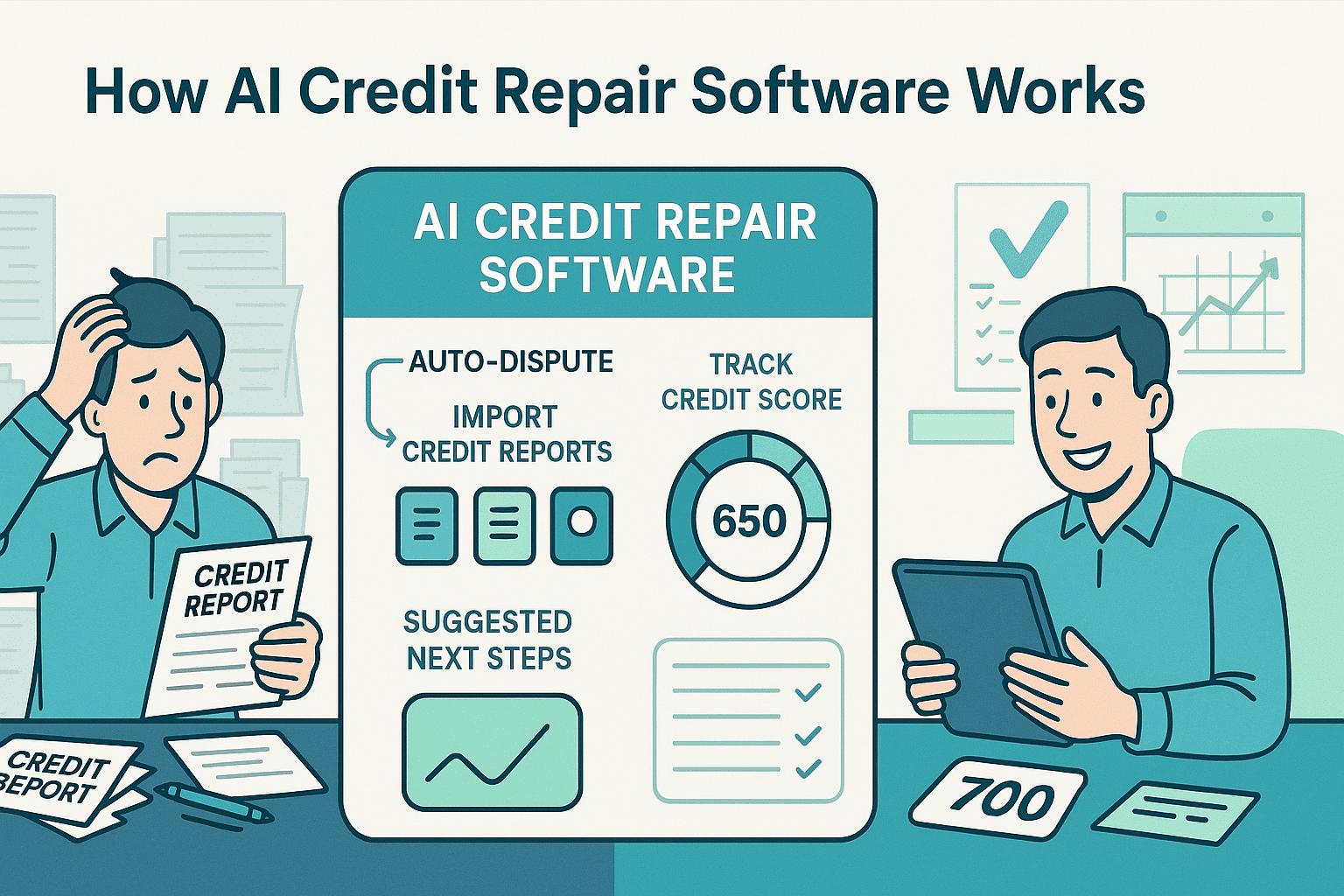
To truly choose software that fosters growth, you must look at the "hidden" operational tasks. One of the most significant bottlenecks in credit repair is the process of importing credit reports. In 2026, the best software provides direct integration with credit monitoring partners (such as SmartCredit or IdentityIQ).
This integration allows the software to "read" the report automatically, highlight changes since the last pull, and calculate the client's new FICO or VantageScore without the user having to manually compare two PDF documents. This feature alone can save a credit repair firm hundreds of hours per month as they scale toward a thousand-client roster.
Furthermore, look for e-signature integration. Growth is often stifled by the friction of onboarding. If a client has to print, sign, and scan a contract, the conversion rate drops. Integrated tools like DocuSign or proprietary e-sign modules within the credit repair software allow for one-click onboarding, which is essential for capturing leads the moment they are motivated to start.
Cost Analysis and ROI on Software Investment
While it is tempting to choose the cheapest option, the return on investment (ROI) for credit repair software is measured by the "cost per successful deletion."
- Software Fees: Generally range from $150 to $600 per month for professional tiers.
- Labor Savings: If a $300/month software saves 20 hours of labor that would otherwise cost $25/hour, the software has already paid for itself through efficiency ($500 in labor savings).
- Customer Lifetime Value (CLV): Software that improves the success rate or provides a better user experience increases the months a client stays in the program, directly increasing the CLV.
A business aiming for 20% month-over-month growth should prioritize software that offers unlimited leads and charges based on active clients or team members, rather than a system that penalizes you for having a large marketing database.
Common Pitfalls in Software Selection
Many business owners make the mistake of choosing software based on the interface's aesthetics rather than its functional depth. Avoid platforms that:
- Lack API Access: As your business grows, you will want to connect your credit repair software to your accounting tools (like QuickBooks), your email marketing platforms (like Mailchimp), or custom web forms. Without a robust API, your data remains siloed.
- Have No Training Resources: The credit repair industry has a steep learning curve regarding laws and tactics. The best software providers offer "Credit Repair Universities" or certification programs to ensure you use the tool effectively.
- Restrict Data Portability: Ensure you can export your client data at any time. If you decide to switch platforms in 2027, you do not want your business data held hostage by a proprietary format.
FAQ
What is the most important legal requirement for credit repair software?
The most critical requirement is compliance with the Credit Repair Organizations Act (CROA). The software must include features that prevent illegal billing practices and provide consumers with their legal rights and disclosures. Failure to comply with CROA can lead to heavy fines from the FTC or private lawsuits.
Can I run a credit repair business without specialized software?
While possible for a handful of clients, it is not sustainable for business growth. Manual tracking of dispute dates, credit report changes, and follow-up deadlines becomes prone to human error. Specialized software acts as a fail-safe, ensuring no deadlines are missed and every dispute is legally grounded.
How does AI change credit repair software in 2026?
AI has shifted the industry from "template-based" to "logic-based" disputes. Instead of using the same "Item is inaccurate" text for every client, AI analyzes the specific reporting error (such as a date inconsistency or a balance mismatch) and drafts a unique legal argument, which typically results in higher deletion rates.
Is cloud-based or desktop-based software better for growth?
In 2026, cloud-based SaaS (Software as a Service) is the industry standard for growth. It allows for remote teams, instant updates to reflect new credit laws, and seamless integration with third-party web tools. Desktop software lacks the collaborative features necessary to scale a modern agency.
Does the software include credit reports?
Most software does not provide the reports directly but integrates with third-party providers. The client usually pays for a credit monitoring subscription, and the software pulls the data from that account. This model is preferred as it keeps the business's overhead low while providing the client with ongoing credit monitoring.
Final Recommendation for Business Growth
To maximize growth in 2026, choose a software platform that offers a comprehensive affiliate portal and AI-driven dispute logic. If you are just starting, a platform like Credit Repair Cloud offers the best balance of training and tools. However, if you are already managing a team and looking to break into the enterprise tier, DisputeFox or similar AI-integrated platforms offer the customization and automation necessary to handle thousands of clients efficiently. Always prioritize platforms that offer a 30-day trial to test the workflow against your specific business model before committing to a long-term contract.
Image Gallery