Navigating Beneficial Life Insurance Forms: A Comprehensive Guide for Policyholders
Beneficial Life Insurance forms are the essential documents required to manage, update, or settle policies held with the Beneficial Life Insurance Company. As the company operates as a "closed block" of business—meaning it services exi...
Beneficial Life Insurance forms are the essential documents required to manage, update, or settle policies held with the Beneficial Life Insurance Company. As the company operates as a "closed block" of business—meaning it services existing policies but no longer sells new ones—these forms are the primary tools for policyholders to change beneficiaries, request policy loans, or process death benefit claims. Most forms can be accessed through the company’s official service portal or by contacting their Salt Lake City-based customer service department.
Contents
Understanding the Status of Beneficial Life Insurance in 2026
To correctly utilize Beneficial Life Insurance forms, it is necessary to understand the current operational status of the entity. Beneficial Life Insurance Company, a subsidiary of Deseret Management Corporation (owned by The Church of Jesus Christ of Latter-day Saints), ceased the sale of new life insurance products and annuities in 2009.
In 2026, the company remains a financially stable, "run-off" operation. This means their sole focus is the administration and fulfillment of existing "in-force" policies. For policyholders, this environment makes the accuracy of paperwork even more critical, as the administrative staff manages a finite pool of accounts with rigorous adherence to historical policy language and state-specific regulations. Whether you are a long-time policyholder or a beneficiary navigating a claim, the forms you submit are the legal catalysts for any action taken on a policy.
Essential Types of Beneficial Life Insurance Forms
Managing a life insurance policy over several decades requires periodic updates to ensure the contract reflects current life circumstances. Beneficial Life provides specific forms for different administrative needs. Using the correct form prevents processing delays and potential legal complications during the payout phase.
Beneficiary Designation and Change Forms
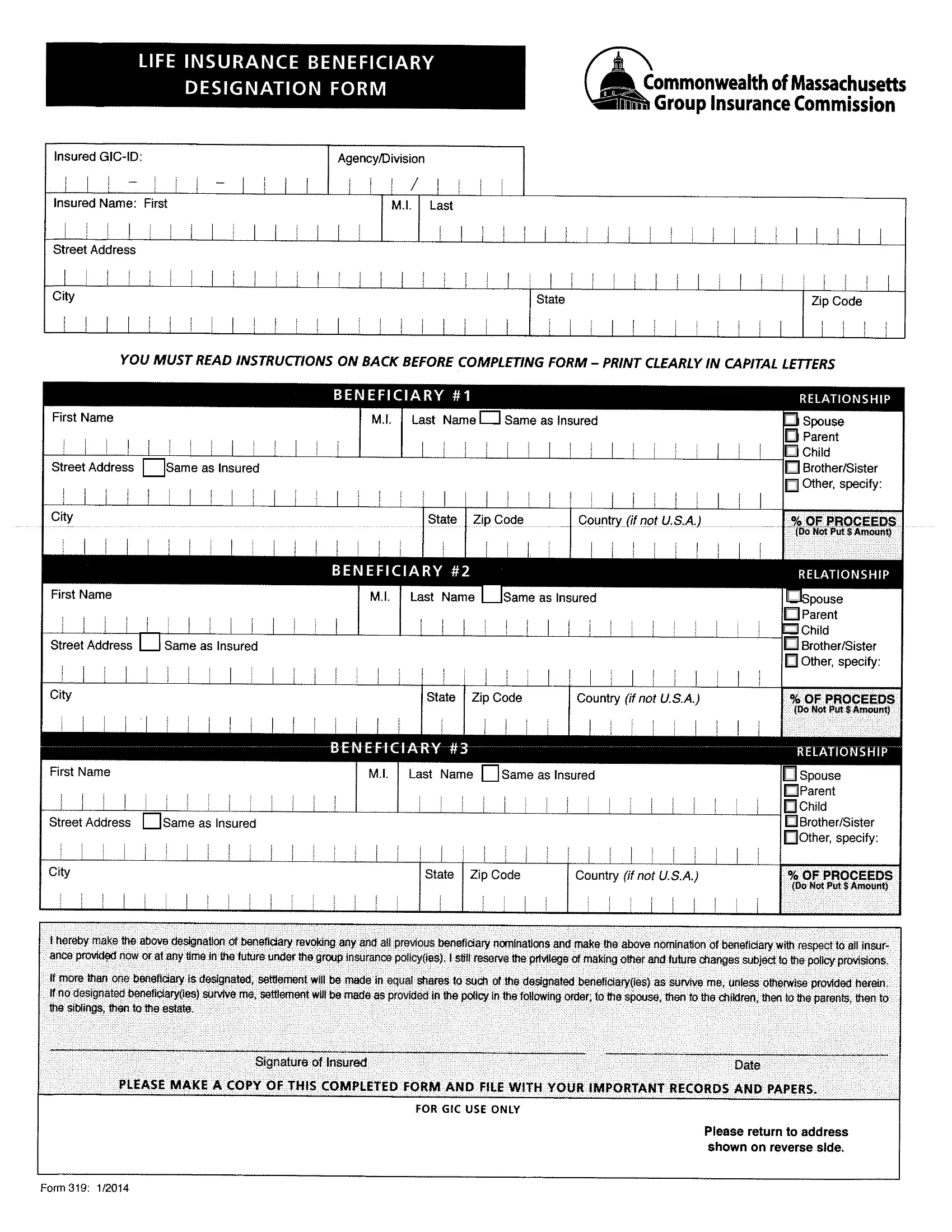
The Request for Change of Beneficiary is perhaps the most frequently utilized form. It allows the policy owner to designate who will receive the death benefit. In the context of older policies, it is common for original beneficiaries to have predeceased the insured or for family structures to have changed through marriage or divorce.
When filling out this form, policyholders must distinguish between Primary Beneficiaries (first in line for the payout) and Contingent Beneficiaries (those who receive the benefit only if the primary beneficiaries are deceased). Beneficial Life requires clear percentages for distributions if multiple individuals are named, and the total must equal 100%.
Policy Loan and Cash Value Access Forms
Many Beneficial Life policies are "Permanent" or "Whole Life" products that accumulate cash value. The Policy Loan Request Form allows owners to borrow against the equity of their policy. Because these are older contracts, the interest rates on these loans are often dictated by the specific terms at the time of issuance, which may differ significantly from modern market rates.
It is vital to understand that a policy loan is not a withdrawal; it is a debt secured by the death benefit. If the loan is not repaid, the balance plus accrued interest is deducted from the final payout to beneficiaries.
Ownership and Name Change Forms
The Absolute Assignment Form or Change of Ownership Form is used when the policy owner wishes to transfer all rights of the policy to another person or a trust. This is a common step in estate planning. Additionally, the Change of Name Form is required when a policyholder or beneficiary has a legal name change due to marriage, divorce, or court order. These forms usually require supporting documentation, such as a marriage certificate or a court decree.
Death Claim Documentation
The Claimant’s Statement is the primary document required to initiate the payout of a death benefit. This form must be completed by the named beneficiary. In 2026, as the "closed block" of policies continues to mature, the claims process is the most common interaction the company has with the public. This process typically requires the form to be accompanied by a certified death certificate.
Step-by-Step Guide to Accessing and Submitting Forms
Accessing the correct paperwork is the first hurdle in policy administration. Because Beneficial Life does not maintain a massive network of local agents, most transactions are handled directly with their central office.
- Locate the Form: Visit the official Beneficial Life Insurance Company website. Most standard forms, including beneficiary changes and address updates, are available in the "Forms" or "Customer Service" section as downloadable PDFs.
- Verify the Policy Number: Every form requires a valid policy number. This can be found on your original policy document or your most recent annual statement. Submitting a form without this number, or with an incorrect one, will result in the document being returned unprocessed.
- Complete with Precision: Use blue or black ink. If the policy is owned by a trust or a corporation, the person signing must indicate their title (e.g., "John Doe, Trustee").
- Notarization and Witnesses: Many Beneficial Life forms, particularly those involving the transfer of ownership or large cash value surrenders, require a Notary Public to witness the signature. Do not sign these forms until you are in the presence of the notary.
- Submission: Completed forms should be mailed to the company's headquarters.
- Mailing Address: Beneficial Life Insurance Company, P.O. Box 45600, Salt Lake City, UT 84145-0600.
- Physical Address (for overnight delivery): 36 South State Street, Suite 1000, Salt Lake City, UT 84111.
Summary of Common Forms and Requirements
| Form Name | Primary Purpose | Required Supporting Documents |
|---|---|---|
| Change of Beneficiary | Update who receives the death benefit. | None, unless signing for a trust. |
| Claimant’s Statement | Request payout after the death of the insured. | Certified Death Certificate. |
| Policy Loan Request | Borrow against the policy's cash value. | None, but may require notarization. |
| Lost Policy Statement | Formally declare the original policy lost/destroyed. | Verification of identity. |
| Change of Name | Update policy records after a legal name change. | Marriage license or court order. |
| W-9 Form | Certify Taxpayer Identification Number. | Essential for taxable distributions. |
Critical Requirements for Document Verification
Beneficial Life maintains strict verification protocols to prevent insurance fraud and ensure that funds are distributed only to authorized parties. In 2026, these security measures remain a top priority.
The Role of Notarization
If a form indicates that a signature must be notarized, this is a non-negotiable requirement. A notary serves as an impartial witness who verifies the identity of the signer. This is especially important for the Lost Policy Statement and Surrender Request Forms, where the policyholder is effectively liquidating a financial asset.
Verification of Authority
If you are signing a form on behalf of someone else—such as under a Power of Attorney (POA)—you must include a complete copy of the legal document granting you that authority. Beneficial Life’s legal department must review the POA to ensure it includes the specific power to manage insurance contracts. Similarly, if a policy is owned by a Trust, a "Memorandum of Trust" or "Trust Certification" is usually required alongside the administrative form.
Troubleshooting Common Submission Issues
Even with the correct forms, errors can lead to significant delays. Understanding the common pitfalls can help you navigate the bureaucracy more effectively.
- Incomplete Beneficiary Information: A common mistake is providing a name but no Social Security number or date of birth for a beneficiary. While not always mandatory, providing this data ensures that Beneficial Life can locate the beneficiary when the time comes to pay the claim.
- Signature Mismatch: If your signature has changed significantly since you originally purchased the policy decades ago, the company may flag the form for potential fraud. If you suspect this might be an issue, providing a copy of a current government-issued ID can help verify your identity.
- Outdated Form Versions: While the core requirements rarely change, the company occasionally updates the layout or legal disclosures on its forms. Always download the most recent version from the website rather than using a copy you may have kept in a file for several years.
- Missing W-9: For any transaction that involves a distribution of funds (loans, surrenders, or death benefits), the IRS requires a completed W-9 form. Without this, the company may be legally required to withhold a portion of the payment for federal taxes.
Tax Considerations and Legal Disclosures
It is important to remember that changes made via these forms can have tax implications. For example, surrendering a policy for its cash value may trigger a taxable event if the amount received exceeds the "cost basis" (the total premiums paid into the policy).
Beneficial Life Insurance Company does not provide tax or legal advice. Policyholders should consult with a qualified tax professional or estate attorney before making significant changes to ownership or requesting large distributions. In 2026, the tax laws surrounding "Modified Endowment Contracts" (MECs) remain complex; if your policy is classified as a MEC, any loan or withdrawal may be treated as taxable income first.
FAQs
How do I change my beneficiary if the original person is deceased?
You must submit a "Request for Change of Beneficiary" form. It is helpful, though not always required, to provide a copy of the death certificate for the deceased beneficiary to help the company clear their records. Once processed, the new beneficiaries you name will become the sole legal claimants.
Can I submit Beneficial Life forms online?
While you can download the forms online, Beneficial Life typically requires original "wet" signatures or high-quality scanned copies sent via a secure portal or fax. For many sensitive transactions, such as ownership changes, they still require the physical document to be mailed to their Salt Lake City office to ensure authenticity.
What should I do if I cannot find my original policy document?
You do not need the original policy to make changes or file a claim. You will, however, need to complete a "Lost Policy Statement" or "Affidavit of Lost Policy" form. This document legally affirms that the policy is missing and protects the company if the original document were to resurface and be used fraudulently.
How long does it take for a claim form to be processed?
Once Beneficial Life receives the Claimant’s Statement and the certified death certificate, the standard processing time is typically 7 to 14 business days. However, this can be extended if the policy is still within its "contestability period" (though this is rare for Beneficial Life as most policies were issued prior to 2009) or if there are conflicting claims.
Is the "Beneficial Life" involved with the LDS Church still active?
Yes. Beneficial Life remains a subsidiary of Deseret Management Corporation. While it is not selling new insurance, it is a fully functioning entity dedicated to honoring the contracts of its existing policyholders. The company’s financial ratings (such as from A.M. Best) generally reflect a stable outlook, providing assurance that claims will be paid.
Practical Recommendation
If you are a policyholder, your next action should be to conduct an "Annual Policy Review." Log in to the Beneficial Life portal or call their service line at 1-800-233-4631 to verify that your current address and beneficiary designations are correct. If any information is outdated, download the appropriate Change of Beneficiary or Address Change form immediately. Keeping these records current is the most effective way to ensure that your death benefit is paid out quickly and without legal dispute to your loved ones.
Image Gallery