How to Write a Check from a Credit Card: A Guide to Convenience Checks
You can write a check from a credit card using "convenience checks" provided by your card issuer. These checks draw directly from your credit line rather than a bank account balance. While they function like standard checks, they are t...
You can write a check from a credit card using "convenience checks" provided by your card issuer. These checks draw directly from your credit line rather than a bank account balance. While they function like standard checks, they are typically treated as cash advances, incurring higher interest rates and immediate fees.
Contents
In the landscape of 2026 personal finance, the ability to bridge the gap between credit availability and cash-only transactions remains a vital tool for many consumers. Whether you are paying a contractor who does not accept plastic or managing a complex balance transfer, "writing a check from a credit card" involves a specific financial instrument known as a convenience check. However, because these checks interact with your credit limit differently than a standard swipe or tap, understanding the mechanical, legal, and financial implications is essential before you put pen to paper.
What Are Credit Card Convenience Checks?
Convenience checks are physical paper checks issued by a credit card company that are linked to your credit card account. When you write one of these checks, the amount is charged to your credit card balance. Unlike a standard check from a checking account, which moves existing funds, a convenience check creates new debt.
Financial institutions often send these checks in the mail as promotional offers, particularly for balance transfers. In 2026, most major issuers also allow cardholders to request them through their digital banking portals. It is important to distinguish these from debit card checks or "e-checks." A convenience check is a high-cost borrowing tool, not a method of spending money you already own.
The Two Primary Types of Convenience Checks
- General Spending Checks: These can be made out to any payee. They are often used for services where credit cards are not accepted, such as paying a private landlord or a small-scale home repair professional. These are almost always processed as cash advances.
- Balance Transfer Checks: These are specifically designed to pay off debt at another institution. They often come with a lower introductory APR (Annual Percentage Rate) but usually carry a one-time transaction fee.
How to Obtain and Prepare to Use Convenience Checks
You cannot simply use a standard bank check and write your credit card number on it. You must use the specific checks provided by your issuer for that specific account.
1. Verification of Availability
Before attempting to write a check, log in to your credit card issuer’s app or website to see if your account is eligible. Not all accounts offer this feature, and those that do may require a minimum credit limit or a clean payment history. In 2026, many "premium" or "travel" cards have phased these out in favor of digital cash-out features, while "low-interest" or "basic" cards continue to utilize them.
2. Requesting the Checks
If you do not have checks on hand, you can request a "book" of convenience checks through the "Services" or "Account Management" section of your online portal. Most issuers will ship them via standard mail within 7 to 10 business days. Note that some issuers may charge a small administrative fee for printing and mailing the checkbook.
3. Checking Your Cash Advance Limit
This is a critical step. Your total credit limit and your cash advance limit are rarely the same. For example, if you have a $10,000 credit limit, your cash advance limit might only be $2,000. If you write a convenience check for $3,000, it will likely be declined, and you may be hit with a "returned check fee" from both the bank and the payee.
Step-by-Step Instructions for Writing the Check
Writing a convenience check is identical to writing a personal check, but the consequences of an error are more expensive.
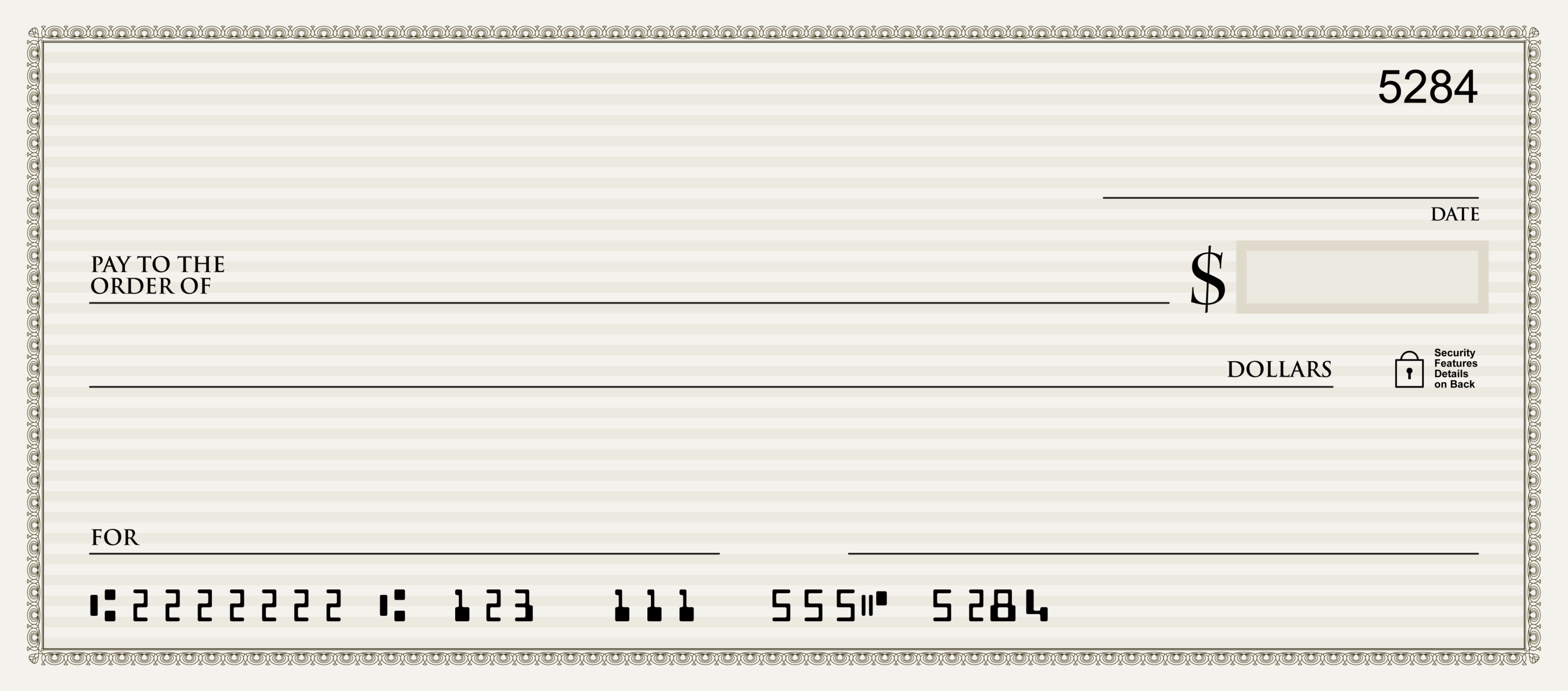
- Date the Check: Write the current date in the top right corner. Post-dating checks (writing a future date) is generally discouraged as banks may process the check immediately regardless of the date written.
- The Payee Line ("Pay to the Order of"): Enter the name of the person or business you are paying. Be precise; if you are using this for a balance transfer, the payee should be the name of the other financial institution.
- Numerical Amount: Write the dollar amount in numbers in the small box on the right.
- Written Amount: Write out the dollar amount in words on the line below the payee. For example, "Five hundred forty-two and 15/100." This is the legal amount the bank will honor if there is a discrepancy.
- The Memo Line: Use this for account numbers or invoice numbers. If you are paying a utility or a specific bill, this helps the recipient credit the payment to the correct account.
- Signature: Sign the check exactly as your name appears on your credit card.
The Financial Impact: Costs and Fees
The most important aspect of writing a check from a credit card is the cost. Convenience checks are one of the most expensive ways to access capital.
Cash Advance Fees
Almost every convenience check triggers a cash advance fee. This is typically a flat rate (e.g., $10) or a percentage of the check amount (e.g., 3% to 5%), whichever is greater. If you write a check for $2,000, a 5% fee adds an immediate $100 to your balance.
Higher Interest Rates (APR)
The APR for cash advances and convenience checks is significantly higher than the APR for standard purchases. While a purchase APR might be 18% to 22% in the 2026 market, the cash advance APR often exceeds 29%.
The Lack of a Grace Period
On standard credit card purchases, you usually have a "grace period" of 21 to 25 days where no interest accrues if you pay your statement in full. This does not apply to convenience checks. Interest begins to accrue the moment the check is posted to your account. There is no "free" period; every day the balance remains, you are being charged at that high cash advance rate.
Comparison of Payment Methods
| Feature | Standard Credit Purchase | Convenience Check | Personal Check (Debit) |
|---|---|---|---|
| Source of Funds | Credit Line | Credit Line (Cash Limit) | Bank Account Balance |
| Transaction Fee | Usually $0 for consumer | 3% - 5% typical | $0 |
| Interest Rate | Purchase APR | Cash Advance APR (Higher) | None |
| Grace Period | Yes (if balance is $0) | No (Interest starts now) | N/A |
| Consumer Protection | High (Chargebacks) | Low/None | Minimal |
Risks and Critical Considerations
Beyond the high costs, there are structural risks associated with using credit card checks that can affect your long-term financial health.
Loss of Purchase Protections
When you use a credit card for a purchase, you are protected by the Fair Credit Billing Act, which allows for chargebacks if a product is never delivered or is defective. When you write a convenience check, you lose these protections. The transaction is treated as cash. If the contractor you paid with a check disappears without finishing the job, the credit card company will not help you recover the funds; you must pursue the individual legally yourself.
Impact on Credit Utilization
Credit utilization—the ratio of your debt to your credit limit—is a major factor in your credit score. Because convenience checks often have lower limits than your total credit line, writing a large check can instantly "max out" that segment of your credit. Furthermore, because the fees and interest are added to the principal immediately, your utilization can spike higher than you anticipated, potentially lowering your credit score within a single billing cycle.
Fraud and Security
Convenience checks are physical documents. If they are stolen or intercepted in the mail, they can be used to drain your credit line. Unlike a stolen credit card, which can be frozen instantly, a physical check can be more difficult to stop once it has been endorsed and deposited. Always treat your credit card checkbook with the same security as you would a stack of cash.
Strategic Alternatives to Writing a Credit Card Check
Given the high cost of convenience checks, it is worth exploring other methods of payment that might be more cost-effective in 2026.
- Digital Wallets (Venmo/PayPal/CashApp): You can link a credit card to these apps. While they usually charge a 3% fee for credit card transactions, the interest may be processed as a "purchase" rather than a "cash advance" depending on your issuer's policies and the app's categorization. This can sometimes preserve your grace period.
- Personal Loans: If you need to write a check for a large amount (e.g., $5,000 or more), a fixed-rate personal loan will almost always have a lower APR and more favorable repayment terms than a credit card cash advance.
- Merchant-Specific Financing: Many service providers (contractors, dental offices, etc.) offer their own financing through third parties. These often have 0% introductory periods that are far superior to the high-interest checks from a credit card.
- Using a Debit Card: If the funds are available in your checking account, a standard debit check or ACH transfer is always the cheapest option as it involves zero interest and zero transaction fees.
Frequently Asked Questions
Can I write a convenience check to myself?
Yes, you can write a check to yourself and deposit it into your own checking account. This is a common way to "liquidate" credit into cash. However, keep in mind that the same cash advance fees and high interest rates apply immediately upon deposit.
Do convenience checks earn rewards or cash back?
Almost never. Card issuers specifically exclude cash advances and convenience checks from rewards programs. You will not earn points, miles, or cash back on these transactions, making them even less efficient than standard card usage.
What happens if I go over my cash advance limit?
If you write a check for more than your available cash advance limit, the check will likely be "bounced" or declined. You will then be responsible for a returned check fee from your credit card issuer (often $35-$40) and potentially a "non-sufficient funds" (NSF) fee from the person or business you tried to pay.
How do I stop a convenience check?
You can request a "Stop Payment" by calling your issuer's customer service line. However, unlike a regular bank account, there is often a significant fee for this service (ranging from $25 to $50 per check), and it must be done before the check is presented for payment.
Are balance transfer checks different from convenience checks?
Technically, they are both convenience checks, but they are coded differently. A balance transfer check usually has a specific promotional interest rate (like 0% for 12 months) and is intended only for paying off other debt. A general convenience check is a standard cash advance tool with no promotional rate.
Recommendation for 2026 Cardholders
Writing a check from a credit card should be viewed as a last-resort financial tool. While it is a convenient way to access your credit line for cash-only situations, the lack of a grace period and the high cash advance APR make it incredibly expensive.
If you must use one, ensure you have a clear repayment plan to eliminate the balance within 30 days to minimize interest. For any amount over $1,000, check if you can use a digital payment service or secure a short-term personal loan first. If the goal is debt consolidation, specifically request "Balance Transfer Checks" to ensure you are getting a promotional rate rather than the standard, punishing cash advance rate.
Image Gallery