Diamonds as an Investment: A Comprehensive Guide to Market Value and Strategy
Investing in diamonds involves purchasing high-quality, natural stones—specifically those classified as investment-grade—to serve as a long-term hedge against inflation and currency volatility. Success in this niche market requires a d...
Investing in diamonds involves purchasing high-quality, natural stones—specifically those classified as investment-grade—to serve as a long-term hedge against inflation and currency volatility. Success in this niche market requires a deep understanding of the "4 Cs," rigorous certification via the GIA, and a focus on rarity rather than retail aesthetic. Unlike liquid financial assets, diamonds are tangible commodities that offer portability and wealth preservation but require specialized knowledge to navigate resale spreads.
Contents
Understanding the Landscape of Investment-Grade Diamonds
In 2026, the distinction between "jewelry" and "investment-grade" diamonds has never been more pronounced. While the retail jewelry market focuses on sentiment and design, the investment market is driven by scarcity and technical specifications. To consider a diamond an investment, one must look beyond the sparkle and evaluate it as a mobile, concentrated form of wealth.
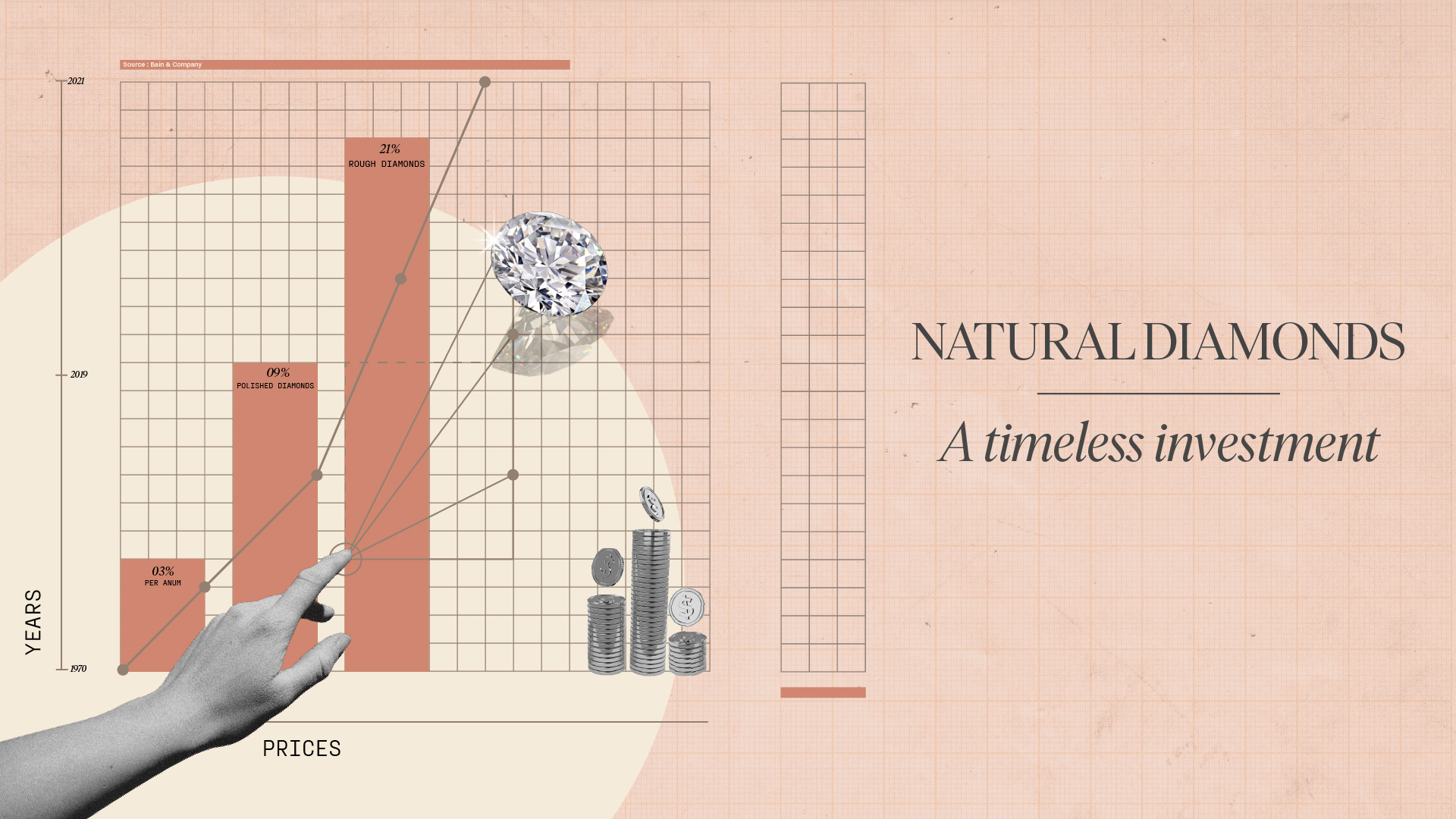
Historically, diamonds have not behaved like traditional stocks or bonds. They do not yield dividends or interest. Instead, they act similarly to gold or fine art—assets that retain value when fiat currencies fluctuate. However, unlike gold, diamonds are not fungible. Every stone is unique, meaning there is no single "spot price" for a diamond. Valuation is a complex intersection of weight, purity, and market demand.
For an investor in 2026, the primary objective is usually diversification. In an era of digital assets and high-frequency trading, a physical diamond represents a "hard asset" that exists outside the banking system. This provides a layer of privacy and physical security, though it comes with the trade-off of lower liquidity and high transaction costs.
The Essential Prerequisites: The 4 Cs and Certification
Before allocating capital to gemstones, an investor must master the technical standards that dictate value. The Gemological Institute of America (GIA) remains the industry's most trusted authority. In the current 2026 market, a diamond without a GIA Grading Report—and increasingly, a digital blockchain-based provenance record—is considered a high-risk asset.
Carat Weight
Carat weight is the most visible driver of price, but it operates on a non-linear scale. A 2-carat diamond is significantly more expensive than two 1-carat diamonds of identical quality because larger stones are exponentially rarer. For investment purposes, professionals generally recommend stones starting at 1.0 carat, with the 3.0 to 5.0-carat range often providing the best balance of rarity and eventual resellability.
Color Grade
For "white" or colorless diamonds, the scale runs from D (colorless) to Z (light yellow). Investment-grade stones are typically concentrated in the D, E, and F categories. Once a stone reaches the G or H range, it becomes more of a commercial jewelry item. In 2026, investors are increasingly avoiding stones with "Strong Fluorescence," as it can cause a milky appearance in natural light, negatively impacting the resale value despite a high color grade.
Clarity Grade
Clarity refers to the absence of inclusions (internal flaws) and blemishes (external flaws). While "Flawless" (FL) and "Internally Flawless" (IF) stones command the highest premiums, many investors find the best value in the VVS1 and VVS2 (Very, Very Slightly Included) categories. These stones appear perfect to the naked eye and even under standard magnification, offering high rarity without the extreme "perfection premium" of FL stones.
Cut Quality
The cut is often the most overlooked "C," but it dictates the stone's "fire" and brilliance. An investment-grade diamond should almost exclusively carry an "Excellent" grade for Cut, Polish, and Symmetry. A poorly cut diamond, even if it is a D-color FL stone, will struggle to find a buyer in the secondary market because its light performance will be dull.
The Impact of Lab-Grown Diamonds (LGDs) in 2026
By 2026, the market has clearly bifurcated. Lab-grown diamonds have achieved such high production volumes and low price points that they are now categorized as high-end costume jewelry or "tech products" rather than investment assets.
Investors must understand that lab-grown diamonds have zero resale value in the investment context. Their price continues to track the cost of energy and technology, which trends downward over time. Natural diamonds, conversely, derive their value from geological scarcity. In 2026, the "natural" origin is verified through sophisticated spectroscopy and blockchain-backed supply chains like De Beers' Tracr platform, ensuring that the stone is not a synthetic substitute.
Fancy Colored Diamonds: The "Equities" of the Gem World
While white diamonds are the "blue-chip" stocks of the industry, Fancy Colored Diamonds (pinks, blues, and yellows) are the high-growth, high-risk assets. These stones are significantly rarer than colorless diamonds.
- Pink and Red Diamonds: Following the 2020 closure of the Argyle Mine in Australia, the supply of high-quality pink diamonds has plummeted. In 2026, these remain some of the most sought-after tangible assets in the world.
- Blue Diamonds: Often containing traces of boron, these stones are prized by ultra-high-net-worth individuals and frequently set records at auction houses like Sotheby's and Christie's.
- Yellow Diamonds: More common than pinks or blues, "Fancy Intense" and "Fancy Vivid" yellow diamonds offer a more accessible entry point for color-focused investing.
The valuation of colored diamonds focuses less on clarity and more on the intensity and saturation of the color. A slightly included Vivid Pink diamond is worth far more than a Flawless light pink stone.
Market Valuation and the Rapaport Price List
How does an investor know they are paying a fair price? The Rapaport Diamond Report, established by Martin Rapaport, provides the industry-standard baseline for diamond pricing.
It is important to note that the "Rap List" reflects high-end asking prices in the global dealer market. An individual investor will typically buy at a slight premium to this list and sell at a discount. In 2026, savvy investors use these tables to ensure they are not paying "retail markups," which can be 100% to 300% above the wholesale value. Investment-grade transactions should ideally occur at or near the wholesale level through specialized brokers or diamond investment funds.
| Asset Class | Liquidity | Volatility | Storage Requirement | 10-Year Outlook (Est.) |
|---|---|---|---|---|
| Natural Diamonds | Low | Low-Moderate | Physical Secure (Vault) | Stable / Scarcity-Driven |
| Gold Bullion | High | Moderate | Physical Secure | Inflation-Correlated |
| S&P 500 Index | High | Moderate-High | Digital/Brokerage | Growth-Correlated |
| Fancy Color Diamonds | Very Low | Moderate | Physical Secure | High Rarity Premium |
Liquidity Challenges and Exit Strategies
The single biggest risk in diamond investing is liquidity. You cannot sell a diamond as quickly as you can sell 100 shares of Apple stock.
When it comes time to exit the investment, owners typically have three paths:
- Auctions: Best for "investment-grade plus" stones (e.g., 5ct+ or rare colors). However, auction houses charge significant commissions (often 10-20%).
- Private Treaty/Brokers: Specialized investment brokers can match sellers with buyers for a fee. This is often the most efficient route for 1–3 carat white diamonds.
- Dealer Buy-Backs: Some investment-focused firms offer buy-back guarantees, though these are often at a 10-15% discount from the current market price to cover the dealer's spread.
Investors must account for the "buy-sell spread." If you buy a diamond and try to sell it the next day, you will likely lose 15-30% of your capital. Therefore, diamonds should be viewed as a 5-to-10-year minimum holding.
Storage, Insurance, and Maintenance
Physical ownership requires logistical planning. In 2026, most diamond investors opt for "allocated storage" in professional vaults located in jurisdictions like Switzerland, Singapore, or Delaware. These facilities offer:
- Segregated Storage: Your specific stone is kept separate from others.
- Insurance: Comprehensive coverage against theft, loss, or damage, which is often cheaper when the stone is kept in a professional vault rather than at home.
- Audit Trails: Regular third-party verification that the stone is present and matches its GIA certificate.
If you choose to take physical possession, you must insure the stone through a specialized jewelry insurer (e.g., Jewelers Mutual) rather than a standard homeowner's policy, which often has low caps on "unscheduled" personal property.
Common Mistakes to Avoid
- Buying Retail: Never buy an "investment" diamond from a mall jeweler or a luxury brand boutique. You are paying for the brand, the marketing, and the expensive storefront, none of which adds to the stone's intrinsic resale value.
- Ignoring the "Girdle" Laser Inscription: Ensure the GIA report number is laser-inscribed on the diamond's edge. This allows for easy verification that the stone matches the paperwork.
- Chasing Size Over Quality: A 2-carat diamond with poor color and clarity is much harder to sell than a 1-carat D-color Flawless stone. In the investment world, quality is the primary driver of liquidity.
- Forgetting Taxes: In many jurisdictions, physical diamonds are subject to capital gains tax upon sale. Additionally, if you take delivery of the stone, you may be liable for sales tax or VAT, which immediately puts your investment "in the red."
FAQ
Are diamonds a better investment than gold?
Diamonds are more concentrated than gold, meaning a million dollars' worth of diamonds fits in a pocket, whereas a million dollars of gold weighs over 15 kilograms. However, gold is more liquid and has a standardized daily price. Diamonds are better for high-density wealth portability, while gold is better for active trading and hedging.
How has the 2026 market changed for diamond investors?
By 2026, the integration of blockchain technology has made "provenance" a mandatory requirement. Investors now demand a digital trail showing the stone's journey from a specific mine to the cutter to the grader. This has reduced the risk of "conflict diamonds" and improved transparency in pricing.
Can I invest in a diamond fund instead of physical stones?
Yes, diamond private equity funds and tokenized diamond platforms exist. These allow you to gain exposure to the price of diamonds without the hassle of physical storage. However, these often come with management fees and counterparty risks that physical ownership avoids.
Do I need to clean my investment diamonds?
If the diamond is kept in a vault for investment, it should be handled as little as possible. Skin oils can attract dust, which may obscure the stone's clarity during an appraisal. If you must handle the stone, use lint-free gloves and professional cleaning solutions recommended by the GIA.
Is the GIA the only certification that matters?
While organizations like the HRD (Hoge Raad voor Diamant) and IGI (International Gemological Institute) are reputable, the GIA is the undisputed global benchmark for investment-grade stones. Diamonds with GIA certificates generally command higher prices and sell faster than those with other reports.
Practical Recommendation for 2026 Investors
If you are looking to enter the diamond market in 2026, start by allocating no more than 5% of your total portfolio to this asset class. Focus on "Round Brilliant" natural diamonds between 1.5 and 3.0 carats, with a minimum color grade of E and a clarity grade of VVS2 or higher. Ensure the stone has a GIA "Triple Excellent" rating (Cut, Polish, Symmetry) and no fluorescence. Purchase through a wholesale broker who can provide access to the Rapaport price baseline and offers a clear, documented exit strategy or resale platform.
Image Gallery