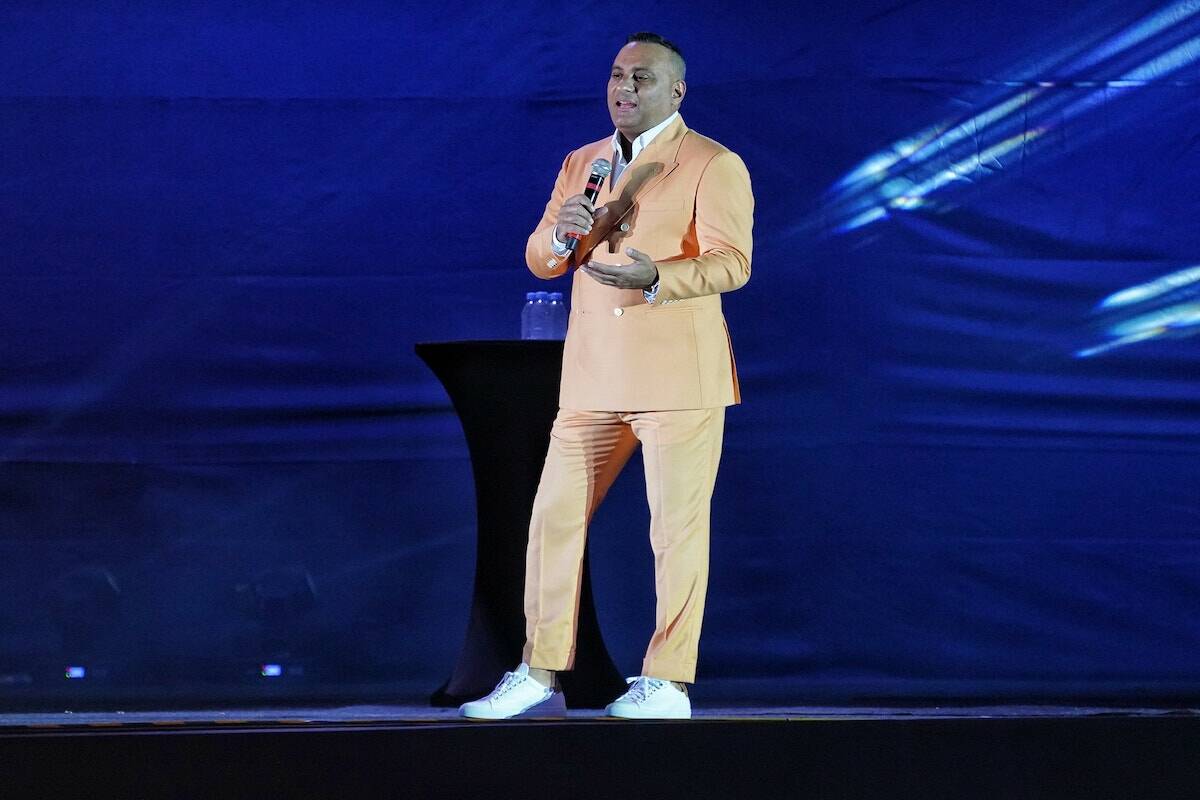
Russell Peters Age and Career Milestones: A Legacy of Global Comedy
Born on September 29, 1970, in Toronto, Canada, Russell Peters is 55 years old as of 2026. He is widely recognized as a pioneer of the modern observational comedy circuit, specifically known for his ability to leverage cultural nuances...
Born on September 29, 1970, in Toronto, Canada, Russell Peters is 55 years old as of 2026. He is widely recognized as a pioneer of the modern observational comedy circuit, specifically known for his ability to leverage cultural nuances, ethnic stereotypes, and regional idiosyncrasies to connect with a global audience. Over a career spanning more than three decades, he transitioned from a local club performer to an international headliner, becoming one of the first stand-up comedians to effectively utilize the internet to build a worldwide fanbase long before the explosion of modern streaming platforms.
Contents
Early Beginnings and the Canadian Comedy Circuit
Russell Peters began his career in 1989, performing at open-mic nights in Toronto. During the early 1990s, he focused on sharpening his timing and delivery within the competitive Canadian stand-up scene. His early years were defined by the grind of the club circuit, where he learned to navigate diverse rooms and refine his signature style—a mix of storytelling and crowd work.
His upbringing as the son of Anglo-Indian parents provided him with a unique perspective on the immigrant experience in North America. This background became the bedrock of his comedy, allowing him to observe and lampoon cultural differences in a way that resonated deeply with immigrant communities that were, at the time, largely ignored by mainstream Western entertainment.
The Turning Point: The Global Breakthrough
While Peters spent the 1990s building a steady reputation in Canada, his international breakthrough arrived in 2004 with his appearance on the Canadian television show Comedy Now!. A clip from this performance, where he famously mocked various ethnic accents and cultural quirks, became one of the earliest examples of viral content. The video spread across the internet via peer-to-peer file sharing and social platforms, reaching millions of viewers outside of his traditional touring markets.
This viral success in the mid-2000s acted as a catalyst that allowed him to move into large-scale touring. He began filling theaters in regions where traditional Western comedians were rarely booked, specifically in South Asia, the Middle East, and Southeast Asia. By 2007, he had achieved the rare feat of selling out the Air Canada Centre in Toronto, a massive milestone that solidified his status as a legitimate stadium-level performer.
Milestones in International Touring and Media
As a performer, Peters is notable for his endurance and his commitment to the touring model. Unlike many of his peers who transitioned early into acting or television hosting, Peters maintained a primary focus on live stand-up. His career milestones reflect this commitment:
- 2008 – Red, White and Brown: This special was a pivotal moment in his career, further cementing his reputation for observational comedy centered on race and cultural identity.
- 2010 – The Green Card Tour: Peters became the first comedian to sell out a massive world tour that spanned multiple continents, setting records for ticket sales in countries like the United Arab Emirates and India.
- 2011 – Guinness World Record: During his Notorious world tour, he set attendance records for a comedy show at several major international venues.
- 2013 – Netflix Partnership: Peters was an early adopter of the direct-to-streaming model, partnering with Netflix for his special Notorious. This shift allowed his work to reach a global audience instantly, bypassing traditional television network constraints.
- 2015 – Walk of Fame: He was inducted into Canada’s Walk of Fame, a recognition of his contribution to the global perception of Canadian entertainment.
Statistical Overview of Career Evolution
| Career Phase | Focus | Key Medium | Market Impact |
|---|---|---|---|
| 1989–1999 | Club Circuit | Live Stand-up | Local Canadian fame |
| 2000–2009 | Viral Growth | VHS/DVD/Early YouTube | International recognition |
| 2010–2019 | Global Stadium Tours | Streaming Platforms | Market expansion to Asia/Middle East |
| 2020–2026 | Legacy/Multi-media | Podcasts/Streaming | Established industry authority |
Cultural Impact and Style Evolution
Russell Peters' style is often categorized as "observational," but it is arguably more accurate to describe it as "cultural anthropology through a comedic lens." He frequently interacts with members of the audience, asking them about their heritage and then using that information to build riffs that highlight human commonality through the lens of difference.
This approach was not without its critics. As the public discourse regarding racial and ethnic humor evolved throughout the 2010s and 2020s, Peters faced questions regarding the longevity of his brand of humor. However, he maintained his relevance by maturing his material. In his more recent work, he has incorporated more autobiographical elements, discussing his life as a father and his experiences as an aging performer in the modern entertainment landscape.
Current Status and Future Trajectory
As of 2026, Russell Peters maintains a significant presence in the industry, balancing live performance with other media ventures. He has effectively utilized the podcast format to engage with fans on a more personal level, often stripping away the "persona" of the comedian to discuss the business of show business and the evolution of comedy as an art form.
He continues to influence a new generation of comedians, particularly those from immigrant backgrounds who now view his success as the blueprint for an international career. His longevity is a testament to his ability to adapt his business model—moving from traditional live shows to digital distribution and back to intimate, venue-based touring.
Frequently Asked Questions
How did Russell Peters become famous before social media? Russell Peters achieved fame through the early internet and traditional television specials. His 2004 Comedy Now! performance was shared virally in the early days of high-speed internet, which allowed his material to bypass traditional gatekeepers and gain traction in international markets.
What is the defining characteristic of his comedy style? His style is defined by interactive "crowd work," where he engages audience members about their cultural background. This creates a spontaneous, conversational tone that makes every show feel unique to the location.
Has Russell Peters shifted his focus to acting? While he has appeared in several film and television roles, Peters has consistently prioritized stand-up comedy as his primary vocation. His acting work is typically secondary to his touring schedule.
Why is he considered a pioneer in international comedy? He was one of the first stand-up comedians to demonstrate that a performer could fill stadiums in non-Western markets. By leveraging his appeal to the South Asian diaspora and international comedy fans, he mapped out a touring route that many Western comedians now emulate.
What is the current approach to his career in 2026? In 2026, Peters focuses on maintaining his legacy as a veteran of the craft. His current work emphasizes long-form storytelling and candid podcasting, moving away from purely observational ethnic humor toward more reflective, personal narrative comedy.
Recommendation for Further Engagement
For those interested in the technical progression of his career, the best next step is to examine his transition from his early 2000s specials to his more recent, long-form content. By comparing the pacing and subject matter of Outsourced (2006) with his latest streaming work, you can observe the professional evolution of a comedian who has successfully navigated the shift from the club era to the digital age.
Image Gallery