The Galactic Starcruiser Price Explained for Travelers
The Star Wars: Galactic Starcruiser, which operated from 2022 to 2023, typically cost between $4,800 and $6,000 for a two-night voyage. This all-inclusive price covered luxury accommodations, boutique dining, and immersive role-playing...
The Star Wars: Galactic Starcruiser, which operated from 2022 to 2023, typically cost between $4,800 and $6,000 for a two-night voyage. This all-inclusive price covered luxury accommodations, boutique dining, and immersive role-playing. While permanently closed as of 2026, its pricing remains the benchmark for premium themed entertainment and all-inclusive immersive travel.
Contents
Historical Pricing Overview: The Cost of a Two-Night Voyage
To understand the pricing of the Galactic Starcruiser, one must first view it not as a standard hotel stay, but as a multi-day theatrical production where the guest is a primary participant. From its opening in March 2022 until its final voyage in September 2023, the pricing was structured as a flat fee for a two-night "voyage" aboard the Halcyon starship.
The entry-level price for a party of two adults in a Standard Cabin started at approximately $4,809. For a party of three (two adults and one child), the price rose to roughly $5,299, and a party of four (three adults and one child) typically saw costs around $5,999. These figures represent the baseline "all-inclusive" rates that were available for the majority of the ship's operational lifespan.
When broken down into a "per person, per night" metric, travelers were looking at a cost of roughly $1,200 per person. In the context of 2026 travel markets, this remains one of the highest price points ever seen for a domestic themed experience, rivaling high-end African safaris or luxury Antarctic expeditions. The price was intentionally high to reflect the labor-intensive nature of the experience, which featured a near 1:1 ratio of cast members to guests.
Understanding the Tiered Cabin Structure
The Galactic Starcruiser offered three distinct cabin classes, each with its own pricing tier. Because the ship only contained 100 cabins, the scarcity of the higher-tier suites often drove prices even higher during peak demand periods.
Standard Cabins
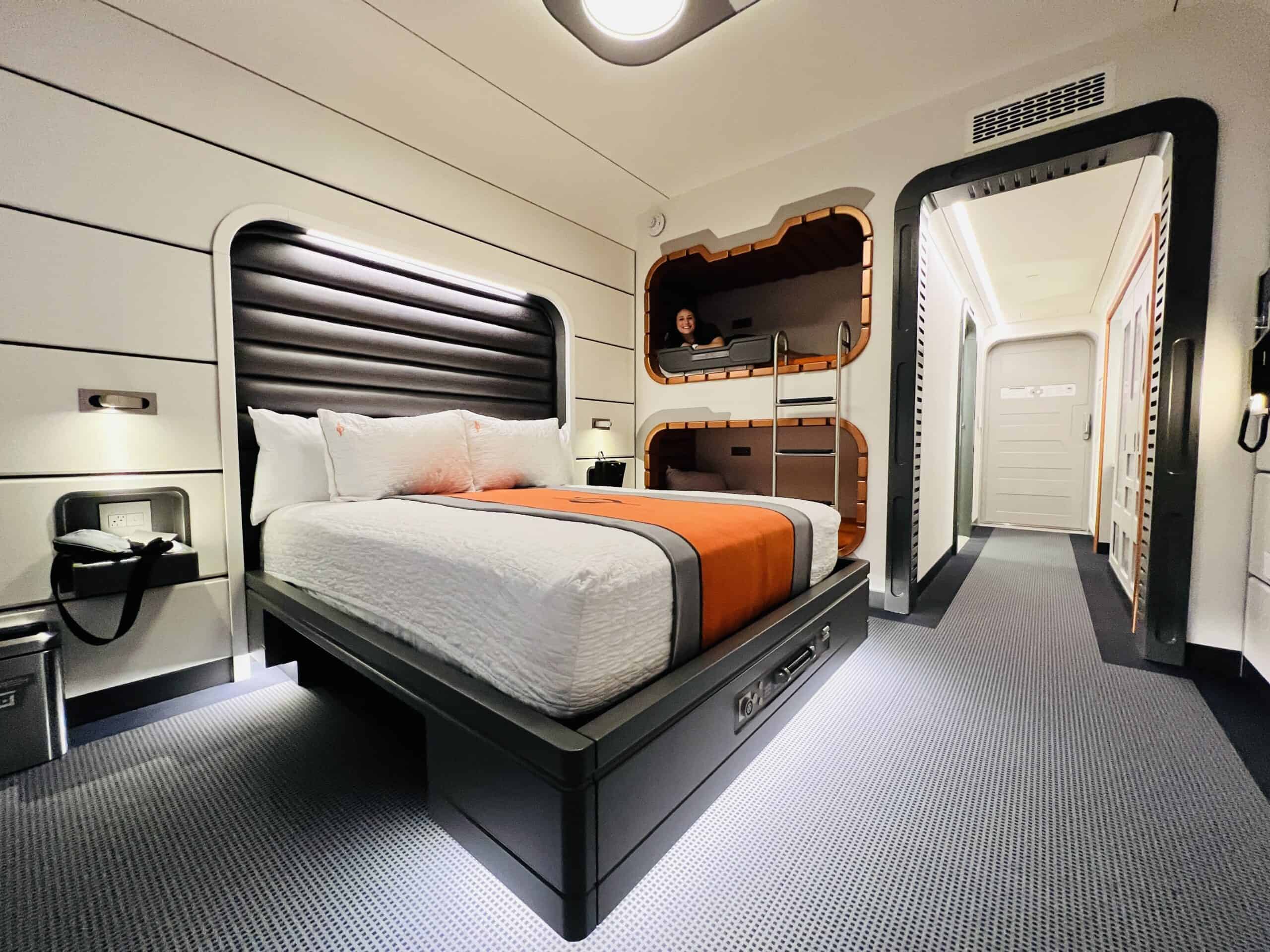
The Standard Cabin was the most common accommodation, making up the bulk of the 100 rooms. These rooms were roughly 235 square feet and could sleep up to five guests. The pricing was most favorable for larger families, as the "per-person" cost dropped significantly when the third, fourth, or fifth guest was added. The design featured queen beds and unique pull-out "bunk pods" built into the wall, which were a significant draw for families with children.
Galaxy Class Suites
These one-bedroom suites were considerably more expensive, often adding $1,500 to $2,500 to the total voyage cost. They featured a separate living area, two pull-down beds, and a bar area. For travelers seeking more space than the somewhat cramped Standard Cabins, the Galaxy Class Suite provided a "bridge" between the entry-level experience and the ultra-premium Grand Captain’s Suite.
Grand Captain’s Suites
The pinnacle of the Halcyon experience was the Grand Captain’s Suite. These two-bedroom suites featured two bathrooms, a living area, and expanded "viewports" into space. Pricing for these units was rarely publicized and often required direct consultation with Disney’s vacation planners, but estimates typically placed these voyages in the $10,000 to $12,000 range for the two-night stay.
| Cabin Type | Occupancy | Estimated Total Price (2022-2023) | Per Person / Per Night (Approx.) |
|---|---|---|---|
| Standard Cabin | 2 Adults | $4,809 | $1,202 |
| Standard Cabin | 3 Adults, 1 Child | $5,999 | $750 |
| Galaxy Class Suite | 2-4 Guests | $7,500+ | $1,875+ |
| Grand Captain's Suite | 4-8 Guests | $10,000 - $12,000+ | $1,500+ |
Value Analysis: What the All-Inclusive Fee Included
To justify the multi-thousand-dollar price tag, Disney bundled almost every aspect of the experience into the initial cost. For travelers, understanding the "included" value was essential for accurate budgeting.
- Immersive Programming: This was the primary "cost driver." Guests received 45 hours of continuous entertainment, including lightsaber training, bridge crew maneuvers, and secret missions that unfolded via the Play Disney Parks app (the "Datapad").
- Dining and Non-Alcoholic Beverages: All meals were included, from the "space-themed" breakfasts and lunches to the elaborate multi-course dinners in the Crown of Corellia Dining Room. This included the famous "Blue Milk" and "Green Milk," which usually carried a premium price elsewhere in the parks.
- Theme Park Admission: The price included a one-day entry to Disney’s Hollywood Studios, specifically for the "planetary excursion" to Star Wars: Galaxy’s Edge.
- Priority Access: Starcruiser guests were given one-time entry to both Star Wars: Rise of the Resistance and Millennium Falcon: Smugglers Run via the Lightning Lane, a value that was significant given the wait times for these attractions during that era.
- Logistics: Valet parking at the terminal and exclusive transport via "space shuttle" (a specialized bus) to the park were included.
The "Hidden" Costs: What Travelers Paid for Separately
While the Starcruiser was marketed as all-inclusive, several high-value items required additional payment. Travelers often found their final bill was 10-20% higher than the base price due to these add-ons.
- The Captain’s Table: For an additional fee (roughly $30–$50 per person), guests could sit at the Captain’s Table in the center of the dining room. This offered extra courses and specialized interactions with the ship’s captain.
- Alcoholic and Specialty Beverages: While sodas and water were included, cocktails and specialty "outer space" alcoholic drinks at the Sublight Lounge were billed separately.
- Savi’s Workshop and Droid Depot: If guests chose to build a custom lightsaber or droid during their excursion to Batuu, these costs (approx. $100–$250 per item) were not part of the voyage price.
- Exclusive Merchandise: The ship featured a "Boutique" with clothing and artifacts only available to passengers. This merchandise was premium-priced, often costing 20% more than standard park merchandise.
The 2026 Perspective: Why the Starcruiser Pricing Model Mattered
Looking back from 2026, the Galactic Starcruiser is often cited as a turning point in the economics of "Experience Tourism." The high price was a direct result of the fixed costs of labor. Unlike a traditional hotel, where a guest might only interact with a front desk clerk and a housekeeper, the Starcruiser required actors, tech directors, and specialized hospitality staff to be "on" 24 hours a day.
For travelers in 2026, the Starcruiser’s pricing serves as a benchmark for modern immersive experiences. Since its closure, we have seen a shift toward more modular "add-on" immersive packages in the Disney Cruise Line and other luxury resorts. The Starcruiser proved that there is a market for $1,000+ per night experiences, but it also highlighted the difficulty of maintaining a high-capacity, high-cost model during economic fluctuations.
The closure in late 2023 was largely attributed to the exhaustion of the "early adopter" market—travelers who were willing to pay any price for a Star Wars experience. Once that demographic was served, the price point was too high for the average family, leading to the eventual sunsetting of the project.
Frequently Asked Questions
Was the Galactic Starcruiser price per person or per room?
The pricing was structured per room, but it was heavily influenced by the number of occupants. While a standard cabin had a base price, adding a third or fourth guest only increased the total by a smaller incremental amount (the "per person" cost decreased as the cabin filled). This made it more economical for groups of four than for couples.
Did the price include airfare or transportation to Orlando?
No. The Galactic Starcruiser price was strictly for the two-night experience at the Walt Disney World Resort. Travelers were responsible for their own flights to Orlando International Airport (MCO) and their own transport to the Starcruiser terminal, although valet parking was included for those who drove.
How did the price compare to a Disney Cruise?
In the 2022-2023 timeframe, a two-night stay on the Galactic Starcruiser was significantly more expensive than a three-night sailing on the Disney Wish or the Disney Fantasy. A typical 3-night Disney cruise for a family of four might have cost between $3,000 and $4,500, whereas the Starcruiser cost $6,000 for only two nights.
Were there ever any discounts or "off-peak" prices?
Initially, there were no discounts. However, in early to mid-2023, Disney began offering limited-time discounts for Disney Vacation Club (DVC) members, Annual Passholders, and Disney Visa Cardholders. These discounts typically ranged from 10% to 30% off the base voyage price during specific "off-peak" windows.
Why did the Starcruiser close despite the high prices?
The high price point created a "niche" product. While the revenue per guest was high, the operational costs—including a massive cast and complex technical maintenance—were also extremely high. Once the initial wave of die-hard fans had visited, the ship struggled to maintain the high occupancy rates required to offset its massive overhead.
Final Recommendation for Immersive Travelers
For those researching historical pricing to plan a future immersive trip in 2026, the key takeaway is scalability. When looking at modern "all-inclusive" immersive experiences, always calculate the "total cost of ownership," including the "hidden" upcharges like the Captain’s Table or exclusive merchandise. If you are seeking a similar level of immersion today, consider high-end boutique experiences or the new generation of Disney "Adventure Guides" packages, which often provide similar personalized service at a more flexible price point.
Image Gallery