Comprehensive Guide to Zen Planner in Gym Management: Features, Costs, and Implementation
Zen Planner is a specialized member management software designed to streamline the administrative and operational demands of boutique fitness businesses, martial arts schools, and CrossFit boxes. In 2026, it remains a primary solution...
Zen Planner is a specialized member management software designed to streamline the administrative and operational demands of boutique fitness businesses, martial arts schools, and CrossFit boxes. In 2026, it remains a primary solution for gym owners seeking to automate billing, manage class schedules, track member progress, and enhance retention through integrated performance tools and data-driven insights.
Contents
The Role of Zen Planner in 2026 Gym Operations
Gym management has evolved from simple attendance tracking to a complex ecosystem involving digital marketing, integrated payment processing, and community engagement. Zen Planner addresses these needs by providing a centralized platform where owner-operators can manage the entire lifecycle of a member—from the initial lead stage to long-term retention.
Unlike generic management software, Zen Planner is built for "boutique" environments. This means it prioritizes the nuances of class-based scheduling and community-focused business models. In 2026, the software is increasingly used to bridge the gap between in-person training and digital accountability, offering tools that allow members to track their progress directly from their mobile devices while gym owners monitor the financial health of the business in real-time.
Core Modules for Business Efficiency
The platform is divided into several high-impact modules, each targeting a specific pain point in gym management:
- Member Management: Centralizes contact information, waivers, and attendance history. This module allows staff to quickly identify "at-risk" members who have not attended classes recently.
- Automated Billing: Reduces the manual labor associated with chasing monthly dues. The system supports recurring payments, handles failed transactions automatically, and provides clear financial forecasting.
- Scheduling and Reservations: A real-time calendar that syncs across staff and member apps. It manages class capacities, waitlists, and specialized sessions like personal training or belt testing.
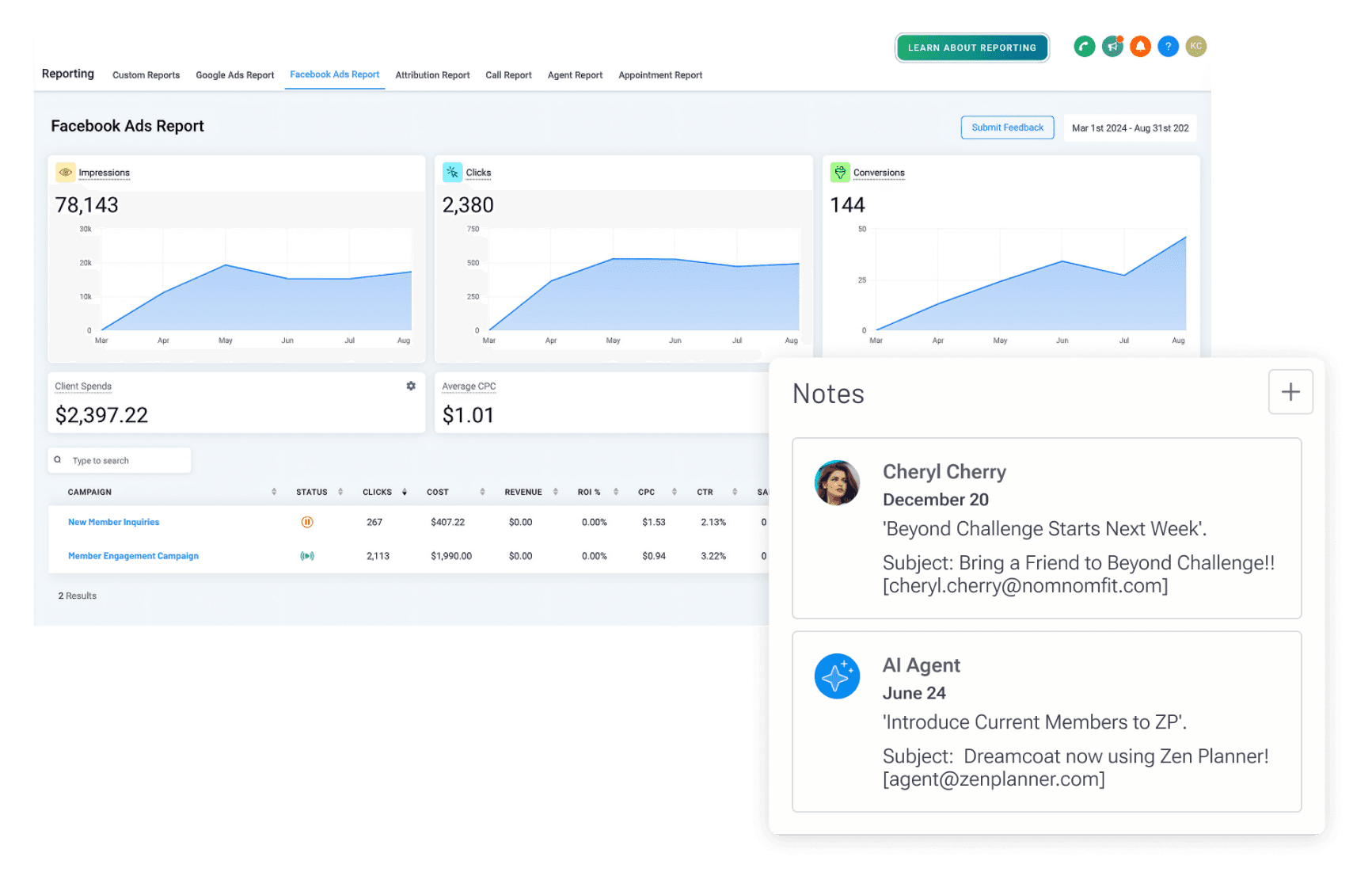
- Reporting and Analytics: Generates insights into Average Revenue per Member (ARM), churn rates, and lead conversion percentages.
Technical Specifications and Setup Requirements
Implementing Zen Planner requires a stable digital infrastructure to ensure that the synchronization between the business’s back-end and the member-facing apps remains seamless. As of 2026, the software operates primarily as a cloud-based SaaS (Software as a Service) model, meaning there is no local server installation required.
System Prerequisites
To utilize Zen Planner effectively, a gym owner needs the following:
- Hardware: At least one tablet (iPad or Android) for the "Kiosk" mode at the front desk for check-ins. High-speed internet is essential to ensure that member data updates instantly across all connected devices.
- Payment Gateways: Zen Planner integrates with specific payment processors (such as PaySimple) to facilitate PCI-compliant transactions. Owners must set up a merchant account that links directly to the software.
- Waiver Management: Digital signature capabilities are built-in, but owners should ensure they have legal templates ready to be uploaded into the system for new member onboarding.
The Onboarding Process
The setup process typically involves a "Migration Phase" where existing member data is cleaned and imported. Zen Planner’s implementation team usually assists with the mapping of custom fields—such as belt ranks for martial arts or PR (Personal Record) categories for CrossFit—to ensure that no historical data is lost during the transition from spreadsheets or legacy software.
Leveraging Automation for Member Retention
One of the most significant advantages of using Zen Planner in gym management is its robust automation engine. Managing a gym with 200+ members makes manual follow-ups impossible. Zen Planner solves this through "Automated Communications."
Trigger-Based Messaging
Owners can set up triggers based on specific member actions or inactions. For example, if a member misses three consecutive classes, the system can automatically send a "We Miss You" email or SMS. Similarly, when a member’s credit card is about to expire, the system alerts them to update their information before a payment fails. This proactive approach significantly reduces involuntary churn.
Performance Tracking with SugarWOD Integration
In the functional fitness niche, tracking performance is a key driver of retention. Zen Planner’s integration with SugarWOD allows members to log their workouts, celebrate "PRs," and engage with the gym’s community via a leaderboard. By making progress visible, the software transforms the gym experience from a utility to a goal-oriented journey.
Financial Management and Pricing Structure
In 2026, Zen Planner continues to use a member-based pricing model. This approach is designed to scale with the business; as your gym grows and your revenue increases, the software cost adjusts accordingly. This ensures that smaller start-up gyms are not burdened with the same overhead as large multi-location facilities.
Pricing Tiers (Estimated 2026 Averages)
| Member Count | Estimated Monthly Fee | Core Features Included |
|---|---|---|
| 0 - 50 Members | $130 - $160 | Full Suite, Mobile Apps, Billing |
| 51 - 150 Members | $210 - $250 | Advanced Reporting, Lead Management |
| 151 - 250 Members | $290 - $340 | Automation Engine, Multi-user Access |
| 250+ Members | Custom Quote | Dedicated Account Manager, API Access |
Note: Prices are subject to change based on specific integrations and payment processing volumes.
ROI Analysis
While the monthly fee is a consideration, the Return on Investment (ROI) is found in the recovery of "lost time." Gym owners typically report saving 10 to 15 hours per week on administrative tasks. When calculated against a standard hourly rate, the software often pays for itself through reclaimed labor and the reduction of failed payments.
Comparison: Zen Planner vs. Competitors
Choosing the right software depends heavily on the specific niche of the fitness business. While Zen Planner is a powerhouse for boutique gyms, it is important to see how it stands against other industry leaders like Mindbody or Wodify.
| Feature | Zen Planner | Mindbody | Wodify |
|---|---|---|---|
| Primary Niche | Martial Arts, CrossFit, Yoga | Salons, Spas, Large Gyms | CrossFit, Performance Gyms |
| Lead Management | Integrated CRM + UpLaunch | High-level Marketing Suite | Performance-focused Lead Gen |
| Tracking | Belt Ranks & Skills | General Attendance | WODs and Leaderboards |
| User Interface | Functional/Data-Heavy | Modern/Consumer-Facing | Performance/App-Centric |
| Customization | High (Custom Fields) | Moderate | Moderate |
Zen Planner stands out for its customization. It allows martial arts schools to track specific skill progression and belt hierarchies, a feature that is often underdeveloped in more generic fitness platforms.
Common Implementation Mistakes to Avoid
Even with powerful software, gym management can fail if the implementation is poorly executed.
- Incomplete Data Migration: Importing "dirty" data with duplicate emails or incorrect billing cycles leads to immediate friction with members. It is vital to audit all member records before the final import.
- Neglecting Staff Training: If coaches do not know how to use the Staff App to check members in, attendance data becomes unreliable. This data is the foundation of all retention reports.
- Underutilizing the Automation Suite: Many owners use Zen Planner only for billing and scheduling, ignoring the automated marketing tools. This leaves significant revenue on the table by not effectively nurturing leads.
- Poor Kiosk Placement: The physical check-in station should be the first thing a member sees. If it is tucked away, attendance tracking will be spotty, rendering your engagement data useless.
Security and Compliance Standards
As a platform handling sensitive financial and personal information, Zen Planner adheres to strict security protocols. In 2026, maintaining PCI DSS compliance is mandatory for any software processing credit card information. Zen Planner ensures that credit card data is "tokenized," meaning the gym owner never actually sees or stores the full credit card number on their local devices. This reduces the legal liability for the gym owner in the event of a local data breach.
Additionally, the platform provides role-based access control. This allows owners to limit what staff members can see. For example, a coach might be able to see attendance and workout results but will be restricted from viewing the gym’s total monthly revenue or individual member billing details.
Frequently Asked Questions
Can Zen Planner manage multiple gym locations?
Yes. Zen Planner offers multi-location management features that allow owners to toggle between different sites. This is particularly useful for franchise owners who need to compare performance metrics across different regions while maintaining a unified brand experience for members.
Does Zen Planner offer a member-facing mobile app?
Yes, the Zen Planner Member App allows clients to view the class schedule, reserve spots, track their workout results, and manage their billing profiles. There is also a separate Staff App designed for coaches to manage attendance and member profiles on the gym floor.
How does Zen Planner handle lead management?
The system includes an integrated CRM (Customer Relationship Management) tool. You can embed lead capture forms on your website that feed directly into Zen Planner. From there, you can automate a sequence of emails and texts to nurture the lead until they book their first "Intro" session.
Is it possible to track belt testing in Zen Planner?
Martial arts schools can take advantage of specific features designed to track "Time in Rank" and "Classes Attended per Belt." The system can automatically notify instructors when a student is eligible for their next promotion or belt test based on these customizable criteria.
What happens if my internet goes out during class check-ins?
While Zen Planner is cloud-based, the mobile apps often have a limited cache. However, for full functionality, an internet connection is required. Most owners maintain a mobile hotspot as a backup to ensure that check-ins and payments are not interrupted during a local service outage.
Practical Recommendation
For gym owners in 2026, the successful use of Zen Planner hinges on data integrity and automation. If you are transitioning from a manual system, prioritize a clean data import and spend the first 30 days mastering the automated communication triggers. Start by automating your "Failed Payment" alerts and "New Lead" follow-ups, as these provide the most immediate impact on your bottom line. Once the administrative foundation is stable, move into advanced performance tracking to deepen member engagement and community ties.
Image Gallery