Understanding Endurance: Physical Capacity, Mental Resilience, and Long-Term Performance
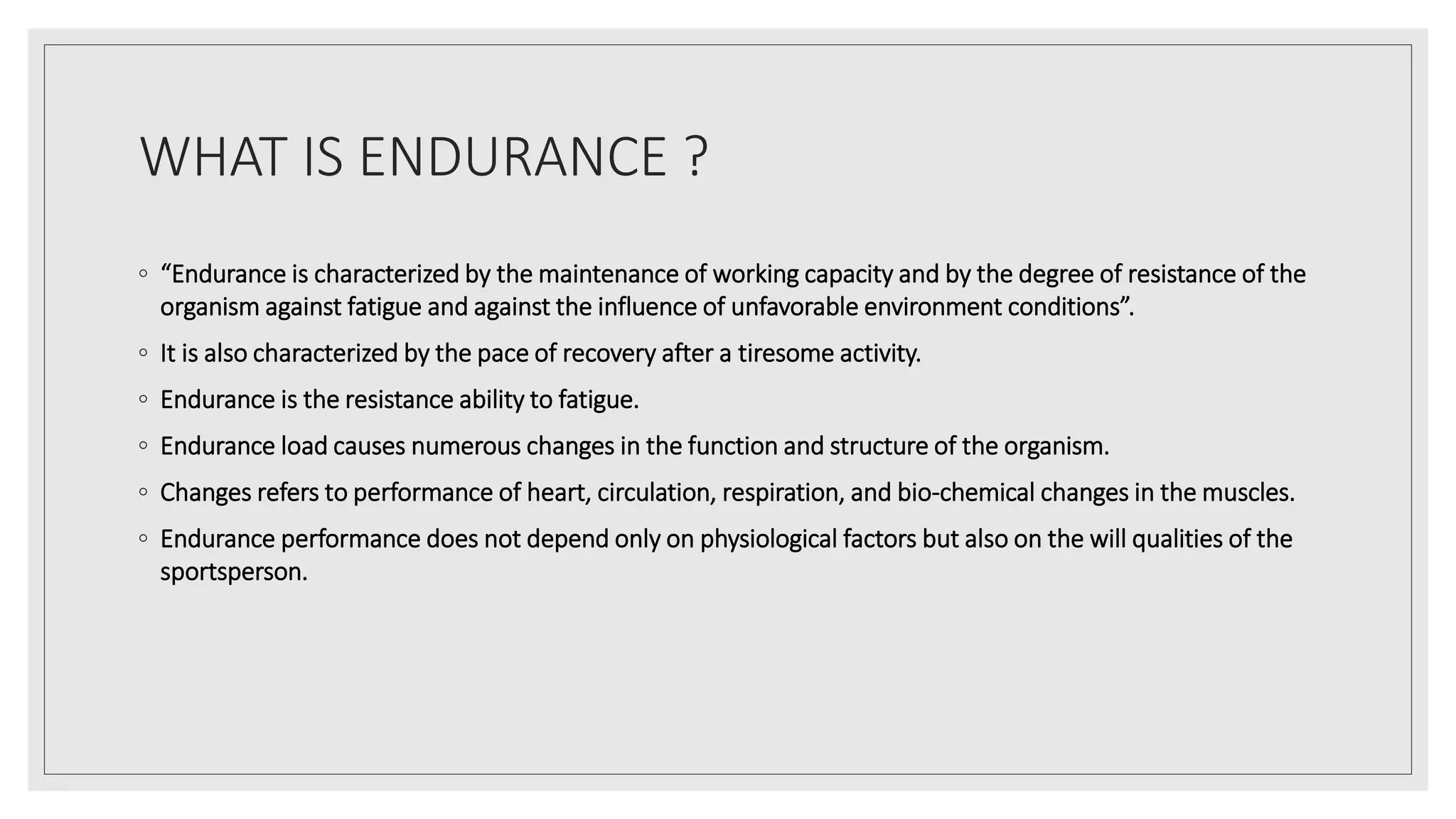
Endurance is the ability of an organism to exert itself and remain active for a long period of time, as well as its ability to resist, withstand, recover from, and have high immunity to trauma, wounds, or fatigue. It is a multi-faceted...
Endurance is the ability of an organism to exert itself and remain active for a long period of time, as well as its ability to resist, withstand, recover from, and have high immunity to trauma, wounds, or fatigue. It is a multi-faceted concept encompassing physiological stamina and psychological fortitude.
Contents
The Core Definition of Endurance
At its most fundamental level, endurance refers to the capacity to sustain a specific activity or state of being over an extended duration. While often used interchangeably with "stamina," endurance specifically emphasizes the "suffering through" or "lasting" aspect of an effort. In 2026, the scientific community continues to view endurance as a critical marker of biological health and cognitive longevity.
Physiologically, it is the body's capability to deliver oxygen and nutrients to working muscles while efficiently removing metabolic waste products. Psychologically, it is the "grit" or mental toughness required to persist through discomfort, boredom, or adversity. Whether an individual is training for a marathon, recovering from a long-term illness, or managing a high-stress career, the principles of endurance remain the primary driver of success and survival.
The term finds its roots in the Latin indurare, meaning "to make hard" or "to harden." This etymology perfectly captures the essence of the concept: endurance is the process of hardening the body and mind against the stresses of external environments and internal fatigue.
Types of Physical Endurance
Physical endurance is typically categorized into two primary forms: cardiovascular endurance and muscular endurance. Both are essential for overall health, but they involve different biological systems and training methodologies.
Cardiovascular Endurance
Cardiovascular endurance, often called aerobic fitness, is the ability of the heart, lungs, and circulatory system to supply oxygenated blood to the body during sustained physical activity. This is arguably the most vital form of endurance because it directly relates to heart health and metabolic efficiency.
Measuring cardiovascular endurance usually involves assessing VO2 max, which is the maximum rate of oxygen consumption measured during incremental exercise. As of 2026, wearable technology has advanced to provide highly accurate VO2 max estimates, allowing individuals to track how efficiently their mitochondria—the powerhouses of the cells—are utilizing oxygen to produce energy. High cardiovascular endurance allows an individual to perform tasks like running, swimming, or cycling for hours without significant distress.
Muscular Endurance
Muscular endurance is the ability of a specific muscle or group of muscles to perform repeated contractions against resistance for an extended period. Unlike muscular strength, which focuses on the maximum force a muscle can exert in a single effort, muscular endurance focuses on the avoidance of fatigue.
This type of endurance depends heavily on the ratio of Type I (slow-twitch) muscle fibers to Type II (fast-twitch) fibers. Type I fibers are highly resistant to fatigue and are fueled primarily by aerobic metabolism, making them the primary drivers of endurance tasks. For example, a rower requires high muscular endurance in the back and arms to maintain a consistent stroke rate over several kilometers, even when the muscles begin to burn from lactic acid accumulation.
The Science of Stamina: How the Body Sustains Effort
To understand what the meaning of endurance is in a biological sense, one must look at how the body produces and manages energy. The human body utilizes different energy systems depending on the intensity and duration of the activity.
The Aerobic System
The aerobic system is the primary engine of endurance. It uses oxygen to convert carbohydrates and fats into adenosine triphosphate (ATP), the energy currency of the cell. This process is highly efficient but relatively slow. During low-to-moderate intensity activities, the aerobic system can provide a near-limitless supply of energy, provided the individual has adequate fuel (glycogen and body fat) and remains hydrated.
The Anaerobic Threshold and Lactic Acid
As intensity increases, the body reaches the "anaerobic threshold." At this point, the aerobic system can no longer meet the demand for ATP, and the body begins to rely more heavily on anaerobic pathways. This leads to the accumulation of lactate and hydrogen ions in the muscles, which creates the "burning" sensation and eventually causes muscle failure. Endurance training effectively "pushes" this threshold higher, allowing an individual to perform at higher intensities for longer periods without the buildup of fatiguing byproducts.
Mitochondrial Biogenesis
One of the most significant adaptations to endurance training is mitochondrial biogenesis—the creation of new mitochondria within the muscle cells. More mitochondria mean a higher capacity for aerobic energy production. Research published by the American Physiological Society highlights that consistent endurance exercise triggers signaling pathways that tell the body to become more efficient at burning fat as fuel, sparing the body's limited glycogen stores for high-intensity bursts.
Mental Endurance: The Psychology of Grit
Endurance is not solely a physical trait; it is deeply rooted in the brain. Mental endurance, or psychological resilience, is the capacity to maintain focus and motivation despite physical pain, mental exhaustion, or environmental stressors.
The Central Governor Theory
A prominent concept in the study of endurance is the "Central Governor Theory," proposed by Dr. Tim Noakes. This theory suggests that the brain, rather than the muscles, is the ultimate limiter of performance. The brain monitors physiological signals (like core temperature, heart rate, and oxygen levels) and induces a feeling of fatigue to prevent the body from reaching a point of catastrophic failure. Endurance athletes essentially train their brains to tolerate higher levels of these signals, "negotiating" with the central governor to allow the body to push further.
Executive Function and Persistence
Mental endurance also involves executive functions such as inhibitory control and cognitive flexibility. In a 2026 context, professionals use mental endurance to navigate "zoom fatigue" or the pressures of a 24/7 global economy. It requires the ability to delay gratification—choosing the long-term goal of finishing a project or a race over the immediate comfort of quitting.
Comparing Aerobic and Anaerobic Endurance
Understanding the difference between these two states is crucial for anyone looking to improve their overall physical capacity.
| Feature | Aerobic Endurance | Anaerobic Endurance |
|---|---|---|
| Primary Energy Source | Oxygen, Fats, and Carbohydrates | Stored ATP and Glucose (Glycolysis) |
| Intensity Level | Low to Moderate | High to Maximal |
| Duration | Long (Minutes to Hours) | Short (Seconds to 2 Minutes) |
| Byproducts | Carbon Dioxide and Water | Lactic Acid and Hydrogen Ions |
| Training Examples | Jogging, Long-distance cycling | Sprinting, HIIT, Heavy lifting |
| Primary Goal | Sustained effort and heart health | Power, speed, and acid tolerance |
Practical Strategies for Building Endurance
Improving endurance requires a systematic approach based on the principle of progressive overload. This involves gradually increasing the volume or intensity of an activity to force the body to adapt.
- The 10% Rule: To avoid injury, increase your weekly volume (time or distance) by no more than 10%. This allows the tendons, ligaments, and cardiovascular system to strengthen alongside the muscles.
- Base Training: Before adding high-intensity intervals, build a "base" of low-intensity aerobic work. This stimulates the growth of capillaries and mitochondria.
- Nutrition and Periodization: Endurance requires adequate carbohydrate intake to top off glycogen stores. In 2026, nutritionists emphasize "metabolic flexibility"—training the body to burn fat efficiently during low-intensity work while remaining capable of utilizing carbohydrates during high-intensity efforts.
- Recovery and Sleep: Adaptation does not happen during the workout; it happens during sleep. Chronic sleep deprivation can decrease time-to-exhaustion by as much as 20%, as the nervous system fails to recover.
- Mental Rehearsal: Techniques such as visualization and positive self-talk are used by elite performers to manage the "pain cave"—the point in an endurance event where the desire to quit is highest.
Factors Affecting Endurance Levels
While training is the primary driver, several other factors influence an individual's endurance capacity:
- Genetics: Genetic markers such as the ACTN3 gene can influence whether an individual is naturally more suited for explosive power or long-distance endurance.
- Age: While VO2 max naturally declines with age, endurance is one of the physical qualities that can be maintained deep into late adulthood. Master athletes in their 60s and 70s often outperform younger, untrained individuals in endurance events.
- Environment: Training at high altitudes forces the body to produce more red blood cells to carry oxygen, which can enhance endurance when returning to sea level.
- Hydration and Electrolytes: Dehydration reduces blood volume, making the heart work harder to pump blood. Maintaining a balance of sodium, potassium, and magnesium is essential for muscle contractions and preventing cramps.
Common Mistakes and Troubleshooting
Many people fail to see improvements in their endurance because they fall into common training traps. One of the most frequent errors is the "black hole" of training—exercising at an intensity that is too hard to be truly aerobic but too easy to be truly anaerobic. This leads to stagnation and burnout.
Another issue is the neglect of strength training. Even for long-distance runners, resistance training is vital for improving "running economy"—the amount of energy required to maintain a certain speed. If your muscles are weak, they have to work harder with every step, which drains your cardiovascular "fuel tank" faster.
If you hit a plateau, consider your stress levels. Endurance is a systemic resource. High levels of work or emotional stress use the same physiological pathways as physical stress. If your life stress is high, you may need to reduce your training volume to allow your nervous system to recover.
FAQs
Is endurance the same as stamina? While often used as synonyms, they have different nuances. Stamina is the ability to sustain prolonged physical or mental effort at near-maximum capacity. Endurance is the broader ability to remain active and resist fatigue over a long period, regardless of intensity. You might use stamina to sprint the final 400 meters of a race, while endurance got you to that final lap.
How long does it take to see improvements in endurance? Initial cardiovascular adaptations, such as increased blood plasma volume, can happen within 7 to 14 days. However, significant changes like mitochondrial growth and improved fat oxidation typically take 8 to 12 weeks of consistent training.
Can you build endurance without running? Absolutely. Any activity that keeps your heart rate elevated in a specific zone for an extended period will build endurance. Swimming, cycling, rowing, brisk walking, and even certain types of circuit training are highly effective.
What is the "wall" in endurance sports? "The wall" usually refers to the point where the body's glycogen (stored carbohydrate) stores are depleted. Since the brain relies on glucose, hitting the wall causes severe physical fatigue and mental "fog." This is why fueling with gels or sports drinks is critical for efforts lasting longer than 90 minutes.
Does weightlifting help with endurance? Yes. Strength training improves the structural integrity of joints and increases the efficiency of muscle fiber recruitment. This allows you to maintain better form for longer, which reduces the energy cost of movement.
How does age affect endurance performance? While peak performance usually occurs in the late 20s or early 30s, endurance is the most resilient physical trait. With proper training, the age-related decline in aerobic capacity can be significantly slowed, and many people achieve their endurance "personal bests" well into their 40s and 50s.
Practical Recommendation: To begin improving your endurance today, start by identifying your baseline. Use a wearable device or a timed test (like a 12-minute run or walk) to measure your current capacity. Focus on "Zone 2" training—exercise where you can still hold a conversation—for 80% of your workouts. This builds the aerobic foundation necessary for all other forms of fitness and long-term health.
Image Gallery