Comprehensive Guide to Nueces County Property Taxes for 2026
In 2026, Nueces County property taxes are determined by the market value of your property as of January 1, with payments for the current tax year typically due by January 31, 2027. Property owners must navigate the assessment process h...
In 2026, Nueces County property taxes are determined by the market value of your property as of January 1, with payments for the current tax year typically due by January 31, 2027. Property owners must navigate the assessment process handled by the Nueces County Appraisal District (NCAD) and the collection process managed by the Nueces County Tax Assessor-Collector's office to ensure compliance and avoid significant late penalties.
Contents
Navigating the Texas property tax system requires a clear understanding of the distinction between the appraisal process and the taxation process. While the state of Texas does not levy a state property tax, local jurisdictions—including the county, cities, school districts, and special districts—rely on these funds to provide essential services such as public education, emergency services, and infrastructure maintenance. As we move through the 2026 fiscal cycle, staying informed about deadlines, exemptions, and protest procedures is critical for every homeowner and business owner in the Corpus Christi metropolitan area and surrounding communities.
The Dual-Agency System: NCAD vs. Tax Assessor-Collector
Understanding who does what is the first step in managing your Nueces County property taxes. The system is split into two distinct entities to ensure a separation of powers between those who value property and those who collect the revenue.
Nueces County Appraisal District (NCAD)
The NCAD is a political subdivision of the state, responsible for discovering, listing, and appraising all property within the county’s boundaries. Their primary goal is to determine the "Fair Market Value" of your property as of January 1 each year. The appraisal district also handles applications for exemptions (such as the General Residential Homestead Exemption) and manages the initial stages of the property tax protest process.
Nueces County Tax Assessor-Collector
Once the appraisal district finalizes the values and the various taxing units (like the City of Corpus Christi or Robstown ISD) set their tax rates, the Tax Assessor-Collector’s office calculates the actual tax bill. This office, currently led by Kevin Kieschnick, is responsible for mailing the statements, collecting payments, and distributing the funds to the respective taxing entities. They are also the office responsible for registering vehicles and handling voter registration, though their role in property taxes is strictly administrative and collection-oriented.
Key Deadlines for the 2026 Nueces County Tax Year
Missing a deadline in the Texas property tax calendar can result in immediate interest charges and penalties that accrue monthly. The following table outlines the critical dates for the 2026 calendar year.
| Date | Significance | Action Required |
|---|---|---|
| January 1, 2026 | Tax Lien Date | Property value and ownership are determined for the 2026 tax year. |
| January 31, 2026 | 2025 Tax Payment Deadline | Last day to pay 2025 taxes without penalty and interest. |
| April 15, 2026 | Rendition Deadline | Deadline for business owners to file renditions of personal property. |
| April - May 2026 | Notices of Appraised Value | NCAD mails notices to owners if value increased or property is new. |
| May 15, 2026 | Protest Deadline | Usually the final date to file a protest with the ARB (or 30 days after notice). |
| July 25, 2026 | Certified Appraisal Rolls | NCAD certifies the final values to the taxing units. |
| October 2026 | Tax Bills Mailed | Tax Assessor-Collector begins mailing statements for the 2026 tax year. |
Qualifying for Property Tax Exemptions in 2026
Exemptions are the most effective way to lower your tax liability in Nueces County. An exemption removes a portion of your property's value from taxation, effectively lowering your bill. In 2026, several key exemptions are available to residents who meet specific criteria.
General Residential Homestead Exemption
To qualify, you must own the property and it must be your primary residence as of January 1. Following recent Texas legislative updates, the homestead exemption for school districts remains a significant relief measure. For most homeowners, this exemption can save hundreds, if not thousands, of dollars annually.
Over-65 and Disability Exemptions
Homeowners who are 65 years of age or older, or who meet the Social Security Administration's definition of disability, are entitled to additional exemptions.
Important Benefit: The Tax Ceiling When you qualify for an Over-65 or Disability exemption, you also receive a "tax ceiling" for school district taxes. This means the amount you pay for school taxes will never increase above the amount you paid in the year you qualified, provided you do not make significant improvements to the home (like adding a new room or a pool).
Disabled Veteran Exemptions
Texas provides a tiered exemption system for veterans with service-connected disabilities. The amount of the exemption depends on the disability rating provided by the Department of Veterans Affairs (VA). Veterans with a 100% service-connected disability rating (or who are unemployable) may be eligible for a total 100% exemption on their primary residence.
How Your 2026 Property Tax Bill is Calculated
Your tax bill is the result of a relatively simple mathematical formula, but it relies on two variables: the Taxable Value and the Tax Rate.
- Appraised Value: The market value determined by NCAD.
- Assessed Value: The appraised value minus any "Homestead Cap" adjustments (in Texas, the assessed value of a homestead cannot increase by more than 10% per year).
- Taxable Value: The assessed value minus all qualifying exemptions (Homestead, Over-65, etc.).
- Tax Rate: The total rate set by all jurisdictions covering your property (County + City + ISD + Special Districts).
Calculation: (Taxable Value ÷ 100) × Total Tax Rate = Total Tax Bill.
Protesting Your Property Value: The 2026 Strategy
Property owners in Nueces County have the legal right to protest their property's appraised value if they believe it is higher than the actual market value or if it is unequally appraised compared to similar properties.
Step 1: File the Protest
You must file a written protest by May 15, 2026, or within 30 days of receiving your Notice of Appraised Value. This can be done online via the NCAD portal or by mail.
Step 2: Informal Meeting
Before a formal hearing, you will often have the opportunity to meet informally with an NCAD appraiser. This is a chance to present evidence—such as photos of damage, recent repair estimates, or a professional appraisal—to reach a settlement without a formal board hearing.
Step 3: Formal ARB Hearing
If no settlement is reached, you will appear before the Appraisal Review Board (ARB). The ARB is a group of local citizens appointed to hear evidence from both the property owner and the appraisal district. They act as an impartial panel to determine the final value.
Expert Tip for 2026 Protests: Focus on "Equity Appeals." Even if your property is valued at market price, if your neighbors have similar homes valued significantly lower, you may have grounds for a reduction based on unequal appraisal. Always request the "Appraisal District's Evidence Packet" at least 14 days before your hearing to see what data they are using against you.
Payment Options and Methods in Nueces County
The Nueces County Tax Assessor-Collector provides several avenues for payment to ensure homeowners can meet the January 31 deadline.
- Online Payments: Using the official tax office website, owners can pay via E-check or Credit/Debit card. Note that credit card payments typically incur a 2.15% processing fee, while E-checks usually have a flat fee (approximately $1.00).
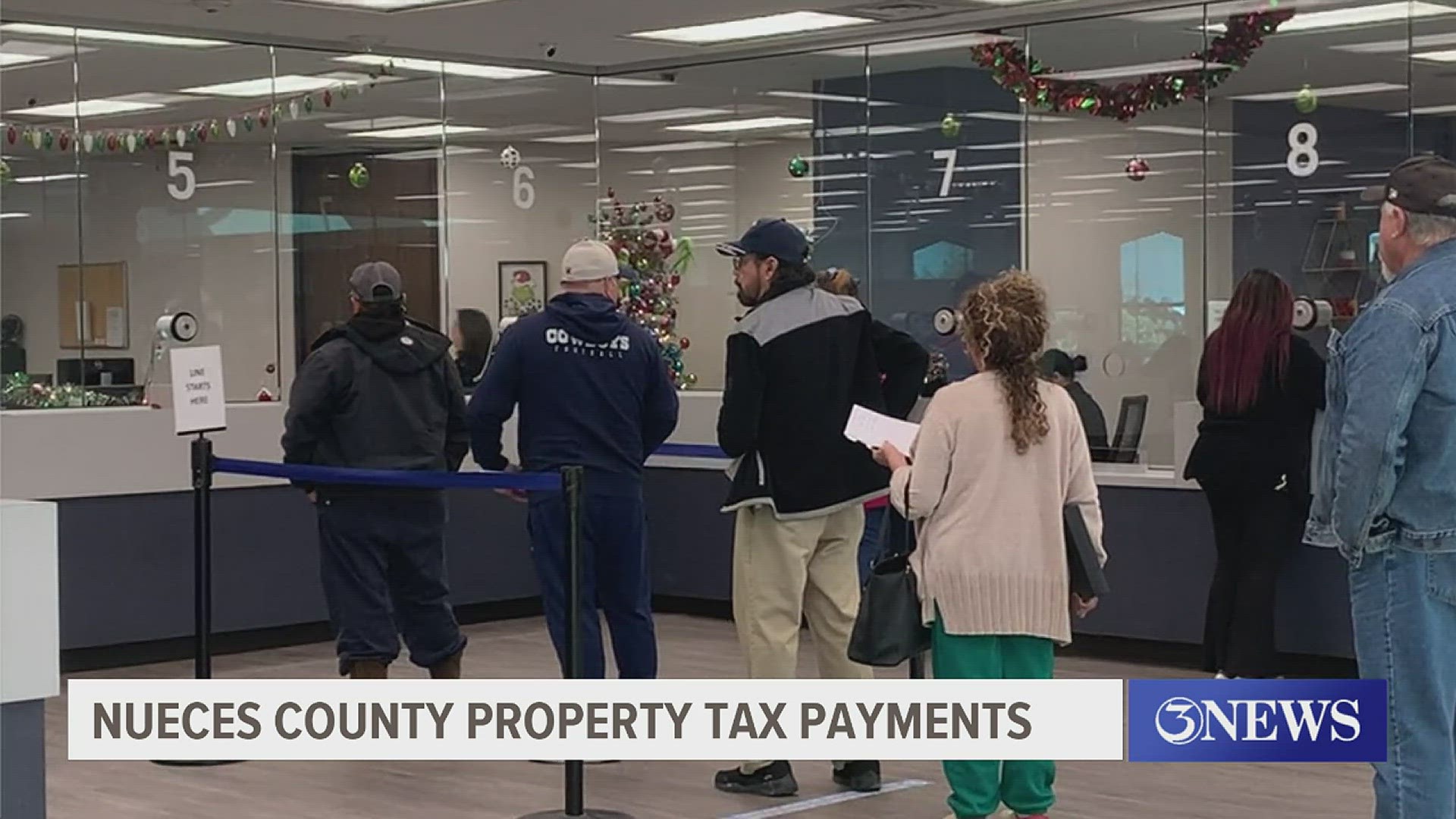
- In-Person: Payments are accepted at the Nueces County Courthouse in Corpus Christi, as well as satellite offices in Robstown and Port Aransas.
- By Mail: Checks or money orders must be postmarked by January 31 to be considered on time. Using certified mail is recommended for those paying close to the deadline.
- Installment Plans: Certain groups, specifically those with Over-65 or Disability exemptions, may elect to pay their taxes in four equal installments without penalty, provided the first payment is made by the January deadline.
Comparative Tax Landscape: Nueces County Jurisdictions
Tax rates vary significantly depending on where your property is located. While the Nueces County base rate is consistent, the total bill changes based on the School District (ISD) and City rates.
| Jurisdiction | Typical Entity Type | Role in 2026 Tax Levy |
|---|---|---|
| City of Corpus Christi | Municipal | Funding for police, fire, and city roads. |
| Corpus Christi ISD | School District | Usually the largest portion of the tax bill. |
| Del Mar College | Junior College | Support for local higher education programs. |
| Nueces County Hospital Dist | Special District | Funding for indigent healthcare and local clinics. |
| Port Aransas ISD | School District | High property values often lead to "Recapture" payments. |
| Coastal Bend Groundwater | Special District | Conservation and management of water resources. |
Common Pitfalls and Troubleshooting
- Failure to Update Mailing Address: The most common cause of missing a tax bill is failing to notify NCAD of a change in mailing address. Under Texas law, "failure to receive a bill" does not waive penalties or interest.
- Assuming the Mortgage Company Paid: If you have an escrow account, your mortgage company should pay the taxes. However, it is the owner's responsibility to verify that the payment was made before the January 31 deadline. Check the Tax Assessor's website in early January to confirm.
- Missing Exemption Deadlines: While some exemptions can be filed late (up to two years for homesteads), it is much simpler to file them during the standard window (January 1 to April 30) to ensure your first bill is accurate.
- Property Tax Loans: Be cautious of high-interest property tax loans. While they can prevent a tax foreclosure, the interest rates and fees often exceed the penalties charged by the county. Explore "Delinquent Tax Payment Plans" with the Tax Assessor-Collector first.
Frequently Asked Questions
When are 2026 property taxes due in Nueces County?
2026 property taxes are billed in October 2026 and must be paid by January 31, 2027, to avoid delinquency. Payments made on or after February 1, 2027, will incur a 7% penalty and interest charge, which increases every month the taxes remain unpaid.
How do I apply for a homestead exemption in Nueces County for 2026?
You must submit an Application for Residential Homestead Exemption (Form 50-114) to the Nueces County Appraisal District. This can be done online or by mail. You will need to provide a copy of your Texas Driver's License or ID card, and the address on your ID must match the address of the property for which you are seeking the exemption.
Can I pay my Nueces County property taxes in installments?
Standard homeowners cannot pay in installments without penalty; however, those with Over-65, Disability, or Disabled Veteran exemptions can sign up for the "Quarterly Payment Plan." This allows the total tax bill to be split into four equal payments due in January, March, May, and July.
Why did my property taxes go up if the tax rate stayed the same?
In most cases, this occurs because the Nueces County Appraisal District increased your property's appraised value. Because Texas does not have an income tax, local governments rely on rising property values to increase revenue even when they "keep the rate the same." You should check if you have a Homestead Cap in place, which limits the increase in assessed value to 10% per year.
What should I do if I didn't receive my 2026 tax bill?
If you haven't received your bill by mid-November 2026, you should contact the Nueces County Tax Assessor-Collector’s office at (361) 888-0230 or look up your account on their website. You are legally responsible for paying the tax even if the bill was lost in the mail or never sent.
Who is the current Nueces County Tax Assessor-Collector for 2026?
As of 2026, Kevin Kieschnick continues to serve as the Nueces County Tax Assessor-Collector. His office manages the billing and collection for dozens of local taxing jurisdictions within the county.
Managing Your Property Tax Burden
Proper management of your property taxes in Nueces County requires a proactive approach. Start by verifying your exemptions in early 2026, then monitor your appraisal notice in the spring. If the value seems excessive compared to the local Corpus Christi real estate market, do not hesitate to file a protest. By the time bills arrive in October, you should have a clear expectation of your liability, allowing you to budget accordingly for the January 31 deadline.
For the most accurate and up-to-date information regarding your specific property account, visit the Nueces County Appraisal District website at ncadistrict.com or the Tax Assessor-Collector’s portal. These resources provide the transparency needed to ensure you are paying only your fair share of local taxes.
Image Gallery