The Deer Population in Poland: A Comprehensive 2026 Analysis of Species, Trends, and Management
The deer population in Poland is currently at a historic high in 2026, with over 1 million individuals across several species, primarily roe deer and red deer. This growth is driven by milder winters, changing agricultural practices, a...
The deer population in Poland is currently at a historic high in 2026, with over 1 million individuals across several species, primarily roe deer and red deer. This growth is driven by milder winters, changing agricultural practices, and controlled forest management. Consequently, the focus has shifted toward balancing ecological health with agricultural protection and road safety.
Contents
Introduction to Poland’s Cervid Diversity
Poland represents one of Europe’s most significant strongholds for the Cervidae family. The country’s diverse landscape—ranging from the dense primeval forests of Białowieża to the vast agricultural plains of Wielkopolska—provides an ideal habitat for several key species. As of 2026, the management of these populations has become a central pillar of Poland’s environmental and agricultural policy.
Understanding the deer population requires a distinction between the species. While "deer" is often used as a generic term, Poland hosts three primary species: the European roe deer (Capreolus capreolus), the red deer (Cervus elaphus), and the fallow deer (Dama dama). Additionally, the elk (moose) population, while distinct, is often managed under similar ecological frameworks.
The trajectory of these populations over the last two decades has been one of consistent growth. This expansion is not merely a biological curiosity; it has profound implications for the Polish economy, the timber industry, and the safety of the national road network.
Key Deer Species and Their Status in 2026
The European Roe Deer (Sarna)
The roe deer remains the most numerous and widely distributed cervid in Poland. Unlike its larger cousins, the roe deer is highly adaptable to "cultural landscapes," frequently inhabiting small woodlots and even suburban green belts. In 2026, the population is estimated to exceed 900,000 individuals. Their success is attributed to their high reproductive rate and their ability to thrive on high-energy agricultural crops like rapeseed and winter wheat.
The Red Deer (Jeleń Szlachetny)
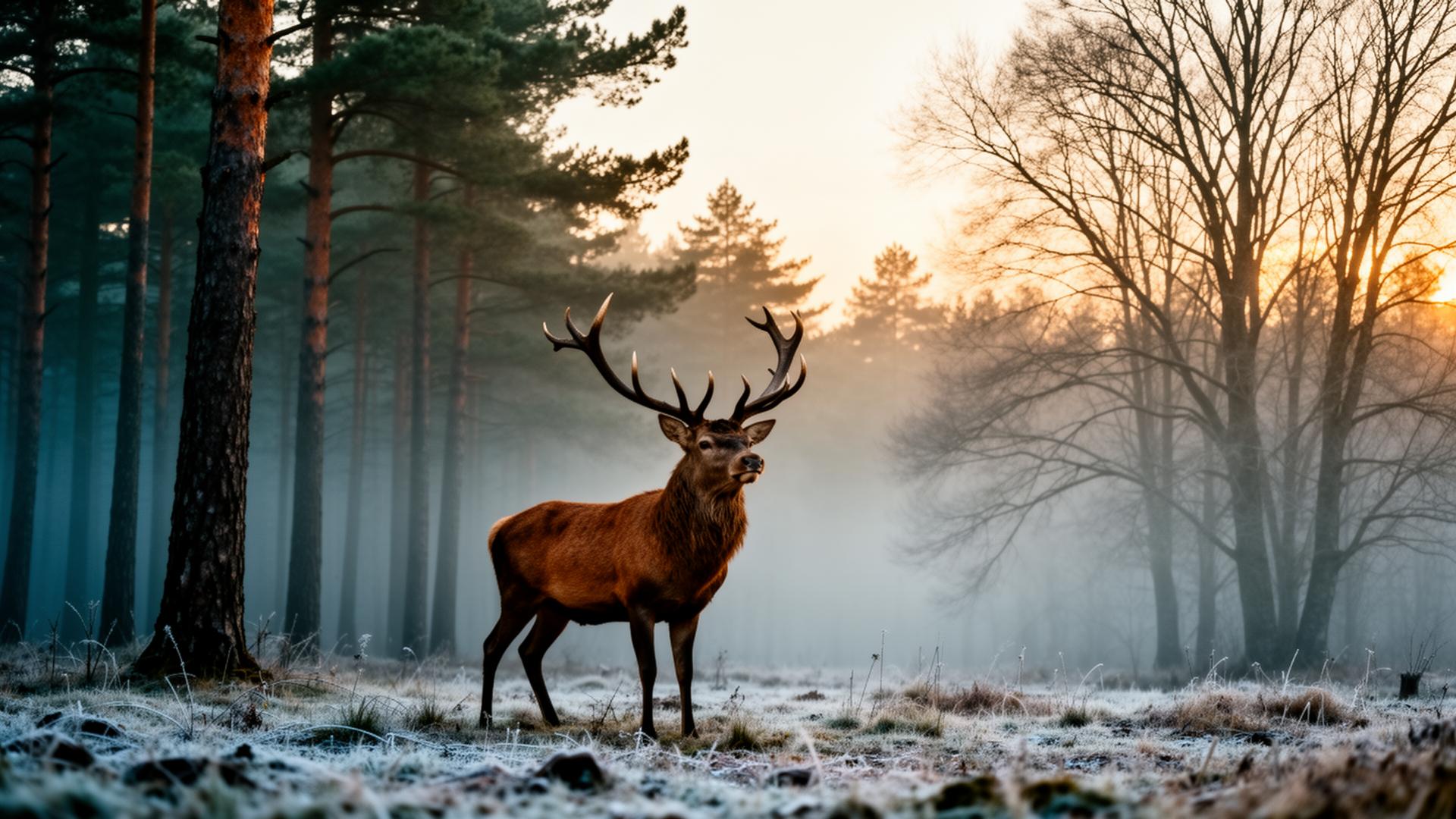
The red deer is the "king" of the Polish forests. Historically restricted to large forest complexes, red deer have expanded their range significantly. In 2026, they are found in almost every major woodland area in the country, from the Carpathian Mountains in the south to the Masurian Lake District in the north. The population is currently estimated at approximately 280,000 to 300,000 individuals.
The Fallow Deer (Daniel)
The fallow deer is an introduced species that has become naturalized over centuries. Its distribution is more fragmented than that of the roe or red deer, with the highest concentrations found in Western Poland, particularly in the Lubuskie and Greater Poland (Wielkopolska) voivodeships. Their population is currently stable at around 35,000 to 40,000.
Statistical Overview of Populations (2026 Estimates)
The following table provides a breakdown of the estimated populations and their primary habitats across Poland, based on data trends from the State Forests (Lasy Państwowe) and the Polish Hunting Association (Polski Związek Łowiecki).
| Species | Estimated Population (2026) | Primary Habitat | Population Trend |
|---|---|---|---|
| Roe Deer | 920,000+ | Mixed forests, meadows, agricultural fields | Increasing/Stable |
| Red Deer | 295,000+ | Large deciduous and coniferous forests | Increasing |
| Fallow Deer | 38,000+ | Park-like forests, Western Poland | Stable |
| Elk (Moose) | 32,000+ | Marshlands, wetlands, Eastern Poland | Rapidly Increasing |
Factors Driving the Population Surge
The increase in deer numbers in Poland is the result of a complex interplay of environmental and anthropogenic factors.
1. Climate Change and Milder Winters
In 2026, the trend of shorter, milder winters continues to impact wildlife survival. Historically, deep snow and prolonged freezing temperatures acted as a natural regulator, particularly for fawns and older individuals. With fewer "hard" winters, the natural mortality rate has dropped significantly, allowing more juveniles to reach reproductive age.
2. Changes in Agriculture
Polish agriculture has moved toward large-scale monocultures. Fields of corn (maize) and rapeseed provide deer with high-calorie food sources for much of the year. Corn, in particular, serves a dual purpose: it provides nutrition and acts as a massive "seasonal forest" where deer can hide from predators and humans for months at a time.
3. Predator-Prey Dynamics
The return of the gray wolf (Canis lupus) to almost all major Polish forests has introduced a natural regulatory mechanism. However, the deer population growth has largely outpaced the expansion of wolf territories. While wolves help maintain the health of the herd by culling the weak, they have not yet reached a density that would cause a decline in the overall deer census.
Ecological and Economic Impact
A high deer density is a double-edged sword. While it indicates a productive ecosystem, it creates significant challenges for other sectors.
Forest Regeneration and Silviculture
The State Forests (Lasy Państwowe) face substantial costs due to deer browsing. Young trees, particularly oak and pine, are frequently damaged by deer eating the leading shoots (browsing) or stripping the bark (fraying). In 2026, foresters must invest heavily in fencing and chemical repellents to ensure that new plantations can survive their first decade. Without these measures, many areas would fail to regenerate, leading to a loss of biodiversity.
Agricultural Conflicts
For Polish farmers, the high deer population translates to direct financial losses. Red deer and roe deer can devastate fields of grain, potatoes, and sugar beets. Under Polish law, the Polish Hunting Association is responsible for compensating farmers for these damages. As population numbers rise, the financial burden on hunting clubs has increased, leading to debates about the sustainability of the current compensation model.
Road Safety and Wildlife Collisions
Vehicle collisions with deer are a major public safety concern in Poland. As deer expand into suburban areas and cross major transit corridors, the frequency of accidents has risen. In 2026, modern infrastructure projects increasingly include "green bridges" (wildlife crossings) to mitigate this risk, but the sheer number of animals remains a challenge for drivers, especially during the dusk and dawn hours.
Management and Conservation Framework
The management of the deer population in Poland is governed by the Law on Hunting (Prawo Łowieckie). It is a highly regulated system based on "Annual Hunting Plans" (Roczne Plany Łowieckie).
The Role of the Polish Hunting Association (PZŁ)
The PZŁ is tasked with maintaining the balance between wildlife and the environment. Every year, hunters conduct a census to estimate numbers. Based on these figures, the Ministry of Climate and Environment sets "cull targets." The goal is not to eradicate the animals but to maintain a population density that the ecosystem can support without excessive damage to forests or crops.
Sustainable Hunting as a Tool
In 2026, hunting is viewed by the state as a necessary ecological tool. By targeting specific age groups and sexes, managers attempt to mirror natural social structures within the herds. For red deer, the management of "trophy" stags is balanced with the necessity of harvesting hinds (females) to control reproductive growth.
Protected Areas and National Parks
In Poland's 23 National Parks, such as Białowieża or Kampinos, hunting is either prohibited or strictly limited to ecological interventions. These areas serve as "genetic reservoirs" for deer, allowing for natural selection and minimal human interference. However, deer frequently migrate out of these protected zones into managed forests and fields.
Conflict Resolution and 2026 Perspectives
The primary challenge in 2026 is the social aspect of deer management. There is a growing divide between urban populations, who often view deer through a lens of strict protectionism, and rural populations, who deal with the economic consequences of high deer density.
To address this, the Polish government has implemented several initiatives:
- Enhanced Monitoring: Using drones and thermal imaging to get more accurate population counts.
- Subsidized Fencing: Providing grants to farmers for permanent electric fencing in high-risk areas.
- Public Awareness Campaigns: Educating drivers on "deer-heavy" zones and seasonal migration patterns (such as the "rutting" season in autumn).
FAQs about Deer in Poland
Which region of Poland has the most deer? The highest densities of red deer are found in the northern and western provinces, such as West Pomerania and Warmia-Masuria. Roe deer are more evenly distributed but are particularly abundant in the agricultural heartlands of Wielkopolska and Lower Silesia.
Is it safe to hike in Polish forests during the deer mating season? Yes, it is generally safe. The red deer rut (rykowisko) occurs in late September and October. While stags can be aggressive toward each other, they typically avoid humans. However, hikers are advised to stay on marked trails and keep dogs on leashes to avoid disturbing the animals.
Who is responsible if I hit a deer with my car in Poland? Liability depends on several factors. If the accident occurs in a marked "wildlife zone" (A-18b sign), it is often difficult to claim damages from the forest district or hunting club. In most cases, vehicle damage is covered by the driver’s "AC" (Autocasco) insurance policy.
Are there still "wild" deer in Poland, or are they all managed? All deer in Poland are technically wild, but their populations are "managed" in the sense that their numbers are monitored and regulated by human intervention to ensure ecological balance.
Can you hunt deer in Poland? Hunting is strictly regulated. Only members of the Polish Hunting Association (PZŁ) or foreign hunters with valid permits and organized tours through recognized agencies can legally hunt deer, following the specific dates and quotas set in the annual plans.
Practical Recommendation for 2026
For travelers and residents in Poland, the high deer population means that wildlife encounters are more likely than ever. To minimize risks, drivers should exercise extreme caution between 5:00 PM and 8:00 AM, especially in forested corridors. For farmers and landowners, investing in proactive deterrents, such as scent barriers or specialized fencing, is the most effective way to protect crops, as the 2026 population levels suggest that deer pressure will remain high for the foreseeable future.
Image Gallery