How Staffing Agency Insurance Really Works: A Guide to Coverage and Risk
Staffing agency insurance functions as a specialized risk management framework that protects agencies from liabilities arising from the tripartite relationship between the agency, the temporary employee, and the client company. It cove...
Staffing agency insurance functions as a specialized risk management framework that protects agencies from liabilities arising from the tripartite relationship between the agency, the temporary employee, and the client company. It covers workplace injuries, professional errors, and employment-related lawsuits, shifting financial risk from the agency to the insurer through premium-based policies.
Contents
To understand how staffing agency insurance really works in 2026, one must look beyond simple policy descriptions. The staffing industry operates on a unique "shared employment" model. While the agency is the legal "employer of record" responsible for payroll, taxes, and benefits, the client company (the host employer) manages the daily tasks and provides the physical workspace. This split in control creates complex liability gaps that standard business insurance cannot bridge.
The Mechanics of the Tripartite Risk Relationship
The core of staffing insurance is the management of the three-way relationship between the agency, the talent, and the client. In a standard business, if an employee is injured, the employer’s Workers’ Compensation covers it. In staffing, if a temporary worker is injured at a client’s warehouse, the agency’s insurance usually pays, even though the agency had no control over the warehouse’s safety protocols.
This dynamic makes underwriting—the process of assessing risk and setting premiums—far more rigorous for staffing firms than for traditional businesses. Insurers evaluate not just the agency’s internal operations, but also the safety standards of every client they service. As of 2026, many insurers utilize real-time data feeds from staffing software to monitor placement types and adjust risk profiles dynamically.
The Role of Contractual Indemnification
Insurance does not operate in a vacuum; it works in tandem with the Client Service Agreement (CSA). These contracts define who is responsible when something goes wrong. A well-structured insurance program ensures that the agency’s policies align with the indemnification clauses in their contracts. For instance, if a contract requires the agency to "hold harmless" the client for any negligence by the temporary worker, the agency must ensure their General Liability policy includes "Contractual Liability" coverage to back up that promise.
Essential Coverage Pillars for Staffing Firms
A comprehensive staffing insurance program is built on several specific types of coverage, each addressing a different facet of the employment relationship.
Workers' Compensation
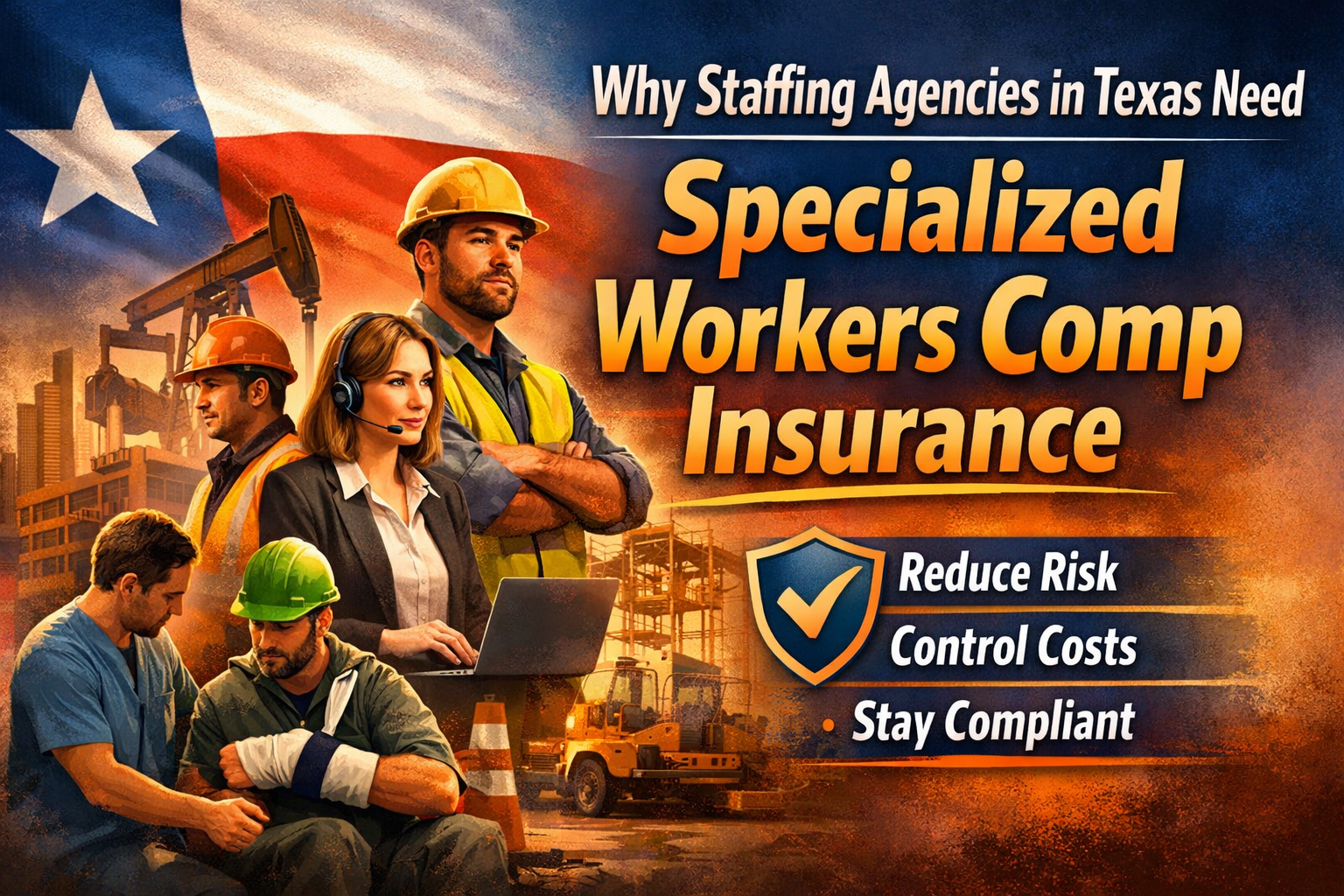
This is the most critical and often the most expensive component. Workers' Compensation provides medical benefits and wage replacement to employees injured on the job. In exchange, employees generally lose the right to sue the employer for negligence.
How it works in staffing:
- Classification Codes: Every job is assigned a four-digit NCCI (National Council on Compensation Insurance) code. An administrative assistant has a lower risk code than a construction laborer. The agency pays premiums based on the specific codes of the workers they place.
- Experience Modification Rate (MOD): This is a multiplier based on the agency’s claims history. A MOD of 1.0 is average. If an agency has fewer accidents than expected, their MOD might drop to 0.85, giving them a 15% discount. If they have many accidents, it could rise to 1.50, increasing costs by 50%.
General Liability (GL)
General Liability protects the agency if a temporary worker causes bodily injury or property damage to a third party (usually the client). For example, if a temporary IT consultant spills coffee on a client’s server rack, causing $50,000 in damage, the agency’s GL policy would trigger. Most clients require a minimum of $1 million per occurrence in GL coverage.
Professional Liability (Errors & Omissions)
While GL covers physical damage, Professional Liability (E&O) covers financial loss resulting from a mistake in the agency’s professional services. This includes two main risks:
- Vicarious Liability: The temporary worker makes a professional error (e.g., an accountant miscalculates a tax filing).
- Direct Liability: The agency fails to properly vet a candidate (e.g., they fail to check a nurse’s license, and the nurse commits medical malpractice).
Employment Practices Liability Insurance (EPLI)
EPLI covers lawsuits related to the employment process itself, such as wrongful termination, sexual harassment, or discrimination. In the staffing world, this coverage must include "Third-Party Coverage." This protects the agency if a temporary worker claims they were harassed by an employee of the client company. Because the agency is the employer of record, they are often named in the lawsuit even if the incident happened at the client site.
Comparison of Key Insurance Types for Staffing
The following table summarizes the primary coverages and how they apply specifically to the staffing industry.
| Coverage Type | Primary Risk Protected | Who Triggers the Claim? | Typical 2026 Requirement |
|---|---|---|---|
| Workers' Comp | Workplace injury/illness | The Temporary Employee | Mandatory by State Law |
| General Liability | Physical damage or injury | Third Party (Client) | $1M Per Occur / $2M Agg |
| Professional (E&O) | Financial loss/Professional error | The Client | Varies by Industry |
| EPLI | Discrimination/Harassment | Employee or Client Staff | Highly Recommended |
| Cyber Liability | Data breach/Ransomware | Hackers/Privacy Regulators | $1M to $5M |
The Underwriting Process: How Rates Are Determined
In 2026, the underwriting process for staffing agencies has become increasingly granular. Insurers no longer look at just total payroll; they look at the "mix of business."
- Industry Risk: Placing software engineers is considered low risk. Placing roofers or long-haul truckers is high risk. An agency that shifts its focus from office clerical to light industrial will see an immediate and significant spike in premiums.
- Geographic Footprint: Different states have different Workers' Comp laws. "Monopolistic" states (Ohio, Washington, North Dakota, and Wyoming) require agencies to buy Workers' Comp directly from a state fund rather than private insurers.
- Vetting Procedures: Insurers will audit the agency’s internal processes. Do they conduct background checks? Do they perform drug tests? Do they visit client sites to perform safety inspections? Agencies with rigorous safety programs are rewarded with lower rates.
- Claim Frequency vs. Severity: Insurers are often more concerned with frequency (many small claims) than severity (one large, freak accident). High frequency suggests a systemic failure in safety or screening protocols.
Navigating the "Additional Insured" Requirement
Almost every staffing contract requires the agency to name the client as an "Additional Insured" on the General Liability policy. This means that if a third party sues the client because of something the temporary worker did, the agency’s insurance policy will defend the client and pay the settlement.
However, agencies must be careful with "Waiver of Subrogation" clauses. Subrogation is the right of an insurance company to sue a third party (the client) to recover the money they paid out for a claim. If an agency signs a waiver of subrogation, their insurance company loses the right to sue the client even if the client was 100% at fault for an injury. Most staffing insurers charge an additional fee for these waivers.
Common Mistakes in Staffing Agency Insurance
Even experienced agency owners often fall into traps that leave them underinsured or facing massive premium audits.
- Misclassifying Workers: Labeling a warehouse worker as "clerical" to save on Workers' Comp premiums is fraud. During the annual audit, the insurer will check payroll records against job descriptions. If misclassification is found, the agency will be hit with a massive "back-premium" bill.
- Ignoring Non-Owned Auto: If a temporary worker drives their own car to run an errand for a client and gets into an accident, the agency can be held liable. "Hired and Non-Owned Auto" coverage is a crucial, often overlooked add-on to the General Liability policy.
- Gap in Cyber Coverage: Staffing agencies hold vast amounts of Sensitive Personal Information (SPI), including Social Security numbers and bank details. Standard GL policies do not cover data breaches. A dedicated Cyber policy is essential in 2026 to cover notification costs, credit monitoring, and regulatory fines.
Frequently Asked Questions
Does the client’s insurance ever cover the temporary worker?
Generally, no. Because the agency is the employer of record, the agency’s Workers' Compensation is the primary coverage. However, the client’s General Liability might cover the worker if the client’s negligence caused the injury, but this often leads to "subrogation" battles between the two insurance carriers.
What is a "Pay-As-You-Go" Workers' Comp model?
In 2026, most staffing firms use "Pay-As-You-Go." Instead of paying a massive estimated premium at the start of the year, the agency’s payroll software reports actual hours worked to the insurer every pay cycle. The insurer then withdraws the exact premium owed. This eliminates the "sticker shock" of year-end audits.
Why is Professional Liability (E&O) separate from General Liability?
General Liability only covers "tangible" harm—bodily injury or property damage. If a temporary recruiter accidentally deletes a client’s database or a temporary accountant misses a filing deadline, there is no physical damage, but there is a massive financial loss. Only E&O covers these "intangible" professional errors.
Are 1099 contractors covered by my staffing insurance?
Usually, no. Standard staffing policies are designed for W-2 employees. If you use 1099 independent contractors, your insurance carrier may exclude them unless you have a specific "Independent Contractor" endorsement. Furthermore, using 1099s in staffing carries high regulatory risk regarding misclassification.
What happens if a temporary worker is injured while working remotely?
In 2026, remote work is standard. Workers' Compensation still applies if the injury occurs "in the course and scope of employment." However, the agency must ensure their policy covers the specific states where their remote workers are located, not just where the agency headquarters is based.
Practical Recommendation for Staffing Owners
To ensure your agency is properly protected, conduct an annual Insurance Gap Analysis. Do not simply renew your policies. Review your Client Service Agreements alongside your insurance broker to ensure that every "Additional Insured" and "Indemnification" requirement in your contracts is actually supported by your policy language. Specifically, ensure you have Third-Party EPLI and Cyber Liability, as these are the fastest-growing claim areas in 2026. Finally, implement a formal safety-site visit protocol for all light industrial or manual labor placements to maintain a low MOD factor and keep your premiums competitive.
Image Gallery