Maximizing Wealth with High Cash Value Dividend Paying Whole Life Insurance
High cash value dividend paying whole life insurance is a permanent life insurance policy specifically engineered to maximize early liquidity and long-term equity growth. By utilizing Paid-Up Additions (PUA) riders and choosing mutual...
High cash value dividend paying whole life insurance is a permanent life insurance policy specifically engineered to maximize early liquidity and long-term equity growth. By utilizing Paid-Up Additions (PUA) riders and choosing mutual insurance companies, policyholders receive non-guaranteed dividends that can be reinvested to compound wealth tax-advantaged while maintaining a lifelong death benefit.
Contents
Understanding the Mechanics of High Cash Value Design
Traditional whole life insurance is often criticized for its slow cash value accumulation in the early years, primarily because a significant portion of the initial premiums covers commissions and the cost of insurance. However, a "high cash value" configuration shifts this dynamic. In 2026, sophisticated investors and financial planners use specific policy riders to redirect the majority of premium dollars into the cash value account rather than the base death benefit.
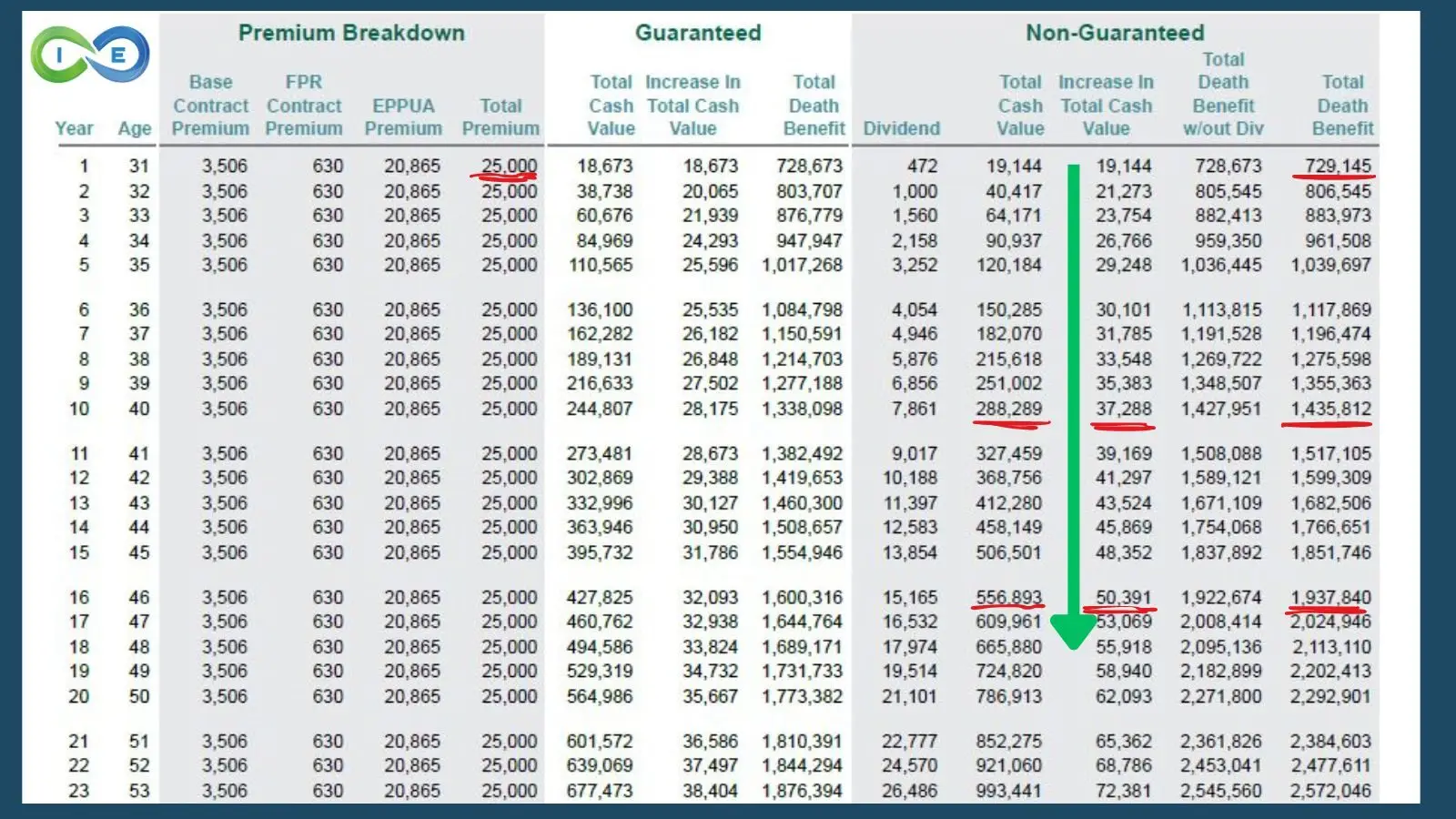
The primary tool for this is the Paid-Up Additions (PUA) rider. When you pay a PUA premium, you are essentially purchasing small "packets" of fully paid-up insurance. These packets have an immediate cash value and also increase the total death benefit, which in turn creates more "room" for future cash growth under IRS guidelines. A well-structured policy in 2026 typically aims for a "blended" approach, where the base premium is kept as low as possible—often 10% to 30% of the total payment—while the remainder is funneled through the PUA rider.
This design ensures that by the end of the first or second policy year, a significant percentage of the premium paid is available for use. This liquidity is a cornerstone of strategies like the "Infinite Banking Concept" or "Bank On Yourself," where the policyholder uses the cash value as a personal revolving credit line.
The Role of Dividends and Mutual Companies
Not all whole life insurance is created equal. To achieve the "dividend paying" aspect of this strategy, the policy must be issued by a mutual insurance company. Unlike stock companies, which are beholden to external shareholders, mutual companies are owned by their policyholders. When the company performs well, it distributes a portion of its surplus to "participating" policyholders in the form of dividends.
While dividends are never guaranteed by law, many of the major U.S. mutual carriers have paid them every single year for over 150 years, including through the Great Depression and the volatility of the early 2020s. In 2026, these dividends remain a critical component of the policy’s internal rate of return (IRR).
Policyholders generally have four options for their dividends:
- Cash: Receiving a check directly.
- Premium Reduction: Using the dividend to pay part of the annual premium.
- Accumulate at Interest: Leaving the money in a side account (taxable).
- Paid-Up Additions (Recommended): Using the dividend to buy more PUA. This is the most effective method for high cash value growth because it compounds the growth tax-free and increases the base upon which future dividends are calculated.
Tax Advantages and the Section 7702 Landscape
The tax treatment of high cash value whole life insurance is governed largely by Internal Revenue Code Section 7702. Following the legislative updates in the early 2020s, the interest rate assumptions used to define life insurance were lowered. For 2026 policyholders, this means you can actually put more cash into a policy relative to the death benefit than was possible a decade ago without triggering "Modified Endowment Contract" (MEC) status.
A policy that becomes a MEC loses its favorable tax treatment on loans and withdrawals. However, as long as the policy remains compliant, it offers a "tax-free trifecta":
- Tax-Deferred Growth: The cash value grows without annual 1099 tax requirements.
- Tax-Free Access: Policyholders can withdraw basis (the amount paid in) tax-free or take policy loans against the death benefit without triggering a tax event.
- Tax-Free Death Benefit: The proceeds passed to beneficiaries are generally exempt from federal income tax.
According to the Internal Revenue Service (IRS), maintaining the balance between the cash value and the death benefit is essential to preserving these benefits.
Direct vs. Non-Direct Recognition
When you take a loan against your high cash value policy, the insurance company uses your cash value as collateral. The way the company treats your dividends while a loan is outstanding is a technical but vital detail.
- Non-Direct Recognition: The company pays the same dividend rate on your cash value regardless of whether you have a loan. This is often preferred by those using the policy for "infinite banking," as the full amount of cash continues to compound even while the "loaned" dollars are working elsewhere (like in real estate or business).
- Direct Recognition: The company adjusts the dividend rate on the portion of the cash value used as collateral. In some economic environments, this can actually lead to a higher dividend on the un-loaned portion, but it requires more careful calculation.
Comparing Policy Structures: Standard vs. High Cash Value
The following table illustrates the conceptual differences between a standard whole life policy and a high cash value (HCV) optimized policy for a healthy 40-year-old in 2026.
| Feature | Standard Whole Life Policy | High Cash Value (HCV) Optimized |
|---|---|---|
| Premium Allocation | High Base / Low or No PUA | Low Base / High PUA Rider |
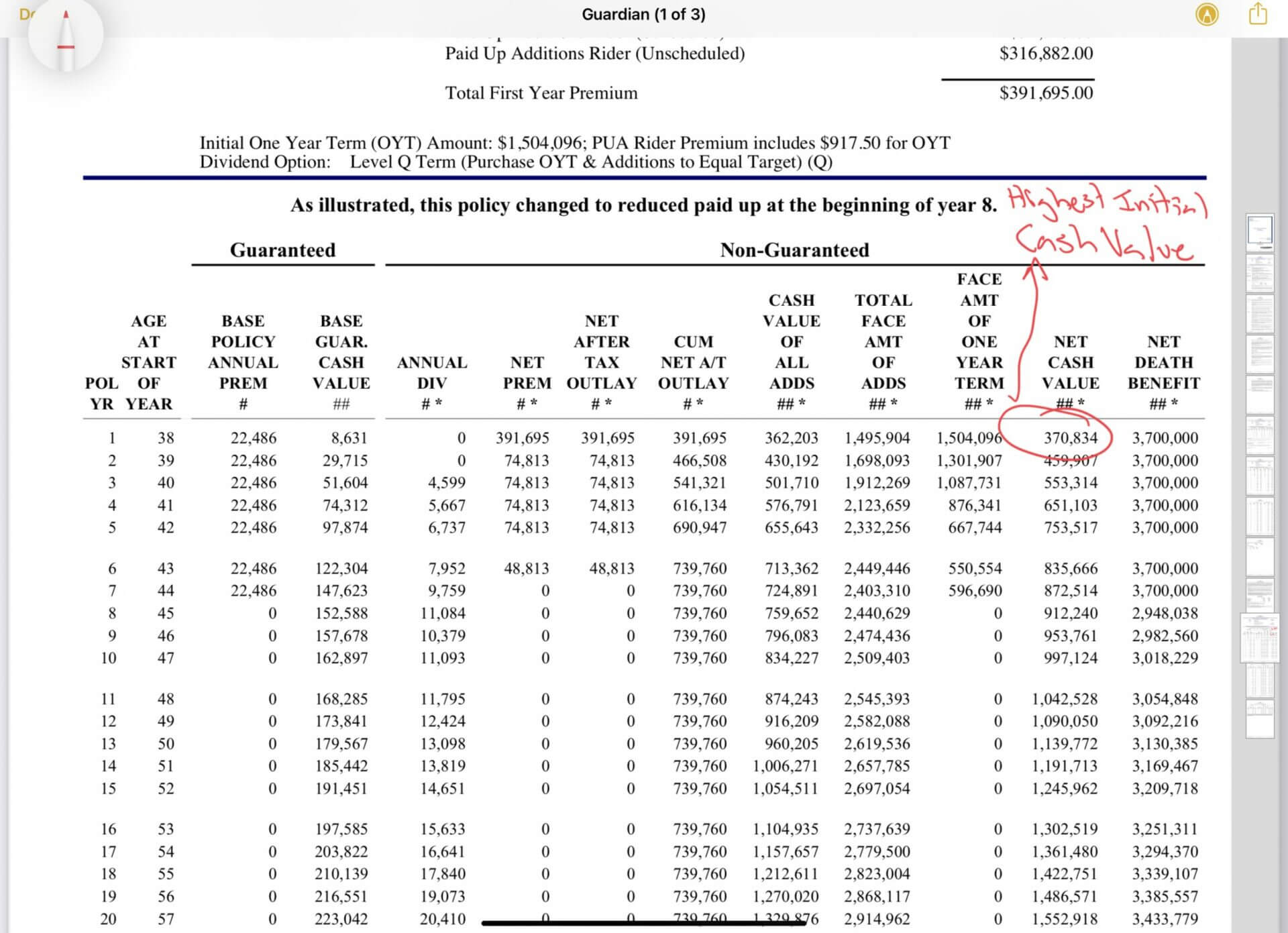
| Year 1 Cash Value | 0% to 10% of Premium | 60% to 85% of Premium |
| Break-Even Point | 12 to 15 Years | 4 to 7 Years |
| Death Benefit | Higher initial benefit | Lower initial benefit (grows over time) |
| Commission | Higher (paid on base premium) | Lower (PUAs have low/no commission) |
| Primary Use | Final expenses / Estate tax | Wealth accumulation / Liquidity / IBC |
Strategic Implementation: Using the Policy as a Volatility Buffer
In 2026, financial advisors increasingly use high cash value insurance as a "volatility buffer." During years when the stock market is down, a policyholder can choose to spend their policy dividends or take a policy loan for income rather than selling equities at a loss. This preserves the portfolio's "sequence of returns" and allows the invested assets time to recover.
Furthermore, the "guaranteed" portion of a whole life policy provides a non-correlated asset class. While the S&P 500 or real estate markets may fluctuate, the guaranteed cash value of a whole life policy from a top-tier mutual carrier is contractually required to increase every year, provided premiums are met. This provides a "floor" to a family's or business's total net worth.
Potential Pitfalls and Limitations
While the benefits are significant, high cash value whole life insurance is not a "get rich quick" scheme. It requires disciplined funding and an understanding of the long-term commitment involved.
- Surrender Charges: Even with high cash value designs, withdrawing all funds and canceling the policy in the first few years will result in a loss.
- The MEC Limit: If you "overfund" the policy too aggressively beyond the IRS limits, it becomes a MEC, and you lose the tax-free loan benefits. Professional software and experienced agents are required to monitor these limits.
- Loan Interest: Policy loans are not free money. The insurance company charges interest on the loan. The goal is for the dividend and growth rate to offset a large portion of this interest, but the net cost must be monitored.
- Cost of Insurance: As the insured gets older, the internal cost of the death benefit increases. In a well-funded policy, the growth of the cash value usually outpaces this, but it is a factor in the policy’s performance.
How to Properly Design a Policy in 2026
To ensure you are receiving a true high cash value product, you must work with an agent who understands "blended" policies. Many traditional agents may not offer these because the commissions are significantly lower.
Steps to take:
- Select a Mutual Carrier: Look for companies like MassMutual, Guardian, New York Life, or Northwestern Mutual. Check their A.M. Best Ratings to ensure financial stability (typically looking for A+ or A++).
- Request a "Maximum PUA" Illustration: Ask for the policy to be designed for maximum early cash value rather than maximum death benefit.
- Verify the MEC Line: Ensure the illustration shows the "7-Pay" or "MEC" limit to see how much you can contribute annually without losing tax advantages.
- Check for "Term Blending": Often, a small term insurance rider is added to the policy. This increases the death benefit (and thus the MEC limit) at a very low cost, allowing for even higher cash value contributions in the early years.
Frequently Asked Questions
Can I lose money in a high cash value whole life policy?
Unlike a Variable Life policy or a 401(k), the cash value in a dividend-paying whole life policy is guaranteed not to decrease due to market volatility. The only way to "lose" money is to surrender the policy in the very early years before the cash value has surpassed the total premiums paid (the break-even point), or to stop paying premiums before the policy is self-sustaining.
How soon can I access my money?
With an HCV-optimized policy, you can typically access your cash value via a policy loan within 10 to 30 days of your first premium payment. Most carriers allow you to borrow up to 90% or 95% of the available cash value immediately.
Are the dividends guaranteed?
No, dividends are never guaranteed. However, major mutual insurers have a track record of paying them for over a century. The "guaranteed" side of the policy illustration shows the minimum growth required by the contract, while the "non-guaranteed" side shows the projected growth including dividends at the current scale.
What happens if I die with an outstanding policy loan?
If the policyholder dies with an outstanding loan, the balance of the loan plus any accrued interest is deducted from the death benefit before the remainder is paid to the beneficiaries. The death benefit serves as the ultimate collateral for the loan.
Is this the same as "Infinite Banking"?
High cash value dividend paying whole life insurance is the instrument used to practice the Infinite Banking Concept (IBC). While the insurance is the product, IBC is the strategy of using that product's liquidity to finance other life expenses or investments.
Recommendation for Next Actions
For those seeking to implement high cash value insurance in 2026, the first step is to obtain a "Participating Whole Life" illustration from a top-rated mutual company. Focus on the "Cash Surrender Value" column in years 1 through 5. If the year 1 cash value is zero or near-zero, the policy is not optimized for high cash value and needs to be redesigned with a higher PUA-to-Base premium ratio. Consult with a specialized financial professional to ensure the policy structure aligns with your specific liquidity needs and tax bracket.
Image Gallery