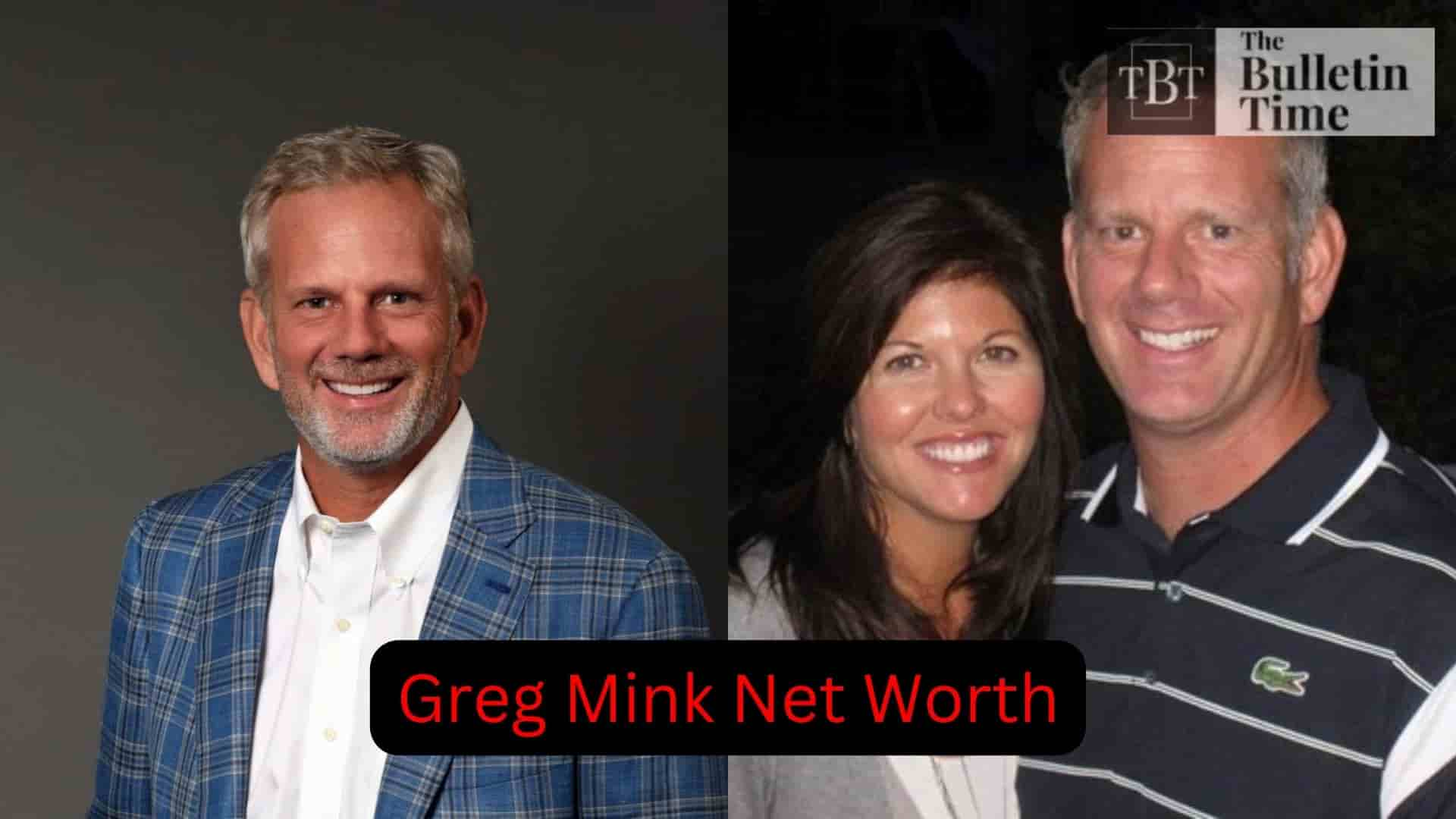
Greg Mink Net Worth Explained in Context
Greg Mink’s net worth is primarily derived from his long-standing leadership and ownership stake in Modular Devices, a premier provider of mobile and modular medical imaging labs and cleanrooms. While specific private financial records...
Greg Mink’s net worth is primarily derived from his long-standing leadership and ownership stake in Modular Devices, a premier provider of mobile and modular medical imaging labs and cleanrooms. While specific private financial records are not public, his wealth is estimated to be in the mid-to-high eight-figure range, bolstered by a 2021 strategic partnership with O2 Investment Partners and the subsequent expansion of the modular healthcare infrastructure market.
Contents
The Professional Foundation of Greg Mink’s Wealth
To understand the net worth of Greg Mink, one must first look at the trajectory of Modular Devices, the company where he has served as President and CEO for several decades. Founded in 1987, the company carved out a highly specialized niche in the healthcare sector. Instead of traditional brick-and-mortar construction, which is slow and capital-intensive, Mink focused on providing high-tech, mobile, and modular solutions for hospitals and pharmaceutical companies.
His wealth is not merely a product of a high salary; it is the result of equity appreciation in a company that serves a critical, high-barrier-to-entry industry. In the late 20th and early 21st centuries, the demand for cardiac cath labs, peripheral vascular labs, and CT/MRI modules grew exponentially. By positioning Modular Devices as a leader in this space, Mink ensured that the company became a valuable asset for private equity consideration.
The context of his net worth changed significantly in 2021 when the company partnered with O2 Investment Partners, a private equity firm based in Michigan. In such transactions, a founder or CEO typically "takes chips off the table," receiving a significant cash payout while retaining a substantial equity stake in the newly recapitalized entity. This move often represents the single largest liquidity event in an executive's career, catapulting their personal net worth.
Strategic Diversification: The Cleanroom Solutions Expansion
A major contributor to the valuation of Greg Mink’s business interests—and by extension, his net worth—is the strategic pivot into Modular Devices Cleanroom Solutions. Recognizing that the pharmaceutical, biotechnology, and semiconductor industries required controlled environments that could be deployed rapidly, Mink expanded the company’s footprint beyond medical imaging.
Cleanrooms are significantly more complex than standard modular buildings. They require sophisticated HVAC systems, HEPA filtration, and compliance with stringent ISO standards. By entering this market, Mink increased the company’s Enterprise Value (EV). As of 2026, the cleanroom sector has become a pillar of the company’s growth strategy, providing recurring revenue through maintenance and high-margin bespoke installations.
The financial context here is vital: modular construction for high-tech industries often commands higher multiples than general construction. By shifting the company toward "Infrastructure-as-a-Service," Mink built a business model that produces predictable, scalable cash flows, which are highly prized by investors and contribute to a robust valuation of his personal holdings.
The Role of Private Equity in Executive Net Worth
In the world of mid-market business leadership, net worth is often "trapped" in the value of the company until a private equity (PE) firm intervenes. For Greg Mink, the partnership with O2 Investment Partners served as a catalyst for both personal liquidity and corporate scaling.
Private equity firms provide the capital necessary for add-on acquisitions. Under Mink’s leadership and O2’s backing, Modular Devices has been able to acquire smaller competitors and specialized technology firms. Each acquisition typically increases the "EBITDA" (Earnings Before Interest, Taxes, Depreciation, and Amortization) of the parent company.
For an executive like Mink, who maintains a leadership role and equity, the "second bite of the apple"—the eventual sale of the company to an even larger private equity firm or a strategic buyer—is where the most significant net worth gains are often realized. In the 2026 economic landscape, the modular healthcare sector remains a "hot" asset class, keeping the valuation of his equity stake high.
Market Factors Influencing the Valuation
The "context" of Greg Mink’s net worth also includes the broader macroeconomic shift toward modularity. Several factors have bolstered the value of his primary business asset:
- Healthcare Infrastructure Backlog: Hospitals often face years of delays in traditional construction. Modular labs provide an immediate solution, allowing them to begin billing for procedures months or years earlier.
- Technological Obsolescence: Medical imaging technology changes rapidly. Modular units allow hospitals to upgrade their equipment without tearing down permanent walls, making Mink’s "mobile" solution a permanent fixture in hospital budgeting.
- Speed to Market for Bio-Pharma: In the wake of global health challenges earlier in the decade, the ability to stand up a cleanroom in weeks rather than years became a matter of national security and corporate survival.
These market tailwinds have increased the revenue of Modular Devices, which in turn elevates the CEO's net worth through both annual compensation and the rising price of the company's shares.
Comparing Modular Infrastructure Value Drivers
To understand how Greg Mink's business generates the wealth associated with his name, it is helpful to compare the different segments of the modular industry.
| Segment | Capital Intensity | Profit Margin | Market Demand (2026) | Contribution to Net Worth |
|---|---|---|---|---|
| Mobile Imaging Labs | High (Equipment cost) | Moderate | Steady / Replacement | Core Stability |
| Modular Cleanrooms | High (Technical) | High | Rapidly Increasing | Growth Engine |
| General Modular Offices | Low | Low | Declining | Minimal |
| Service & Maintenance | Low | Very High | High (Contract-based) | Cash Flow / Liquidity |
As the table illustrates, Mink has focused his career on the high-margin, high-demand sectors of the modular world. By avoiding the commoditized general modular office market, he has preserved the premium status of his brand, ensuring his net worth is tied to high-value intellectual property and specialized engineering rather than simple real estate.
Factors Beyond Business Ownership
While the majority of Greg Mink’s net worth is tied to Modular Devices, other factors common among high-level executives contribute to his financial profile:
- Real Estate Holdings: Long-term business owners in the Indianapolis and Zionsville areas often hold significant commercial and residential real estate portfolios.
- Executive Compensation: As a CEO of a PE-backed company, his compensation package likely includes a base salary, performance bonuses tied to EBITDA targets, and long-term incentive plans (LTIPs).
- Board Positions and Advisory Roles: Successful founders often parlay their industry expertise into advisory roles for other startups or investment funds, providing additional streams of income.
The 2026 Outlook for Modular Leadership
In 2026, the modular construction industry has matured into a mainstream alternative to traditional building. Greg Mink is viewed as a pioneer who transitioned from a "equipment provider" to an "infrastructure partner." This shift is crucial for his net worth because service-oriented companies receive higher valuation multiples than equipment-only companies.
The sustainability of his wealth is tied to the continued integration of Modular Devices into the larger healthcare ecosystem. As hospitals look for "de-centralized" care models—bringing labs closer to where patients live—the demand for portable, high-tech modules remains at an all-time high.
Frequently Asked Questions
How did Greg Mink start his career in modular design?
Greg Mink built his career within the specialized infrastructure niche, focusing early on the logistical challenges of medical imaging. By understanding both the medical requirements (such as radiation shielding and vibration control) and the construction requirements of mobile units, he was able to lead Modular Devices through various phases of growth since its founding.
Is Greg Mink a billionaire?
Based on available financial data and the typical valuation of mid-market modular construction firms, Greg Mink is not currently listed on major billionaire indices. His net worth is concentrated in private equity and business ownership, placing him in the high-net-worth individual (HNWI) category, likely in the tens of millions of dollars.
What was the impact of the O2 Investment Partners deal on his net worth?
The 2021 partnership with O2 Investment Partners was a pivotal "liquidity event." It allowed Mink to realize a portion of the value he built in the company over decades while gaining the capital resources to grow the company further. This typically results in a significant increase in liquid assets (cash) and a re-valuation of remaining equity.
Does Greg Mink own other companies?
His primary focus is Modular Devices and its subsidiary, Modular Devices Cleanroom Solutions. While he may have private investments in other sectors, his public professional profile is almost exclusively tied to the success and expansion of the modular healthcare and cleanroom industry.
Why is modular healthcare such a profitable niche?
It is profitable because it solves the "time-to-revenue" problem for hospitals. A hospital can wait two years for a traditional lab or have a modular lab from Mink's company operational in weeks. The ability to begin treating patients and generating revenue almost immediately justifies the premium pricing of modular units.
Final Practical Consideration
For those tracking the financial success of executives like Greg Mink, the key takeaway is the value of niche specialization. Mink did not just build "buildings"; he built "regulated environments" for the highest-paying sectors of the economy (healthcare and pharma). For investors or entrepreneurs looking to replicate this success, the focus should be on solving complex regulatory and logistical hurdles that traditional competitors avoid.
Image Gallery