Pelican Evolution: The Prehistoric Origins of a Modern Marvel
The evolution of pelicans is a remarkable narrative of morphological stasis, where a highly specialized body plan has remained largely unchanged for over 30 million years. Emerging during the Oligocene epoch, pelicans developed their s...
The evolution of pelicans is a remarkable narrative of morphological stasis, where a highly specialized body plan has remained largely unchanged for over 30 million years. Emerging during the Oligocene epoch, pelicans developed their signature gular pouch and totipalmate feet early, proving so efficient for aquatic foraging that their fundamental anatomy has resisted significant evolutionary alteration into the year 2026.
Contents
The Evolutionary Timeline of the Pelecanidae
To understand the pelican as it exists today, one must look back to the early Cenozoic Era. While many avian lineages underwent rapid diversification and physical transformation, the family Pelecanidae followed a path of early specialization. Fossil evidence indicates that by the time the first recognizable pelicans appeared, they had already mastered the unique biomechanics required for their "scoop-and-drain" feeding method.
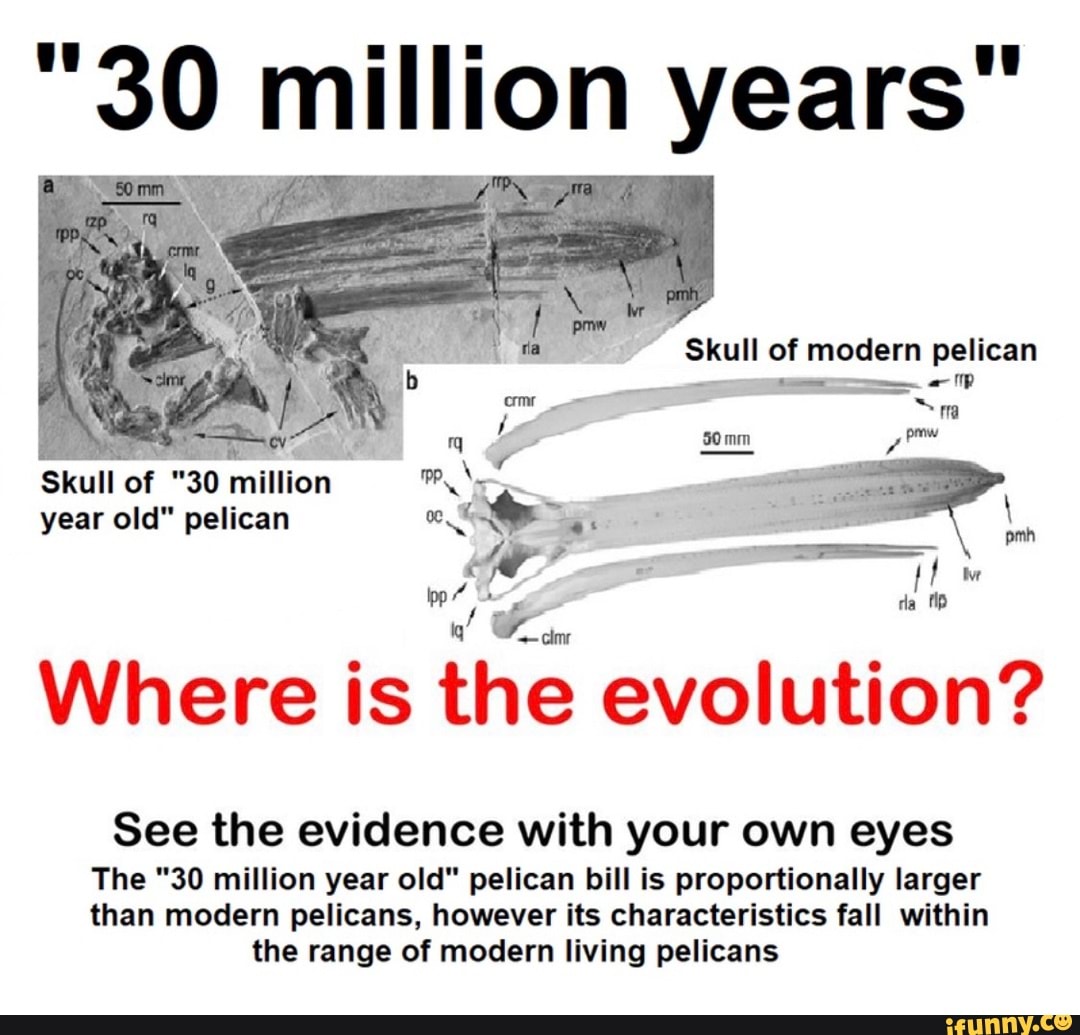
The earliest confirmed pelican fossils date back to the early Oligocene, approximately 30 to 34 million years ago. These specimens, such as those found in the Luberon region of France, reveal birds that are osteologically almost identical to modern species. This phenomenon, often referred to as "evolutionary stasis," suggests that the pelican reached an "adaptive peak"—a state where its physical form was so well-suited to its environment that further major changes provided no selective advantage.
The Fayum Discoveries
Significant breakthroughs in our understanding of pelican lineage occurred with the discovery of Eopelecanus aegyptiacus in the Fayum Depression of Egypt. These fossils, dating to the late Eocene or early Oligocene, provide a "missing link" of sorts, showing that the divergence of the pelican lineage from its broader ancestral group occurred earlier than previously thought. Eopelecanus possessed the characteristic long bill and specialized neck vertebrae that allow modern pelicans to retract their heads against their shoulders during flight and lunging.
Taxonomic Realignment: A Genetic Revolution
For decades, traditional taxonomy grouped pelicans with other water birds that share totipalmate feet—a condition where all four toes are connected by webbing. This group, the order Pelecaniformes, originally included gannets, boobies, cormorants, and frigatebirds. However, the advent of molecular phylogenetics in the late 20th and early 21st centuries completely restructured this tree.
As of 2026, genomic data has confirmed that pelicans are more closely related to the Shoebill (Balaeniceps rex) and the Hamerkop (Scopus umbretta) than they are to cormorants or gannets. This revelation was a watershed moment in ornithology, proving that the totipalmate foot evolved independently in different lineages (convergent evolution) or was lost in others. Today, the order Pelecaniformes has been redefined to include:
- Pelecanidae: The true pelicans.
- Balaenicipitidae: The Shoebill.
- Scopidae: The Hamerkop.
- Ardeidae: Herons and egrets.
- Threskiornithidae: Ibises and spoonbills.
This genetic shift highlights that the pelican's evolution was not an isolated journey but part of a complex radiation of large wading and water birds that adapted to different ecological niches across the prehistoric wetlands of Gondwana.
The Biomechanics of the Gular Pouch
The most distinctive feature in pelican evolution is the gular pouch (or the rhynchokinesis of the lower mandible). This is not merely a flap of skin; it is a sophisticated engineering marvel involving the elastic suspension of the hyoid apparatus and the flexible bone structure of the lower jaw.
Evolutionarily, the pouch serves as a biological dip net. When a pelican strikes the water, the lateral branches of the lower mandible bow outward, expanding the volume of the pouch instantaneously. This creates a vacuum effect that sucks in water and prey. The evolution of this trait required simultaneous changes in the bird's cranial kinesis—the ability to move the upper and lower beak independently and with great flexibility.
Plunge-Diving vs. Surface Foraging
Evolution split the eight modern species of pelicans into two distinct foraging strategies:
- Surface Foragers: Species like the Great White Pelican (Pelecanus onocrotalus) evolved for cooperative hunting. They often form semi-circles to herd fish into shallow water. This strategy favors a larger body size and efficient swimming.
- Plunge-Divers: The Brown Pelican (Pelecanus occidentalis) and the Peruvian Pelican (Pelecanus thagus) evolved a high-impact strategy. Their evolution included the development of subcutaneous air sacs that act as "bubble wrap" to protect their internal organs from the force of hitting the water from heights of up to 60 feet.
Comparative Evolutionary Traits: Prehistoric vs. Modern
The following table compares the anatomical features of prehistoric pelican ancestors (based on fossil records) with the eight extant species recognized in 2026.
| Feature | Prehistoric Ancestors (Eopelecanus) | Modern Pelicans (Pelecanus spp.) | Evolutionary Significance |
|---|---|---|---|
| Mandible Structure | Highly flexible, evidence of expansion | Extreme flexibility, elastic gular skin | Allows for high-volume prey capture without a heavy skull. |
| Pneumatization | Moderate bone air cavities | Extensive subcutaneous air sacs | Aids buoyancy and protects against impact (specifically in divers). |
| Foot Anatomy | Totipalmate (all 4 toes webbed) | Totipalmate (all 4 toes webbed) | Efficient propulsion in water; stable platform on soft mud. |
| Cervical Vertebrae | S-shaped, specialized for retraction | Advanced S-curve with locking mechanism | Protects the neck during strikes and optimizes flight balance. |
| Habitat Preference | Tropical/Subtropical wetlands | Global distribution (except Antarctica) | Transition from localized African/European origins to global success. |
Morphological Stasis: Why Change Stopped
One of the most frequent questions in avian paleontology is why pelicans have changed so little over 30 million years. The answer lies in the efficiency of the niche. The pelican's "scoop-and-drain" method is arguably the most efficient way for a large bird to harvest small, schooling fish.
Because their foraging environment (shallow coastal waters and inland lakes) has remained relatively stable in terms of physical properties, the selective pressure to change was low. While their cousins, the herons, evolved long, stabbing bills for solitary hunting, and the shoebills evolved massive, hooked beaks for lunging at large lungfish, the pelican's "net" remained the optimal tool for its specific food source.
By 2026, researchers using high-resolution CT scans of fossils have confirmed that even the internal vascularization of the beak in Oligocene fossils matches modern birds, indicating that the thermoregulatory functions of the pouch were also perfected early in their evolutionary history.
Survival and Adaptation in the Modern Era
While pelican evolution has been a story of stability, the modern era has forced rapid behavioral adaptations. In the 20th century, the Brown Pelican faced near-extinction due to DDT thinning their eggshells. Their "evolutionary" response was not genetic, but rather a display of ecological resilience as populations rebounded following legal protections and conservation efforts.
In 2026, we observe pelicans adapting to changing fish migration patterns caused by shifting ocean temperatures. While their physical form remains anchored in the Oligocene, their migratory routes and nesting timelines are showing plasticity—the ability of a genome to produce different behaviors in response to environmental changes. This plasticity is what will likely ensure their survival for the next 30 million years.
FAQ: Understanding Pelican Evolution
How did the pelican's pouch evolve?
The pouch evolved from the soft tissue of the throat (the gular region) in conjunction with the lengthening and thinning of the mandibular bones. It likely began as a small throat sac, similar to those seen in some modern herons or boobies, and became more specialized as the lineage moved toward "scoop" foraging rather than "spear" foraging.
Are pelicans related to dinosaurs?
Yes, like all modern birds, pelicans are the descendants of small, feathered theropod dinosaurs. Specifically, they belong to the Neornithes group. Their lineage survived the K-Pg extinction event approximately 66 million years ago, eventually diversifying into the Pelecaniformes order.
Why are there only eight species of pelicans?
The low diversity of species (only eight) is often attributed to their extreme specialization. Because the pelican body plan is so specific to a certain type of fishing, there are limited "sub-niches" they can occupy. This prevents the kind of rapid speciation seen in generalist birds like finches or warblers.
Is the Shoebill a type of pelican?
Technically, no, but it is their closest living relative. In 2026, the Shoebill is classified in its own family (Balaenicipitidae) within the same order as pelicans. They share a common ancestor that likely lived in the early Eocene, after which one branch evolved toward the "pouch" strategy (pelicans) and the other toward the "crushing bill" strategy (shoebills).
Did prehistoric pelicans have teeth?
No. By the time the first true pelicans appeared in the Oligocene, birds had long since lost their teeth, replacing them with a lightweight keratinous beak (rhamphotheca). The ancestors of all modern birds lost their teeth roughly 60 to 100 million years ago to reduce weight for flight.
Next Steps for Enthusiasts and Researchers
For those looking to explore pelican evolution further, visiting natural history museums with significant avian fossil collections—such as the Smithsonian in Washington D.C. or the Natural History Museum in London—is highly recommended. For those interested in the genetic side of the story, following the "Open Wing" genomics project provides the most current data on how these birds are related to other lineages. Understanding the past of the pelican is essential for their future, as conservation efforts in 2026 increasingly rely on genomic health data to manage fragmented populations.
Image Gallery