Understanding Why Workers’ Compensation Is Compulsory in Illinois
In Illinois, workers’ compensation is compulsory to ensure that employees receive prompt medical care and wage replacement for work-related injuries or illnesses without the need to prove employer negligence. By mandating this coverage...
In Illinois, workers’ compensation is compulsory to ensure that employees receive prompt medical care and wage replacement for work-related injuries or illnesses without the need to prove employer negligence. By mandating this coverage, the state provides a balanced legal framework that shields employers from unlimited civil liability while guaranteeing workers essential financial security during recovery.
Contents
The Legislative Purpose of Mandatory Coverage
The Illinois Workers’ Compensation Act was designed to resolve a historical imbalance in the relationship between employers and laborers. Before such laws were enacted, an injured worker had to sue their employer in court to recover damages. This process was often lengthy, prohibitively expensive, and required the employee to prove that the employer was at fault for the accident. Frequently, employers would use common-law defenses—such as the "fellow servant rule" or "assumption of risk"—to avoid paying claims, leaving injured workers destitute and physically compromised.
By making workers’ compensation compulsory, Illinois transitioned to a "no-fault" system. Under this arrangement, the employer’s liability is fixed by statute, regardless of who caused the accident. In exchange for providing this guaranteed coverage, the employer is generally immune from civil lawsuits brought by employees for work-related injuries. This "quid pro quo" ensures that injured workers do not suffer financial ruin while providing businesses with predictable insurance costs rather than volatile, unpredictable litigation outcomes.
Scope and Requirements for Illinois Employers
Under the Illinois Workers’ Compensation Act, almost every employer in the state is required to carry workers’ compensation insurance. Unlike some jurisdictions that grant exemptions for small businesses based on the number of employees, Illinois law is exceptionally broad. If you have one or more employees, you are generally required to provide coverage.
This mandate applies regardless of whether the employees are full-time, part-time, seasonal, or temporary. Even family members working for a business must be covered unless they meet very specific, narrow exemption criteria. The only significant exceptions involve certain types of sole proprietors or partners who may choose to exclude themselves from coverage, or employees who are already covered under federal programs (such as the Federal Employees’ Compensation Act or the Jones Act for maritime workers).
Failure to carry this insurance is a serious violation of Illinois law. Employers who fail to obtain coverage may be subject to substantial daily fines, "stop-work" orders that can shut down operations, and personal liability for any injuries that occur during the period the employer was uninsured.
The Benefits Structure: Protecting the Worker
The fundamental reason the state makes this insurance compulsory is to protect the health and livelihood of the workforce. When an employee is injured, the insurance policy provides three primary categories of benefits:
- Medical Benefits: Employers must pay for all necessary medical, surgical, and hospital services required to cure or relieve the effects of the injury. This includes physical therapy, medication, and surgical procedures, with no deductible or co-pay for the worker.
- Temporary Total Disability (TTD): If the injury prevents the employee from working while they recover, they are entitled to a portion of their average weekly wage. This ensures the worker can maintain basic living standards during their period of temporary incapacity.
- Permanent Disability Benefits: If an injury results in a permanent loss of function or partial loss of use of a body part, the system provides compensation based on the severity of the disability, determined by a statutory schedule or medical evaluation.
Comparative Perspective: Why Not Just Use Health Insurance?
A common misconception is that private health insurance or general liability insurance is sufficient to cover workplace injuries. However, these policies are not designed to address the specific needs of a work-related injury. Private health insurance often carries high deductibles and limits on physical therapy or long-term rehabilitation. Furthermore, general liability insurance typically excludes injuries sustained by employees in the course of their employment.
Workers’ compensation is uniquely tailored to handle industrial and office-related accidents. It covers not just the acute injury, but the ongoing wage replacement that regular health insurance does not provide. Because the state has a vested interest in keeping the workforce productive and preventing injured citizens from relying on public assistance, the mandatory nature of this insurance acts as a social safety net funded by the private sector.
Comparison of Coverage Scenarios
| Feature | Workers' Compensation | General Liability | Personal Health Insurance |
|---|---|---|---|
| Covers Work Injuries? | Yes | No | No (typically excludes) |
| Wage Replacement? | Yes | No | No |
| Employer Liability? | Limited/No-Fault | Varies (Negligence) | N/A |
| Mandatory in Illinois? | Yes | No | No |
The Financial Burden and Risk Management
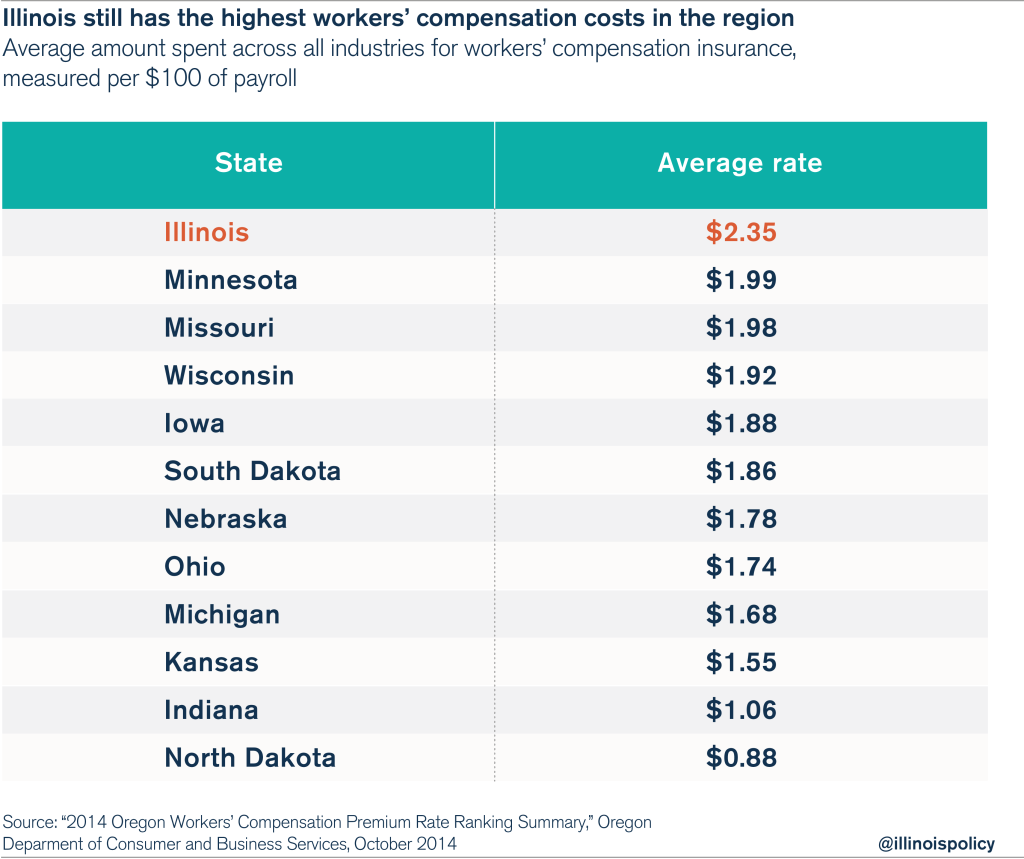
For the employer, the cost of workers' compensation premiums is determined by the "risk classification" of their industry. For example, a construction firm or a heavy manufacturing plant will pay higher premiums than an office-based accounting firm because the statistical likelihood of injury is higher.
Some employers may be tempted to misclassify employees as independent contractors to avoid paying these premiums. This is known as "premium fraud" and is aggressively monitored by the Illinois Workers’ Compensation Commission and the Department of Insurance. The state mandates coverage to prevent employers from externalizing the costs of workplace accidents onto the public, ensuring that businesses take financial responsibility for the risks inherent in their specific operations.
Practical Steps for Compliance
If you are an employer in Illinois, compliance involves more than just purchasing a policy. You must display the "Workers’ Compensation Notice" (Form IC-65) in a conspicuous location in your workplace, such as a breakroom or employee bulletin board. This notice informs employees of their rights and provides them with the information necessary to file a claim should an accident occur.
For employees, it is critical to understand that your right to these benefits is protected by law. If you are injured, you must notify your employer immediately—ideally in writing—to initiate the process. You are not required to hire an attorney to receive standard benefits, though legal counsel can be beneficial if there is a dispute regarding the extent of your injury or the amount of the payout.
Frequently Asked Questions
1. Can an employee waive their right to workers’ compensation in Illinois? No. An employee cannot legally sign away their rights to workers’ compensation benefits. Any contract or agreement attempting to waive these rights is considered void and unenforceable under the Illinois Workers’ Compensation Act, as it would undermine the state's intent to protect the workforce.
2. Are volunteers covered by workers’ compensation? Generally, no. Volunteers are typically not considered employees. However, if a volunteer receives compensation or benefits beyond mere reimbursement for expenses, the legal status can shift. Each case is fact-dependent, but true volunteers usually fall outside the mandatory coverage requirements.
3. What happens if an employer does not have insurance? The Illinois Workers’ Compensation Commission can issue a penalty fine against the employer. More critically, if a worker is injured, the employer becomes personally liable for all medical bills, lost wages, and disability payments. This can result in financial devastation for the business owner.
4. Does workers' compensation cover stress-related injuries? Coverage for psychological or stress-related conditions is complex. In Illinois, a mental health injury must be a direct result of a physical injury or a sudden, severe emotional trauma arising from the scope of employment. Cumulative stress or "wear and tear" from daily work pressure is typically not covered under the same standard as physical injuries.
Next Actions for Employers and Employees
For employers, the most important action is to verify that your insurance policy is active and covers all individuals performing work for your business. Conduct an annual audit of your payroll classifications to ensure your premiums accurately reflect your current operations.
For employees, keep a digital record of any workplace incident, including photographs, witness names, and copies of any injury reports submitted to your manager. If you are ever injured, seek medical attention immediately and ensure the healthcare provider understands the injury occurred at work, as this distinction determines how the billing is processed.
Image Gallery