Inside the Colorado ADX Prison: Security, Architecture, and Inmate Management
United States Penitentiary, Administrative Maximum Facility (ADX Florence) in Colorado is the federal government’s only supermax prison, engineered specifically to house the most dangerous, high-risk, and incorrigible male inmates in t...
United States Penitentiary, Administrative Maximum Facility (ADX Florence) in Colorado is the federal government’s only supermax prison, engineered specifically to house the most dangerous, high-risk, and incorrigible male inmates in the federal correctional system. Operating under stringent security protocols established by the Federal Bureau of Prisons, the facility functions as a fortress within a fortress, designed to eliminate any possibility of escape or violent interaction with staff and fellow inmates.
Contents
Understanding the Operational Framework of ADX Florence
The Administrative Maximum Facility in Florence, Colorado, commonly known as ADX, represents the pinnacle of modern correctional engineering and maximum-security confinement. Opened in 1994 and situated on the Federal Correctional Complex, Florence grounds, the facility was designed to isolate inmates who pose an extreme, intolerable threat to national security, institutional safety, or public welfare.
Unlike traditional maximum-security units that allow some degree of communal interaction, ADX Florence isolates inmates from one another and heavily restricts contact with the outside world. The operational framework relies on total sensory deprivation and technological surveillance. Understanding this system requires examining the architectural design, security classifications, and administrative mandates that govern daily operations inside the facility.
Architectural Engineering and Structural Defenses
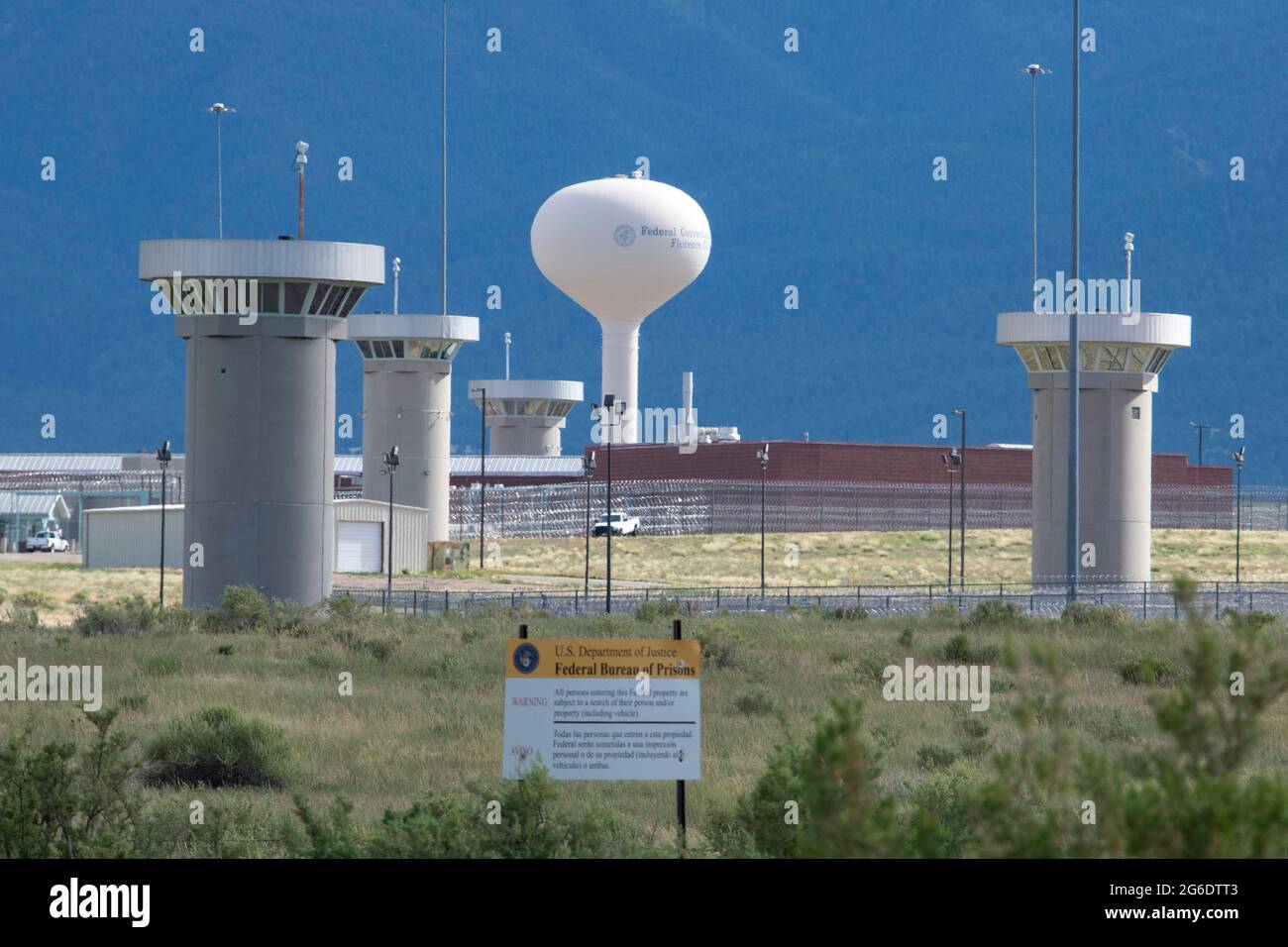
The physical plant of ADX Florence is a masterclass in hostile architecture and secure containment. Every structural element is engineered to withstand physical attacks, prevent tunneling, and neutralize escape attempts.
- Reinforced Concrete Construction: Walls, floors, and ceilings are constructed from thick, poured-in-place reinforced concrete designed to resist cutting tools, explosives, and heavy impacts.
- Controlled Doors and Portals: Cell doors are constructed of solid steel with narrow slit windows, preventing inmates from viewing outside their immediate threshold or throwing objects. Movement between zones requires passing through multiple electronically controlled interlocking sliding gates.
- Anti-Climb Perimeter Fencing: The compound is surrounded by multiple layers of razor-wire fencing, electronic intrusion detection systems, high-definition thermal imaging cameras, and armed patrol towers.
- Soundproofing and Lighting: Cells feature recessed fluorescent lighting controlled remotely by staff, and acoustic dampening materials prevent inmates from communicating through plumbing pipes or structural walls.
Security Tiers and Inmate Classification
Inmates assigned to ADX Florence are categorized based on their specific threat profile. The Bureau of Prisons utilizes specialized classification criteria to determine placement within the facility's tiered housing units.
| Security Tier / Unit | Primary Purpose | Contact Level | Out-of-Cell Time |
|---|---|---|---|
| General Population | Standard high-threat confinement | Strictly monitored visits and monitored calls | 5 to 10 hours per week (recreation/law library) |
| Intermediate Units | Transition phase for compliant inmates | Earned privileges based on behavioral compliance | Incremental increases in structured recreation |
| Step-Down Unit (H-Unit) | Long-term reintegration pathway | Supervised group interaction for behavioral models | Up to 15 hours per week of communal activity |
| Control Unit | Extreme behavioral management | Total isolation from all peer contact | Minimum required recreation, entirely alone |
Daily Life and Controlled Isolation Procedures
Life inside ADX Florence is defined by relentless predictability and absolute solitude. Inmates spend approximately 22 to 24 hours a day locked inside single-person cells measuring roughly 7 by 12 feet. Each cell contains a fixed concrete stool and desk, a poured concrete bed frame with a thin mattress, a stainless steel combination toilet and sink, and a shower.
Windows are narrow, measuring about 4 inches wide and 4 feet high, angled upward so that inmates can see only the sky, preventing them from determining their exact location within the complex or studying the surrounding terrain. Meals are slid through a small slot in the cell door by correctional officers.
Recreation occurs either in an indoor concrete recreation room—essentially a smaller, indoor solitary cell with a pull-up bar and a single window showing a strip of sky—or in solitary outdoor cages where inmates exercise alone. These measures ensure that inmates have zero physical contact with other human beings during standard disciplinary phases, mitigating the risk of coordinated attacks or hostage-taking.
Communication Restrictions and Special Administrative Measures
For inmates convicted of high-profile terrorism or national security offenses, the Attorney General often imposes Special Administrative Measures (SAMs). These regulations severely curtail an inmate's ability to communicate with the outside world to prevent the direction of criminal or terrorist activities from behind bars.
- Mail Monitoring: All incoming and outgoing correspondence is intercepted, read, translated if necessary, and heavily restricted.
- Media Bans: Inmates are prohibited from participating in interviews with journalists, and access to television programming is limited to approved, educational, or sanitized broadcasts.
- Social Confinement: Attorney-client visits are monitored, and social visits from family members are frequently denied or subjected to non-contact glass partitions and audio surveillance.
Comparing ADX Florence to Traditional Maximum-Security Prisons
To understand the unique status of ADX Florence, it is necessary to contrast its operating model with standard maximum-security (USP) facilities across the federal system.
| Operational Feature | Standard United States Penitentiary (USP) | ADX Florence (Supermax) |
|---|---|---|
| Inmate Movement | Controlled group movement to dining halls, work assignments, and recreation yards. | Individualized movement escorted by multiple armed guards; restrained in handcuffs and leg irons. |
| Cell Configuration | Two-man cells with standard bars or perforated steel doors, allowing peer communication. | Single-man soundproofed cells with solid steel doors and remote-controlled slots. |
| Communal Activities | Group work programs, educational classes, religious services, and yard sports. | Strictly prohibited in general population; highly earned and monitored in step-down phases. |
| Staff-to-Inmate Ratio | Balanced ratio suitable for standard high-security populations. | Extremely high staff-to-inmate ratio to ensure constant observation and immediate response capability. |
Legal, Psychological, and Human Rights Considerations
The extreme nature of confinement at ADX Florence has generated significant legal scrutiny and debate among human rights organizations, legal scholars, and mental health professionals. Critics argue that prolonged sensory deprivation and total isolation constitute cruel and unusual punishment, leading to severe psychological deterioration, depression, anxiety, and psychosis among long-term residents.
Conversely, federal defense and corrections authorities maintain that the facility is an absolute necessity for national security. Proponents argue that certain individuals—such as international terrorists, cartel leaders, and high-ranking gang bosses who have ordered murders from within standard prison systems—cannot be managed safely in any other environment. The institution serves as a deterrent and an impenetrable containment mechanism for individuals whose escape or continued illicit operations would pose catastrophic risks to society.
Frequently Asked Questions About ADX Florence
What types of inmates are housed at ADX Florence?
ADX Florence houses federal inmates who have demonstrated extreme violence, perpetrated high-profile terrorist acts, attempted escapes from other facilities, or led massive transnational criminal organizations. Notable past and present inmates include unrepentant terrorists, spies, and gang leaders.
Can inmates ever leave ADX Florence and transfer to lower-security prisons?
Yes, well-behaved inmates can enter a multi-year step-down program housed within the facility. Successful completion of behavioral milestones and years of compliance can eventually lead to a transfer to a United States Penitentiary (USP) with lower security restrictions.
Do inmates at ADX Florence have access to televisions and radios?
Inmates who maintain good behavior can earn television privileges in their cells, though programming is restricted to pre-approved, non-live educational, religious, and entertainment broadcasts monitored by staff.
How are meals served to inmates in solitary confinement?
Meals are prepared in the central kitchen and delivered directly to the cell doors by correctional officers using a sliding tray slot, eliminating any direct physical contact between staff and inmates during meal times.
What is the purpose of the Special Administrative Measures (SAMs)?
SAMs are imposed by the Attorney General to prevent specific high-risk inmates from communicating instructions, plotting attacks, or transmitting operational details to criminal associates outside the prison walls.
Securing the Nation's Most Dangerous Federal Offenders
The Administrative Maximum Facility in Florence, Colorado, remains an unyielding component of the federal corrections landscape. By balancing absolute physical security with rigid isolation protocols, ADX Florence fulfills its core mandate: neutralizing the threats posed by the most dangerous offenders in the United States federal system while maintaining institutional safety for correctional personnel and the public.
Image Gallery