Does the Beneficiary Receive Paid-Up Life Insurance in Addition to the Face Amount?
In most participating whole life insurance policies, the total death benefit paid to beneficiaries includes the original face amount plus the value of any accumulated paid-up additions. These additions are supplemental layers of insura...
In most participating whole life insurance policies, the total death benefit paid to beneficiaries includes the original face amount plus the value of any accumulated paid-up additions. These additions are supplemental layers of insurance purchased over time, typically using policy dividends, which increase the total coverage beyond the initial policy limit.
Contents
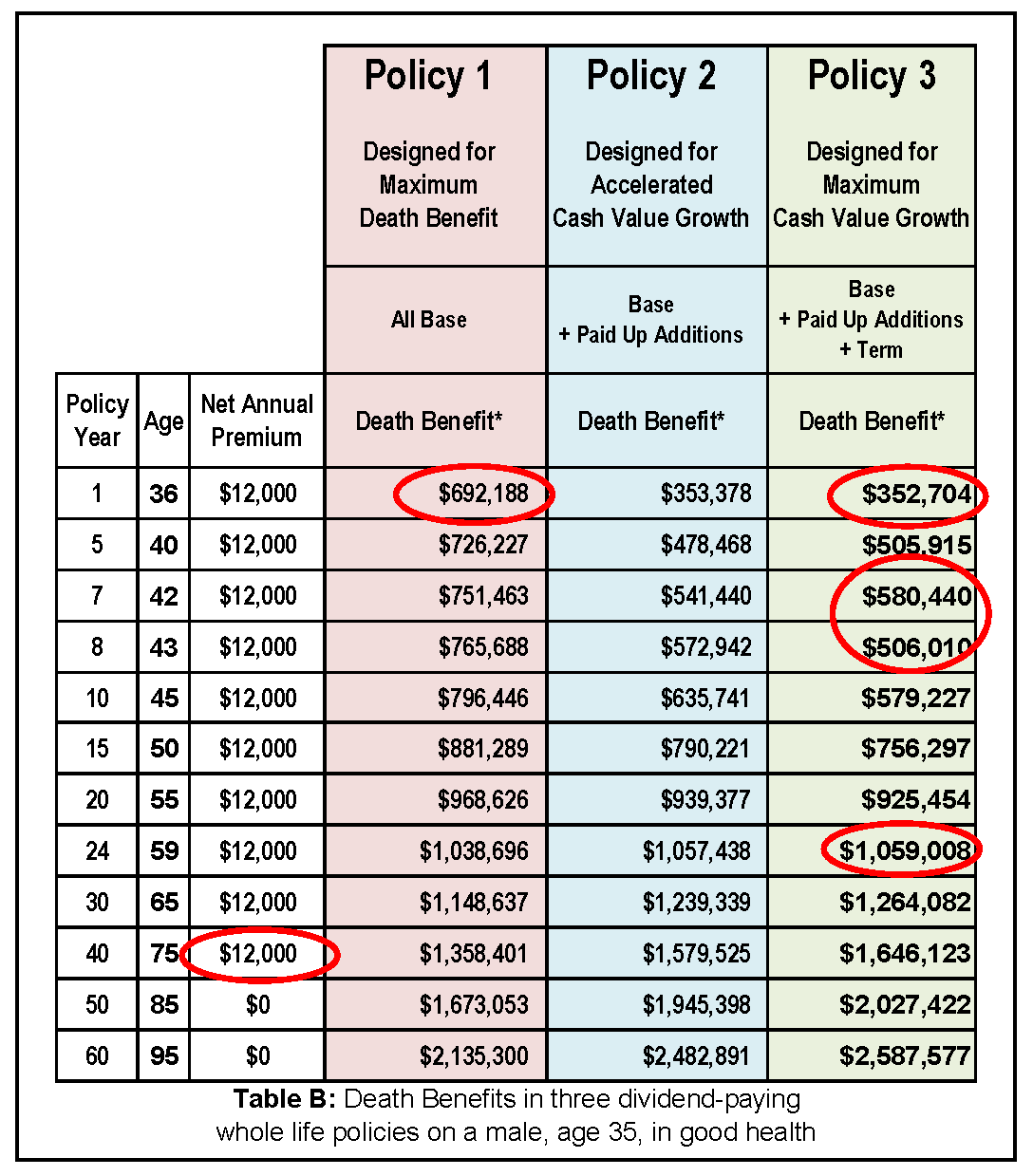
Navigating the complexities of life insurance terminology often leads to confusion regarding what a beneficiary actually receives upon the insured's death. To understand whether "paid-up insurance" is paid in addition to the "face amount," one must first distinguish between different dividend options and policy structures. In the context of permanent life insurance—specifically whole life—the "face amount" is the baseline coverage you purchased at the start. However, if your policy earns dividends and you have selected the Paid-Up Additions (PUA) option, those additions represent extra death benefits that stack on top of your original coverage.
Understanding the Components of a Death Benefit
The death benefit of a permanent life insurance policy is rarely a static number unless the policyholder specifically chooses a non-participating structure. To answer the core question accurately, we must break down the two primary components involved: the face amount and the paid-up additions.
What is the Face Amount?
The face amount is the initial sum of money the insurance company agrees to pay upon the death of the insured, as stated on the first page of the policy contract. It is the "stated value" or "base coverage." For example, if you buy a $500,000 whole life policy, $500,000 is your face amount. This amount remains constant throughout the life of the policy, provided premiums are paid, and no "reduced paid-up" options are triggered due to a lapse in payment.
What is Paid-Up Additional Insurance (PUA)?
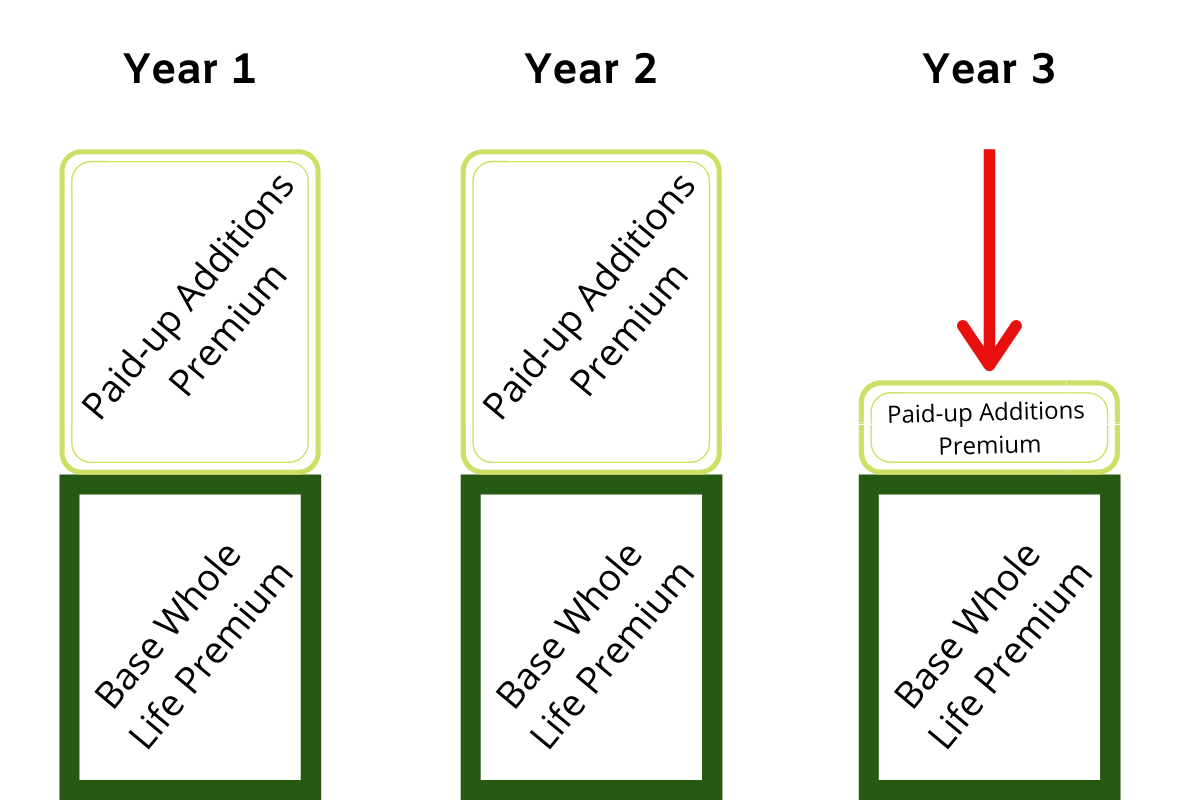
Paid-up additions are small, single-premium life insurance policies purchased using the dividends issued by a mutual or participating insurance company. These additions are "paid-up," meaning no further premiums are required to keep that specific slice of extra coverage in force.
When dividends are funneled into PUAs, they do two things simultaneously:
- Increase the Death Benefit: Each PUA has its own small face value that is added to the main policy's face amount.
- Increase the Cash Value: Each PUA has its own cash value that grows over time and earns its own dividends, creating a compounding effect.
As of 2026, many financial professionals continue to recommend the PUA rider as the most efficient way to maximize the internal rate of return and total liquidity within a whole life contract.
How Paid-Up Additions Stack with the Face Amount
The mechanics of a participating whole life policy allow the total death benefit to grow significantly over several decades. Because PUAs are actual insurance fragments, they are treated as part of the "total amount at risk" for the insurance company.
When the insured passes away, the claims department calculates the Total Death Benefit by adding several figures together:
- Base Face Amount
- (+) Accumulated Paid-Up Additions
- (+) Any Term Insurance Riders (if applicable)
- (+) Any Unearned Premium (premiums paid in advance)
- (-) Outstanding Policy Loans and Interest
Therefore, if a policy has a $1,000,000 face amount and has accumulated $250,000 in paid-up additions over twenty years, the beneficiary will receive $1,250,000 (assuming no loans are outstanding). This is the standard operational procedure for participating policies where the "Paid-Up Additions" dividend option is active.
Distinguishing PUAs from "Reduced Paid-Up" Insurance
Confusion often arises because the term "paid-up" is used in two different contexts within the insurance industry. It is vital to distinguish between Paid-Up Additions and the Reduced Paid-Up (RPU) non-forfeiture option.
If a policyholder can no longer afford premiums but wants to keep some coverage, they may exercise the Reduced Paid-Up option. In this scenario, the policy's existing cash value is used to buy a single-premium policy with a lower face amount than the original. In this case, the original face amount is gone; it is replaced by a smaller, fully paid-up amount.
Conversely, the user asking if they get the paid-up insurance in addition to the face amount is almost certainly referring to the dividend option. In that specific context, the answer remains a firm yes: the additions are supplemental to the base.
The Impact of Policy Loans on the Payout
While PUAs increase the death benefit, policy loans can significantly decrease the final check sent to beneficiaries. In 2026, as in previous years, insurance companies treat policy loans as an advance on the death benefit.
If you have a $500,000 face amount plus $100,000 in PUAs, your gross death benefit is $600,000. However, if you took a $50,000 loan against the cash value and never paid it back, the insurance company will deduct that $50,000 (plus any accrued interest) from the $600,000 total. The beneficiary receives the "net death benefit."
Comparison Table: Death Benefit Components
| Feature | Base Face Amount | Paid-Up Additions (PUA) | Reduced Paid-Up (RPU) |
|---|---|---|---|
| Origin | Initial Contract Purchase | Dividends or PUA Rider | Non-forfeiture Action |
| Premium Requirement | Periodic (Monthly/Annual) | Paid by Dividends/Extra Cash | No further premiums |
| Relationship to Face | Is the Face Amount | Added to the Face Amount | Replaces the Face Amount |
| Impact on Cash Value | Standard growth | Accelerates growth | Static or slower growth |
| Beneficiary Receipt | Received in full | Received in addition to face | Received as the total sum |
Tax Implications of the Total Death Benefit
Under Internal Revenue Code Section 101(a)(1), life insurance death benefits are generally received by beneficiaries income tax-free. This applies to both the base face amount and the paid-up additions.
However, there are specific 2026 considerations regarding the federal estate tax. If the total death benefit (Face + PUAs) pushes the value of the decedent’s estate above the federal estate tax exemption threshold, the proceeds might be subject to estate taxes. While the exemption remains high in 2026, policyholders with significant PUAs should monitor their total "death benefit footprint" to ensure they are utilizing tools like Irrevocable Life Insurance Trusts (ILITs) if necessary. More information on estate tax limits can be found at the Internal Revenue Service (IRS) website.
Why the "Paid-Up Additions" Option is Preferred
Insurance companies offer several dividend options, but the PUA option is often the only one that increases the death benefit over time. The other options include:
- Cash: The company mails you a check. The death benefit remains at the base face amount.
- Premium Reduction: The dividend pays part of your bill. The death benefit remains at the base face amount.
- Accumulate at Interest: The dividends sit in a side account. This is paid to the beneficiary, but it is treated as "cash" and the interest earned is taxable, unlike PUAs which are insurance.
The PUA route is mathematically superior for most looking for long-term growth because it buys more "net amount at risk," and that additional insurance has its own cash value that continues to generate more dividends, creating a "snowball effect."
Verifying Your Policy Status
To confirm exactly how much your beneficiary will receive, you should request a Policy Illustration or a Current Annual Statement from your insurance carrier.
- Check the "Dividend Option": Ensure it is set to "Paid-Up Additions."
- Look for "Total Death Benefit": This line item should clearly show the sum of the base policy and the additions.
- Review the "Dividend History": This shows how many additions were purchased in the last year.
- Confirm "Loan Balance": Ensure no forgotten loans are eroding the additions you’ve built up.
For residents in the United States, the National Association of Insurance Commissioners (NAIC) provides resources for understanding policy types and consumer rights regarding death benefit disclosures.
Frequently Asked Questions
Is the cash value of the policy paid in addition to the face amount?
Generally, no. In a standard whole life policy, the cash value is part of the face amount, not in addition to it. However, paid-up additions do have their own cash value, and their face value is added to the base death benefit. This is a common point of confusion; you do not get "Face + Cash Value," but you do get "Face + PUA Face Value."
Can I withdraw the paid-up insurance before I die?
You can "surrender" paid-up additions for their cash value. If you do this, the total death benefit will decrease by the amount of insurance those additions represented. This is a way to access liquidity without taking a loan, but it permanently reduces the legacy left to beneficiaries.
Are paid-up additions subject to medical underwriting?
No. One of the greatest advantages of PUAs is that they are purchased at "standard" or "preferred" rates based on your original health rating when you bought the policy, regardless of how your health has changed since then. This allows you to increase your total coverage even if you become uninsurable later in life.
What happens if I stop paying premiums on a policy with PUAs?
If the policy lapses and you don't have enough cash value to sustain it, the policy may terminate. However, if you use a non-forfeiture option like "Reduced Paid-Up," your existing PUAs are typically folded into the new, smaller face amount.
Do paid-up additions earn their own dividends?
Yes. Paid-up additions are essentially "mini" whole life policies. They have their own cash value, and that cash value is eligible to receive dividends, which are then used to buy even more paid-up additions. This is the primary mechanism for the exponential growth seen in high-performing mutual life insurance policies.
Practical Recommendation
If your primary goal is to maximize the legacy left to your heirs, ensure your dividend election is set to Paid-Up Additions. Review your policy annually to check the "Current Death Benefit" versus the "Original Face Amount." If you find that your additions are not growing as expected, consult with your agent to ensure that dividends are being applied correctly and that high policy loan interest isn't neutralizing the growth of your additions. For those in the planning stages, adding a PUA Rider to a new policy allows you to "overfund" the policy legally, significantly boosting the death benefit in the early years of the contract.
Image Gallery