Choosing the Best Knife Sharpener for Home Cooks: A Comprehensive 2026 Guide
The best knife sharpener for most home cooks is the Chef’sChoice Trizor XV EdgeSelect, which provides a consistent, professional-grade 15-degree edge with minimal effort. For those prioritizing manual control and blade longevity, a dua...
The best knife sharpener for most home cooks is the Chef’sChoice Trizor XV EdgeSelect, which provides a consistent, professional-grade 15-degree edge with minimal effort. For those prioritizing manual control and blade longevity, a dual-grit whetstone (1000/6000) remains the superior choice for achieving surgical precision and maintaining various steel types.
Contents
The pursuit of the perfect kitchen edge has evolved significantly. By 2026, the technology behind home sharpening has reached a point where the gap between consumer tools and professional services has narrowed. For a home cook, a dull knife is more than a nuisance; it is a safety hazard. A dull blade requires more force, increasing the likelihood of the knife slipping and causing injury. Conversely, a sharp knife bites into the surface of the food, allowing for cleaner cuts and better preservation of the ingredient's cellular structure, which directly impacts flavor and texture.
Understanding the Mechanics of Sharpening
Before selecting a tool, it is essential to understand what happens to a blade during the sharpening process. Sharpening is the act of removing metal from the sides of the blade to create a new, clean edge. This differs from honing, which uses a steel rod to realign the existing edge without removing significant material.
The Importance of the Bevel Angle
The "bevel" is the angle at which the edge of the knife is ground. Historically, Western knives (German and French) featured a 20-degree angle, prioritizing durability for heavy-duty tasks. Japanese knives typically use a 15-degree (or even 12-degree) angle, favoring precision and sharpness. In 2026, the trend has shifted toward the "universal" 15-degree edge, which offers the best balance of sharpness and retention for modern high-carbon stainless steels.
Grit and Abrasives
Abrasive materials are categorized by "grit." Lower numbers (200–400) are coarse and used for repairing chips or extremely dull blades. Medium grits (1000–2000) are for general sharpening, while high grits (5000–8000) are used for polishing and refining the edge to a mirror finish. Common abrasives include:
- Diamond: The hardest material, which removes steel quickly and stays flat.
- Tungsten Carbide: Usually found in inexpensive pull-through sharpeners; it is aggressive and can be harsh on high-end steel.
- Ceramic: Excellent for finishing and maintenance.
The Best Electric Sharpener: Chef’sChoice Trizor XV EdgeSelect
For the average home cook who values efficiency and repeatable results, the Chef’sChoice Trizor XV remains the gold standard. Its primary innovation is the ability to convert a standard 20-degree factory edge into a high-performance 15-degree "Trizor" edge.
Multi-Stage Precision
The unit uses a three-stage process. Stage 1 employs 100% diamond abrasives to create the initial bevel. Stage 2 uses finer diamonds to refine that edge, and Stage 3 utilizes a flexible stropping disk to polish the metal. This staged approach creates a "gothic arch" shape on the edge, which is structurally stronger than a simple V-shape.
Ease of Use and Safety
The Trizor XV features advanced spring guides that automatically position the knife at the correct angle. This eliminates the most common failure point in sharpening: human error in maintaining a consistent angle. While it is a significant investment, its durability and the quality of the edge it produces make it the most practical choice for a busy 2026 kitchen.
The Best Manual Sharpener: Brod & Taylor Professional
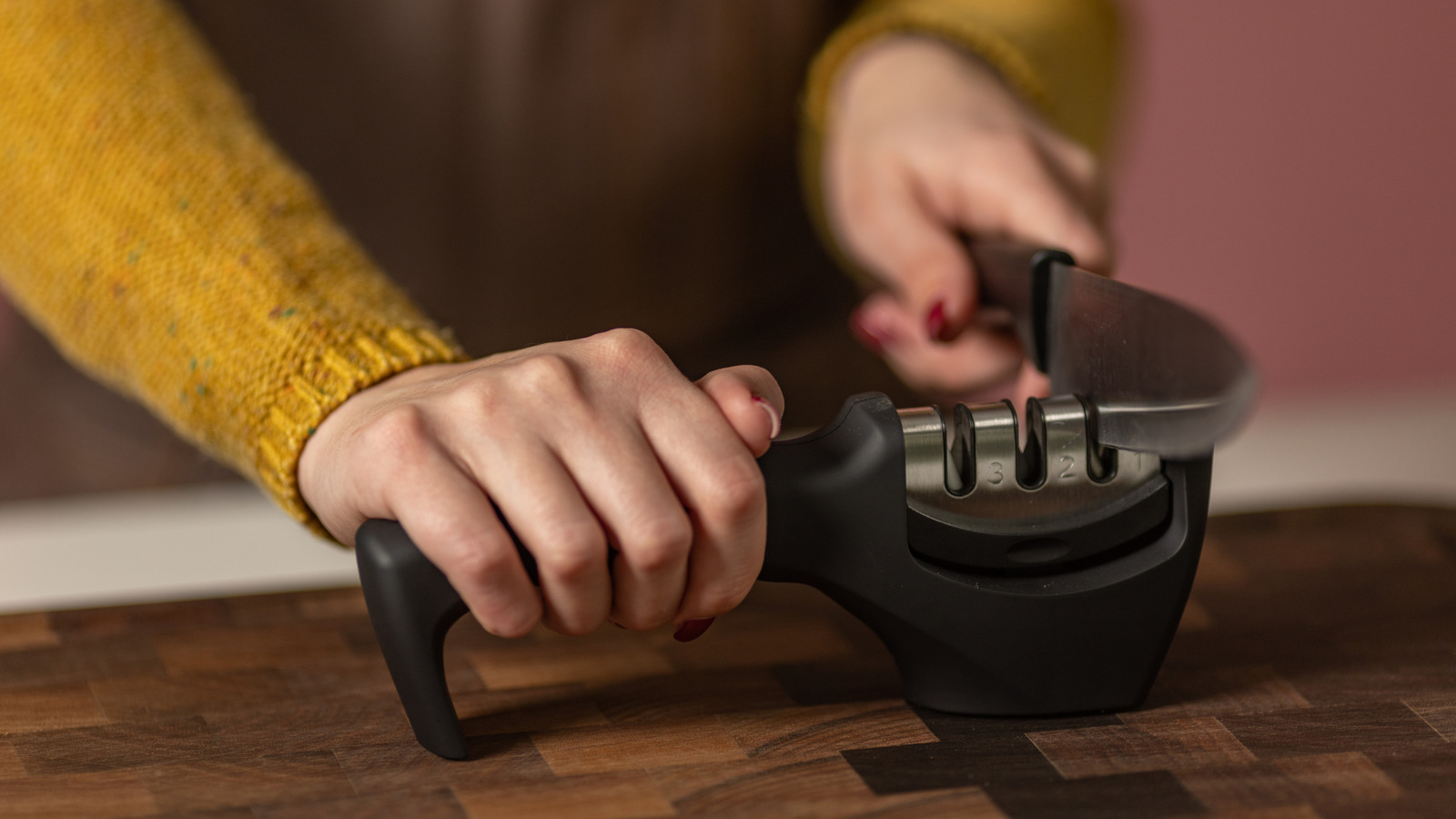
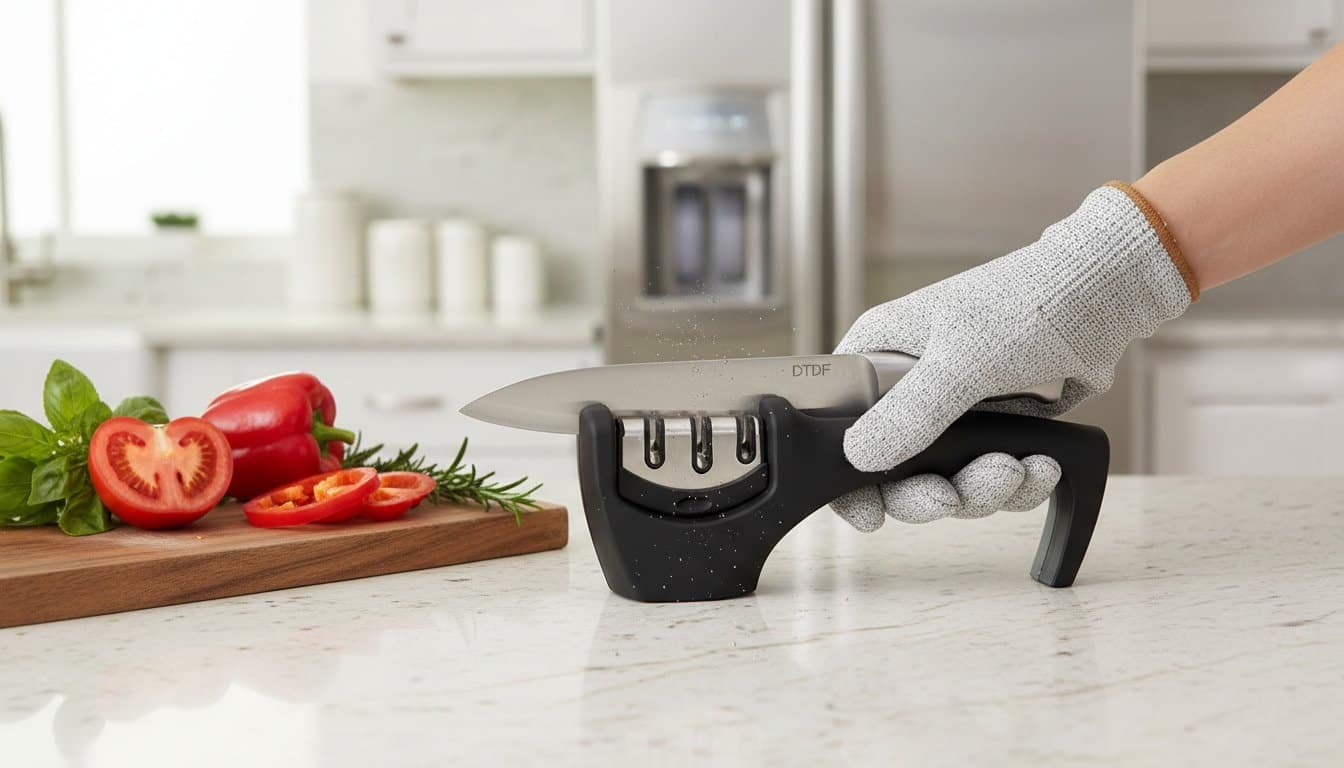
If you prefer a tool that does not require electricity and takes up minimal drawer space, the Brod & Taylor Professional manual sharpener is the premier choice. Unlike cheap V-shaped sharpeners that shave metal off the blade in chunks, this device uses patented spring-action bars made of ultra-hard tungsten carbide.
Adaptive Sharpening Technology
The unique design allows the bars to track the existing angle of the knife. By changing the position of the knife handle (angled up, down, or flat), the user can perform three different functions:
- Coarse Sharpening: For very dull blades.
- Honing: To realign the edge daily.
- Polishing: For a smooth finish.
This versatility is particularly useful for serrated knives, which most electric sharpeners cannot handle effectively. The Brod & Taylor can sharpen serrations without damaging the scallops, making it an essential multi-tool for the home cook.
The Enthusiast’s Choice: Whetstones
For the cook who views food preparation as a craft, nothing replaces the whetstone. It offers the highest degree of control over the amount of metal removed and the exact angle of the edge. As of 2026, brands like Shapton and King continue to lead the market with "splash-and-go" ceramic stones that do not require lengthy soaking.
The 1000/6000 Grit Combination
A dual-sided stone is the most economical way to start. The 1000-grit side is used to establish the edge, while the 6000-grit side provides a refined, razor-sharp finish. While there is a learning curve associated with maintaining a 15-degree angle by hand, the results are objectively superior. Whetstones also extend the life of your knives because they remove only the absolute minimum amount of steel required to restore the edge.
| Sharpener Type | Recommended Model | Best For | Skill Level | Price Range (2026) |
|---|---|---|---|---|
| Electric | Chef’sChoice Trizor XV | Daily convenience & 15° conversion | Beginner | $160 - $190 |
| Manual Pull-Through | Brod & Taylor Professional | Compact storage & serrated knives | Intermediate | $110 - $130 |
| Whetstone | Shapton Kuromaku #1000 | Precision & enthusiasts | Advanced | $45 - $65 |
| Guided System | Work Sharp Precision Adjust | Perfectionists who want ease | Intermediate | $60 - $100 |
Factors to Consider When Buying
Selecting the right sharpener requires an honest assessment of your habits and the types of knives you own.
1. Knife Material
If you own high-end Japanese knives made of hard steel (HRC 60+), avoid cheap tungsten carbide pull-through sharpeners. These can cause "micro-chipping" on brittle steel. Instead, opt for diamond-based electric sharpeners or whetstones. For softer, standard European stainless steel (HRC 54-56), manual sharpeners are perfectly adequate.
2. Frequency of Use
Do you cook every night, or just on weekends? A professional cook may need to hone their blade every few hours and sharpen once a month. A home cook might only need a full sharpening session every three to six months. If you only sharpen occasionally, an electric unit's speed is a major benefit.
3. Kitchen Space
Electric sharpeners are bulky and require proximity to an outlet. If you have limited counter space, a manual sharpener or a set of stones that can be tucked into a cabinet is preferable.
Common Sharpening Mistakes to Avoid
Even with the best tools, improper technique can ruin an expensive blade.
- Applying Too Much Pressure: Let the abrasives do the work. Pressing down too hard can heat up the steel, potentially ruining its "temper" (hardness) or creating an uneven edge.
- Inconsistent Angles: This is why guided systems or electric sharpeners with built-in guides are popular. If you vary the angle by even a few degrees during the stroke, you will create a rounded, dull edge rather than a sharp V.
- Neglecting the Burr: A "burr" is a microscopic wire edge that forms on the opposite side of the blade during sharpening. You must flip the knife and sharpen the other side (or use a honing stage) to remove this burr, or the knife will feel dull almost immediately.
Maintenance and Long-Term Care
Once you have sharpened your knives, maintenance is the key to longevity. Using a ceramic honing rod once a week will keep the edge aligned, delaying the need for a full sharpening session. Always hand-wash your knives; the high heat and abrasive detergents in a dishwasher are the fastest ways to dull a blade and damage the handle.
Furthermore, consider your cutting surface. Wood or high-quality plastic boards are "forgiving" to the blade. Cutting on glass, marble, or stainless steel surfaces will flatten the edge of even the most expensive knife in a single session.
Frequently Asked Questions
Can I sharpen serrated bread knives?
Yes, but you must use the right tool. Most electric sharpeners are not designed for serrations. A manual sharpener like the Brod & Taylor or a specific ceramic honing rod (tapered) is required to reach inside the individual serrated gullets.
How often should I sharpen my kitchen knives?
For a regular home cook, a full sharpening every 4 to 6 months is usually sufficient, provided you are honing the blade every few uses. If the knife fails the "paper test" (the ability to slice through a vertical sheet of paper cleanly), it is time for a sharpen.
Is it better to use a professional sharpening service?
While professional services provide an excellent edge, the cost adds up over time. In 2026, the average cost of professional sharpening is $2 to $3 per inch of blade. Investing in a high-quality home sharpener usually pays for itself within two years if you have a full set of knives.
Will an electric sharpener "eat" my knife?
Lower-quality electric sharpeners can remove excessive metal. However, premium units like the Chef’sChoice Trizor XV are designed with fine abrasives and controlled speeds to minimize steel removal, ensuring your knives last for decades.
Do ceramic knives need sharpening?
Ceramic knives stay sharp much longer than steel but are prone to chipping. They require specialized diamond sharpeners. Most standard home sharpeners will not work on ceramic blades; it is often best to send these back to the manufacturer for service.
Final Recommendation
For the vast majority of home cooks in 2026, the Chef’sChoice Trizor XV EdgeSelect offers the most reliable path to a sharp kitchen. It bridges the gap between professional results and amateur skill levels, ensuring your prep work is safe, efficient, and enjoyable. If you are on a budget or have limited space, the Brod & Taylor Professional provides an excellent alternative without the need for power. Whichever path you choose, remember that the most important part of knife maintenance is consistency—don't wait until your knife is dangerously dull to take action.
Image Gallery