Why the Omnivore Food Choice Matters: Nutrition, Ecology, and Human Resilience
The omnivore food choice matters because it provides a biologically optimized balance of nutrient density, metabolic flexibility, and ecological adaptability. By consuming both plant and animal sources, humans access essential bioavail...
The omnivore food choice matters because it provides a biologically optimized balance of nutrient density, metabolic flexibility, and ecological adaptability. By consuming both plant and animal sources, humans access essential bioavailable nutrients—such as Vitamin B12 and heme iron—while supporting diversified agricultural systems that integrate livestock and crop production to maintain soil health.
Contents
Biological Foundations: The Evolutionary Advantage of Being an Omnivore
The human species is biologically classified as an omnivore, a status that has historically provided a significant survival advantage. Unlike obligate carnivores or strict herbivores, humans possess a digestive tract that is intermediate in length and complexity. This allows for the fermentation of certain plant fibers in the large intestine while facilitating the rapid enzymatic breakdown of high-density animal proteins and fats in the small intestine.
In 2026, evolutionary biology remains a cornerstone of nutritional science. The "expensive tissue hypothesis" suggests that the consumption of energy-dense animal foods allowed the human gut to shrink over millennia, freeing up metabolic energy for the expansion of the brain. This anatomical trade-off underscores why the omnivore choice is not merely a cultural preference but a biological legacy. Our dental structure—featuring both incisors for shearing and molars for grinding—further reflects this dual-purpose design.
Furthermore, human metabolism is characterized by significant plasticity. We can shift between burning glucose from carbohydrates and ketones from fats. This metabolic flexibility was essential for ancestral survival during seasonal shifts in food availability and remains a key health marker in the modern era. An omnivorous diet provides the broadest spectrum of substrates to maintain this flexibility, ensuring the body can efficiently process a wide variety of fuel sources.
Nutrient Density and Bioavailability: The Technical Edge
One of the primary reasons the omnivore choice matters is the concept of bioavailability—the proportion of a nutrient that is absorbed and utilized by the body. While many plant foods contain high levels of vitamins and minerals, they often come packaged with "antinutrients" like phytates, oxalates, and tannins that can inhibit absorption.
Animal-sourced foods (ASFs) provide several critical nutrients in their most accessible forms:
- Vitamin B12: Essential for DNA synthesis and neurological function, B12 is naturally occurring only in animal products. While synthetic fortification exists, the natural matrix of B12 in meat, eggs, and dairy is highly efficient for human uptake.
- Heme Iron: Found in red meat and poultry, heme iron is absorbed at a rate of 15–35%, whereas non-heme iron from plant sources is absorbed at a rate of only 2–20%.
- Omega-3 Fatty Acids (EPA and DHA): While flax and chia seeds provide ALA (alpha-linolenic acid), the conversion rate to the essential long-chain fatty acids EPA and DHA is remarkably low in humans (often less than 5%). Fatty fish and pasture-raised eggs provide these directly.
- Complete Protein Profiles: Animal proteins contain all essential amino acids in ratios that closely mirror human requirements, supporting muscle protein synthesis and metabolic repair more effectively than most single-source plant proteins.
By choosing an omnivorous path, individuals can meet their nutritional requirements with a lower total volume of food, which can be particularly important for life stages with high nutrient demands, such as childhood, pregnancy, and old age.
Environmental Sustainability and the Integrated Farming Model
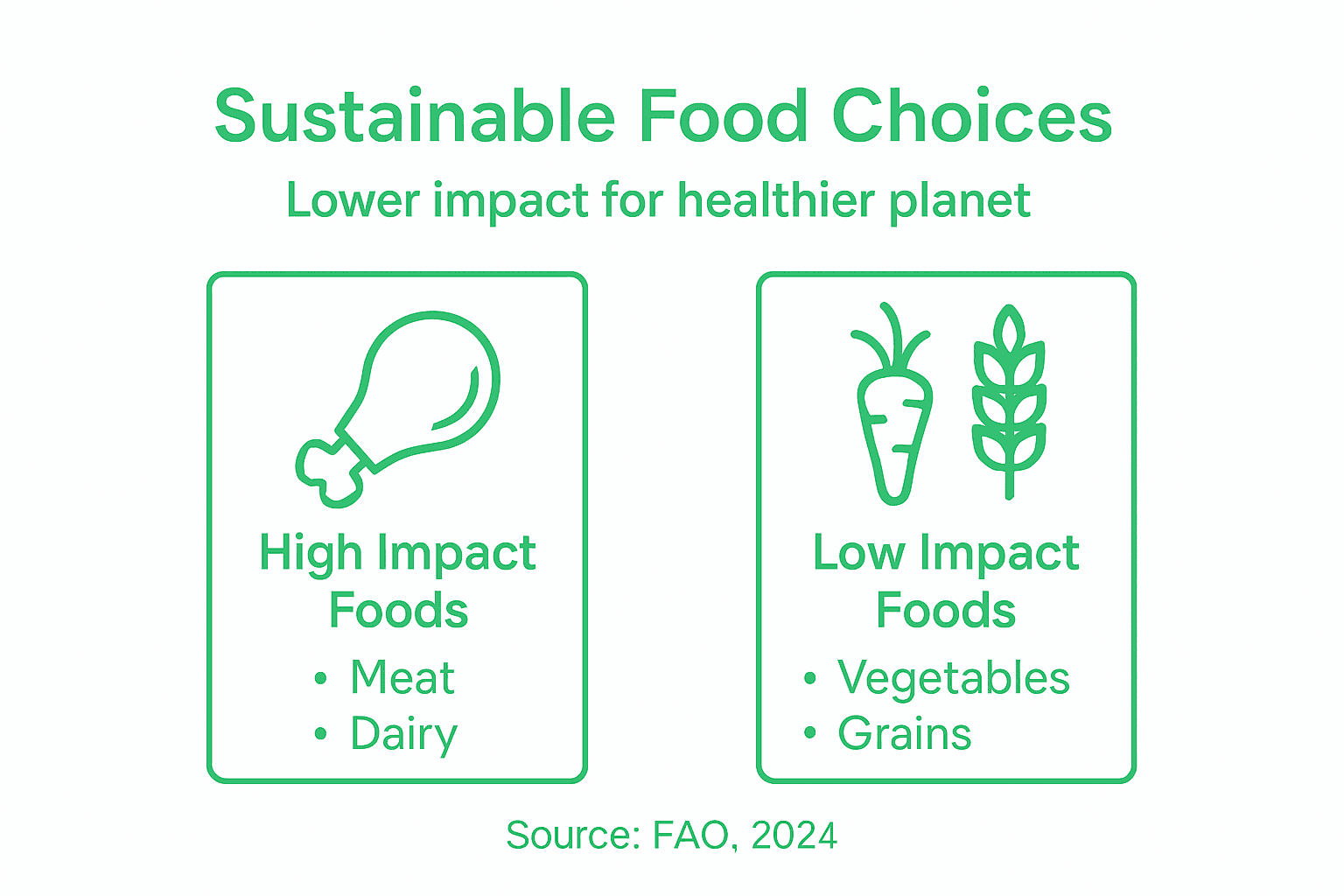
As of 2026, the conversation surrounding food and the environment has shifted from a simplistic "meat vs. plants" binary to a more nuanced understanding of ecosystem health. The omnivore choice matters because it supports integrated, regenerative agricultural systems that are often more resilient than monocrop-based vegan systems.
Livestock play a crucial role in a circular food economy. They can graze on marginal lands—hilly, rocky, or arid terrains that are unsuitable for growing crops—converting inedible cellulose (grass) into high-quality human food. This process prevents the conversion of natural grasslands into carbon-releasing tilled farmland.
Moreover, the integration of animals into crop cycles provides natural fertilization. Manure reduces the reliance on synthetic, petroleum-based fertilizers, which are major contributors to waterway eutrophication and greenhouse gas emissions. In a well-managed regenerative system, ruminants like cattle can actually contribute to carbon sequestration by stimulating root growth in grasslands, which pulls carbon dioxide from the atmosphere into the soil. The omnivorous consumer, by selecting regeneratively raised products, participates in a system that restores biodiversity rather than depleting it through endless rows of soy or corn monocultures.
Comparing Dietary Patterns and Functional Outcomes
To understand why the omnivore choice remains a dominant and scientifically supported strategy, it is helpful to compare it against other common dietary frameworks available in 2026.
| Dietary Pattern | Primary Nutrient Sources | Environmental Impact Focus | Key Advantage |
|---|---|---|---|
| Omnivore (Balanced) | Plants, Meat, Dairy, Fish | Integrated/Regenerative | Maximal nutrient bioavailability and metabolic flexibility. |
| Vegan (Plant-Based) | Grains, Legumes, Nuts, Seeds | Land use reduction | High fiber intake and low saturated fat from animal sources. |
| Paleo | Whole meats, fruits, vegetables | Evolutionary consistency | Elimination of processed grains and refined sugars. |
| Mediterranean | Olive oil, fish, vegetables, grains | Longevity and heart health | High antioxidant profile and healthy monounsaturated fats. |
The balanced omnivore approach essentially incorporates the strengths of the Mediterranean and Paleo models while allowing for the dietary diversity that ensures long-term adherence. Difficulty with adherence is a leading cause of nutritional deficiencies in more restrictive diets; the omnivore choice provides a pragmatic middle ground that is socially, culturally, and biologically sustainable.
The Role of Animal Products in Cognitive and Physical Development
The importance of the omnivore choice is perhaps most visible in the context of brain health. The human brain is approximately 60% fat, and specific compounds found primarily or exclusively in animal products are vital for its maintenance.
Choline, for instance, is a precursor to acetylcholine, a neurotransmitter involved in memory and muscle control. While present in some plants, the highest concentrations are found in egg yolks and liver. Creatine, often associated with athletic performance, is also critical for brain energy metabolism; studies have shown that supplemental creatine can improve cognitive tasks in individuals who do not consume meat.
For children, the inclusion of even small amounts of animal-sourced foods has been shown to significantly improve growth markers and cognitive outcomes. In 2026, global health initiatives continue to emphasize the "first 1,000 days" of a child's life, during which the nutrient density of an omnivorous diet is often considered a safeguard against developmental stunting and iron-deficiency anemia.
Ethical Sourcing and the "Conscious Omnivore" in 2026
The decision to be an omnivore in 2026 is increasingly tied to the concept of "conscious consumption." Choosing this diet does not mean ignoring the welfare of animals or the impact of industrial farming. Rather, it involves a deliberate choice to support food systems that prioritize animal welfare and ecological integrity.
The conscious omnivore focuses on:
- Transparency: Utilizing 2026 tracking technologies to verify the origin of meat and dairy products.
- Quality over Quantity: Shifting from large portions of low-quality, factory-farmed meat to smaller portions of high-quality, pasture-raised, or wild-caught sources.
- Nose-to-Tail Consumption: Reducing waste by consuming a wider variety of animal parts, including organ meats, which are among the most nutrient-dense foods on the planet.
This approach addresses the ethical concerns associated with large-scale "CAFO" (Concentrated Animal Feeding Operation) models while maintaining the biological benefits of animal protein consumption.
Common Misconceptions and Risks to Consider
While the omnivore choice is robust, it is not immune to poor execution. The primary risk in 2026 is not the presence of animal products, but the overconsumption of ultra-processed foods (UPFs). A "Standard Western" omnivorous diet high in refined flours, added sugars, and seed oils can lead to metabolic syndrome, regardless of meat intake.
Another misconception is that all meat is created equal. There is a significant nutritional and environmental difference between a grass-finished steak and a highly processed deli meat containing nitrates and fillers. To maximize the benefits of being an omnivore, one must ensure that the "plant" side of the plate is equally prioritized—providing the necessary fiber, phytonutrients, and potassium to balance the acid-forming nature of high-protein foods.
FAQ: Understanding the Omnivore Choice
Is it possible to get all necessary nutrients without eating meat? While it is possible to survive on a carefully planned vegan diet with heavy supplementation (particularly B12, Vitamin D, and Omega-3s), an omnivorous diet provides these nutrients naturally in a more bioavailable matrix. For many, the omnivore choice is a "fail-safe" that prevents the subclinical deficiencies often seen in restrictive diets.
Does an omnivore diet increase the risk of heart disease? Recent research in 2026 suggests that the risk of heart disease is more closely linked to chronic inflammation, sedentary lifestyles, and the consumption of ultra-processed carbohydrates than to the moderate consumption of unprocessed meats. When balanced with high fiber and healthy fats, animal products are a core component of many of the world's longest-lived populations.
How does being an omnivore affect the gut microbiome? Omnivores typically have a highly diverse microbiome. While fiber is the primary fuel for beneficial gut bacteria, animal proteins and fats also influence microbial composition. A diverse diet leads to a diverse ecosystem in the gut, which is associated with better immune function and mental health.
Is lab-grown meat considered part of an omnivore diet? Yes. In 2026, cultivated or "lab-grown" meat is an emerging option for omnivores who wish to consume animal protein without the need for traditional slaughter. It provides the same amino acid profiles and B12 content, though it currently lacks some of the complex micronutrients found in pasture-raised animals.
What is the "Conscious Omnivore" movement? It is a dietary philosophy that emphasizes the consumption of animal products sourced from regenerative farms. It focuses on the ethical treatment of animals, the elimination of antibiotics in livestock, and the use of grazing to improve soil health.
Recommendation for the Modern Omnivore
To optimize the benefits of an omnivorous diet in 2026, focus on a 70/30 plate composition: fill 70% of your volume with diverse, colorful plant foods (vegetables, tubers, fruits, and fermented grains) and 30% with high-quality animal proteins. Prioritize wild-caught fish twice a week and seek out "grass-finished" or "pasture-raised" labels for beef and poultry. This strategy ensures you reap the rewards of plant-based phytonutrients and fiber while maintaining the essential nutrient density and metabolic advantages that only animal-sourced foods can provide.
Image Gallery