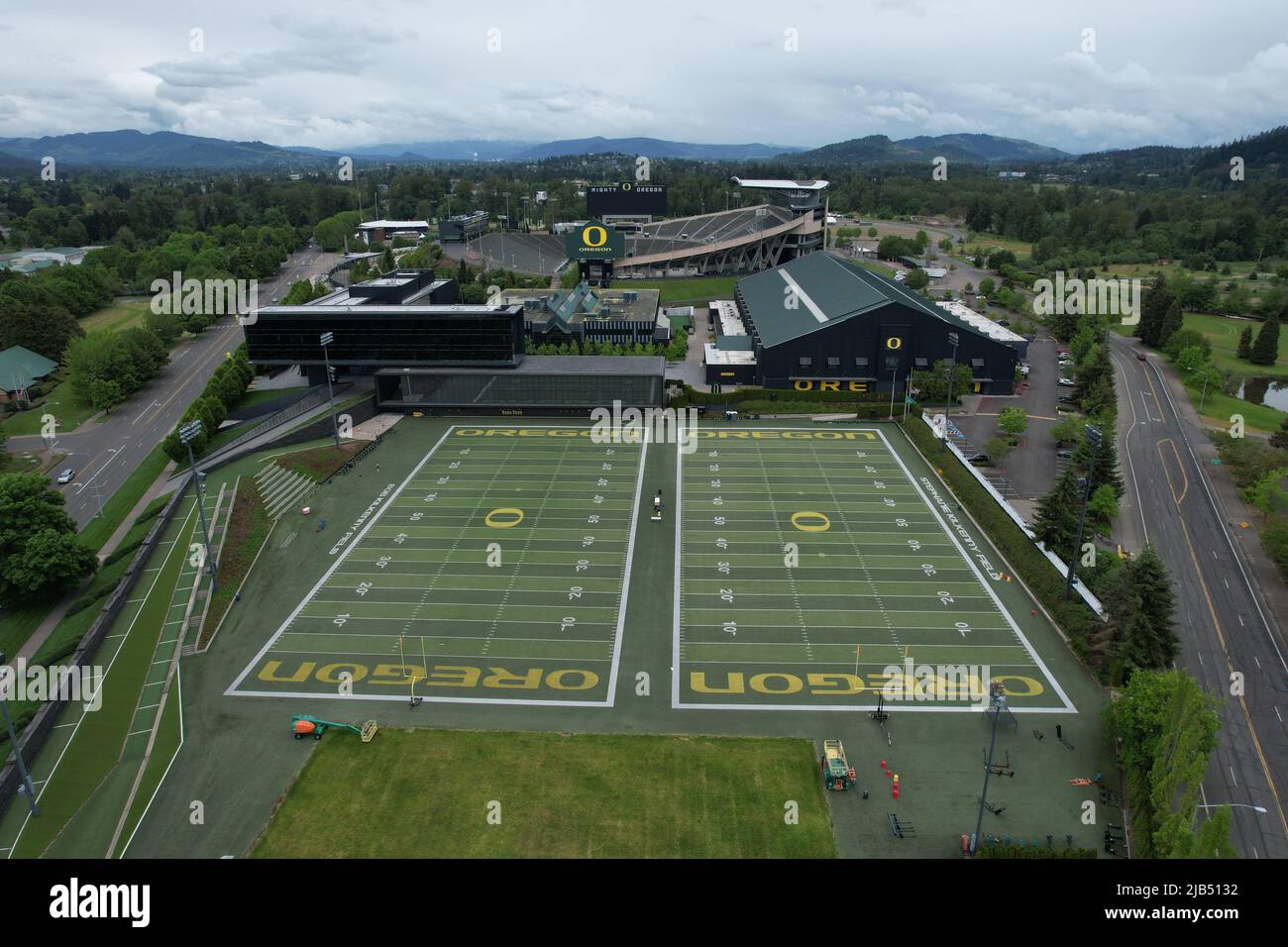
What the Oregon Ducks Training Facility Offers Student-Athletes and Programs
The Oregon Ducks training facility offers a state-of-the-art, multi-disciplinary ecosystem designed to optimize athletic performance, accelerate physical recovery, and enhance academic success through elite amenities, advanced sports s...
The Oregon Ducks training facility offers a state-of-the-art, multi-disciplinary ecosystem designed to optimize athletic performance, accelerate physical recovery, and enhance academic success through elite amenities, advanced sports science laboratories, and high-performance recovery zones.
Contents
Introduction to the Oregon Athletic Ecosystem
When examining elite collegiate athletics, few programs match the infrastructural investment and architectural innovation found in Eugene, Oregon. The facilities servicing the Oregon Ducks athletic department are not merely gymnasiums; they represent a convergence of high-performance engineering, cutting-edge sports science, and player-centric design. Designed to support hundreds of student-athletes across multiple varsity sports—most notably football, basketball, and track and field—these complexes redefine what collegiate athletic facilities offer.
Understanding what the Oregon Ducks training facility offers requires looking beyond the superficial aesthetics. The infrastructure is systematically divided into functional zones that address every facet of a modern athlete’s daily life, from biomechanical analysis and injury rehabilitation to nutritional science and academic support. This comprehensive guide explores the specific offerings, architectural layout, technological integrations, and operational parameters of these world-class facilities.
The Leonard R. Casanova Center and Moshofsky Center
At the heart of the football and multi-sport operations is the Leonard R. Casanova Center, alongside the adjacent Moshofsky Center indoor practice facility. Together, these buildings provide a climate-controlled, weather-proof environment that ensures uninterrupted training regimens regardless of Pacific Northwest weather conditions.
The Casanova Center houses primary weight rooms, locker facilities, and administrative offices, serving as the daily operational hub for the football program. Meanwhile, the Moshofsky Center—affectionately known as "The Mosh"—features a full-length 120-yard indoor football field outfitted with high-performance synthetic turf designed to minimize joint stress and replicate optimal outdoor playing conditions.
- Climate Control: Advanced HVAC systems maintain optimal ambient temperatures, reducing thermal stress during intense summer workouts and protecting athletes from freezing winter conditions.
- Surface Technology: The indoor turf utilizes modern infill systems that balance traction with shock absorption, lowering the incidence of non-contact lower extremity injuries.
- Media and Tactical Integration: Integrated AV systems allow coaching staffs to project live practice drone footage and instantaneous telemetry data directly to sideline displays.
The Marcus Mariota Sports Performance Center
Perhaps the most technologically advanced component of the athletic complex is the Marcus Mariota Sports Performance Center (MMSPC). Originally opened as the Hatfield-Dowlin Complex and later updated, this facility integrates sports science, medicine, and recovery into a unified wing. The facility operates on the principle that data-driven performance management is just as critical as physical exertion.
Athletes entering the MMSPC gain access to diagnostic equipment typically reserved for elite professional franchises and Olympic training centers. High-speed force plates embedded in the flooring measure ground reaction forces during explosive movements, while optical motion-capture systems map biomechanical inefficiencies in real time.
| Diagnostic Zone | Primary Technology & Measurement Capabilities |
|---|---|
| Biomechanics Lab | High-speed infrared cameras, force plates |
| Recovery & Hydrotherapy | Cryotherapy chambers, contrast immersion pools |
| Physiological Testing | Metabolic carts, VO2 max analysis, body comp DXA |
| Sleep & Neurological | Neurocognitive testing, circadian monitoring |
Advanced Sports Science and Recovery Infrastructure
Physical regeneration is prioritized equally with physical output. The Oregon Ducks training facility offers an extensive suite of recovery modalities designed to accelerate tissue repair, reduce systemic inflammation, and optimize sleep architecture.
Hydrotherapy and Thermal Stress
The hydrotherapy suite includes custom-tiled hot and cold plunge pools, underwater treadmill systems equipped with resistance jets, and contrast-water therapy stations. Underwater treadmills allow injured athletes to maintain cardiovascular conditioning while offloading up to 80% of their body weight, significantly reducing impact forces on healing joints and ligaments.
Whole-Body Cryotherapy and Compression
To manage post-workout inflammation, the facility incorporates whole-body cryotherapy chambers. These units expose athletes to sub-zero temperatures for brief intervals, triggering peripheral vasoconstriction and subsequent systemic flush of metabolic waste products. Additionally, pneumatic compression sleeves are widely utilized to enhance venous return and lymphatic drainage following heavy training loads.
Nutritional Science and Fueling Stations
Optimal physical adaptation requires precise nutritional fueling. The facility features dedicated fueling stations and dining halls staffed by full-time sports dietitians and culinary professionals.
- Customized Macronutrient Planning: Meals and snacks are tailored to individual biometric profiles, position demands, and daily caloric expenditures calculated via continuous wearable data.
- Hydration Monitoring: Urine specific gravity testing and sweat-patch analysis are regularly deployed to create personalized hydration protocols for every athlete.
- Recovery Bars: Strategically placed fueling zones offer immediate post-training protein formulations, complex carbohydrates, and electrolyte replacements within the critical anabolic window.
Academic and Professional Development Integration
Athletic infrastructure at the University of Oregon extends beyond physical training to encompass holistic student-athlete development. High-performance demands are balanced with robust academic support systems housed within proximity to the training areas.
Quiet study spaces, private tutoring rooms, and computer laboratories equipped with specialized software ensure that student-athletes can seamlessly transition between rigorous athletic schedules and academic commitments. Furthermore, career development coordinators utilize spaces within the complex to conduct leadership seminars, financial literacy workshops, and networking events with alumni and corporate partners.
Operational Standards, Access, and Eligibility
Access to these elite training facilities is strictly regulated in compliance with institutional policies, athletic conference bylaws, and National Collegiate Athletic Association (NCAA) regulations.
- Status Verification: Active roster status as a varsity student-athlete, manager, or approved athletic department personnel is mandatory for entry.
- Safety Inductions: All users must complete mandatory equipment and safety protocols supervised by certified strength and conditioning coaches.
- Scheduling Compliance: Facility usage follows strict seasonal scheduling guidelines to prevent overtraining and ensure equitable access across all varsity programs.
- Data Privacy: Biometric and performance data collected within the sports science labs are managed under strict institutional privacy standards to protect student-athlete information.
Frequently Asked Questions
What sports programs can utilize the Oregon Ducks training facility?
While football and basketball occupy dedicated high-profile wings, all varsity sports programs sponsored by the University of Oregon athletic department—including track and field, soccer, softball, and volleyball—have scheduled access to the training facilities, sports science labs, and recovery equipment.
Are the sports science diagnostics available to walk-on athletes?
Yes. All rostered student-athletes, regardless of scholarship status, receive equal access to the diagnostic tools, hydrotherapy pools, nutritional fueling stations, and strength and conditioning coaching staff housed within the facilities.
How do the hydrotherapy pools aid in injury rehabilitation?
The hydrotherapy suite utilizes adjustable-depth pools and underwater treadmills. By reducing gravitational load on skeletal structures, athletes can perform running mechanics and resistance exercises much earlier in their rehabilitation timeline without risking re-injury.
What is the role of the sports dietitians within the facility?
Sports dietitians conduct body composition assessments via Dual-Energy X-ray Absorptiometry (DXA) scans, analyze individual metabolic rates, and oversee the campus fueling stations to ensure athletes consume precise macronutrient ratios tailored to their specific training demands.
Can prospective student-athletes tour the training facilities?
Yes, prospective student-athletes can tour the facilities during official and unofficial recruiting visits permitted under NCAA compliance rules and institutional recruitment schedules.
Next Actions and Conclusion
For those evaluating elite collegiate athletic infrastructure, the Oregon Ducks training facility sets a benchmark for integrated design. Student-athletes entering the program gain immediate access to an environment where biomechanical data, advanced recovery protocols, and expert coaching converge. To learn more about varsity athletics, compliance guidelines, or visiting the campus, interested parties should consult the official University of Oregon Athletics portal or reach out to the athletic department's compliance and administration offices.
Image Gallery