Best Laser Eye Surgery for Astigmatism: A Comprehensive Comparison
The best laser eye surgery for astigmatism depends on your corneal thickness, prescription severity, and unique eye shape. Topography-guided LASIK (such as Contoura Vision) is widely considered the primary choice for regular astigmatis...
The best laser eye surgery for astigmatism depends on your corneal thickness, prescription severity, and unique eye shape. Topography-guided LASIK (such as Contoura Vision) is widely considered the primary choice for regular astigmatism up to 6.0 diopters. However, Photorefractive Keratectomy (PRK) is often preferred for thin corneas, while SMILE offers a flapless alternative for patients with combined myopia and astigmatism.
Contents
Disclaimer: This article is for informational and educational purposes only and does not constitute formal medical advice. Consult a board-certified ophthalmologist or refractive surgeon to evaluate your individual candidacy.
Understanding Astigmatism and How Laser Vision Correction Works
Astigmatism is a common refractive error caused by an asymmetrical curvature of the eye’s optical system. In a standard eye, the cornea (the clear front surface of the eye) and natural lens possess a spherical shape similar to a basketball, allowing light rays to refract evenly onto a single focal point on the retina. In an eye with astigmatism, the surface is shaped more like a football, possessing two distinct curves—a steeper meridian and a flatter meridian.
This uneven curvature causes light rays to bend unequally, focusing at multiple points either in front of or behind the retina. As a result, vision becomes blurry, distorted, or stretched at both near and far distances.
- Normal Cornea (Spherical)
- Single Focal Point on Retina
- Clear Vision
- Astigmatic Cornea (Oval)
- Multiple Focal Points
- Blurry / Distorted Vision
Astigmatism is measured in diopters of cylinder (D):
- Mild Astigmatism: Under 1.00 D
- Moderate Astigmatism: 1.00 D to 3.00 D
- Severe/High Astigmatism: Greater than 3.00 D (typically up to 6.00 D for laser candidacy)
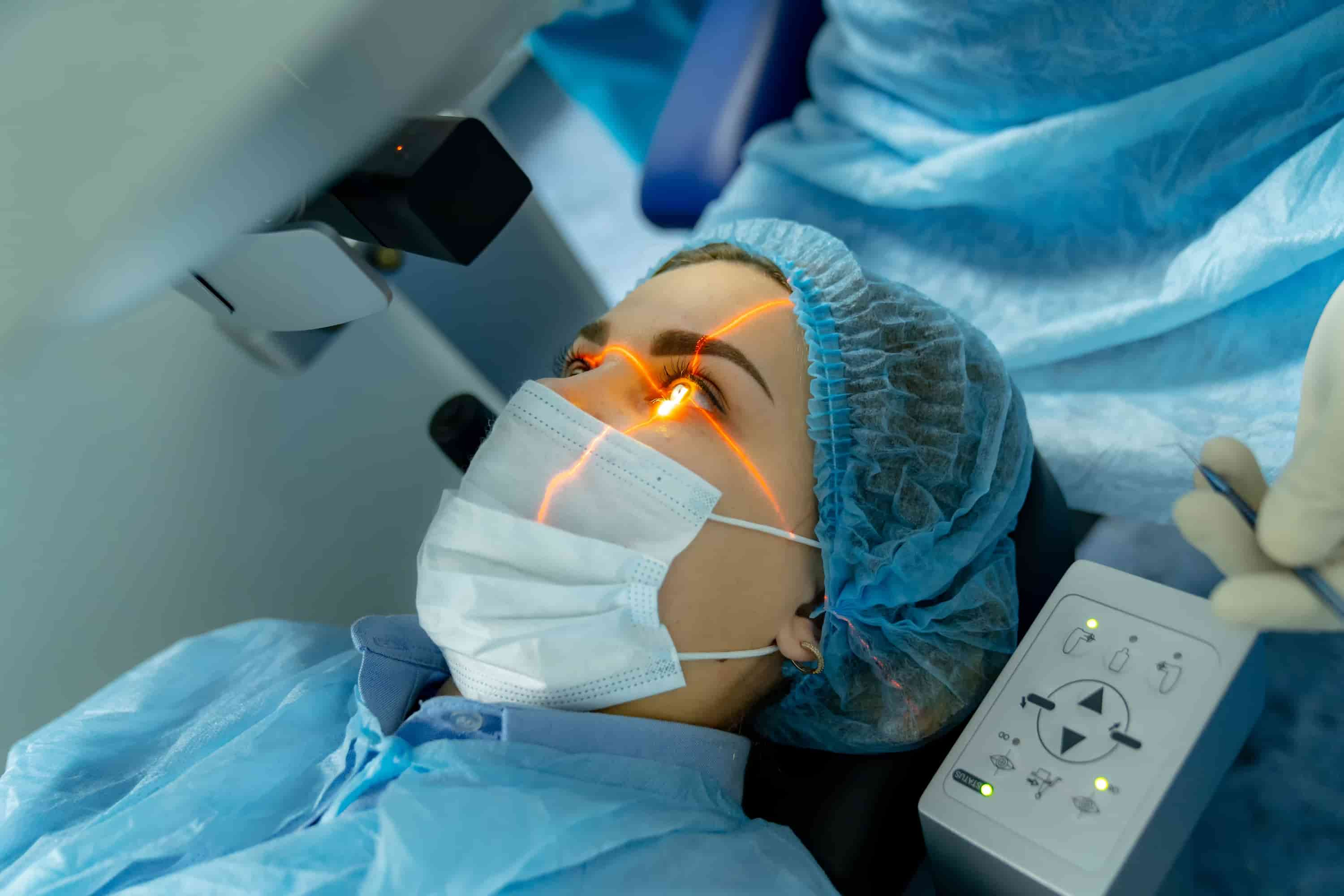
Laser vision correction reshapes the corneal tissue (the stroma) to smooth out these uneven meridians, converting the oval profile back into a more symmetrical, spherical shape. Modern excimer and femtosecond laser systems utilize advanced eye-tracking technology to compensate for subtle eye rotations (cyclotorsion) that occur when a patient transitions from a seated position to lying flat on the operating table, ensuring precise alignment along the astigmatic axis.
Top Laser Eye Surgery Options for Astigmatism
Several advanced laser procedures effectively treat astigmatism. Choosing the right method requires evaluating your corneal thickness, eye surface health, lifestyle, and whether your astigmatism is accompanied by nearsightedness (myopia) or farsightedness (hyperopia).
1. Topography-Guided LASIK (Contoura Vision)
Topography-guided LASIK—often marketed under brand names like Contoura Vision—is frequently cited by refractive surgeons as the premier laser procedure for regular astigmatism. Standard LASIK corrects your basic vision prescription (glasses or contacts), but topography-guided systems map the micro-irregularities of your individual cornea using up to 22,000 unique elevation points.
- How It Works: A femtosecond laser creates a thin, protective flap on the outer corneal layer (epithelium). The flap is lifted, and an ultra-precise excimer laser reshapes the underlying stromal tissue based on the detailed topographic map. The flap is then repositioned, where it naturally adheres without sutures.
- Treatable Range: FDA-approved to treat up to 6.00 D of astigmatic cylinder, depending on total tissue depth.
- Best Suited For: Patients seeking rapid visual recovery, minimal postoperative discomfort, and high visual acuity, especially those with regular corneal astigmatism.
- Advantages: Rapid visual recovery (often within 24 hours); superior correction of higher-order aberrations, which reduces nighttime glare and halos.
- Limitations: Requires adequate corneal thickness to create a flap safely while leaving a safe residual stromal bed (typically at least 250–300 microns).
2. Photorefractive Keratectomy (PRK) and TransPRK
Photorefractive Keratectomy (PRK) is the predecessor to LASIK and remains a top choice for patients who are not candidates for flap-based surgeries. TransPRK (Transepithelial PRK) is a refined, no-touch variation where the laser removes the outer corneal cells and reshapes the stroma in a single seamless step.
- How It Works: Unlike LASIK, PRK does not involve creating a corneal flap. Instead, the surgeon gently removes the surface epithelium (either manually, with a dilute alcohol solution, or via laser in TransPRK). The excimer laser then reshapes the exposed corneal stroma directly. A soft bandage contact lens is placed over the eye while the surface skin cells regenerate over 3 to 5 days.
- Treatable Range: Effectively treats astigmatism up to 4.00 D to 5.00 D.
- Best Suited For: Patients with thin or irregular corneas, deep-set eyes, dry eye syndrome, or individuals involved in contact sports, military service, or high-impact professions where a corneal flap poses a displacement risk.
- Advantages: Preserves maximum underlying corneal structural integrity; avoids flap-related complications entirely; safe for thinner corneas.
- Limitations: Longer visual recovery period (1 to 2 weeks for functional vision, several weeks for final stability); moderate discomfort during the first 48 to 72 hours of epithelial healing.
3. Small Incision Lenticule Extraction (SMILE / SMILE pro)
SMILE is a minimally invasive, flapless refractive procedure performed entirely with a high-precision femtosecond laser (such as the VisuMax system).
- How It Works: Rather than vaporizing tissue with an excimer laser, the femtosecond laser cuts a tiny, lens-shaped piece of tissue (a lenticule) within the intact corneal stroma, alongside a keyhole side incision measuring less than 4 millimeters. The surgeon manually extracts the lenticule through this small opening, altering the shape of the cornea to correct the astigmatism.
- Treatable Range: Treats astigmatism up to 5.00 D (in combination with myopia up to -10.00 D).
- Best Suited For: Patients with moderate-to-high myopia combined with astigmatism who prefer a flapless procedure with lower post-operative dry eye incidence.
- Advantages: Flapless technique maintains superior corneal biomechanical strength; significantly reduced risk of dry eye due to fewer severed corneal nerves; quick recovery.
- Limitations: Currently cannot treat hyperopic (farsighted) astigmatism or mixed astigmatism; relies heavily on surgeon skill for clean lenticule extraction; visual recovery can take slightly longer (a few days) compared to LASIK.
4. Wavefront-Guided and Custom Wavefront LASIK
Wavefront-guided LASIK utilizes a sensor to measure how light travels through your entire optical system—including the cornea, natural lens, and vitreous body. It creates a 3D optical footprint (a wavefront map) to treat both lower-order aberrations (astigmatism, myopia, hyperopia) and higher-order aberrations (spherical aberration, coma).
- Best Suited For: Patients with significant higher-order aberrations or wide pupils who experience severe night-vision disturbances.
- Advantages: Customizes treatment to the entire optical path rather than the corneal surface alone.
Direct Comparison of Laser Procedures for Astigmatism
The following table provides a clear comparison of technical parameters, candidate suitability, and recovery metrics for the primary laser vision procedures used to treat astigmatism.
| Procedure Type | Max Astigmatism Limit (Cylinder) | Min. Corneal Thickness Requirement | Visual Recovery Time | Post-Op Dry Eye Risk | Key Primary Advantage |
|---|---|---|---|---|---|
| Topography-Guided LASIK (e.g., Contoura) | Up to 6.00 D | High (Stroma + Flap depth required) | 24 – 48 Hours | Moderate | Highest visual acuity & custom mapping |
| Standard / Wavefront LASIK | Up to 5.00 D | High | 24 – 48 Hours | Moderate | Established track record & fast vision recovery |
| PRK / TransPRK | Up to 4.00 D – 5.00 D | Low to Moderate (No flap needed) | 1 – 3 Weeks | Low | Preserves maximum corneal tissue & stability |
| SMILE / SMILE pro | Up to 5.00 D | Moderate | 2 – 7 Days | Low to Very Low | Flapless, keyhole incision with lower dry eye risk |
Critical Candidacy Factors for Astigmatism Surgery
Determining the "best" laser procedure requires a thorough pre-operative consultation featuring corneal tomography, pachymetry, and dry eye evaluations. Ophthalmologists analyze several vital anatomical factors before confirming your candidacy:
- Pre-Op Evaluation
- Corneal Thickness (Pachymetry)
- Thin? Recommend PRK / TransPRK
- Corneal Topography (Shape)
- Regular? LASIK / SMILE / PRK
- Irregular? Keratoconus Screening (CXL / Custom PRK)
- Refractive Stability
- Unstable (<1 yr)? Defer Surgery
- Tear Film & Ocular Surface
- Severe Dry Eye? SMILE or PRK preferred
- Corneal Thickness (Pachymetry)
Regular vs. Irregular Astigmatism
- Regular Astigmatism: The principal meridians are 90 degrees apart (perpendicular). This form is readily correctable by LASIK, PRK, and SMILE.
- Irregular Astigmatism: The meridians are not perpendicular, or the curvature varies across a single meridian. This often stems from corneal scarring, previous eye trauma, or underlying ectatic conditions like keratoconus. Standard LASIK is strictly contraindicated for irregular astigmatism. Instead, specialized topography-guided PRK combined with Corneal Cross-Linking (CXL) or specialized rigid contact lenses are required.
Corneal Thickness (Pachymetry)
Surgeons measure corneal thickness in microns (average human cornea is ~540 microns). After laser ablation, the remaining untouched layer—known as the Residual Stromal Bed (RSB)—must remain thick enough to maintain structural integrity. According to guidance published by the American Academy of Ophthalmology (AAO), surgeons typically maintain a minimum safe RSB of 250 to 300 microns to prevent post-LASIK ectasia (corneal bulging). If your corneas are naturally thin, PRK or SMILE are safer options because they preserve more stromal tissue.
Refractive Stability
Your prescription must remain stable for at least 12 consecutive months prior to surgery. Changes greater than 0.50 D in cylinder or sphere indicate active eye growth or corneal changes, requiring you to delay procedure scheduling.
Tear Film and Surface Health
Laser ablation temporarily disrupts corneal nerve signaling, reducing reflexive tear production. If a patient suffers from baseline moderate-to-severe Dry Eye Disease (DED), flap-based procedures like LASIK can exacerbate symptoms. SMILE or surface-ablation techniques like PRK are generally preferred for individuals prone to dry eyes.
Potential Risks and Complications Specific to Astigmatism
While modern laser vision correction carries success rates above 95%, treating astigmatic prescriptions introduces specific technical considerations:
- Cyclotorsion Alignment Errors: When you lie down, your eyes naturally rotate slightly inward or outward (static cyclotorsion). If the laser platform does not incorporate dynamic iris-registration tracking to rotate the treatment profile accordingly, the laser may treat the wrong axis. Treating off-axis by even 10 degrees can reduce astigmatism correction efficacy by approximately 30%.
- Undercorrection or Overcorrection: High levels of astigmatism involve removing larger amounts of corneal tissue. Occasionally, healing responses can lead to slight residual cylinder, requiring a touch-up (enhancement) procedure after 3 to 6 months.
- Regression: Over several years, the cornea may partially revert toward its original shape, particularly in cases of very high initial astigmatism.
- Induced Aberrations: If the optical treatment zone is smaller than the patient's pupil under dark conditions, night vision artifacts like halos, glare, and starbursts around headlights may occur.
Step-by-Step Patient Journey: What to Expect
Understanding the clinical process helps ensure smooth pre-operative preparation and post-operative healing.
- Pre-Op Exam & Topography
- Surgical Day (15-20 Min)
- Initial Healing (1-3 Days)
- Long-Term Follow-up
Step 1: The Comprehensive Pre-Operative Assessment
Before surgery, you will undergo advanced diagnostic imaging:
- Corneal Topography/Tomography (Pentacam or Galilei): Creates a 3D elevation map of the front and back surfaces of your cornea.
- Pachymetry: Measures exact corneal thickness across multiple points.
- Cycloplegic Refraction: Eye drops temporarily paralyze the focusing muscles to reveal your true refractive error without subconscious muscular compensation.
- Pupillometry: Measures your pupil size in ambient, bright, and dark conditions.
Note: You must discontinue wearing soft contact lenses for 1 to 2 weeks (and rigid gas permeable lenses for 3 to 4 weeks) prior to evaluation, as contacts temporarily alter corneal shape.
Step 2: Surgery Day Procedure
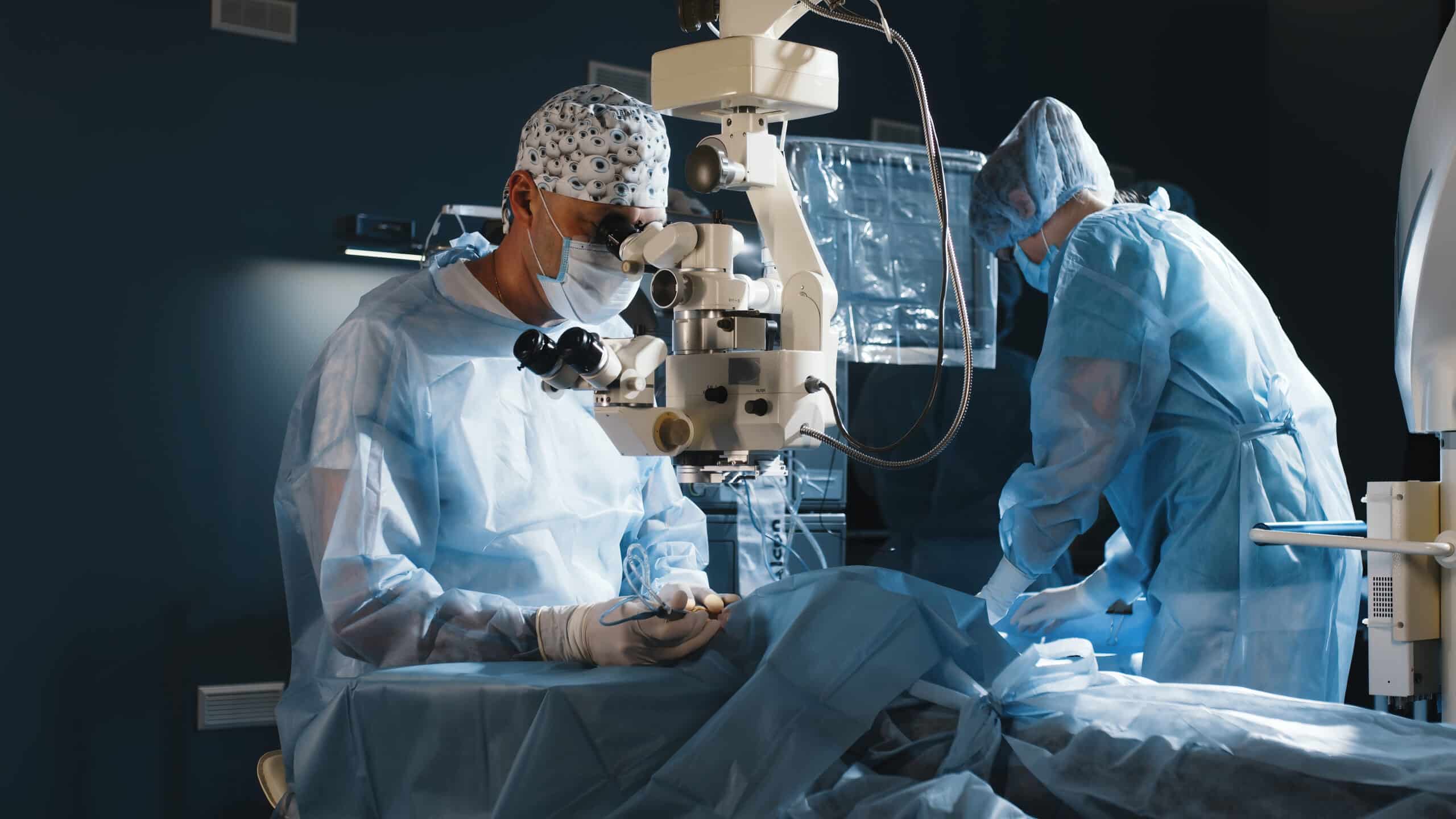
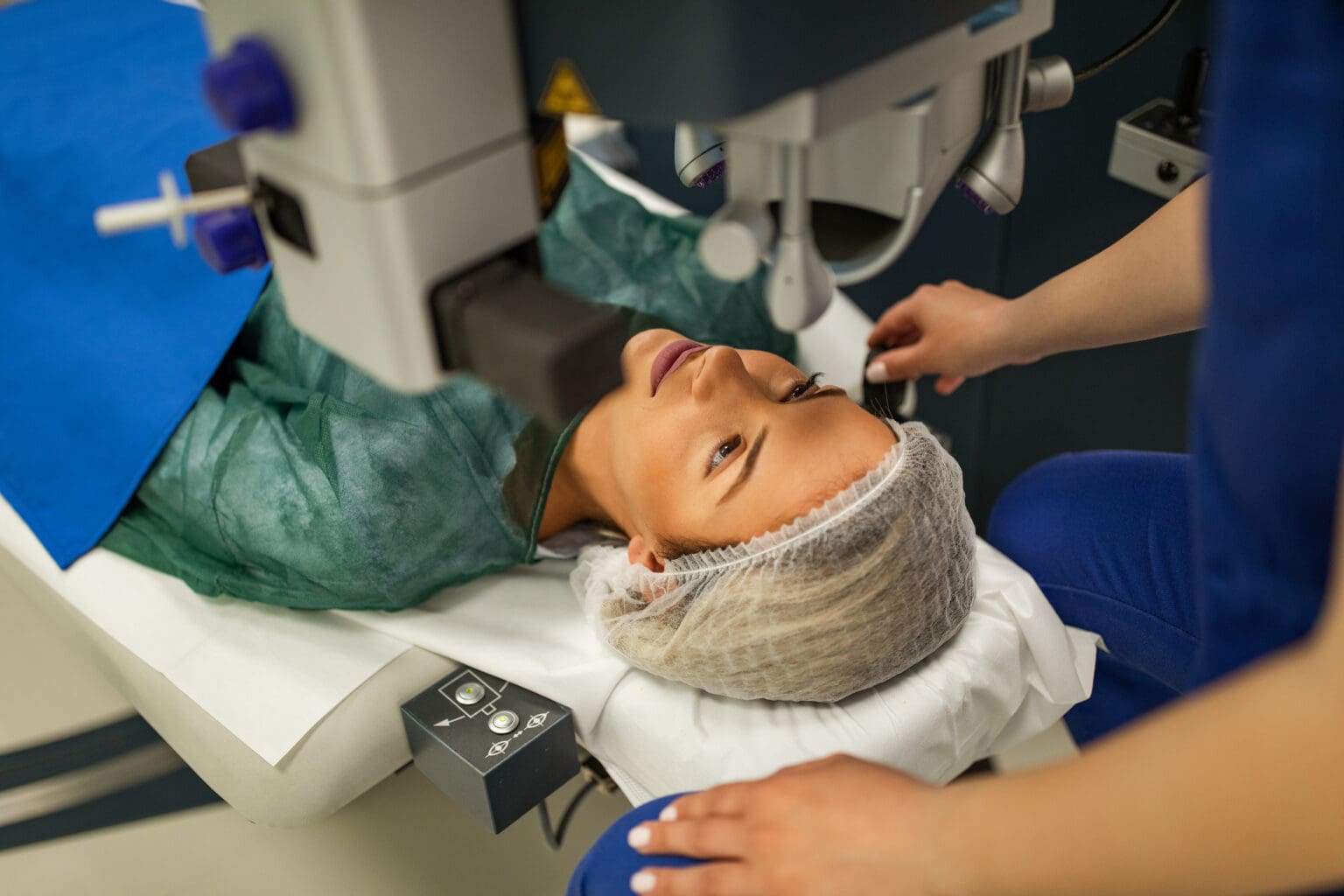
Laser vision correction is an outpatient procedure lasting approximately 15 to 20 minutes for both eyes:
- Anesthetic numbing eye drops are administered; no general anesthesia or intravenous needles are needed.
- An eyelid speculum gently holds your eyes open to prevent blinking.
- You focus on a target fixation light while the automated eye tracker aligns with your pupil and iris pattern.
- The laser application itself usually takes less than 60 seconds per eye.
Step 3: Immediate Recovery and Eyedrop Regimen
- LASIK/SMILE: Most patients experience clear vision within 24 to 48 hours. Burning or foreign-body sensations usually resolve within 4 to 6 hours.
- PRK: Clear vision develops progressively over 1 to 3 weeks as the epithelium heals under a protective contact lens.
- Medications: You will be prescribed antibiotic drops to prevent infection and steroid drops to control inflammation, alongside preservative-free artificial tears.
Frequently Asked Questions
Can LASIK permanently correct high astigmatism?
Yes, LASIK can permanently treat high astigmatism up to 6.00 diopters, provided your corneas are sufficiently thick and structurally healthy. The tissue removed by the excimer laser does not grow back. However, natural aging changes inside the eye's natural crystalline lens (such as presbyopia or cataracts) can still alter your overall vision later in life.
Is PRK or LASIK better for astigmatism?
Neither procedure is universally "better"; rather, each is tailored to specific eye shapes. Topography-guided LASIK offers faster, virtually painless visual recovery and is ideal for normal corneal thickness. PRK yields equivalent long-term visual results for astigmatism while preserving corneal structural integrity, making it the safer choice for patients with thin corneas, flat corneas, or active lifestyles.
What options exist if I have irregular astigmatism from keratoconus?
Standard LASIK is unsafe for irregular astigmatism caused by corneal ectasia or keratoconus. Candidates with irregular astigmatism often undergo Corneal Cross-Linking (CXL) to strengthen corneal fibers, sometimes paired with customized, low-depth topography-guided PRK (such as the Athens Protocol). Specialized rigid gas-permeable (RGP) or scleral contact lenses also remain standard non-surgical management options.
Can SMILE treat astigmatism without nearsightedness (hyperopic astigmatism)?
Currently, SMILE is FDA-approved only for myopic astigmatism (astigmatism combined with nearsightedness). If you have isolated astigmatism or hyperopic astigmatism (astigmatism combined with farsightedness), topography-guided LASIK or PRK are the appropriate laser treatment choices.
How much does laser eye surgery for astigmatism cost?
As of 2026, the average cost of laser eye surgery (LASIK, PRK, or SMILE) ranges between $2,000 and $3,500 per eye, depending on geographic location, technology platform (e.g., Contoura vs. standard), surgeon experience, and post-operative care packages. High-astigmatism treatments utilizing topography-guided mapping generally fall on the higher end of this spectrum. Elective refractive surgeries are rarely covered by standard medical insurance, though Flexible Spending Accounts (FSA) and Health Savings Accounts (HSA) can be used.
Final Verdict and Next Steps
To select the best laser eye surgery for your astigmatism, consult a qualified refractive surgeon rather than focusing solely on procedure names.
- If you have regular astigmatism and normal corneal thickness: Topography-guided LASIK (Contoura Vision) offers optimal visual outcomes and rapid recovery.
- If you have thin corneas or dry eyes: PRK / TransPRK eliminates flap complications and preserves stromal bed depth.
- If you have moderate-to-high nearsightedness alongside astigmatism: SMILE delivers a minimally invasive, flapless solution with a reduced risk of postoperative dry eye.
Recommended Next Action: Schedule a comprehensive refractive surgery evaluation featuring 3D corneal tomography (such as a Pentacam scan). Ensure your surgeon measures your pupil size, corneal thickness, tear film health, and cyclotorsional alignment before committing to a treatment plan.
Image Gallery