Understanding Charles Electrics Services in California: Scope, Licensing, and Project Execution
Understanding Charles Electrics services in California requires evaluating how licensed electrical contractors operate within state regulatory frameworks, deliver residential and commercial installations, and comply with strict safety...
Understanding Charles Electrics services in California requires evaluating how licensed electrical contractors operate within state regulatory frameworks, deliver residential and commercial installations, and comply with strict safety standards. In California, professional electrical services encompass panel upgrades, EV charger installations, rewiring, Title 24 energy efficiency compliance, and emergency troubleshooting under California Contractors State License Board (CSLB) oversight.
Contents
Regulatory Framework for Electrical Services in California
Evaluating any electrical service provider operating under names such as Charles Electrics or Charles Electric in California begins with understanding the state's stringent licensing and safety mandates. Electrical work in California carries significant public safety and fire risk implications, making regulatory oversight central to every project.
C-10 Electrical Contractor License Mandates
In California, any electrical project where the combined cost of labor and materials exceeds $500 must be performed by a contractor holding an active Class C-10 Electrical Contractor license issued by the California Contractors State License Board.
A valid C-10 classification verifies that the contractor or their qualifying individual has demonstrated at least four years of journey-level experience, passed comprehensive trade and law examinations, and maintains required financial protections:
- Surety Bond: California requires licensed contractors to maintain a $25,000 contractor license bond to protect consumers against financial loss resulting from defective work or contract violations.
- Workers' Compensation Insurance: Mandatory for all contractors with employees to cover on-the-job injuries.
- General Liability Insurance: Protects real estate assets against accidental property damage or bodily injury during project execution.
Property owners should verify a contractor's legal standing directly through the CSLB online verification tool before signing service agreements or releasing deposit funds.
Compliance with the California Electrical Code and Title 24
California enforces distinct building and electrical standards adapted from national baselines. Electrical contractors operating across the state must execute work in strict compliance with Title 24 of the California Code of Regulations.
Part 3 of Title 24 adopts the National Electrical Code (NEC), maintained by the National Fire Protection Association, incorporating state-specific amendments for seismic bracing, fire safety, and electrical surge protection. Additionally, Part 6 governs the California Energy Commission Title 24 Building Energy Efficiency Standards, requiring specific automatic lighting controls, occupancy sensors, demand-responsive systems, and solar-ready panel configurations for both residential and commercial structures.
Core Service Offerings and Technical Scope
Professional electrical contractors providing services under the Charles Electrics umbrella typically cover residential, commercial, and specialized infrastructure scope. Understanding these service categories helps property owners scope projects accurately and anticipate necessary permits.
Electrical Service Categories in California
| Residential | Commercial & Industrial | Specialized |
|---|---|---|
| Main Panel Upgrades | 3-Phase Power | EV Chargers |
| Whole-House Rewire | Title 24 Controls | Battery Storage |
| AFCI/GFCI Retrofits | Backup Generators | Smart Automation |
Residential Electrical Services
Residential electrical demand in California has grown significantly due to the electrification of heating, cooking, and personal transportation. Key residential services include:
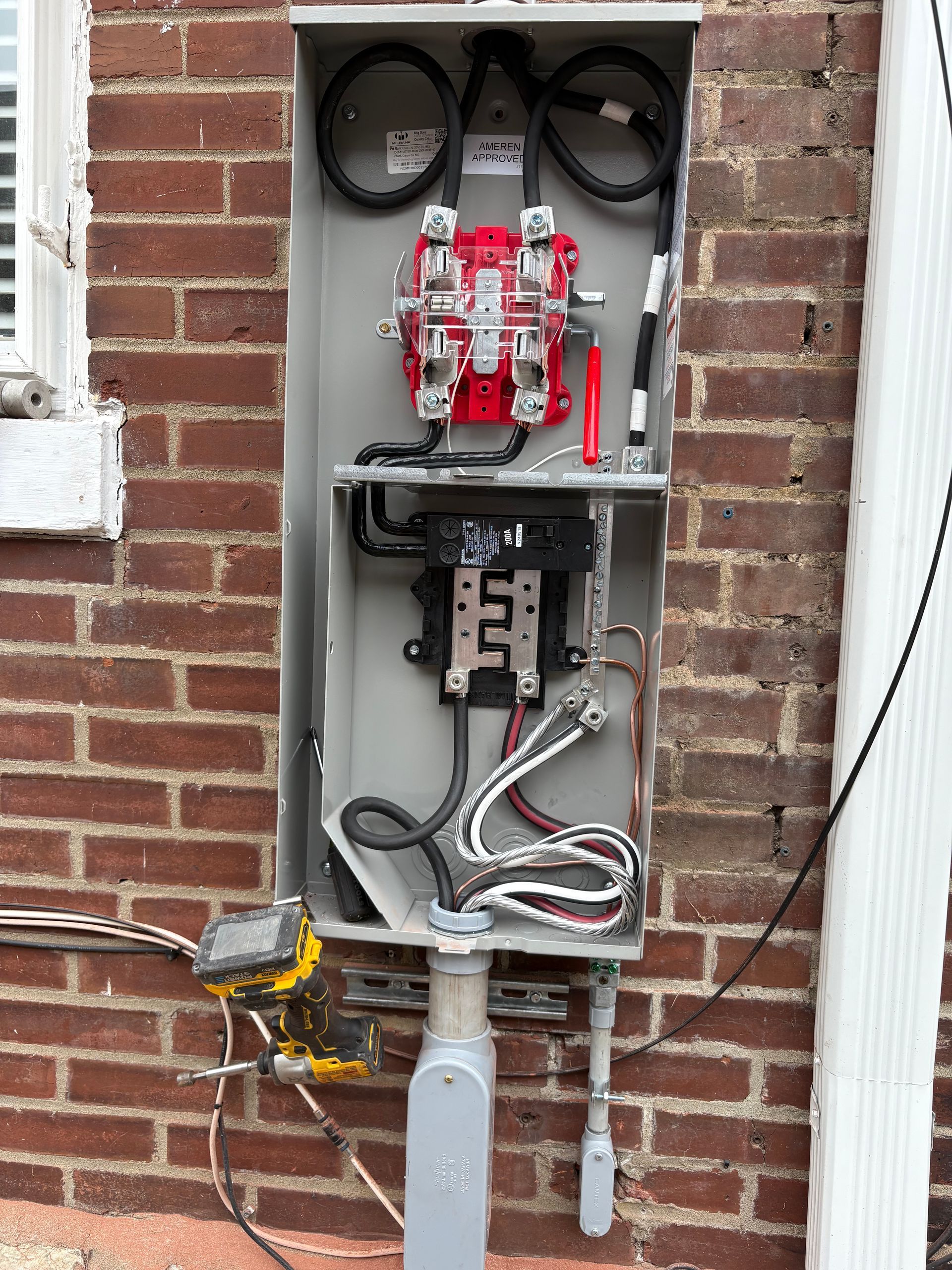
- Main Service Panel Upgrades: Replacing legacy 60-amp or 100-amp main breaker panels with 200-amp or 400-amp service panels. Upgrades are necessary to accommodate modern electrical loads, solar power grid connections, and heat pump HVAC conversions.
- Whole-House Rewiring: Removing outdated knob-and-tube or ungrounded armored cable (BX) wiring and installing modern copper conductors with dedicated equipment grounding conductors.
- Circuit Breaker & Safety Protection: Retrofitting standard breakers with Ground Fault Circuit Interrupters (GFCI) and Arc Fault Circuit Interrupters (AFCI) as required by California residential codes to mitigate electric shock and electrical fire risks.
- Electric Vehicle Supply Equipment (EVSE): Hardwiring Level 2 (240V) EV chargers on dedicated 40-amp to 80-amp branch circuits, complete with load-calculate verification to avoid overloading residential main panels.
Commercial and Industrial Electrical Services
Commercial operations demand robust power distribution, higher voltage systems, and strict energy management controls. Standard commercial service scope includes:
- Three-Phase Power Distribution: Installing and balancing 120/208V and 277/480V three-phase systems for commercial machinery, server infrastructure, and commercial HVAC units.
- Title 24 Lighting Control Systems: Setting up daylight harvesting systems, programmable dimming panels, automatic shut-off controls, and occupancy sensing arrays required in commercial tenant improvements.
- Emergency and Standby Power: Integrating automatic transfer switches (ATS) with commercial backup diesel or natural gas generators to maintain power continuity for critical infrastructure.
- Subpanel Distribution: Sub-metering and subpanel additions for multi-tenant commercial centers and industrial facilities.
Project Execution Lifecycle and Permitting Requirements
Understanding how an electrical contract moves from initial diagnostic evaluation to final city inspection ensures realistic timelines and protects property value.
Step 1: Site Assessment and Load Calculation
Before physical installation begins, a qualified technician reviews existing panel capacity, conductor gauge, and grounding system integrity. In compliance with NEC Article 220, contractors perform formal load calculations to determine whether the existing service drop or lateral from the utility provider—such as Pacific Gas and Electric (PG&E), Southern California Edison (SCE), or Los Angeles Department of Water and Power (LADWP)—can support the planned added load.
Step 2: Plan Submission and Permitting
Major electrical projects require permits issued by the local Building Department or Authority Having Jurisdiction (AHJ). The contractor submits detailed one-line electrical diagrams, load calculations, and site plans for review. Work performed without required permits can lead to severe penalties, voided insurance policies, and mandatory removal of unpermitted wiring during property sales.
Step 3: Physical Work and Rough-In Inspection
Once permits are granted, work proceeds in distinct stages:
- Rough-In Phase: Conduit runs, junction boxes, and wiring are installed through wall studs and joists prior to closing drywall.
- Rough-In Inspection: The local municipal inspector evaluates wire gauge, box volume calculations, grounding pathways, and physical support systems before wall surfaces are concealed.
Step 4: System Trim-Out and Final Inspection
After wall finishes are completed, devices, light fixtures, main breakers, and service equipment are connected. The contractor tests system voltage, polarity, grounding resistance, and circuit performance. The city or county inspector performs the final inspection to sign off on the permit, after which the utility company completes any final service drop connections or meter upgrades.
Comparative Breakdown of California Electrical Projects
Costs, permit requirements, and completion schedules vary based on scope, building age, and regional utility rules. The table below outlines standard benchmarks for common California electrical service projects.
| Service Category | Typical Scope & Key Components | Required Permits & Approvals | Typical Timeline | Estimated Cost Range (CA) |
|---|---|---|---|---|
| Main Service Panel Upgrade | Replacing 100A panel with 200A panel; new grounding electrode system; meter socket upgrade. | Municipal Building Permit + Utility Service Order (PG&E/SCE/LADWP) | 1 to 3 Days (Excludes utility wait times) | $3,200 – $6,500 |
| Level 2 EV Charger Installation | 240V dedicated 50A branch circuit run; NEMA 14-50 outlet or hardwired station; sub-panel if required. | Local Municipal Electrical Permit | 4 to 8 Hours | $850 – $2,400 |
| Whole-House Rewire (2,000 sq. ft.) | Removal of legacy wiring; installation of Romex/THHN copper conductors, modern panel trim, GFCI/AFCI devices. | Full Plan Check + Rough & Final Inspections | 5 to 10 Business Days | $12,000 – $24,000 |
| Title 24 Commercial Lighting Retrofit | Occupancy sensors, high-efficiency LED drivers, central dimming panels, daylight sensors. | City Commercial Plan Check + Title 24 Compliance Certificate | 3 to 7 Days | $5,000 – $18,000 |
| Commercial 3-Phase Service Addition | Step-down transformer installation, 480V panel distribution, equipment disconnects. | Engineering Review + Full Municipal Building & Electrical Permits | 2 to 4 Weeks | $15,000 – $45,000+ |
Cost Determinants in California Electrical Contracting
Understanding the variable factors behind electrical estimates prevents cost overruns and helps owners evaluate contractor proposals objectively.
Primary Price Drivers in California
- Geographic Labor Rates (Bay Area / LA Metro vs. Central Valley)
- Raw Material Costs (Copper, Conduit, Panel Hardware)
- Utility Provider Requirements & Inspection Queues
- Structural Accessibility (Attic/Crawlspace vs. Open Framing)
- Permitting & Local AHJ Fees
Labor and Regional Variations
Journeyman electrician rates in metropolitan areas such as San Francisco, San Jose, Los Angeles, and San Diego are significantly higher than national averages, reflecting regional living costs, union scale benchmarks, and localized business overhead. Hourly rates for licensed electrical work in urban California typically range between $110 and $220 per hour per technician.
Material Quality and Supply Chain Specifications
- Conductor Material: Copper conductors are mandated for most branch circuits, though aluminum may be utilized for main service feeders when sized appropriately according to code tables. Fluctuations in global copper prices directly affect proposal pricing for whole-home rewiring and commercial feeders.
- Component Grades: Commercial-grade and industrial-grade switches, receptacles, and breakers cost substantially more than standard residential grade hardware but offer longer operational lifespans under heavy electrical loads.
Utility Interconnection Fees and Delays
Projects involving meter main upgrades or grid ties require close coordination with municipal and investor-owned electric utilities. Utility application fees, service drop modifications, and delays in utility crew scheduling can affect both the total budget and project delivery schedules.
Evaluating and Selecting Qualified Electrical Services
Selecting a contractor to perform electrical work requires systematic due diligence. Property owners should follow a structured evaluation protocol before issuing payments or authorizing work.
Essential Selection Checklist
- Verify C-10 License Standing: Confirm on the CSLB website that the contractor holds an active C-10 license without pending administrative disciplinary actions.
- Review Insurance Coverage: Obtain certificates of insurance directly from the contractor's insurance broker showing general liability insurance and active workers' compensation coverage.
- Inspect Contract Language: Ensure the contract complies with California Home Improvement Contract (HIC) law, which requires specific payment schedules, statutory notice of cancellation forms, and clear scope descriptions. Down payments for residential work in California cannot exceed $1,000 or 10% of the total contract price, whichever is less.
- Demand Written Warranties: Professional contractors typically provide a minimum one-year written warranty on workmanship alongside manufacturer warranties for installed hardware.
Red Flags to Avoid
- Unlicensed Handymen: Individuals offering to perform major electrical work without a C-10 license for low cash rates pose legal, safety, and insurance risks.
- Refusal to Pull Permits: Contractors suggesting that permits are unnecessary for panel replacements or circuit extensions are circumventing local code compliance, leaving the property owner legally liable.
- Vague Estimates: Quotes that lack detailed line items for labor, materials, permit fees, and specific component brands should be rejected in favor of transparent, itemized bids.
Frequently Asked Questions
How do I confirm if Charles Electrics holds a valid California contractor license?
Visit the official CSLB license verification portal and search using the contractor's legal business name, license number, or qualifying individual's name. The status must display as "Active," with confirmed bond standing and current workers' compensation policy details attached.
Is a building permit required for replacing an electrical panel in California?
Yes. Replacing or upgrading an main electrical service panel requires a permit from the local city or county building department. The project must undergo formal municipal inspection and utility sign-off to ensure compliance with the California Electrical Code.
What is the difference between a C-10 licensee and a certified electrician in California?
A C-10 licensee is a business entity or individual licensed by the CSLB to contract for electrical work, pull permits, and hire workers. A certified electrician is an individual who has passed state certification exams to perform physical electrical work under the supervision of a licensed C-10 contractor.
Why do electrical installations in California require GFCI and AFCI breakers?
California building codes mandate GFCI protection near water sources to prevent fatal electric shocks, while AFCI breakers are required in living areas to detect dangerous arcing conditions that cause structure fires.
How long does a standard residential main panel upgrade take?
The physical replacement of the main panel hardware by the contractor typically takes 4 to 8 hours. However, total project duration—including utility disconnect/reconnect approvals and final municipal inspection—can span several days depending on local utility scheduling.
Practical Recommendations for Property Owners
To execute electrical projects safely and within budget, follow these concrete steps:
- Document Your Project Scope: Write down all planned appliance additions, EV charging needs, or panel upgrades prior to requesting quotes.
- Request Three Independent Itemized Bids: Compare detailed line-item bids from active C-10 electrical contractors to evaluate fair market pricing in your local area.
- Confirm Permit Acquisition: Ensure the written agreement explicitly assigns responsibility for pulling municipal permits and scheduling inspections to the contractor.
- Verify Grid Capacity with Utility: For major panel upgrades or commercial additions, contact your local utility provider (PG&E, SCE, or LADWP) early to confirm that local transformers can support your planned service capacity.
Image Gallery