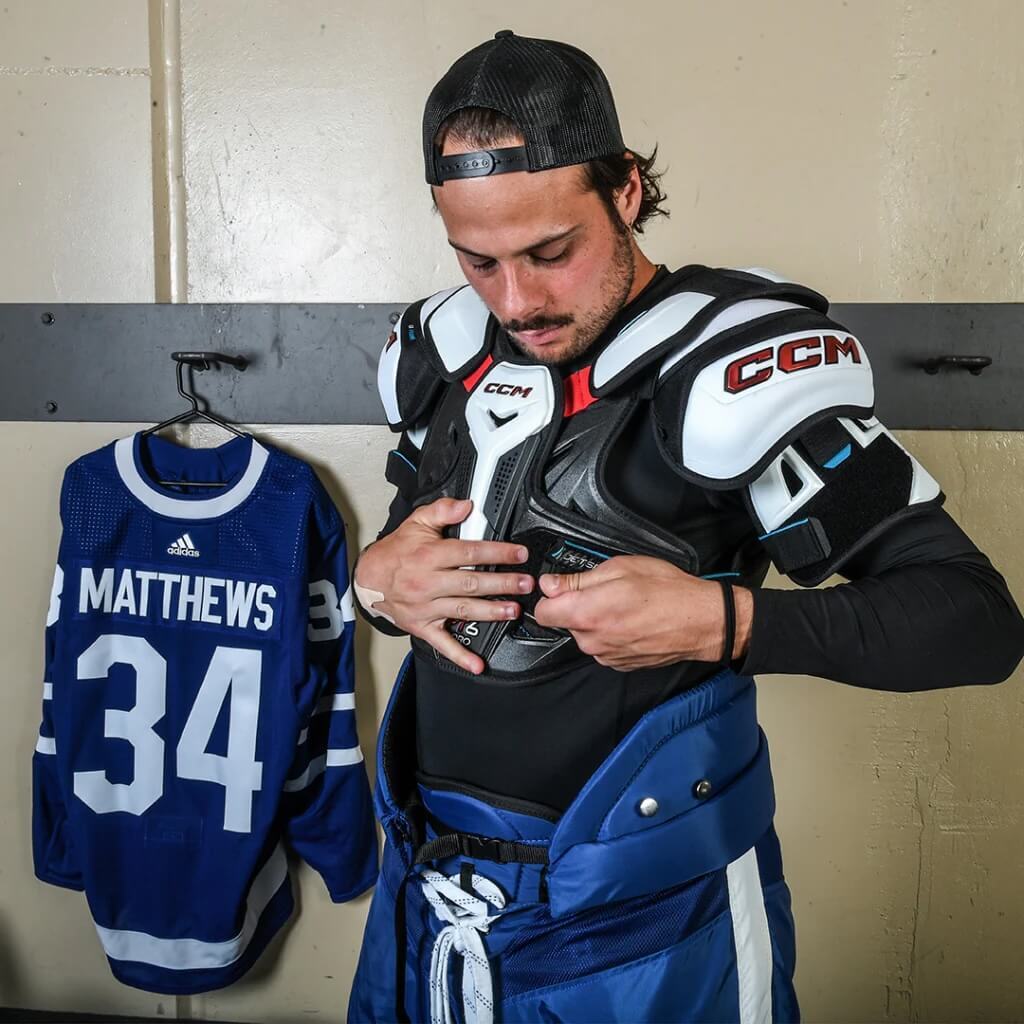
How a Properly Fitted Shoulder Pad Protects Players: The Science of Impact Safety
A properly fitted shoulder pad protects players by creating a structural "bridge" that redistributes high-velocity impact forces away from vulnerable areas like the collarbone and AC joint toward the larger muscle groups of the chest a...
A properly fitted shoulder pad protects players by creating a structural "bridge" that redistributes high-velocity impact forces away from vulnerable areas like the collarbone and AC joint toward the larger muscle groups of the chest and back. This precise alignment ensures shock-absorbing materials sit flush against the body, preventing the equipment from shifting during contact and minimizing the risk of traumatic fractures or nerve damage.
Contents
The Biomechanics of Shoulder Protection
In high-impact sports like American football, the shoulder is the primary point of contact for both the tackler and the ball carrier. The shoulder joint—specifically the glenohumeral joint and the acromioclavicular (AC) joint—is remarkably mobile but inherently unstable. Without the structural reinforcement of a shoulder pad, the force of a collision would be absorbed directly by the bones and soft tissues, leading to catastrophic injuries.
The fundamental goal of a shoulder pad is energy attenuation. When an impact occurs, the hard outer shell (the "arch") deforms slightly, absorbing the initial kinetic energy. This energy is then channeled through the padding system, which spreads the force across a larger surface area. By increasing the area over which a force is distributed, the pressure (force per unit area) applied to any single point on the player's body is significantly reduced.
A proper fit is the linchpin of this entire system. If the pad is too large, the "bridge" is unstable and can collapse or slide, leaving the clavicle exposed. If the pad is too small, the shock-absorbing materials do not cover the necessary strike zones, and the rigid edges of the shell may actually dig into the player’s neck or trapezius muscles upon impact, causing secondary injuries.
Key Components of Modern Shoulder Pads
As of 2026, shoulder pad technology has evolved to utilize multi-density foams and "Air Management" systems. Understanding the components helps explain how a proper fit facilitates protection.
The Cantilever System
Most traditional protective pads utilize a cantilever design. This is a strap-and-arch system that suspends the shell above the player's shoulder. This creates a gap between the equipment and the AC joint. When a player is hit, the shell moves, but the gap prevents the impact from bottoming out directly onto the bone. A proper fit ensures this cantilever maintains its structural integrity under load.
Epaulets and Caps
The epaulet is the large outer flap that covers the shoulder, while the cap sits underneath it, covering the deltoid muscle. Together, they provide a double layer of protection. If the pads are fitted correctly, the cap should extend just far enough to cover the prominence of the shoulder without restricting the player's ability to raise their arms. Misalignment here often leads to "stingers"—nerve pinches in the brachial plexus that cause temporary numbness or weakness.
The Arch and Liner
The arch is the plastic shell that gives the pad its shape, while the liner is the internal padding (often made of EVA or D3O foam in 2026 models). The liner must be seated firmly against the chest and back. In a proper fit, the arch should cover the scapula (shoulder blade) and the sternum entirely, as these are the "anchors" that help the body absorb the shock transmitted by the pads.
How to Verify a Correct Fit for Maximum Safety
A shoulder pad that "looks" right is not necessarily safe. Equipment managers and coaches follow a rigorous protocol to ensure the gear performs as designed. The following steps are essential for player safety:
- Measurement of Shoulder Width: Using a soft tape measure, technicians measure from the tip of one acromion process to the other. This measurement determines the shell size. A shell that is too wide will slide around; one that is too narrow will leave the deltoids exposed.
- Neck Opening Clearance: The collar of the pad should be snug but not restrictive. There should be enough room to allow full head rotation (essential for situational awareness and avoiding head-first impacts) but not so much room that the pad can slide and expose the collarbone.
- Sternum and Scapula Coverage: The front plates should meet at the center of the chest to protect the sternum. The back plates must extend low enough to cover the lower points of the shoulder blades.
- Elastic Strap Tension: The side straps (or "belts") are what lock the padding against the torso. If these are loose, the pad will "ride up" during play, often striking the player under the chin or exposing the ribs.
Impact Distribution: The Difference Proper Fitting Makes
| Feature | Properly Fitted Impact Result | Improperly Fitted Impact Result |
|---|---|---|
| AC Joint Protection | Force is bridged over the joint to the chest/back. | Pad shifts; force is applied directly to the AC joint. |
| Clavicle (Collarbone) | Protected by the cantilever gap and padding. | Shell edges may strike the bone, causing fractures. |
| Range of Motion | Allows full arm extension for safe tackling forms. | Restricts movement, forcing "unsafe" hitting angles. |
| Brachial Plexus | Caps and epaulets dissipate lateral hits. | "Stingers" occur as the pad fails to shield the nerve. |
| Sternum/Ribs | Full coverage prevents direct torso compression. | Exposed areas are vulnerable to "spearing" or blunt force. |
Position-Specific Fitting and Safety Requirements
In 2026, the industry has moved away from "general purpose" pads toward position-specific designs. The way a pad protects a quarterback is fundamentally different from how it protects an offensive lineman.
Skill Positions (QB, WR, DB)
Players in skill positions require a high degree of mobility. Their pads are typically lighter and have a lower profile. A proper fit for a quarterback must ensure that the "throwing" shoulder has a specialized cap that doesn't pinch the joint when the arm is cocked back. If these pads are fitted too tightly, the player may alter their mechanics, leading to secondary overuse injuries in the elbow or shoulder.
Linemen (OL, DL)
Linemen engage in high-frequency, low-velocity collisions. Their pads are heavier and feature larger arches. The fit here focuses on preventing the opponent from getting their hands inside the pads (a "holding" risk) and ensuring the pads do not ride up during the constant upward-pushing motion of line play. A "long-cut" fit is often preferred here to protect the lower ribs and lumbar region.
Fullbacks and Linebackers
These players require the most robust protection due to high-speed, head-on collisions. Their fitting protocol emphasizes the thickness of the padding and the security of the hardware. The "fit" must be exceptionally secure because these players often endure multiple impacts per play; any shifting of the equipment between the first and second contact can be dangerous.
Common Fitting Mistakes That Compromise Protection
The most frequent error in equipment management is "sizing up" for younger players in hopes they will "grow into" the pads. This is a critical safety hazard. A pad that is too large creates a dangerous gap between the body and the protective foam. When hit, the pad gains momentum before it actually strikes the player's body, essentially turning the equipment itself into a secondary striking object.
Another common mistake is neglecting the maintenance of the laces and straps. Over a season, elastic straps lose their tension and nylon laces can fray. If the straps are stretched out, the pad will no longer stay centered. This "drift" means the player might start a play protected but end it with their clavicle completely exposed. Regular inspection of the hardware is as vital to protection as the initial fitting.
The Role of Modern Materials in 2026
Modern shoulder pads have transitioned toward liquid-cell technology and poly-axial hinges. These materials allow the pad to be more form-fitting than ever before. Unlike the rigid plastics of the past, these 2026-standard materials remain flexible during normal movement but "lock" and become rigid upon impact. This advancement makes proper fitting even more crucial; because the materials are designed to contour to the body, any gap in the fit prevents the non-Newtonian fluids in the padding from reacting correctly to the force of a hit.
Frequently Asked Questions
How do I know if my shoulder pads are too small?
If the pads are too small, the most obvious sign is that the "cap" does not cover the prominent outer bone of the shoulder (the deltoid). Additionally, if the neck opening is pinching the trapezius muscles or if you cannot take a full breath when the straps are buckled, the pads are likely undersized. Small pads also fail to cover the sternum, leaving a gap in the center of the chest.
Can a properly fitted pad prevent all shoulder injuries?
No equipment can prevent 100% of injuries. While a properly fitted pad significantly reduces the risk of fractures and AC joint separations, it cannot entirely eliminate the risk of labral tears or dislocations caused by the arm being forced into an unnatural position. The pad protects against direct impact, but internal joint injuries often result from torsional forces.
Why does my shoulder pad keep riding up toward my chin?
This is usually a sign that the straps are too loose or the pads are too large for your torso. When you raise your arms or get hit from below, the pad slides upward because it isn't anchored correctly to your chest. This is dangerous because it exposes your ribs and can cause the collar of the pad to strike your neck.
How often should shoulder pad fit be re-evaluated?
For student-athletes, fit should be checked at the start of the season and again mid-season. Significant changes in muscle mass or height during a single year can render a previously "perfect" fit unsafe. For professional or adult players, a fit check should be performed after any major impact that results in equipment deformation.
Does the brand of the shoulder pad affect how it should fit?
While the fundamental principles of protection (covering the AC joint, sternum, and scapula) are universal, different manufacturers have proprietary sizing charts. A "Large" in one brand might correspond to a "Medium" in another. Always use the specific manufacturer’s measurement guide rather than assuming sizes are consistent across brands.
Final Recommendation for Players and Coaches
To ensure maximum safety on the field, never settle for a "close enough" fit. Before every game, perform a three-point check: ensure the AC joint is covered by the cantilever, verify the straps are tight enough to prevent the arch from sliding, and confirm that the neck opening allows for full range of motion without exposing the clavicle. If any of these criteria are not met, the equipment must be adjusted or replaced by a certified equipment manager. Proper protection is a matter of millimeters; the science of the pad only works if it stays exactly where it was designed to sit.
Image Gallery