French Cooking Pans: The Complete Guide to Materials, Brands, and Culinary Technique
French cooking pans are specialized culinary vessels engineered for precise heat control, classical technique execution, and lifelong durability. Crafted predominantly from carbon steel, enameled cast iron, lined copper, and multi-ply...
French cooking pans are specialized culinary vessels engineered for precise heat control, classical technique execution, and lifelong durability. Crafted predominantly from carbon steel, enameled cast iron, lined copper, and multi-ply stainless steel, these pans form the backbone of both French bistro cooking and fine dining. Choosing the ideal French pan depends on your preferred cooking methods, tolerance for maintenance, and kitchen setup.
Contents
The Heritage and Science of French Cookware
French culinary traditions have shaped modern kitchenware design for centuries. The philosophy behind French cookware is rooted in functional metallurgy: selecting the precise metal composition, wall thickness, and geometry that best serves a specific cooking technique. Whether it is rapid thermal responsiveness for deglazing a sauce pan or slow, steady thermal retention for braising a stew, French pan design aligns vessel physics with culinary intent.
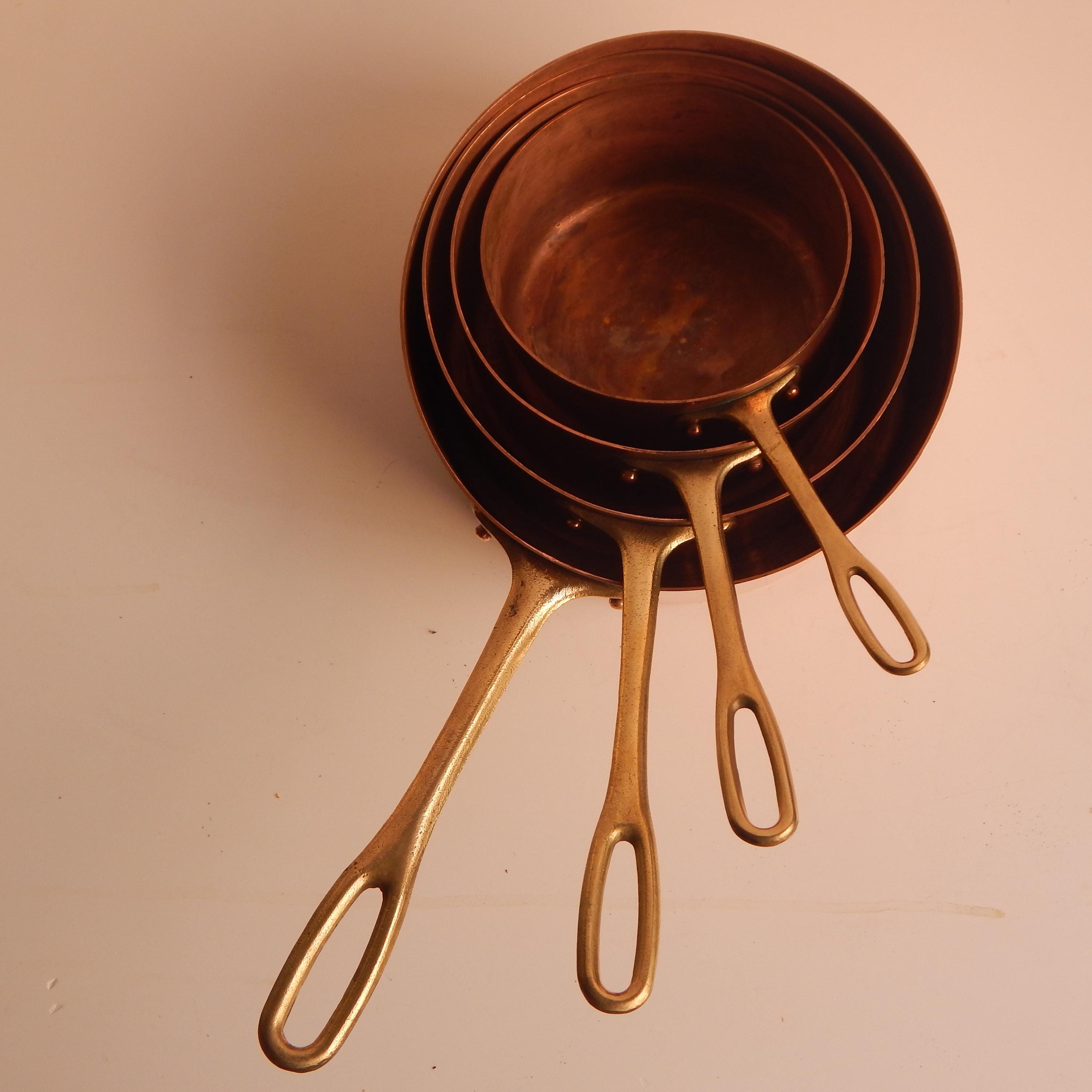
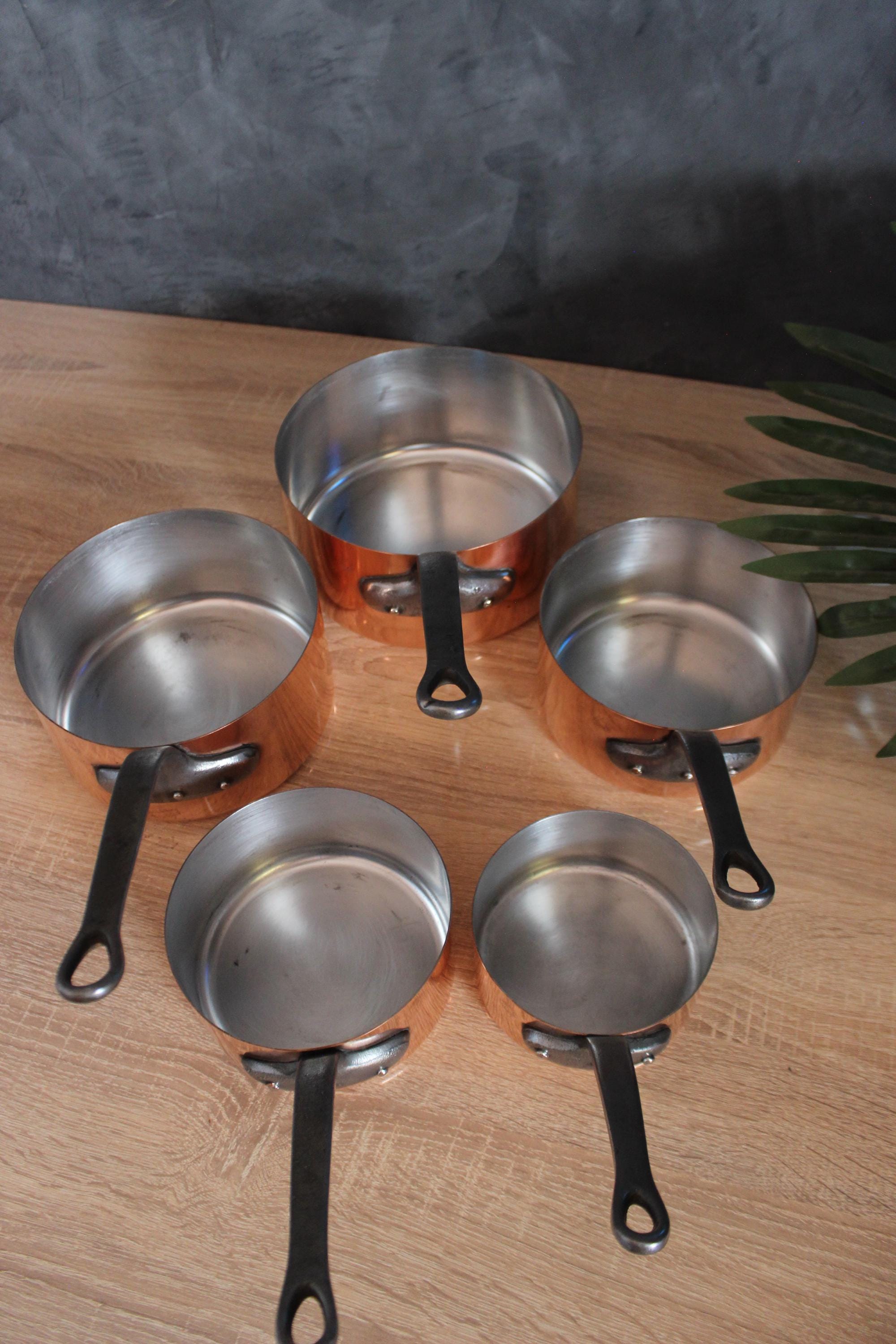
A defining characteristic of traditional French pans is their handle geometry. Unlike short, flat American-style handles, French pans frequently feature long, sweeping, iron or cast stainless steel handles known as the queue française. This arched design shifts the center of gravity closer to the cook’s wrist, providing maximum leverage when tossing ingredients (sauter) or maneuvering heavy vessels into an oven.
Furthermore, French pan shapes are strictly optimized for surface area and air circulation. Sloped sides permit rapid evaporation for reductions, straight vertical walls reduce splatters while maintaining liquid volume, and tight-fitting lids trap condensation to turn tough cuts of meat tender over low heat.
Iconic Materials Used in French Pans
Understanding the performance metrics of traditional materials is essential before building a collection of French cookware. Each material responds differently to thermal energy and requires unique care protocols.
French Cookware Materials:
- Carbon Steel (Acier Carbone): High Heat, Rapid Response, Natural CS
- Enameled Cast Iron (Fonte): High Heat Mass, Superior Retention
- Lined Copper (Cuivre): Instant Thermal Adjustability
- Multi-Ply Stainless (Inox): Non-Reactive, Dishwasher-Safe
Carbon Steel (Acier Carbone)
Carbon steel is the ultimate workhorse of the traditional French professional kitchen. Composed of approximately 99% iron and 1% carbon, carbon steel pans offer performance characteristics similar to raw cast iron—such as high heat tolerance and natural nonstick development—while weighing roughly half as much.
- Thermal Dynamics: Carbon steel heats faster than cast iron but slower than copper or aluminum. It maintains high heat effectively, making it ideal for high-temperature searing, frying, and pan-roasting.
- Surface Properties: Uncoated carbon steel must be seasoned with polymerizing oils before its initial use. Over time, repeated cooking builds a smooth, dark patina of polymerized fat that rivals synthetic nonstick surfaces without toxic coatings.
- Best Uses: Searing steaks, charring vegetables, frying eggs, and making classic French omelets.
- Limitations: Carbon steel is reactive. Cooking acidic liquids like tomato sauces, lemon reductions, or wine-based deglazings for extended periods will strip the seasoned patina and impart a metallic taste to food.
Enameled Cast Iron (Fonte Émaillée)
French enameled cast iron combines the massive thermal mass of heavy cast iron with a vitreous enamel glaze. Unlike bare cast iron, enameled cast iron does not require seasoning and will not react with acidic ingredients.
- Thermal Dynamics: Cast iron is a poor conductor of heat compared to copper or aluminum, meaning it heats slowly and can develop hot spots if heated too quickly. However, once saturated with thermal energy, it retains heat exceptionally well and radiates it evenly across the cooking chamber.
- Surface Properties: The interior enamel coat is non-porous, smooth, and impervious to moisture, acids, and alkalis. Traditional light-colored interiors (cream or white) allow cooks to monitor fond development during browning, while matte black enamel surfaces offer superior crisping properties.
- Best Uses: Slow-cooking braises, stews, soups, deep frying, and baking artisanal sourdough bread.
- Limitations: Highly heavy and susceptible to thermal shock; rapidly plunging a scorching hot enameled pan into cold water can crack or chip the vitreous enamel shell.
Solid Copper (Cuivre)
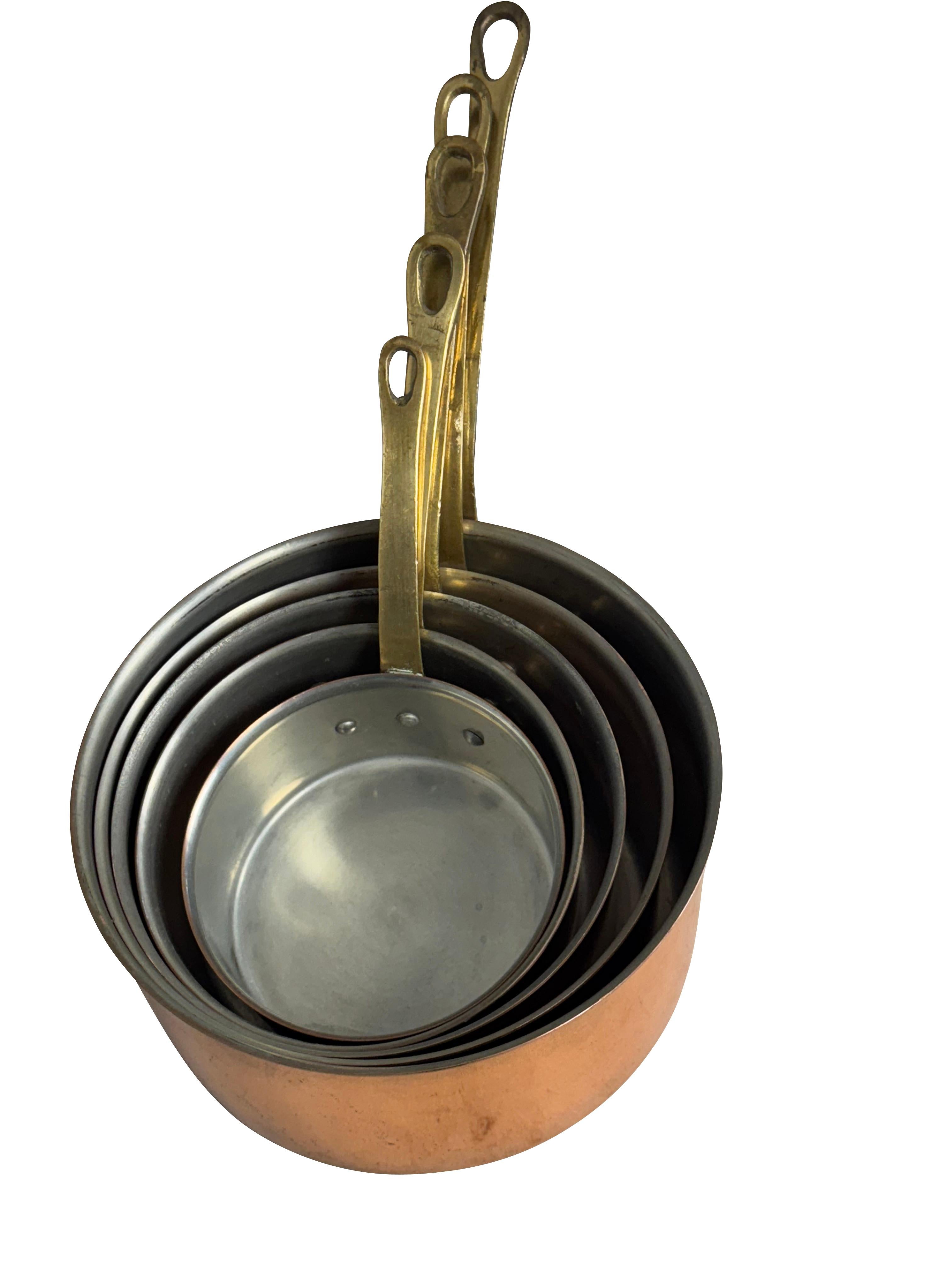
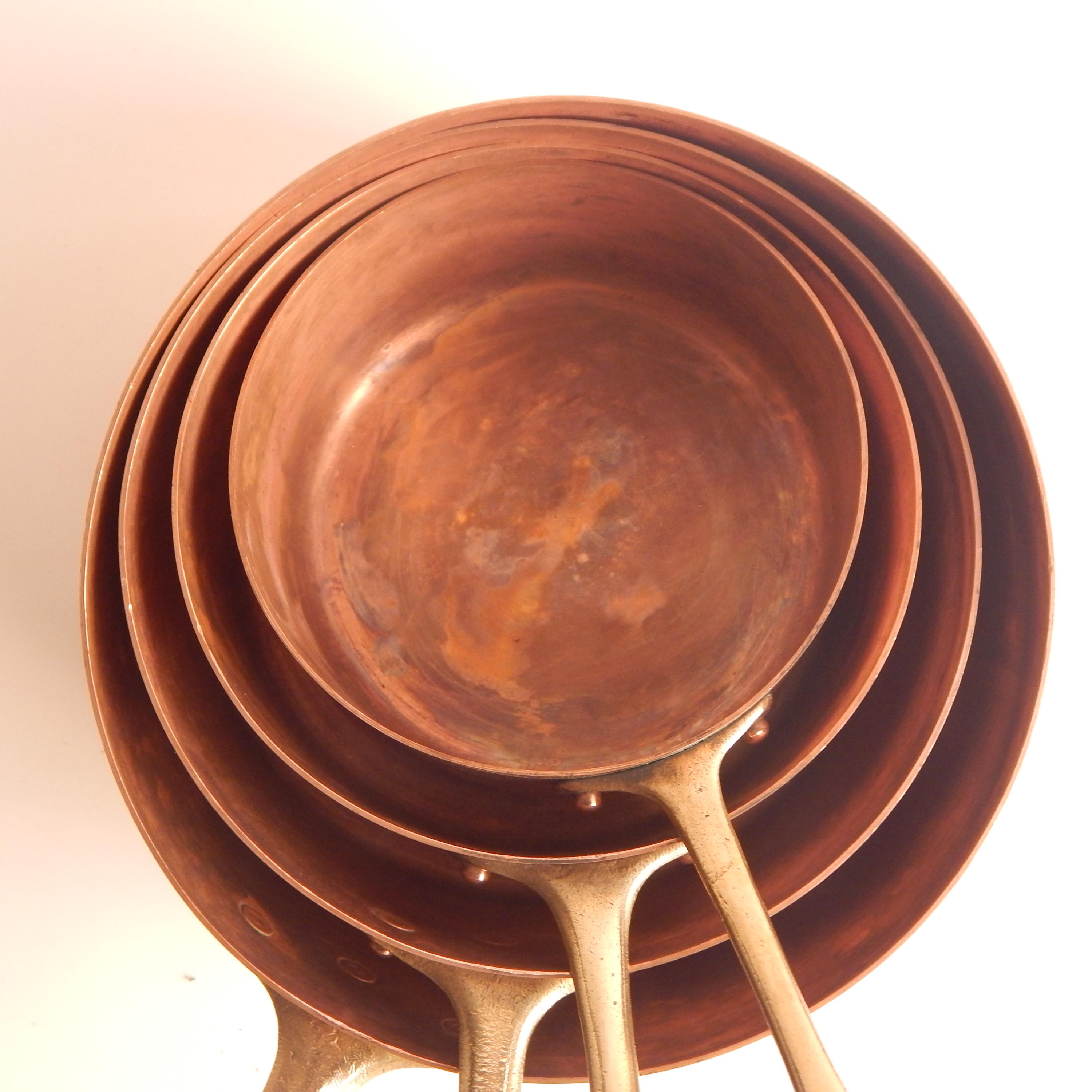
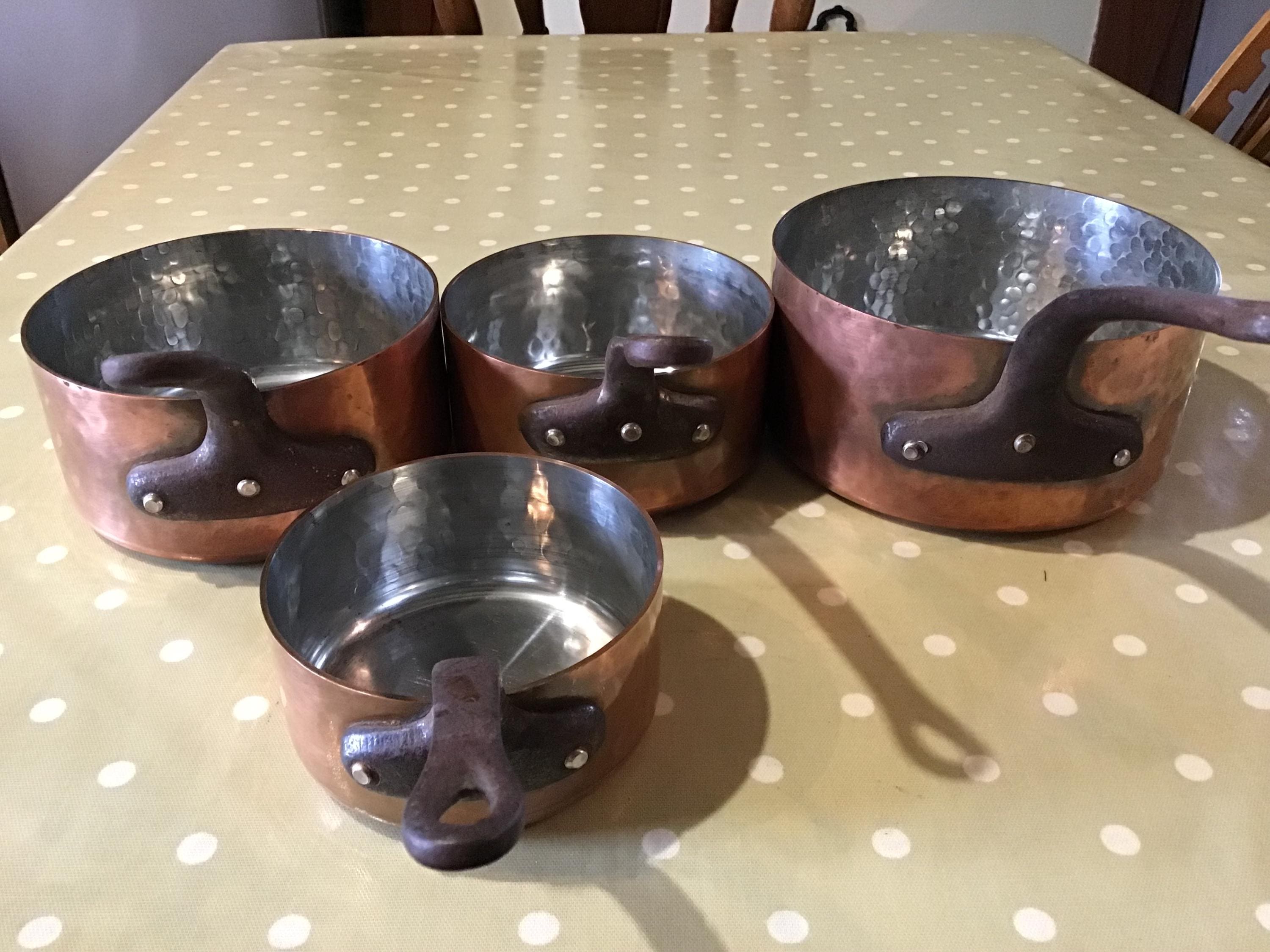
Heavy-gauge solid copper remains the absolute gold standard for temperature control in classic French gastronomy. Because raw copper reacts with acidic foods and can leach toxic levels of metal into meals, copper cookware is lined with a thin layer of a non-reactive metal.
- Thermal Dynamics: Copper has exceptionally high thermal conductivity among cookware metals. It responds almost instantly to adjustments in burner flame, heating up and cooling down in seconds. This prevents delicate egg dishes, caramel, or emulsified butter sauces from breaking or burning.
- Lining Options:
- Tin Lining: The traditional lining method. Pure molten tin is hand-wiped onto the copper interior. Tin is naturally nonstick and non-reactive, but it melts at 450°F (232°C) and will wear down over years of heavy use, requiring re-tinning.
- Stainless Steel Lining: Modern copper pans bond a thin sheet of 18/10 stainless steel to the copper exterior. This lining is durable, dishwasher-safe, and tolerant of extreme heat, though slightly less nonstick than tin.
- Best Uses: Delicate sauces (béarnaise, hollandaise), sugar work, simmering custards, and precise reductions.
- Limitations: Extremely heavy, high purchase cost, and requires regular polishing if you wish to prevent natural tarnish and patina.
Multi-Ply Stainless Steel (Inox)
Modern French cookware manufacturers have embraced multi-ply construction (often called cladding). These pans sand-cast a highly conductive aluminum core between layers of durable, non-reactive stainless steel.
- Thermal Dynamics: Clad stainless steel spreads heat evenly up the sidewalls of the pan, eliminating cold spots while maintaining rapid responsiveness to temperature changes.
- Surface Properties: Stainless steel will not rust, pit, or react with any food product. It is completely dishwasher safe and accepts vigorous scrubbing.
- Best Uses: Pan sauces, deglazing with wine, boiling, blanching, and general everyday kitchen tasks.
- Limitations: Can stick easily if cooking temperatures and oil heating protocols are executed incorrectly.
Essential French Pan Shapes Explained
French cuisine relies on specifically shaped vessels to achieve precise physical outcomes during cooking. Below are the core shapes every cook should understand.
Typical French Pan Geometries:
- Sauté Pan (Sauteuse)
- Vertical Sidewalls (Reduces Splatters)
- Skillet (Poêle)
- Sloped Sidewalls (Easy Flipping)
1. The Poêle (Frying Pan / Skillet)
The poêle is a shallow skillet featuring low, outward-sloping walls. The wide opening encourages evaporation, while the flared sides allow spatulas to slip effortlessly under food. It is designed for quick cooking methods like searing, sautéing, and pan-frying.
2. The Sauteuse / Sauté Pan
Unlike a standard skillet, a French sauté pan (sauteuse) features tall, straight vertical walls perpendicular to a flat bottom. This shape increases internal volume and surface contact while preventing liquid splatters. It allows cooks to sear meats and subsequently add large volumes of braising liquid or aromatics without changing vessels.
3. The Sauteuse Bombée (Fait-Tout / Evaporating Pan)
Also referred to as a chef’s pan or reduction pan, the sauteuse bombée features bowl-shaped, curved sidewalls that flare outward toward a wide rim. The lack of sharp interior corners makes whisking seamless, preventing sauces from scorching in bottom seams, while the wide top surface accelerates evaporation for stock reductions.
4. The Cocotte (French Oven / Dutch Oven)
The cocotte is a heavy, thick-walled oval or round pot fitted with a tightly sealing lid. Traditionally made from enameled cast iron, it is engineered to capture evaporation from liquids, condense it on the underside of the lid, and drop it back onto cooking meats for self-basting during long oven braises.
5. The Poêle à Crêpe (Crêpe Pan)
Designed specifically for thin batters, a French crêpe pan is a shallow, flat carbon steel or cast iron disc with extremely low rims (often under half an inch). The minimal sidewall profile enables cooks to tilt the pan to spread batter thin and slip an offset spatula under delicate crêpes for quick flipping.
Technical Material Comparison
The matrix below compares performance traits across the primary construction materials found in French cooking pans:
| Material | Thermal Conductivity | Heat Retention | Acid Reactivity | Maintenance Level | Weight | Ideal Primary Application |
|---|---|---|---|---|---|---|
| Carbon Steel | Moderate-High | Moderate | Reactive (Avoids Acids) | High (Requires Seasoning) | Medium-Heavy | High-Heat Searing & Eggs |
| Enameled Cast Iron | Low | Very High | Non-Reactive | Low-Moderate | Very Heavy | Slow Braising & Stews |
| Copper (Tin-Lined) | Exceptional | Low | Non-Reactive Interior | High (Hand-Wash & Re-tin) | Heavy | Precision Sauces & Sugars |
| Copper (Inox-Lined) | Exceptional | Low-Moderate | Non-Reactive Interior | Moderate | Heavy | Searing & High-Control Cooking |
| 5-Ply Stainless | High | Moderate | Non-Reactive | Low (Dishwasher Safe) | Medium | Sautéing, Deglazing, Boiling |
Leading French Cookware Brands
Several centuries-old French manufacturers continue to produce premium culinary vessels. Each brand specializes in specific materials and construction disciplines.
De Buyer
Founded in 1830 in the Vosges region of France, De Buyer is globally recognized for its carbon steel pans. Their Mineral B and Carbone Plus series feature thick-gauge steel (typically 2.5mm to 3mm) designed to withstand high commercial burner heat without warping. De Buyer also manufactures premium multi-ply stainless steel (Affinity) and copper-stainless hybrid pans (Prima Materia).
Le Creuset
Established in 1925 in Fresnoy-le-Grand, Le Creuset is famous for colorful enameled cast iron. Their signature Dutch ovens and braisers feature smooth, cream-colored interior enamel designed for easy monitoring of fond development. Le Creuset vessels are cast individually in single-use sand molds, ensuring consistent wall thickness and thermal balance.
Staub
Originating in Alsace, France, in 1974, Staub is Le Creuset's primary competitor in the enameled cast iron space. Staub pans are distinguished by their dark-matte black quartz enamel interior, which offers superior browning performance and resistance to scratching. Staub lid designs feature self-basting spikes (chistera) on the underside that continuously drip moisture across cooking foods.
Mauviel 1830
Located in Villedieu-les-Poêles ("the city of copper"), Mauviel has crafted professional copper cookware since 1830. Their flagship M'heritage collection features thick copper bodies bonded to thin stainless steel linings. Mauviel also produces traditional tin-lined copper vessels for classic culinary purists.
Matfer Bourgeat
A primary supplier to commercial professional kitchens, Matfer Bourgeat manufactures rugged, heavy-duty carbon steel skillets (such as the Bourgeat Black Steel series) and stainless steel stockpots. Their carbon steel pans feature a flat, welded handle connection rather than traditional rivets, eliminating interior pan bump-outs where food debris can collect.
Seasoning and Caring for French Carbon Steel Pans
Properly initializing and maintaining a carbon steel pan ensures a slick, rust-free surface that lasts for generations.
Seasoning Carbon Steel (Cycle):
- Clean Factory Wax
- Apply Micro-Layer Oil
- Heat to Smoke Point
- Repeat as Needed
Initial Seasoning Protocol
- Strip Protective Wax: New carbon steel pans are shipped with a protective beeswax or paraffin coating to prevent rust during transport. Wash the pan thoroughly with boiling hot water, mild dish soap, and a stiff scrub brush until the wax coating is completely stripped.
- Dry Thoroughly: Wipe dry immediately with paper towels and place over low burner heat for 2 minutes to evaporate residual microscopic moisture.
- Apply High-Smoke-Point Oil: Add half a teaspoon of neutral oil with a high smoke point (such as grapeseed, canola, or refined sunflower oil). Using a folded paper towel, rub the oil across the entire interior and exterior surface.
- Wipe Excess Off: Wipe the pan with a dry paper towel until it appears completely dry. The biggest mistake in seasoning is leaving too much oil, which creates a sticky, gummy surface rather than a smooth polymer skin.
- Heat to Smoke Point: Place the pan over high heat on a stovetop (or upside down in an oven heated to 450°F / 232°C) until the steel begins to discolor, turn blue-gray, and smoke gently. Hold at heat for 5 minutes, then turn off the burner and allow the pan to cool naturally.
- Repeat: Repeat steps 3–5 two to three times to build a foundational dark golden-brown patina.
Everyday Cleaning and Maintenance
- Avoid Soap When Possible: After cooking, rinse the pan under hot tap water and scrub away food residue using a stiff wooden brush or coarse sea salt with a paper towel. Mild soap can be used occasionally on well-seasoned pans, but avoid prolonged soaking.
- Never Use Dishwashers: Machine dishwashing detergents contain harsh alkalis that instantly strip carbon steel patinas and cause rapid oxidation (rust).
- Dry and Oil: After washing, dry the pan completely over a low stovetop flame for 60 seconds. Rub one drop of neutral oil across the interior cooking surface before storing it in a dry cabinet.
How to Select the Right French Cooking Pan
Selecting the ideal French pan depends on matching the vessel’s strengths with your primary cooking habits and stove technology:
- Evaluate Your Heat Source:
- Induction Cooktops: Require magnetic materials. Enameled cast iron, carbon steel, and multi-ply stainless steel with magnetic exterior cladding work exceptionally well. Pure copper does not work on induction unless manufactured with a specially engineered magnetic stainless steel baseplate (such as Mauviel's M'6s line).
- Gas Burners: All materials perform well on gas, but heavy-gauge solid copper and carbon steel shine under gas flames due to rapid heat responsiveness.
- Identify Your Dominant Cooking Style:
- High-heat searing, steaks, eggs, stir-frying: Choose a 2.5mm–3mm thick carbon steel pan (e.g., De Buyer Mineral B).
- Slow braises, stews, pot roasts, bread baking: Choose a 5.5-quart to 7-quart enameled cast iron cocotte (e.g., Staub or Le Creuset).
- Delicate sauces, pan reductions, butter emulsification: Invest in a 2.5mm stainless-lined copper sauce pan (e.g., Mauviel M'200c).
- Low-maintenance everyday versatility: Choose a 3-ply or 5-ply clad stainless steel sauté pan.
- Consider Weight Tolerances: Heavy cast iron and thick copper pans can easily weigh between 8 to 14 pounds when empty. If wrist strength or joint strain is a practical concern, select multi-ply stainless steel or mid-gauge carbon steel over thick cast iron.
Frequently Asked Questions
Are French carbon steel pans better than American cast iron skillets?
Neither is inherently superior; they offer different performance strengths. Carbon steel heats faster, reacts more quickly to flame adjustments, and features sloped sides ideal for tossing food. Cast iron holds more heat energy, keeping skillet temperatures stable when dropping large cuts of meat into the pan, but it is noticeably heavier and less maneuverable.
Why do classical French copper pans use tin linings instead of stainless steel?
Tin bonded to copper creates a smooth, non-porous interior that resists sticking far better than raw stainless steel. Additionally, tin can be easily removed and re-applied (re-tinned) by a metalsmith if worn down over decades of use, giving the pan an infinite lifespan. However, stainless steel linings are increasingly popular today because they do not melt at high temperatures and require zero re-tinning maintenance.
Can you cook tomato sauce in a French carbon steel pan?
Avoid cooking highly acidic ingredients like tomato sauce, wine reductions, or vinegar deglazes in carbon steel for long periods. Acid breaks down the seasoned polymer layer on the pan's surface, stripping its nonstick coating and imparting an unpleasant metallic flavor to the food. Use enameled cast iron or clad stainless steel for acid-heavy dishes instead.
What is the difference between a French oven and a Dutch oven?
The terms are largely interchangeable in modern culinary language. Traditionally, a classic Dutch oven referred to an un-enameled raw cast iron pot used over open flames or camp coals. A French oven (cocotte) specifically refers to a heavy cast iron vessel coated inside and out with smooth, vitreous protective enamel, making it suitable for gentle indoor cooktop and oven use.
Why are traditional French pan handles so long and angled upward?
The long, sweeping queue française handle design acts as a lever arm. By extending the handle length and sweeping it upward at a gentle angle, the weight of a heavy iron or copper pan is distributed more evenly down the user's forearm. This reduces wrist fatigue during flipping motion and keeps the cook's hands further away from open gas flames.
Next Steps for Building Your Cookware Collection
When upgrading your kitchen with French cooking pans, build your collection around fundamental daily needs rather than buying complete cookware sets.
Start with a single 10-inch or 12-inch carbon steel skillet to master high-heat browning, omelets, and pan-searing. Pair this with a 5.5-quart enameled cast iron round cocotte for all stews, braises, and soups. Once these foundational pieces are in place, introduce specialized vessels—such as a stainless-lined copper reduction pan or a dedicated shallow crêpe pan—to suit your specific culinary ambitions.
EDITORIAL CATEGORY METADATA:
Image Gallery