Navigating the APA Online Writing Lab for Academic Excellence in 2026
The APA Online Writing Lab—most prominently represented by Purdue University's Online Writing Lab (OWL)—is a comprehensive digital resource providing free access to styling, formatting, and citation guidelines established by the Americ...
The APA Online Writing Lab—most prominently represented by Purdue University's Online Writing Lab (OWL)—is a comprehensive digital resource providing free access to styling, formatting, and citation guidelines established by the American Psychological Association. It helps researchers, students, and professionals ensure their academic and scientific manuscripts strictly adhere to official publication standards.
Contents
Academic writing requires absolute precision, and navigating citation guidelines can quickly become overwhelming without a centralized, reliable roadmap. Whether you are formatting an undergraduate research paper or preparing a manuscript for a peer-reviewed psychological journal, understanding how to utilize institutional writing resources is critical for maintaining academic integrity. This guide explores the structure, core offerings, and practical applications of digital writing labs operating under current publishing frameworks.
Understanding the Scope and Purpose of Digital Writing Labs
Digital writing labs serve as virtual hubs for instructional materials, grammar refreshers, and style guides. The primary objective of these platforms is to democratize access to writing support, removing the geographical and financial barriers traditionally associated with campus-based writing centers.
Institutions like Purdue OWL have set the benchmark for open-access academic support. By translating dense manuals—such as the Publication Manual of the American Psychological Association—into digestible, web-based articles, these labs make complex rules accessible to a global audience.
Core Pillars of Academic Support
- Style and Formatting Guides: Comprehensive breakdowns of cover pages, running heads, abstracts, and body paragraph layouts.
- Citation Mechanics: Direct rules and real-world examples for referencing books, journal articles, websites, and audiovisual media.
- Grammar and Mechanics: Foundational rules covering punctuation, active versus passive voice, and bias-free language.
- Instructor Resources: Lesson plans, grading rubrics, and downloadable handouts designed for educators teaching academic writing.
Core Components of APA Style Compliance
Adhering to the latest guidelines requires attention to multiple structural layers within a document. The standards govern everything from macro-level layout down to micro-level punctuation.
General Document Formatting Rules
When preparing a manuscript, specific typographic and spatial parameters must be maintained uniformly across all pages:
- Font Type and Size: Use legible, accessible fonts such as 12-point Times New Roman, 11-point Calibri, 11-point Arial, or 10-point Lucida Sans Unicode.
- Line Spacing: Apply double-spacing throughout the entire manuscript, including the title page, abstract, text, block quotes, reference list, tables, and figure captions.
- Margins: Maintain standard 1-inch (2.54 cm) margins on all sides (top, bottom, left, and right).
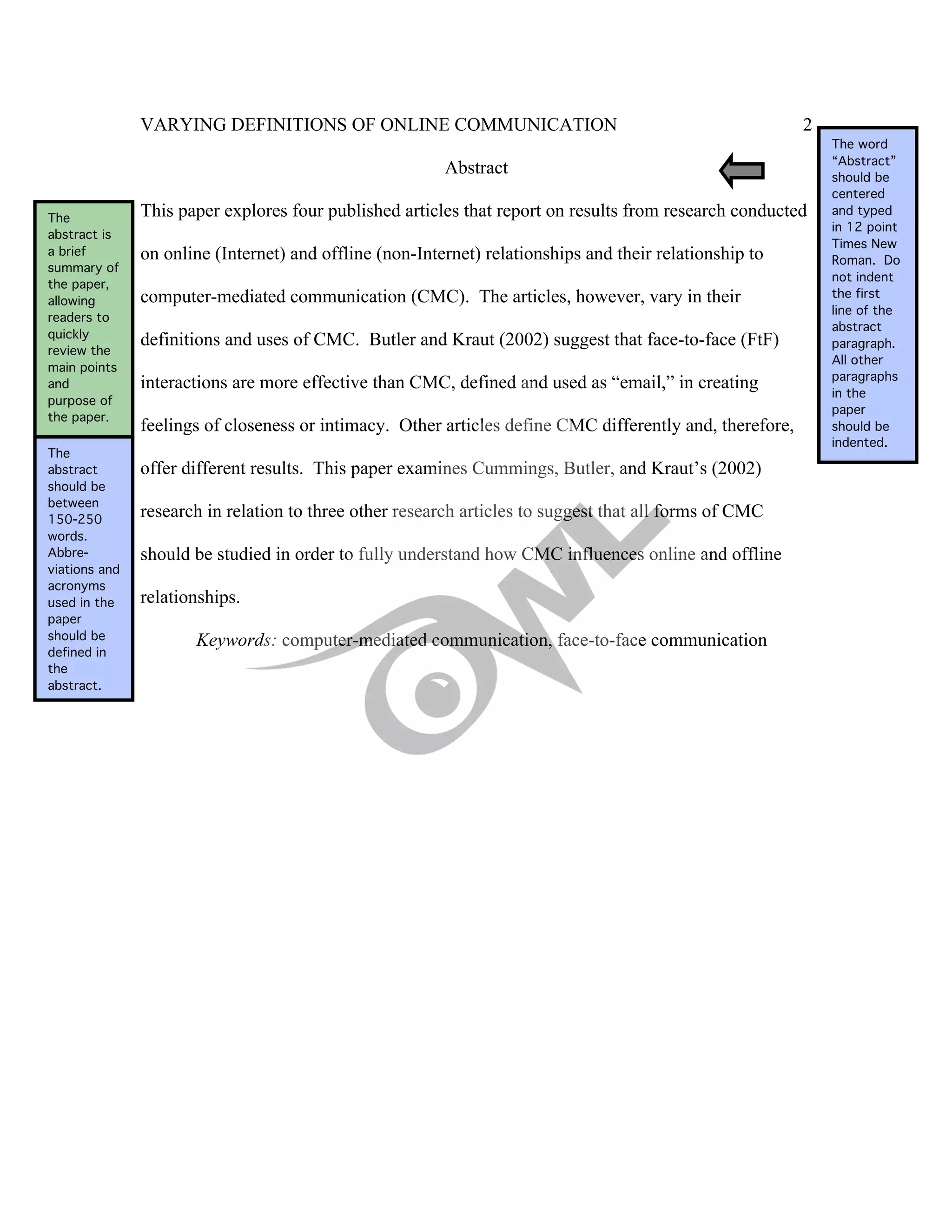
- Page Numbers: Insert page numbers in the top right-hand corner of the header, beginning with page 1 on the title page.
In-Text Citations Versus Reference Lists
A common pitfall for researchers is confusing the function of in-text citations with reference list entries. Every source cited within the body of the text must have a corresponding entry in the reference list, and vice versa (with personal communications serving as the rare exception).
- Parenthetical Citations: Include the author's last name and publication year enclosed in parentheses at the end of a sentence or referenced claim (e.g., Smith, 2024).
- Narrative Citations: Integrate the author's name directly into the sentence flow, followed immediately by the publication year in parentheses (e.g., Smith (2024) argued that...).
- Reference List Entries: Provide complete bibliographic data at the end of the document, arranged alphabetically by the author's last name, utilizing hanging indents.
Comparison of Citation Formatting Across Formats
Different source types demand distinct structural formats within a reference list. The following table outlines standard formats for common academic sources.
| Source Type | In-Text Citation Format | Reference List Structure | Key Elements Required |
|---|---|---|---|
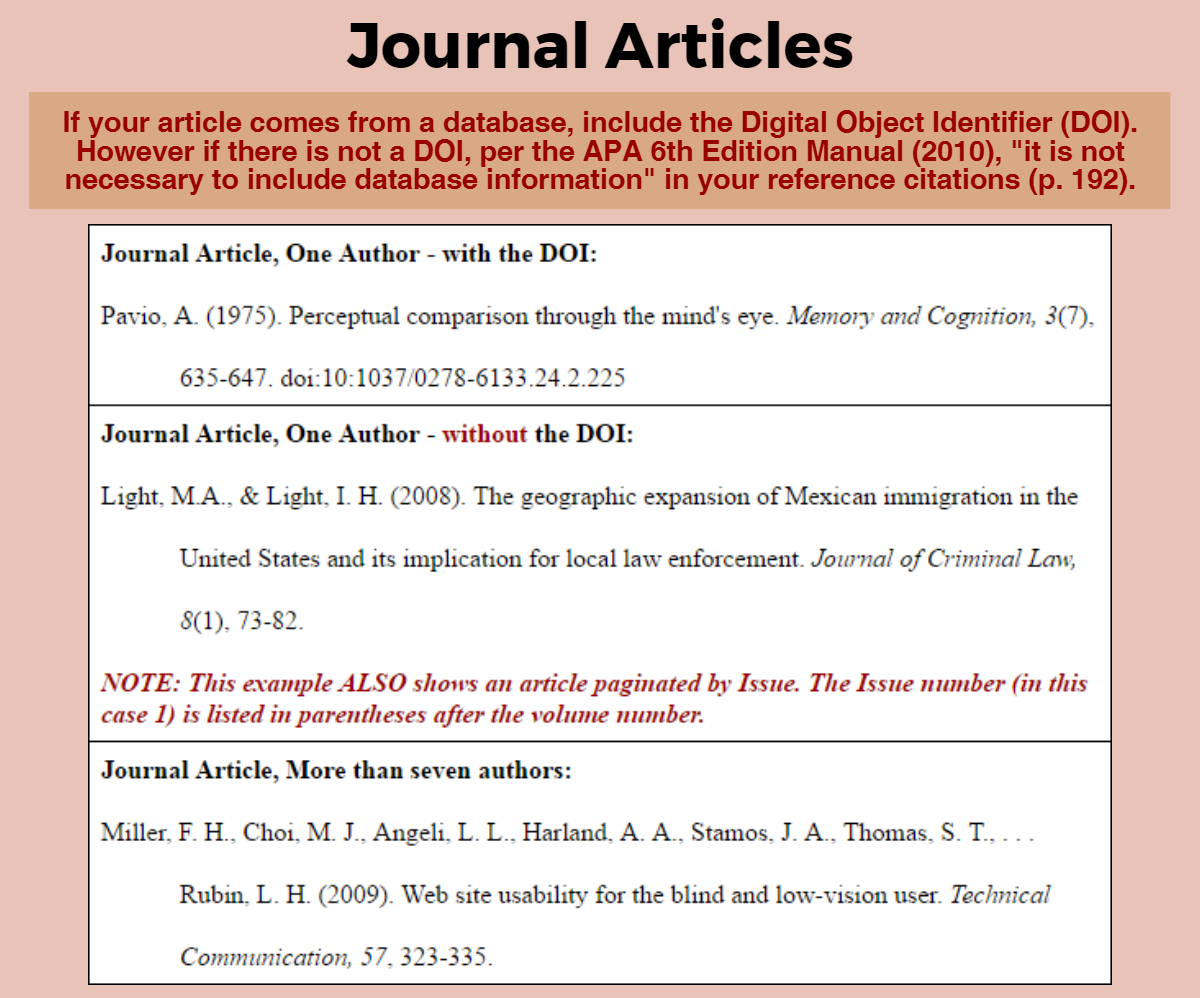
| Peer-Reviewed Journal | (Author, Year) | Author, A. A. (Year). Title of article. Title of Journal, Volume(Issue), pages. DOI | Author, Year, Article Title, Journal Name, Volume, Issue, Page Range, DOI |
| Authored Book | (Author, Year) | Author, A. A. (Year). Title of work. Publisher. | Author, Year, Italicized Book Title, Publisher Location & Name |
| Webpage with Author | (Author, Year) | Author, A. A. (Year, Month Day). Title of page. Site Name. URL | Author, Exact Date, Page Title, Website Publisher, Direct Hyperlink |
| Edited Book Chapter | (Author, Year) | Author, A. A. (Year). Title of chapter. In E. E. Editor (Ed.), Title of book (pp. xx-xx). Publisher. | Chapter Author, Chapter Title, Editor Name, Book Title, Page Numbers, Publisher |
Step-by-Step Guide to Utilizing Digital Labs for Research Papers
Maximizing the utility of online writing resources involves a systematic approach to drafting and reviewing. Follow this structured workflow to integrate APA guidelines seamlessly into your writing process.
Step 1: Establish the Document Skeleton
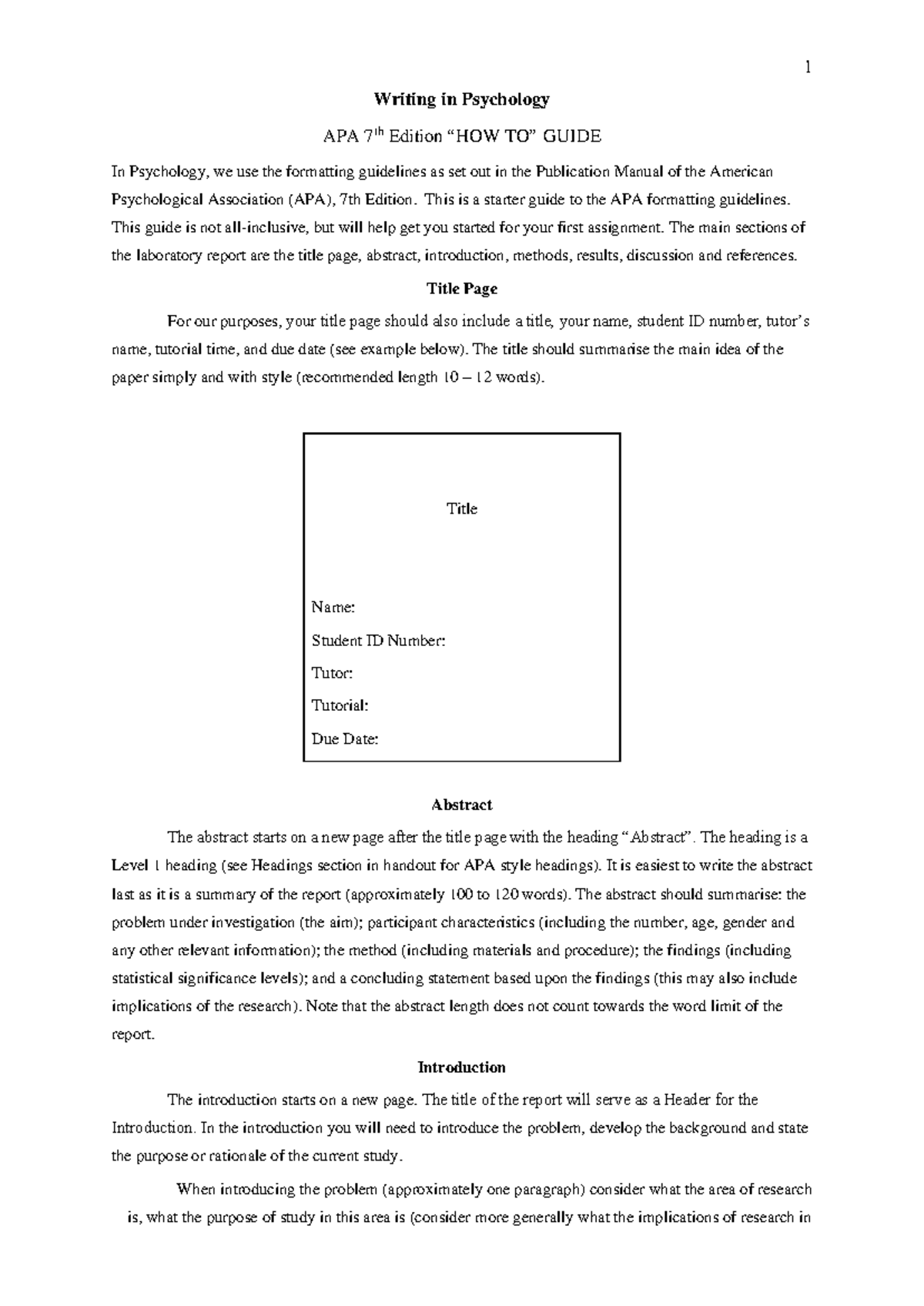
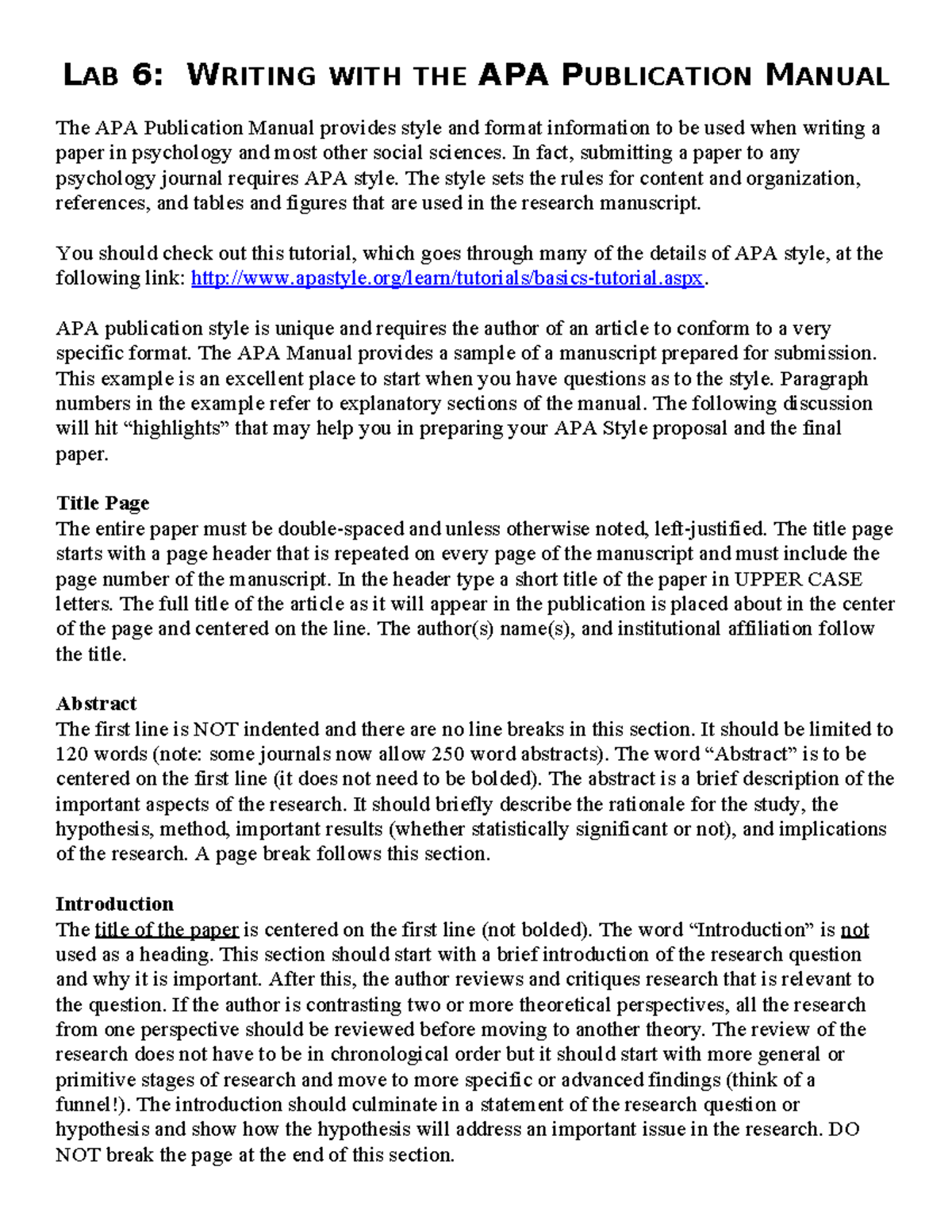
Before writing the first sentence, configure your word processor. Set your margins to one inch, choose an approved font, and enable double-spacing. Insert the page number in the header and create a dedicated title page following the professional or student template outlined in the writing lab instructions.
Step 2: Draft with Source Tracking
As you write, record complete bibliographic metadata for every source you consult. Note the author names, publication years, titles, digital object identifiers (DOIs), and URLs. Capturing this data during the drafting phase prevents tedious retroactive searching during the final editing stage.
Step 3: Cross-Reference In-Text Citations
Once the draft is complete, review every claim requiring external support. Use the writing lab's citation generator guides to verify that single-author, multi-author, and corporate author citations follow the correct format for first and subsequent mentions.
Step 4: Build and Audit the Reference List
Alphabetize your reference list and check each entry against the manual's structural rules. Ensure that DOIs are formatted as active URLs and that titles use sentence case (capitalizing only the first word, proper nouns, and the first word after a colon).
Step 5: Conduct a Final Polish
Check running heads, heading levels (Levels 1 through 5), table formatting, and figure placement. Run your document through the lab's grammar and mechanics checklists to eliminate passive voice overuse and potential bias in language.
Pros and Cons of Relying on Online Writing Labs
While digital writing labs offer immense value, understanding their limitations ensures users apply them effectively.
Operational Advantages of Online Writing Labs
Accessibility and Speed: Online writing labs provide instant, 24/7 access to authoritative style guides without requiring physical appointments or waiting for campus center hours. They offer clear, searchable databases that streamline the editing process for remote and non-traditional students alike.
Pros:
- Free, unhindered access to comprehensive citation rules and formatting examples.
- Regular updates reflecting the latest manual revisions and publishing standards.
- Abundant practice exercises, sample papers, and downloadable templates.
- Clear explanations of complex rules paired with real-world examples.
Cons:
- Lack of personalized, one-on-one human feedback for unique structural or argumentative writing flaws.
- Potential for user misinterpretation of complex grammatical rules without instructor guidance.
- Over-reliance on static web pages can occasionally lead to overlooking nuanced, context-specific disciplinary requirements.
Troubleshooting Common APA Formatting Mistakes
Even experienced researchers encounter recurring formatting challenges. Addressing these pitfalls early preserves the integrity of your manuscript.
Mistake 1: Mismanaging Multiple Authors in In-Text Citations
- The Problem: Citing all authors every time for sources with three or more authors clutters the text.
- The Solution: For sources with three or more authors, use the first author's name followed by et al. right from the first in-text citation, unless doing so creates ambiguity with another source.
Mistake 2: Incorrect DOI Formatting
- The Problem: Including outdated prefixes like "DOI:" or omitting the hyperlink format entirely.
- The Solution: Present DOIs as standard URLs in the format
https://doi.org/xxxxxxx. This ensures the identifier functions as a clickable link in digital publishing environments.
Mistake 3: Improper Heading Level Hierarchy
- The Problem: Skipping heading levels or failing to use correct font styling (bolding, italics, indentation) for sublevels.
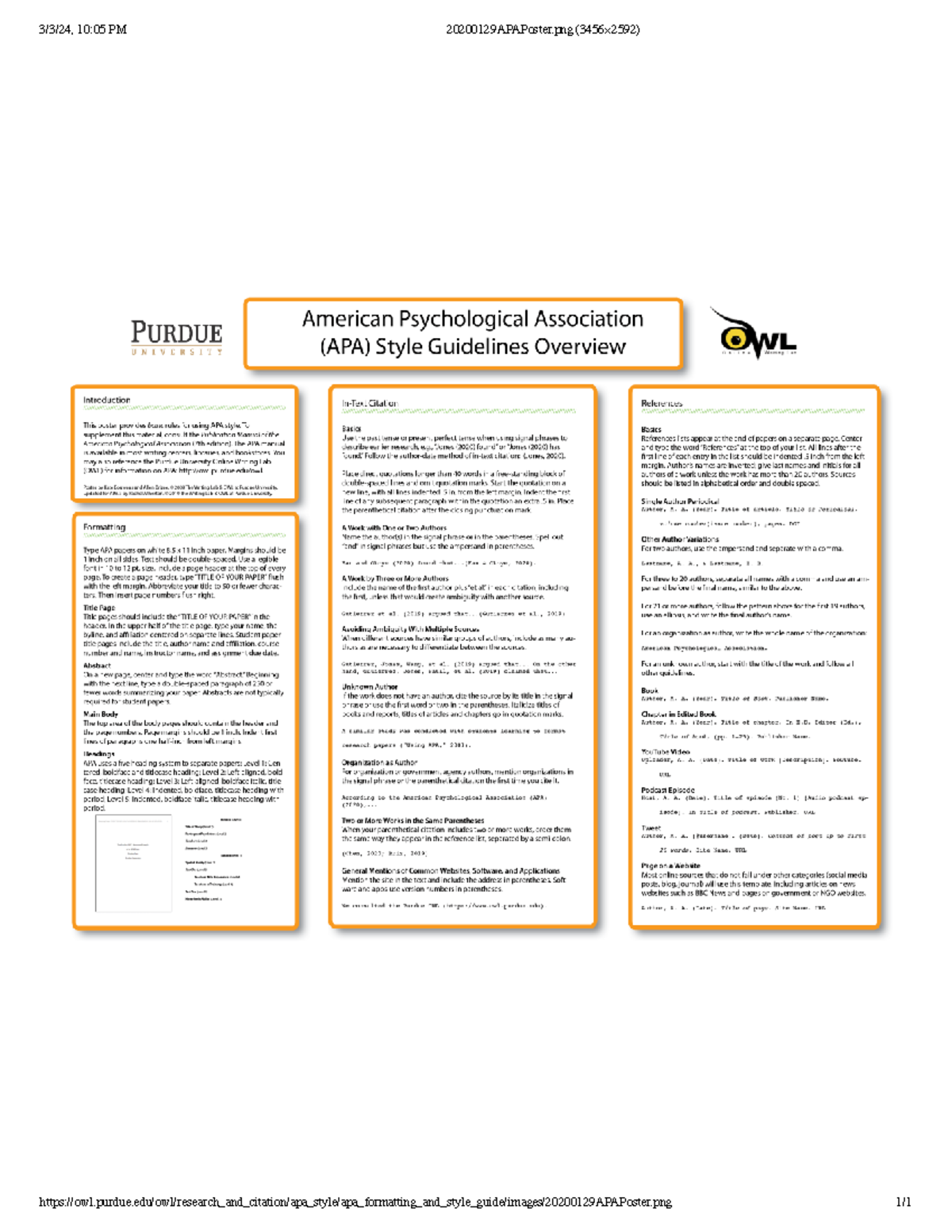
- The Solution: Consult the writing lab's visual guides for heading levels. Level 1 headings are centered and bolded; Level 2 headings are flush left and bolded; Level 3 headings are flush left, bolded, and italicized.
Frequently Asked Questions
What is the APA Online Writing Lab?
The APA Online Writing Lab is a digital educational platform—most notably Purdue University's OWL—that provides free, comprehensive guidance on academic writing, grammar, and American Psychological Association citation styles. It serves as an accessible reference tool for students and researchers worldwide.
How often are digital writing lab guidelines updated?
Digital writing labs update their resources continuously to reflect official manual revisions and evolving digital publishing standards. Whenever the American Psychological Association releases a new edition or minor correction, major online writing labs update their documentation to match.
Can I use the APA Online Writing Lab to generate my citations automatically?
While online writing labs provide extensive rules, examples, and sample templates, they primarily function as instructional guides rather than automated citation generators. Users must manually apply the rules or verify any automated citation tool output against the lab's official examples.
Are Purdue OWL APA guidelines applicable internationally?
Yes, APA style is an international standard utilized across behavioral, social sciences, and various professional disciplines globally. Purdue OWL provides the definitive digital interpretation of these universal guidelines for international scholars and institutions.
How should websites without publication dates be cited in APA style?
When a reliable webpage lacks a publication date, use the abbreviation "n.d." (which stands for "no date") in place of the year within both your in-text citation and reference list entry. Always include an access date if the source content is likely to change over time.
Practical Recommendation
To achieve optimal results when preparing academic manuscripts, bookmark a trusted digital resource like the Purdue OWL and consult it iteratively throughout your writing process rather than leaving formatting until the final hour. Pair these web-based guidelines with institutional handbooks and peer review to ensure absolute compliance and scholarly rigor.
Image Gallery