How Term Life Insurance Level Premiums Work: An Actuarial and Practical Guide
Level premium term life insurance keeps your premium payment identical throughout the chosen policy length—such as 10, 20, or 30 years—while maintaining a constant death benefit. Insurance companies calculate this fixed rate by averagi...
Level premium term life insurance keeps your premium payment identical throughout the chosen policy length—such as 10, 20, or 30 years—while maintaining a constant death benefit. Insurance companies calculate this fixed rate by averaging the rising actuarial risk of mortality over time, allowing policyholders to secure predictable, long-term financial protection without unexpected price increases.
Contents
The Mechanics Behind Level Premium Term Life Insurance
To understand how a level premium functions, it is essential to look at the relationship between human mortality and age. Statistically, the risk of dying increases with every year an individual ages. If an insurance policy were priced purely on a year-to-year basis—known as Annual Renewable Term (ART)—the policyholder’s premium would start very low in youth and rise every single year, becoming exponentially more expensive in middle and older age.
A level premium policy removes this volatility. Instead of charging a rate that increases annually alongside your biological risk, the life insurance company calculates the total projected cost of insuring you across the entire duration of the policy term (e.g., 20 years). The insurer then levels out that cumulative cost into equal, predictable monthly or annual payments.
- Early Policy Years
- Higher Premium paid than actual risk
- Surplus held in reserve
- Late Policy Years
- Surplus offsets higher risk
- Lower Premium paid than actual risk
During the early years of a level term policy, the fixed premium you pay is higher than the actual cost required to cover your statistical risk of dying at that age. The insurance company holds and invests this early excess premium. In the later years of the term, as your age increases and your statistical mortality risk rises, the actual cost of insurance surpasses your fixed premium. The insurer utilizes the reserves and investment returns accumulated during the early years to subsidize the higher risk in the later years.
This leveling structure provides absolute financial predictability for the policyholder while allowing the insurer to manage long-term portfolio risk.
The Actuarial Reserve vs. Cash Value
A common point of confusion for policyholders is the difference between the insurer's internal reserve in a level term policy and the cash value found in permanent life insurance policies.
Because you pay more than the natural cost of insurance during the early years of a level term policy, the insurance company builds up an actuarial reserve. However, this reserve belongs entirely to the insurance company’s pool of capital used to manage risk across all policyholders.
- Level Term Insurance Reserve: It is an internal risk-smoothing pool. If you cancel your level term life policy after five years, you do not receive any refund of the excess premiums paid in those early years. The funds remain with the insurer to balance the aggregate risk pool.
- Permanent Cash Value (Whole/Universal Life): In permanent life insurance, excess early premiums build an equity account (cash surrender value) owned by the policyholder. This balance can be borrowed against, withdrawn, or paid out upon surrender.
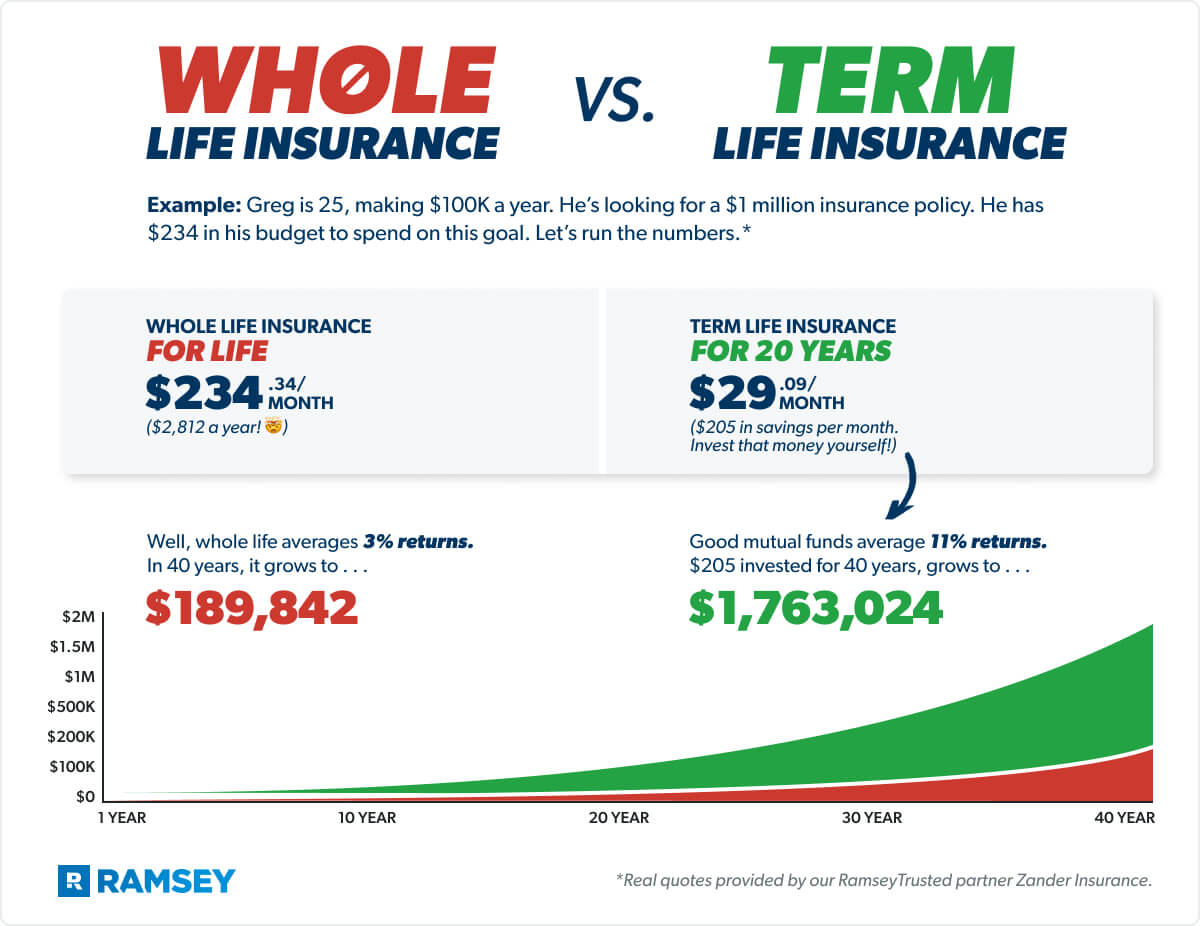
Because level term insurance does not build cash value or pay out savings upon cancellation, it is significantly less expensive than permanent life insurance for equivalent amounts of death benefit coverage.
Key Factors That Determine Your Fixed Premium Rate
When you apply for a level premium term life policy, the underwriter evaluates several individual risk factors to lock in your fixed rate for the duration of the term. Once the policy is issued and active, the insurance company cannot change your level premium rate, regardless of changes to your health, career, or lifestyle.
The rate calculation depends heavily on baseline mortality data published in standardized actuarial tables, such as those maintained by the National Association of Insurance Commissioners. Underwriters combine these population statistics with your individual application profile.
- Level Premium Rate Determination
- Underwriting Profile
- Age & Biological Sex
- Medical History
- Family Health History
- Tobacco / Nicotine
- Occupation & Hobbies
- Policy Design
- Death Benefit (Face Value)
- Term Duration (10-30 Years)
- Optional Riders
- Underwriting Profile
1. Age and Biological Sex
Age is the single primary factor in determining term life insurance rates. Younger applicants represent lower short-term mortality risk, resulting in lower fixed premiums. Additionally, biological females have a higher average life expectancy than males, which translates to lower insurance rates for female applicants across all age brackets.
2. Medical History and Current Health Metrics
Underwriters review personal health data, including body mass index (BMI), blood pressure, cholesterol levels, blood glucose, and chronic conditions such as cardiovascular disease or diabetes. A history of major illnesses like cancer will directly impact the risk class assigned to the policy.
3. Family Medical History
Insurers evaluate hereditary health factors, looking specifically at parent or sibling diagnoses of heart disease, stroke, or cancer prior to age 60. A strong family history of premature disease may push an applicant into a higher risk category.
4. Tobacco and Nicotine Usage
Tobacco use dramatically increases mortality risk. Smokers, vapers, and users of nicotine replacement products typically pay between 200% and 400% more for level term coverage than non-tobacco users of the same age.
5. Occupation and High-Risk Hobbies
Engaging in hazardous occupations (e.g., structural steelworking, commercial aviation, underground mining) or dangerous hobbies (e.g., scuba diving, private piloting, rock climbing) can result in a "flat extra" fee added to the base level premium or a higher overall rate tier.
6. Policy Length and Face Value
The duration of the level period directly impacts the price. A 30-year level term policy costs more per month than a 10-year policy for the same death benefit because the insurer must cover your mortality risk when you are 20 years older. Similarly, higher death benefits (e.g., $1,000,000 versus $250,000) increase the overall level premium proportionally.
What Happens When the Level Premium Period Ends?
When a 10-, 20-, or 30-year level term policy reaches the end of its initial guaranteed period, the level premium guarantee expires. The policyholder generally faces four main choices:
- End of Level Premium Guarantee
- Renew via Annual Renewable Term (ART)
- Convert to Permanent Policy (Rider)
- Re-underwrite for New Term Policy
- Let Policy Lapse / Terminate
1. Transition to Annual Renewable Term (ART)
Most modern term policies include a guaranteed renewability clause. When the level period ends, the coverage does not automatically terminate. Instead, it converts to an Annual Renewable Term structure. Under ART, you can keep the policy active without passing a medical exam, but the premium increases every single year based on your current attained age. These post-level rates are typically cost-prohibitive.
2. Exercise a Term Conversion Rider
Many level term policies include a term conversion option. This contract provision allows you to convert all or part of your term policy into a permanent life insurance policy (such as whole life or universal life) before a specified age or deadline, without undergoing new medical underwriting. While the new permanent policy premium will be higher based on your age at conversion, your health status will not negatively affect your rate class.
3. Re-Underwrite for a New Term Policy
If you still require life insurance coverage and remain in good health, applying for a brand-new level term policy is generally much cheaper than renewing an old policy via ART. However, the new rate will reflect your older starting age and any medical conditions developed since the original policy was issued.
4. Allow the Coverage to Terminate
If your financial obligations—such as a mortgage, child-rearing expenses, or income replacement needs—have concluded, you can simply stop paying premiums and allow the policy to lapse without any surrender fees or tax obligations.
Comparing Life Insurance Structure Options
Understanding how level term insurance compares to other common product structures helps highlight its specific role in personal financial planning. Industry data from the Insurance Information Institute highlights that term life insurance remains the most widely purchased policy type due to its cost efficiency for temporary income protection needs.
| Policy Type | Premium Behavior | Death Benefit | Cash Value Feature | Typical Term Duration | Primary Purpose |
|---|---|---|---|---|---|
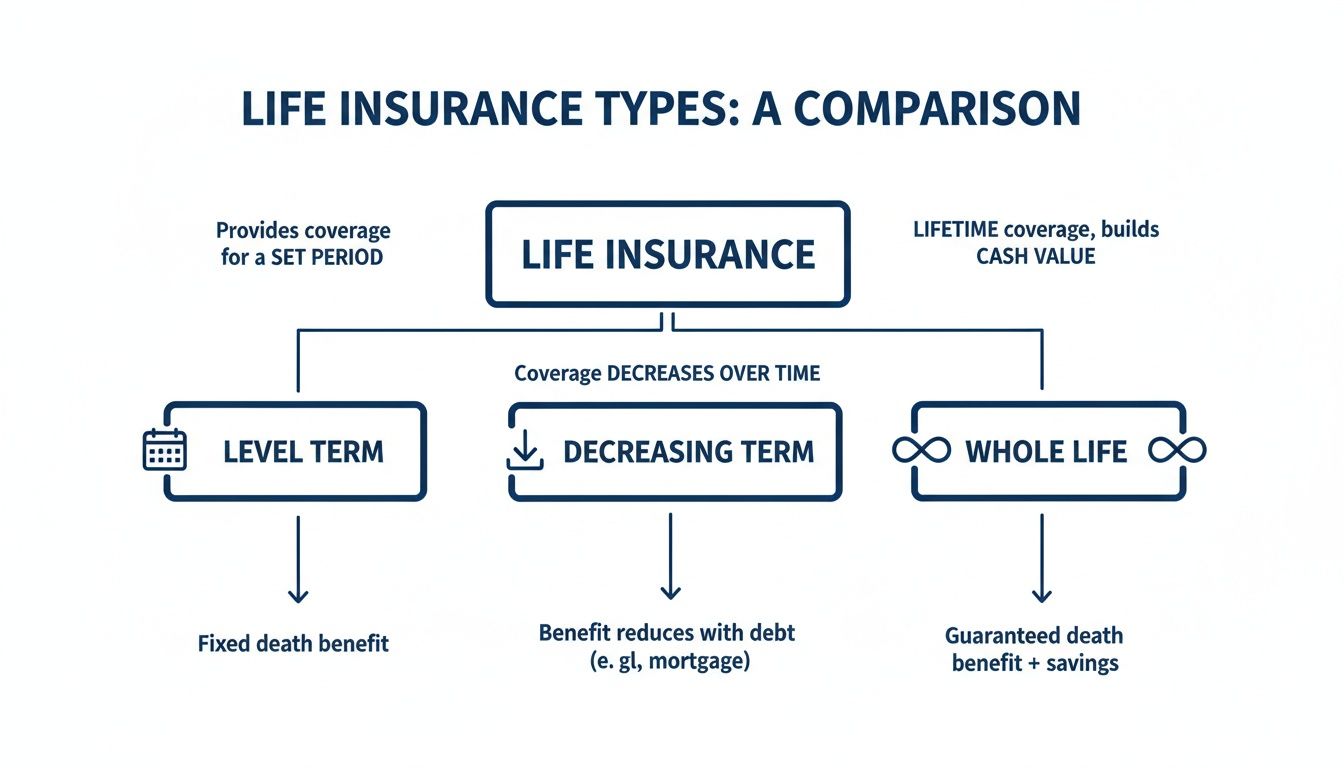
| Level Term Life | Guaranteed fixed rate for the selected period | Constant (Fixed) | None | 10, 15, 20, 25, or 30 years | Income replacement, mortgage protection, debt payoff |
| Annual Renewable Term (ART) | Increases every year based on attained age | Constant (Fixed) | None | 1 year (renewable annually) | Short-term bridge coverage, temporary business needs |
| Decreasing Term Life | Guaranteed fixed rate throughout the term | Decreases over time according to a set schedule | None | 15 to 30 years | Matching a declining debt balance, such as a amortizing mortgage |
| Whole Life Insurance | Fixed level premium for the life of the insured | Guaranteed constant death benefit | Yes (Guaranteed growth curve) | Lifetime (Up to age 100-121) | Estate planning, final expenses, lifelong dependents |
Pros and Cons of Level Premium Term Life Insurance
Evaluating the structural advantages and limitations of level term policies ensures that the product aligns with your broader financial plan.
Advantages
- Financial Predictability: Fixed monthly costs allow for straightforward household budgeting over decades without unexpected rate hikes.
- Cost Efficiency: Provides maximum death benefit coverage per dollar spent compared to permanent cash-value policies.
- Risk Protection Against Health Changes: Once locked in, your premium cannot increase if you develop severe health conditions during the term.
- Simplicity: Uncomplicated contract structure with clear terms, clear duration, and clear beneficiaries.
Disadvantages
- No Accumulation of Equity: Premiums paid strictly purchase mortality protection. No cash value is returned if you outlive the policy term.
- Strict Expiration Schedule: Once the level period ends, continuing coverage becomes significantly more expensive.
- Potential for Overpaying Early On: If you drop the policy after two years, you have paid the "averaged" higher early rate without benefiting from the subsidized lower rate in later years.
- Fixed Coverage Needs: A flat death benefit may not keep pace with major unexpected inflationary periods, though extra coverage can be purchased separately.
Common Mistakes When Purchasing Level Term Coverage
To maximize the value of a level term policy, avoid these operational and strategic errors during the selection process:
- Mismatches Between Term Duration and Debt Duration: Buying a 10-year term policy to cover a 30-year residential mortgage forces you to re-apply at age 40 or 50, when health risks and baseline rates are significantly higher.
- Ignoring Conversion Rider Expiration Dates: Conversion riders often expire before the full term ends (for example, at age 65 or within the first 10 years of a 20-year policy). Missing this window eliminates the right to convert without medical evidence.
- Underestimating Future Income Replacement: Factoring only current living expenses without accounting for salary growth, inflation, or future child education costs leads to underinsurance.
- Selecting Premium Modes with Added Fees: Paying premiums monthly rather than annually often incurs administrative fractional fees (mode charges) that increase total annual spend by 2% to 5%.
Frequently Asked Questions
What happens to my level premium if I am diagnosed with a serious illness during the term?
Your level premium cannot be increased, and your coverage cannot be canceled by the insurer due to a change in your health status during the guaranteed term period, provided you pay your premiums on time. The insurance company assumed this risk when underwriting and issuing the policy.
Can an insurance company change my level premium during the policy term?
No. Under a standard guaranteed level premium term contract, the insurance company is legally bound to keep the premium rate identical for the duration of the term. Always verify that the policy contract explicitly specifies "Guaranteed Level Premium" rather than "Indeterminate Premium," which could allow adjustments under limited regulatory conditions.
Is a level premium policy cheaper than a decreasing term policy?
Decreasing term insurance premiums are sometimes slightly lower or comparable, but the coverage amount declines over time. Level term insurance maintains the full original death benefit across the entire duration of the policy, offering superior overall value and flexibility for most family protection needs.
What is the difference between a level premium and a level death benefit?
A level premium refers to the fixed dollar cost you pay periodically to keep the policy active. A level death benefit refers to the fixed dollar payout your beneficiaries receive if you pass away during the policy term. Most level term policies feature both a level premium and a level death benefit.
Can I cancel a level term policy early if I no longer need it?
Yes. You can cancel a term life policy at any time simply by notifying the insurer or ceasing premium payments. Because term policies do not carry surrender charges or contractual lock-ins, the policy will lapse without penalty. However, you will not receive a refund of past premiums paid.
Actionable Recommendations for Securing Level Term Coverage
When preparing to purchase a level premium term life policy, follow these practical steps to lock in optimal coverage:
- Calculate Exact Horizon Needs: Align your policy term directly with key financial milestones (e.g., matching a 20-year term to the years remaining until your youngest child graduates college or your mortgage is paid off).
- Audit Health Indicators Early: Address manageable lifestyle health metrics—such as blood pressure, cholesterol, or tobacco usage—well before applying to qualify for preferred risk categories.
- Review the Policy's Conversion Provisions: Ensure the policy contract includes a flexible Term Conversion Rider that allows conversion to a reputable permanent policy line without medical underwriting up to at least age 65.
- Select an Annual Payment Schedule: Pay premiums on an annual basis rather than monthly to eliminate fractional administrative charges levied by carriers.
- Compare Rated A-Tier Carriers: Select insurance carriers rated "A-" or higher by credit rating agencies like A.M. Best to ensure long-term solvency and reliable claim fulfillment across your 10- to 30-year horizon.
Disclaimer: This article provides general technical and educational information regarding life insurance mechanics. It does not constitute formal legal, tax, or financial advisory services. For individualized advice tailored to your financial situation, consult a qualified financial planner or licensed insurance professional.
Image Gallery