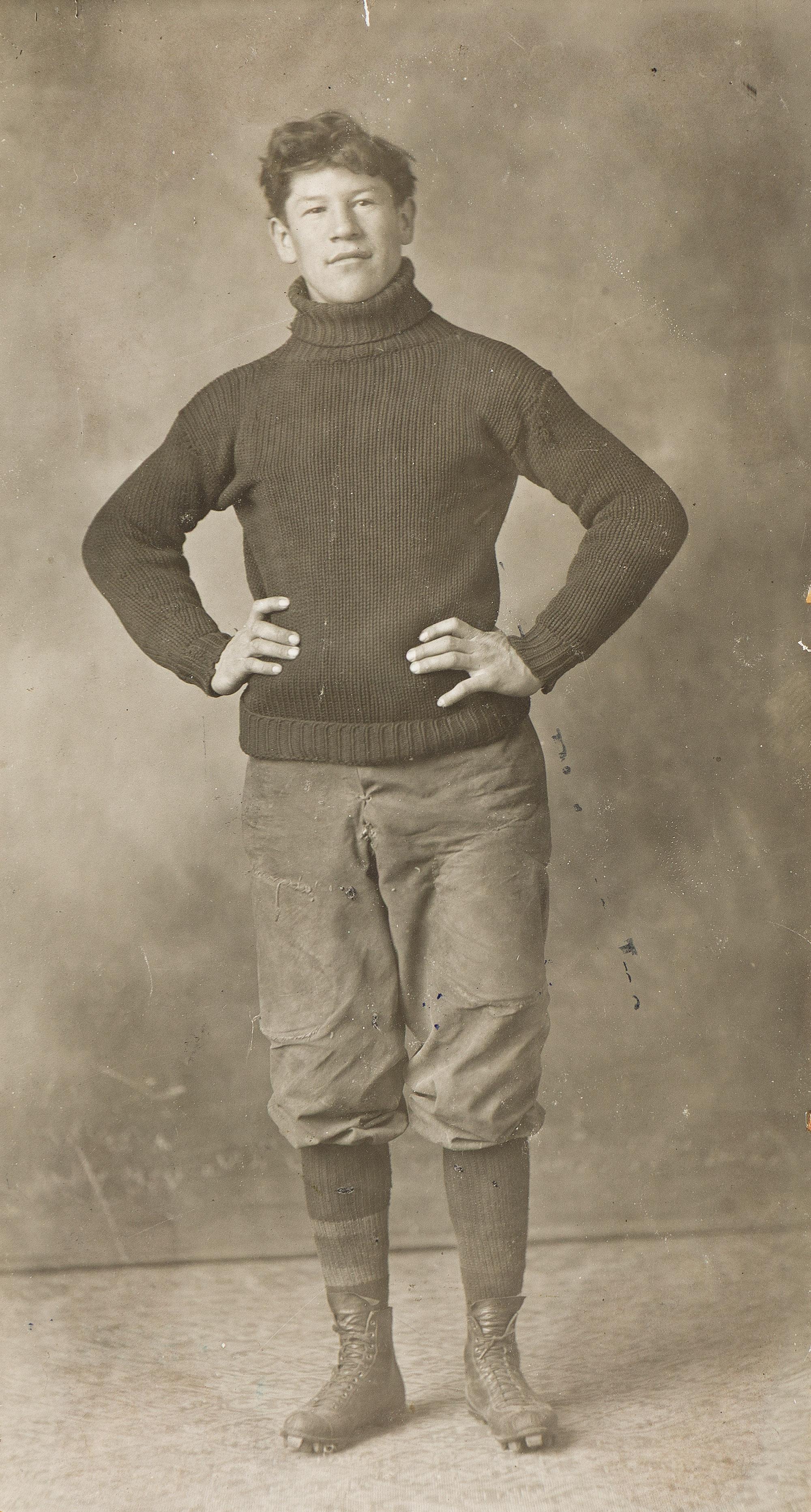
The Legacy of the Native American Athlete at the 1912 Olympics
Jim Thorpe stands as the most iconic Native American athlete of the 1912 Olympic Games in Stockholm, Sweden, where his unparalleled performance in the decathlon and pentathlon secured two gold medals. Representing the Sac and Fox Natio...
Jim Thorpe stands as the most iconic Native American athlete of the 1912 Olympic Games in Stockholm, Sweden, where his unparalleled performance in the decathlon and pentathlon secured two gold medals. Representing the Sac and Fox Nation, Thorpe’s dominance on the international stage marked a pivotal moment in sports history, challenging prevailing social perceptions of Indigenous people while navigating complex bureaucratic and political obstacles surrounding his eligibility and amateur status.
Contents
The 1912 Stockholm Games: A Global Stage
The 1912 Olympic Games, officially known as the Games of the V Olympiad, served as a turning point for modern athletics. Held in Stockholm, the event saw the participation of 28 nations and over 2,400 athletes. For the United States, the delegation included a significant number of Native American competitors, most of whom were students or alumni of the Carlisle Indian Industrial School in Pennsylvania.
At the time, the United States viewed these athletes as representatives of a specific assimilationist educational model. However, for the athletes themselves, participation was an assertion of physical prowess and individual agency. Jim Thorpe, under the tutelage of the legendary coach Glenn "Pop" Warner, arrived in Sweden already established as a collegiate football star. His performance at the Stockholm Stadium would transcend sport, becoming a permanent fixture in the annals of Olympic history.
Jim Thorpe: The Quintessential Multi-Sport Athlete
Jim Thorpe’s performance in Stockholm remains one of the most remarkable feats of physical endurance and versatility. He entered two of the most demanding events of the Games: the pentathlon and the decathlon.
The Pentathlon
The 1912 pentathlon consisted of the long jump, javelin throw, 200-meter dash, discus throw, and the 1,500-meter run. Thorpe’s dominance was near-total; he placed first in four of the five events. His victory was so decisive that he finished well ahead of his closest competitors, establishing a standard for the modern combined-event athlete.
The Decathlon
Following his pentathlon success, Thorpe competed in the decathlon, a ten-event contest spanning three days. He performed with remarkable consistency, finishing in the top four in every individual event, including the 100-meter dash, shot put, and high jump. His total score of 8,412.95 points—calculated using the scoring system of the era—remained a record for nearly two decades. His performance prompted King Gustav V of Sweden to famously remark, "Sir, you are the greatest athlete in the world," to which Thorpe reportedly replied, "Thanks, King."
Other Native American Competitors
While Jim Thorpe is the most recognized, he was not the only Native American athlete to compete in the 1912 Games. The influence of the Carlisle Indian Industrial School was profound, as many of the athletes selected for the U.S. track and field team had honed their skills within the highly structured, albeit controversial, athletic program at the school.
Notable athletes such as Lewis Tewanima (Hopi), who won a silver medal in the 10,000-meter run, demonstrated the depth of talent present within these communities. Tewanima’s success in a long-distance event highlighted the endurance capabilities that had long been part of his cultural heritage. These athletes faced the dual pressure of performing for a nation that had systematically sought to suppress their cultural identities while simultaneously trying to prove their individual excellence on the world's most visible stage.
Table: Key Performance Indicators of 1912 Medalists
| Athlete | Nation / Heritage | Event | Medal |
|---|---|---|---|
| Jim Thorpe | Sac and Fox | Pentathlon | Gold |
| Jim Thorpe | Sac and Fox | Decathlon | Gold |
| Lewis Tewanima | Hopi | 10,000m Run | Silver |
The Amateurism Controversy and Disqualification
The legacy of Jim Thorpe’s 1912 Olympic success is inextricably linked to the scandal that followed in 1913. In early 1913, reports surfaced in the press claiming that Thorpe had accepted small payments to play minor league baseball in North Carolina in 1909 and 1910.
Under the strict amateurism rules of the International Olympic Committee (IOC) at the time, accepting any payment for athletic competition was grounds for immediate disqualification. Despite the fact that many other athletes of the era engaged in similar semi-professional activities under pseudonyms or through informal arrangements, the Amateur Athletic Union (AAU) and the IOC stripped Thorpe of his medals and erased his name from the record books.
This decision was widely criticized as a discriminatory application of the rules, as the discovery of his past was driven by sensationalized reporting. It took decades of advocacy by historians, supporters, and the Thorpe family to rectify this. In 1982, the IOC finally reinstated Thorpe as a co-champion, and in 2022, after further legal and historical verification, the organization formally declared him the sole winner of the 1912 pentathlon and decathlon.
Socio-Political Context of the Era
To understand the significance of Native American participation in 1912, one must acknowledge the environment of the early 20th century. Native Americans were largely viewed through the lens of government-mandated assimilation. The Carlisle Indian Industrial School operated under the motto "Kill the Indian, Save the Man," aiming to force the abandonment of Indigenous languages, religions, and traditions.
Athletics became one of the few avenues where Indigenous talent was not only permitted but encouraged and celebrated by mainstream American society. However, this celebration was often paternalistic. The "athlete" was often commodified as a symbol of the success of the assimilationist project. Despite this, the athletes themselves often maintained strong connections to their tribal identities, using the visibility of the Olympic Games to demonstrate a level of competence that defied the derogatory stereotypes of the era.
Frequently Asked Questions
Why were Jim Thorpe's medals taken away in 1913?
Thorpe was disqualified because he had played minor league baseball for pay in 1909 and 1910. At the time, Olympic rules strictly prohibited professional athletes from competing in the Games. The Amateur Athletic Union and the IOC enforced these rules against him after his professional background became public knowledge.
Did other Native American athletes win medals in 1912?
Yes, Lewis Tewanima, a Hopi runner, won the silver medal in the 10,000-meter run. His success alongside Thorpe demonstrated the significant athletic impact of students from the Carlisle Indian Industrial School on the 1912 U.S. Olympic team.
How was Jim Thorpe's status restored by the IOC?
After years of campaigning by his family and the public, the IOC recognized the excessive nature of the 1913 disqualification. In 1982, they restored his status as a co-champion. In 2022, based on newly surfaced documentation of the rules at the time, the IOC officially restored his status as the sole gold medalist for both the pentathlon and decathlon.
What was the significance of the Carlisle Indian School to these athletes?
The school operated a highly disciplined and competitive sports program. While the institution itself was aimed at forced assimilation, its athletic teams, particularly the football and track squads, allowed Native American athletes to develop their talents in a way that eventually led to Olympic recognition.
Are the 1912 results recognized as they stand in 2026?
Yes. As of 2026, Jim Thorpe is universally recognized as the rightful gold medalist for the 1912 decathlon and pentathlon, with his records fully restored in all official Olympic archives and historical summaries.
Recommendation for Further Research
For those interested in the nuance of this history, the primary records held by the U.S. National Archives regarding the Carlisle Indian Industrial School provide essential context. Additionally, the official Olympic World Library provides digitized reports of the 1912 Stockholm Games, which detail the specific competition rules and the logistical environment in which these athletes performed. Examining these documents allows for a clearer distinction between the institutional goals of the era and the individual achievements of the athletes who transcended them.
Image Gallery