Understanding 4BB Embryo Quality: Grading, Success Rates, and Transfer Outcomes
A 4BB embryo is a high-quality blastocyst evaluated under the standard Gardner grading system during in vitro fertilization (IVF). The number 4 signifies a fully expanded blastocyst cavity, the first B indicates a good-quality inner ce...
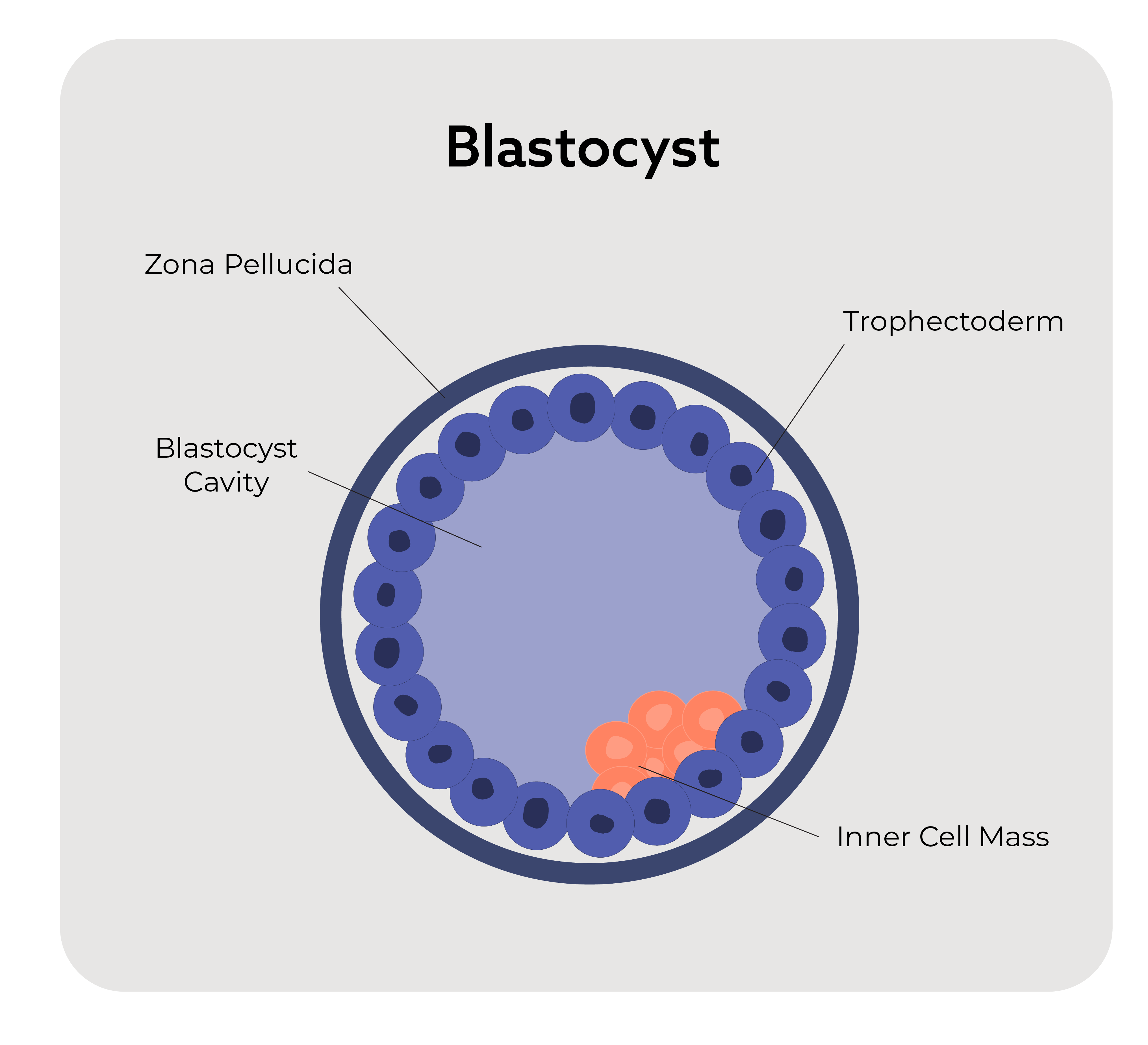
A 4BB embryo is a high-quality blastocyst evaluated under the standard Gardner grading system during in vitro fertilization (IVF). The number 4 signifies a fully expanded blastocyst cavity, the first B indicates a good-quality inner cell mass that develops into the fetus, and the second B denotes a cohesive trophectoderm layer that forms the placenta. This grade represents a healthy embryo with strong implantation potential.
Contents
Decoding the Gardner Scale: What Does 4BB Mean?
Embryo grading is a standardized visual evaluation performed by embryologists to assess an embryo's growth rate and structural integrity before transfer or cryopreservation. The most widely used framework worldwide is the Gardner Blastocyst Grading System, which evaluates embryos on Day 5, Day 6, or Day 7 of development.
To understand a 4BB rating, it helps to break down the three distinct components of the grade: the expansion number, the inner cell mass (ICM) letter grade, and the trophectoderm (TE) letter grade.
1. The Blastocyst Expansion Stage (The Number 4)
The number in the grade describes the degree of blastocyst expansion and the physical state of the zona pellucida (the protective outer shell). Stages range from 1 (an early blastocyst where the cavity is less than half the volume of the embryo) to 6 (a fully hatched blastocyst completely out of its shell).
- Stage 1: Early blastocyst; cavity fills less than 50% of the embryo.
- Stage 2: Blastocyst; cavity fills more than 50% of the embryo.
- Stage 3: Full blastocyst; cavity completely fills the embryo.
- Stage 4: Expanded blastocyst; the cavity is larger than the original embryo size, and the zona pellucida has thinned significantly.
- Stage 5: Hatching blastocyst; the trophectoderm has begun pushing through the thinned zona pellucida.
- Stage 6: Fully hatched blastocyst; the embryo is entirely free from the zona pellucida.
A stage 4 blastocyst is at an ideal point of expansion, indicating that the embryo is cellularly active, structurally robust, and ready for hatching and uterine implantation.
2. The Inner Cell Mass Quality (The First Letter 'B')
The first letter grade evaluates the Inner Cell Mass (ICM). The ICM is the condensed group of cells inside the blastocoel cavity that eventually differentiates into the fetus, yolk sac, and all embryonic tissues.
- Grade A: Prominent, tightly packed group consisting of many cells.
- Grade B: Readily observable group composed of several cells grouped loosely together.
- Grade C: Very few cells forming a sparse or poorly defined group.
A grade of 'B' for the ICM means embryologists see a clear, healthy cluster of cells capable of forming fetal tissue, even if it is not quite as densely packed as a Grade A mass.
3. The Trophectoderm Quality (The Second Letter 'B')
The second letter grade assesses the Trophectoderm Epithelium (TE). This single layer of cells coats the outer perimeter of the blastocyst and plays a critical role in invading the uterine lining, establishing placenta formation, and secreting human chorionic gonadotropin (hCG).
- Grade A: Many cells forming a continuous, tightly knit cohesive layer.
- Grade B: Several cells forming a loosely cohesive epithelial layer.
- Grade C: Very few, large, or sparse cells.
A trophectoderm grade of 'B' demonstrates that the outer cell layer possesses sufficient cell count and structural stability to successfully attach to the endometrium and initiate placenta development.
Evaluating Clinical Quality: Is a 4BB Embryo Good?
In clinical reproductive medicine, a 4BB embryo is classified as a good quality blastocyst. While an embryo graded 4AA represents the top morphological score on paper, 4BB embryos are widely considered premium transfer candidates with excellent clinical utility.
Embryo grading systems generally divide blastocysts into three operational categories:
- Top/Excellent Quality: 4AA, 5AA, 6AA, 3AA
- Good/Fair Quality: 4AB, 4BA, 4BB, 3AB, 3BA, 5BB, 6BB
- Poor/Fair-Poor Quality: 4CB, 4BC, 4CC, 3CC
Laboratory research demonstrates that while top-tier embryos (such as 4AA) yield slightly higher initial implantation metrics, good-tier embryos like 4BB consistently deliver strong live birth rates. The distinction between an 'A' and a 'B' grade often reflects minor visual variations in cell density rather than fundamental biological defects.
| Embryo Grade | Expansion Status | Inner Cell Mass (ICM) | Trophectoderm (TE) | Clinical Classification | Relative Implantation Potential |
|---|---|---|---|---|---|
| 4AA | Fully Expanded | High cell count, tightly packed | High cell count, cohesive layer | Top Quality | Excellent (Highest) |
| 4AB / 4BA | Fully Expanded | One component Grade A, one Grade B | One component Grade A, one Grade B | High Quality | Very High |
| 4BB | Fully Expanded | Moderate cell count, loosely grouped | Moderate cell count, cohesive layer | Good Quality | High / Strong |
| 3BB | Full (Unexpanded) | Moderate cell count, loosely grouped | Moderate cell count, cohesive layer | Good / Fair Quality | Moderate to High |
| 4CB / 4BC | Fully Expanded | One component Grade B, one Grade C | One component Grade B, one Grade C | Fair Quality | Moderate |
| 4CC | Fully Expanded | Very low cell count, sparse cells | Very low cell count, sparse cells | Poor Quality | Lower |
Success Rates and Implantation Metrics for 4BB Embryos
When discussing IVF success rates, it is crucial to differentiate between raw morphological grading and genetic status. The success of a 4BB embryo transfer depends primarily on whether preimplantation genetic testing for aneuploidy (PGT-A) was performed, as well as patient age and uterine receptivity.
4BB Embryo Transfer Success with PGT-A (Euploid Embryos)
Preimplantation genetic testing confirms whether an embryo has the correct number of chromosomes (46,XX or 46,XY). When a 4BB embryo is tested and confirmed to be euploid (chromosomally normal), morphological differences become secondary.
For a tested, euploid 4BB frozen embryo transfer (FET), clinical data shows:
- Clinical Pregnancy Rate: Approximately 55% to 65% per single embryo transfer.
- Live Birth Rate: Approximately 50% to 60% per single embryo transfer.
- Miscarriage Rate: Significantly reduced (typically under 10% to 12%), matching the baseline risk of chromosomally normal pregnancies.
A euploid 4BB embryo performs nearly as well as a euploid 4AA embryo because chromosomal normality is the single greatest predictor of live birth.
4BB Embryo Transfer Success Without PGT-A (Untested Embryos)
If an embryo is untested, implantation and live birth rates correlate directly with the age of the patient at the time of egg retrieval. Younger eggs have lower rates of chromosomal abnormalities (aneuploidy), resulting in higher success rates for untested 4BB blastocysts.
Average live birth rates per untested 4BB embryo transfer:
- Under Age 35: ~45% – 55%
- Ages 35–37: ~35% – 45%
- Ages 38–40: ~25% – 35%
- Ages 41–42: ~10% – 20%
- Over Age 42: < 10%
Morphology vs. Genetics: Why a 4BB Can Outperform a 4AA
A common point of confusion for IVF patients is the difference between visual appearance (morphology) and chromosomal health (genetics).
Morphology grading is a snapshot in time using an optical microscope. It measures structural beauty and growth rate, but it cannot see inside the cell nuclei to count chromosomes.
Key Clinical Insight on Embryo Genetics
Visual grading does not guarantee genetic health. A visually perfect 4AA blastocyst can be aneuploid (carrying extra or missing chromosomes), which will lead to implantation failure or early pregnancy loss. Conversely, a 4BB embryo can be completely euploid and lead to a healthy full-term pregnancy.
When selecting embryos for transfer, a confirmed euploid 4BB embryo takes priority over an untested 4AA embryo or an aneuploid 4AA embryo.
Embryologists evaluate genetics and morphology together using a hierarchy:
- Genetic Status (PGT-A Result): Euploid status always overrides visual grade.
- Day of Freezing: Day 5 blastocysts generally show slightly higher efficiency than Day 6 blastocysts, though both yield high success rates.
- Morphological Grade: Trophectoderm and ICM ratings (e.g., AA vs. BB).
Day 5 vs. Day 6 vs. Day 7 4BB Embryos
The developmental speed at which an embryo reaches the 4BB expanded blastocyst stage plays an important role in expected transfer outcomes.
Day 5 4BB Blastocysts
Embryos that reach the 4BB stage on Day 5 are developing at the standard pace. They typically demonstrate the highest implantation success rates among 4BB embryos, as their developmental clock aligns with the natural window of endometrial receptivity in fresh cycles and standard frozen cycles.
Day 6 4BB Blastocysts
It is common for embryos to take an extra 24 hours to reach full expansion and achieve a 4BB grade. Day 6 4BB embryos have identical chromosomal normal rates (euploidy rates) as Day 5 embryos when controlling for patient age.
In Frozen Embryo Transfer (FET) protocols, Day 6 euploid 4BB embryos perform almost equivalently to Day 5 euploid embryos, with live birth rates reaching approximately 45% to 55%. In fresh transfer cycles, however, Day 6 embryos perform slightly lower because the uterine lining can become advanced due to stimulation hormones. Cryopreservation and transfer in a prepared frozen cycle mitigates this issue entirely.
Day 7 4BB Blastocysts
Embryos that reach the expanded blastocyst stage on Day 7 develop more slowly. While Day 7 4BB blastocysts have lower overall implantation and live birth rates (typically around 20% to 35% even when euploid), they still represent viable opportunities for pregnancy and are safely used when faster-developing blastocysts are unavailable.
Clinical Workflow: Thawing, Transfer, and Care Protocols
Preparing for a 4BB frozen embryo transfer involves precise medical protocols designed to optimize the uterine lining (endometrium) for implantation.
Blastocyst Thaw Survival Rate
Modern IVF laboratories use vitrification, an ultra-rapid freezing technique that prevents ice crystal formation within embryonic cells. Good quality blastocysts, including 4BB embryos, have a survival rate of 95% or higher upon thawing.
Endometrial Preparation Protocols
To maximize the chances of a 4BB embryo implanting successfully, the clinical team prepares the uterus using one of two primary protocols:
- Medicated (Programmed) FET Cycle:
- Exogenous estrogen (patches, oral tablets, or injections) is administered to suppress natural ovulation and build the endometrial lining to an optimal thickness (ideally $\ge 7\text{ mm}$ or $8\text{ mm}$ with a trilaminar pattern).
- Progesterone support (vaginal suppositories or intramuscular injections) is initiated precisely 5 days (120 hours) prior to the 4BB blastocyst transfer.
- Natural or Modified Natural FET Cycle:
- The patient’s natural follicular growth and endogenous estrogen build the lining.
- An hCG trigger shot induces ovulation, and progesterone supplementation is introduced to align the endometrium precisely with the embryo’s developmental stage.
The Transfer Procedure
The transfer of a 4BB blastocyst is a brief, non-surgical outpatient procedure performed under abdominal ultrasound guidance:
- A speculum is inserted to expose the cervix, which is cleansed with liquid culture media.
- A soft, flexible inner catheter containing the 4BB embryo in a microscopic drop of fluid is passed through the cervical canal into the uterine cavity.
- The embryologist deposits the embryo approximately 1 to 1.5 cm from the top of the uterine fundus.
- The catheter is checked under a microscope immediately after removal to confirm the embryo was successfully released.
Strategies for Optimizing Transfer Outcomes with a 4BB Embryo
Patients preparing to transfer a 4BB embryo can focus on several evidence-based clinical steps to maximize implantation potential:
- Evaluate Uterine Cavity Integrity: Prior to transfer, undergo a saline infusion sonogram (SIS) or hysteroscopy to rule out polyps, submucosal fibroids, intrauterine adhesions (Asherman's syndrome), or uterine septa.
- Manage Endometrial Thickness: Ensure the uterine lining reaches an optimal thickness of at least 7 to 8 millimeters with a clear three-layer (trilaminar) appearance on ultrasound.
- Screen for Hydrosalpinx: Blocked, fluid-filled fallopian tubes (hydrosalpinx) can leak toxic fluid back into the uterine cavity, reducing implantation rates by up to 50%. Hydrosalpinx should be treated or surgically removed before transfer.
- Maintain Medication Compliance: Strictly adhere to prescribed progesterone and estrogen regimens. Stopping or missing doses during early luteal phase support can cause premature luteal breakdown and transfer failure.
- Follow Lifestyle Guidelines: Refrain from smoking, alcohol consumption, extreme heat exposure (saunas, hot tubs), and high-impact physical stress during the post-transfer two-week wait.
Frequently Asked Questions About 4BB Embryos
Can a 4BB embryo result in a healthy baby?
Yes. A 4BB embryo is a high-quality blastocyst with strong developmental potential. Millions of healthy children have been born from 4BB embryo transfers. When a 4BB embryo is chromosomally normal (euploid), its live birth rate is generally between 50% and 60%.
Is a 4BB embryo better than a 3AA or 5BB embryo?
It depends on individual clinic preferences and embryo development timing:
- Compared to a 3AA, a 4BB is further expanded (Stage 4 vs Stage 3), which some clinics prefer, though a 3AA has slightly higher internal cell counts (Grade A vs Grade B).
- Compared to a 5BB, a 4BB is fully expanded but still inside its protective shell (zona pellucida), whereas a 5BB has started hatching. Both have identical ICM and trophectoderm grades and yield comparable clinical outcomes.
What is the thawing survival rate for a 4BB frozen embryo?
Using modern vitrification technology, 4BB blastocysts have a thaw survival rate exceeding 95%. Because 4BB embryos have healthy, robust outer trophectoderm cells, they withstand the freeze-thaw process exceptionally well.
Does a 4BB embryo have a higher risk of splitting into twins?
No. Blastocyst grading does not increase the rate of fraternal twins, as single embryo transfers involve only one egg and sperm combination. Identical twin splitting (monozygotic twinning) occurs in roughly 1% to 2% of IVF transfers across all grades, slightly higher than natural conception, but a 4BB grade itself does not elevate this risk above baseline IVF standards.
Should I transfer a 4BB embryo if I also have a 4AA embryo available?
If both embryos are untested, embryologists will typically prioritize the 4AA embryo for the first transfer due to its higher visual cell density. However, if the 4BB embryo is confirmed euploid via PGT-A and the 4AA embryo is untested, the euploid 4BB embryo should be selected first, as confirmed genetic health is more predictive of success than visual grading alone.
Next Steps for Your IVF Journey
If your clinic has reported a 4BB blastocyst result, you have a viable, high-quality candidate for transfer. Discuss with your reproductive endocrinologist whether PGT-A testing suits your treatment plan, review your personalized transfer timeline (fresh vs. frozen), and ensure your uterine preparation protocol is fully optimized before proceeding with transfer day.
Image Gallery