Best Revolving Car Seats: 2026 Safety, Ergonomics, and Buyer’s Guide
The best revolving car seats combine certified crash-test protection with 180- or 360-degree rotation mechanisms, allowing parents to turn the seat toward the open vehicle door for effortless loading. Leading models like the Evenflo Go...
The best revolving car seats combine certified crash-test protection with 180- or 360-degree rotation mechanisms, allowing parents to turn the seat toward the open vehicle door for effortless loading. Leading models like the Evenflo Gold Revolve360, Nuna REVV, and Chicco Fit360 stand out by integrating secure belt-tensioning bases with extended rear-facing capabilities and high-grade safety materials.
Contents
Disclaimer: Child passenger safety requirements depend on vehicle compatibility, regional laws, and exact child measurements. Always follow the manufacturer's instruction manual and vehicle owner's manual. Consult a certified Child Passenger Safety Technician (CPST) to verify proper installation.
Understanding Revolving Car Seats: Mechanics and Ergonomic Benefits
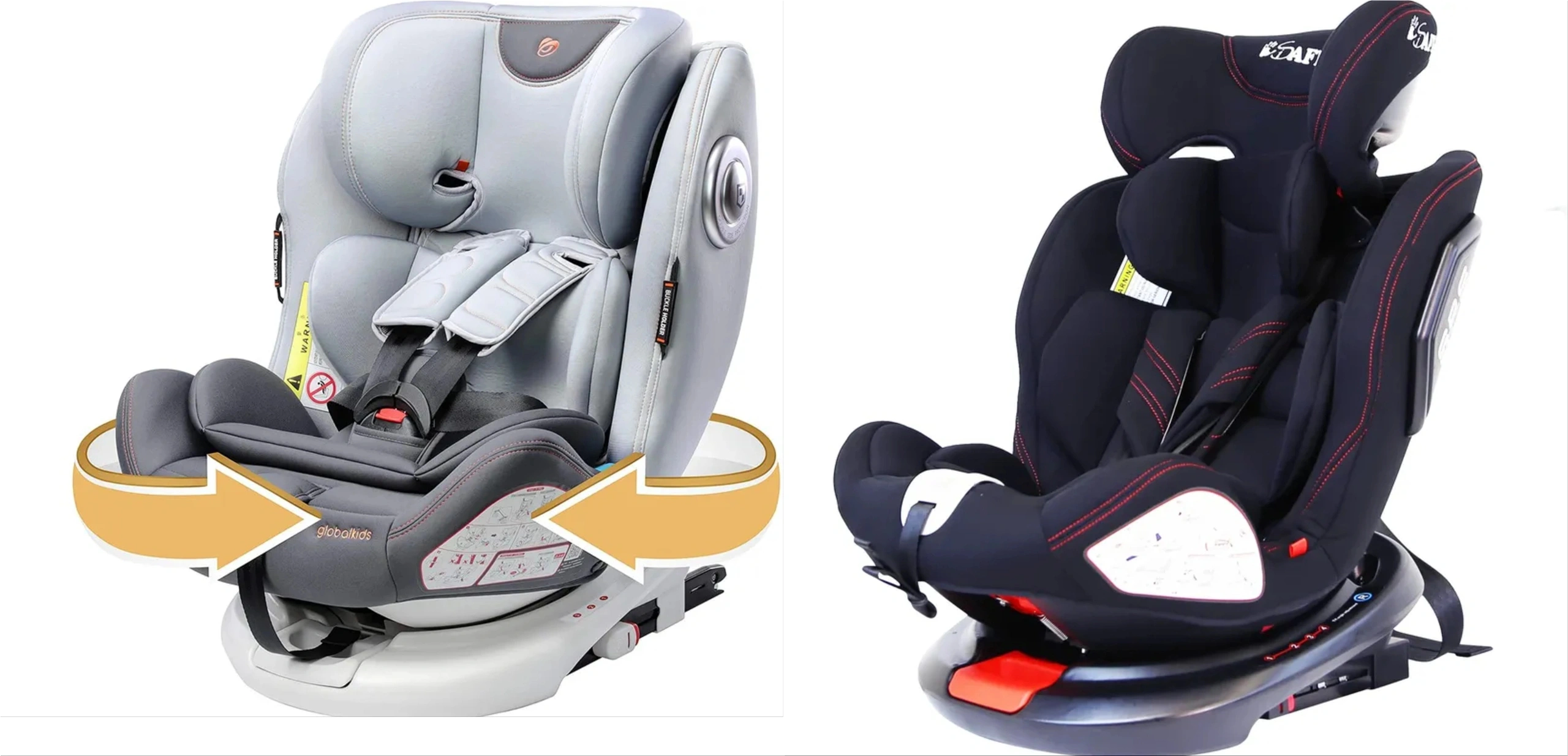
Revolving car seats—also commonly referred to as rotating or swivel car seats—have transformed child passenger safety equipment by solving a primary pain point for parents: physical strain and improper harnessing caused by awkward loading angles. Traditional convertible car seats remain fixed in either a rear-facing or forward-facing orientation. In contrast, revolving seats feature a dual-component architecture consisting of a stationary base anchored to the vehicle and a shell that swivels smoothly on a mechanical turntable.
How the Rotation Mechanism Works
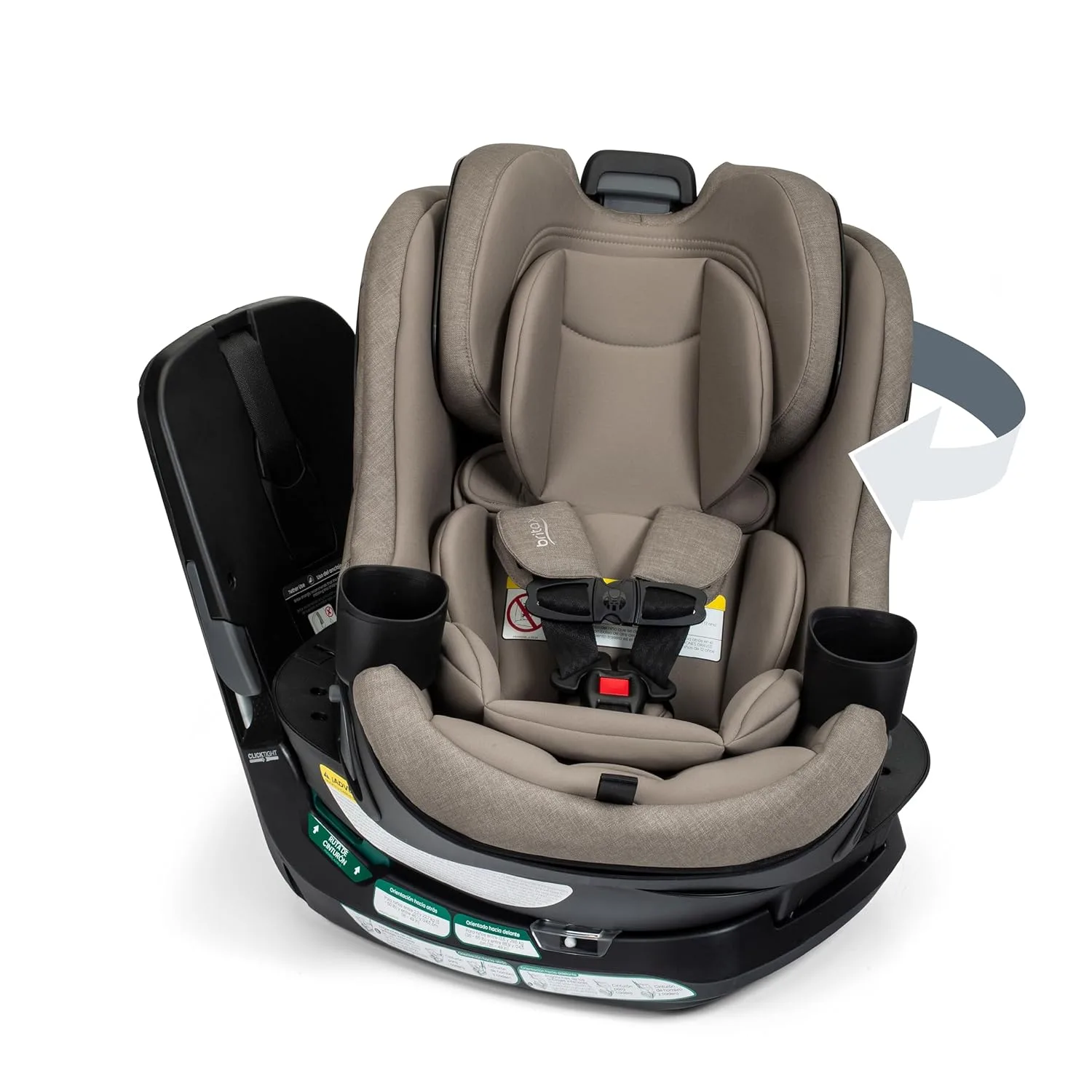
The core of a revolving car seat relies on a heavy-duty central swivel mechanism built into the base plate. Caregivers actuate the swivel using a single-handed or dual-actuator release handle. Once disengaged, the seat rotates horizontally toward the door opening.
- Loading Position: The seat faces the door at a 90-degree angle, giving the caregiver direct, head-on access to position the child, insert arms into the harness straps, and pull the center adjustment webbing straight toward them.
- Travel Position: Once the child is buckled and the harness is adjusted, the seat is rotated back into a locked, crash-tested travel position (either rear-facing or forward-facing).
- Auditory and Visual Indicators: High-quality revolving seats utilize color-coded visual indicators (green for locked, red for unlocked) and audible clicks to confirm the shell is fully engaged in a safe driving mode.
Ergonomic and Practical Advantages
Beyond convenience, revolving seats offer measurable ergonomic and safety benefits:
- Reduced Spinal Strain for Caregivers: Parents and grandparents avoid the awkward torso twisting and leaning required to buckle a child into a standard rear-facing seat, significantly reducing back and shoulder strain.
- Tighter Harness Adjustment: Buckling a child from a direct front-facing angle allows caregivers to pull tension straps evenly and check for harness slack more accurately, directly reducing improper harness use.
- Seamless Transitions: For families with physical limitations, mobility challenges, or small vehicle door openings, the side-facing entry point makes daily transportation far more accessible.
Core Safety Standards and Structural Mechanics
Prospective buyers often ask whether the added mechanical complexity of a rotating mechanism compromises structural integrity during a collision. In modern car seat engineering, revolving seats are designed to meet or exceed the exact same rigorous federal safety regulations as traditional fixed convertible seats.
Regulatory Compliance and Testing
In the United States, revolving car seats must comply with Federal Motor Vehicle Safety Standard 213 (FMVSS 213), which governs child restraint systems, as well as dynamic crash performance criteria under FMVSS 213a for side-impact protection. In Europe, rotating seats are evaluated under the UN R129 (i-Size) regulation, which mandates strict side-impact testing and requires rotation mechanisms to withstand multi-directional collision forces without unlatching.
Base Stabilization Technologies
Because a revolving seat separates the seating shell from the base mounting, manufacturers utilize specialized engineering features to prevent rotation under dynamic crash loads:
- Tensioning Lock-Off System: Systems such as Chicco’s LeverLock, Evenflo’s LockStrong, or Nuna’s True Lock leverage mechanical levers to remove all slack from the vehicle seat belt, anchoring the base securely to the car chassis.
- Top Tether Systems in Rear-Facing Modes: Unlike traditional convertible seats where the top tether is only used forward-facing, several revolving models (such as the Evenflo Revolve360 series) require the top tether to be installed in both rear-facing and forward-facing configurations. This tether reduces forward rotation and shell pitch during an impact.
- Anti-Rebound Bars and Load Legs: Premium models incorporate structural anti-rebound bars at the vehicle seatback contact point or extended load legs that rest against the vehicle floor. These components absorb crash energy and minimize rotational movement during rear-end or frontal impacts.
Comprehensive Evaluation of Top Revolving Car Seats
When selecting a revolving car seat, performance varies across rotation capabilities, height/weight limits, installation difficulty, and vehicle footprint. Below is a detailed breakdown of the leading models evaluated across the industry.
| Model | Rotation Range | Rear-Facing Limit | Forward-Facing Limit | Booster Mode Support |
|---|---|---|---|---|
| Evenflo Revolve360 | 360 Degrees | 40 lbs / 40 in | 65 lbs / 49 in | Up to 120 lbs |
| Revolve360 Extend | 360 Degrees | 50 lbs / 48 in | 65 lbs / 49 in | Up to 120 lbs |
| Nuna REVV | 360 Degrees | 40 lbs / 43 in | 40 lbs / 43 in | No |
| Chicco Fit360 ClearMax | 360 Degrees | 40 lbs / 43 in | 65 lbs / 49 in | No |
| Cybex Sirona S | 360 Degrees | 50 lbs / 49 in | 65 lbs / 49 in | No |
| Graco Turn2Me | Rear-Facing Only | 40 lbs / 40 in | 65 lbs / 49 in | Up to 100 lbs |
1. Evenflo Gold Revolve360 & Revolve360 Extend
The Evenflo Gold Revolve360 series is one of the most versatile revolving platforms on the market due to its true 360-degree rotation across multiple stages of growth.
- Rotation Mechanics: Swivels smoothly with one hand in both rear-facing and forward-facing modes without requiring base re-installation.
- Weight and Growth Limits: The standard Revolve360 supports rear-facing up to 40 lbs, forward-facing up to 65 lbs, and converts into a high-back belt-positioning booster up to 120 lbs. The Revolve360 Extend elevates rear-facing safety by allowing extended use up to 50 lbs and 48 inches.
- Installation: Uses the LockStrong belt-tensioning system. The base installs once into the vehicle using the seat belt and top tether; the shell can remain attached during adjustments.
- Considerations: Has a large front-to-back footprint in recline positions, which may require moving driver or front passenger seats forward in compact vehicles.
2. Nuna REVV
The Nuna REVV emphasizes ultra-premium fabrics, steel-reinforced structural components, and streamlined cabin aesthetics.
- Rotation Mechanics: Delivers a 360-degree rotation executed via ambidextrous side buttons located near the base lip.
- Weight and Growth Limits: Rear-facing from 4 lbs to 40 lbs, and forward-facing from 30 lbs to 40 lbs (maximum height of 43 inches). It does not convert into a booster seat.
- Installation: Features Nuna’s True Lock™ ISOFIX/LATCH rigid system and seat belt lock-off tensioner, making it one of the easiest bases to install correctly.
- Considerations: The 40-lb overall weight limit means taller or heavier children will outgrow this seat earlier than competing options, requiring a transition to a dedicated forward-facing harness seat.
3. Chicco Fit360 ClearMax Rotating Convertible
Chicco entered the revolving market with a focus on intuitive mechanical feedback and robust installation security.
- Rotation Mechanics: Operates on a 360-degree rotation platform with a top-mounted rotation handle accessible from either side of the vehicle door.
- Weight and Growth Limits: Accommodates rear-facing from 4 lbs to 40 lbs and forward-facing from 25 lbs to 65 lbs.
- Installation: Incorporates the LeverLock™ tensioning system. The vehicle seat belt routes through the base, and a heavy-duty mechanical lever clamps down, eliminating belt slack with minimal physical force.
- Considerations: The seat shell separates from the base during installation to ensure visual confirmation of the belt routing pathway, which requires a multi-step setup initial process.
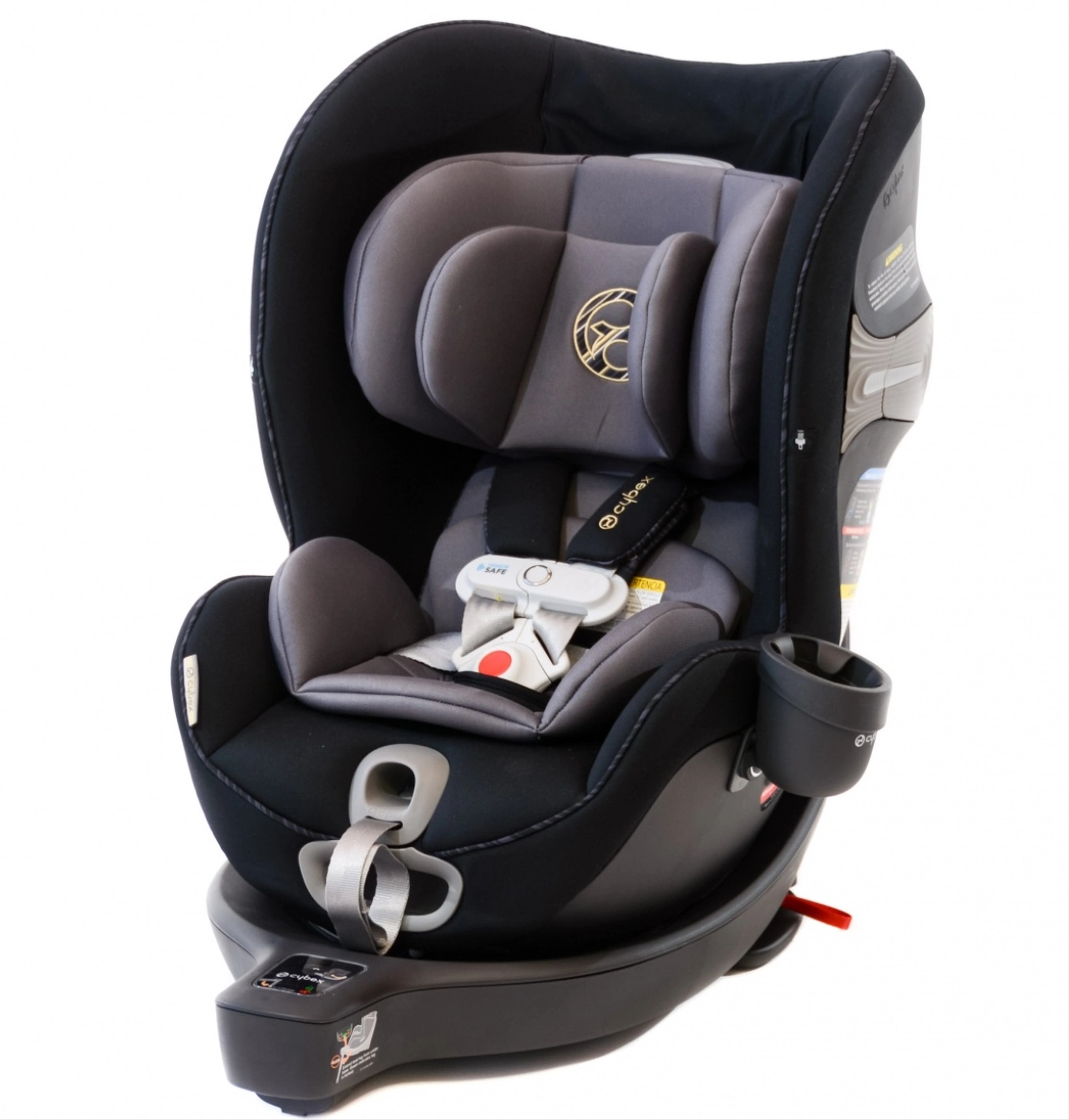
4. Cybex Sirona S with SensorSafe
The Cybex Sirona S is engineered with advanced technological safety features, focusing heavily on side-impact protection and child monitoring.
- Rotation Mechanics: Features a 360-degree rotating seat design with an integrated Easy-Lock bar system.
- Safety Features: Includes an integrated load leg that extends from the base to the vehicle floor, transferring crash energy away from the child. It also integrates SensorSafe™ technology inside the harness chest clip, sending real-time Bluetooth alerts to a smartphone if the child unbuckles, becomes too warm, or is left unattended.
- Weight Limits: Rear-facing up to 50 lbs and forward-facing up to 65 lbs.
- Considerations: The load leg cannot be used in all vehicle seating positions (e.g., over hollow under-floor storage compartments), so vehicle manual verification is critical.
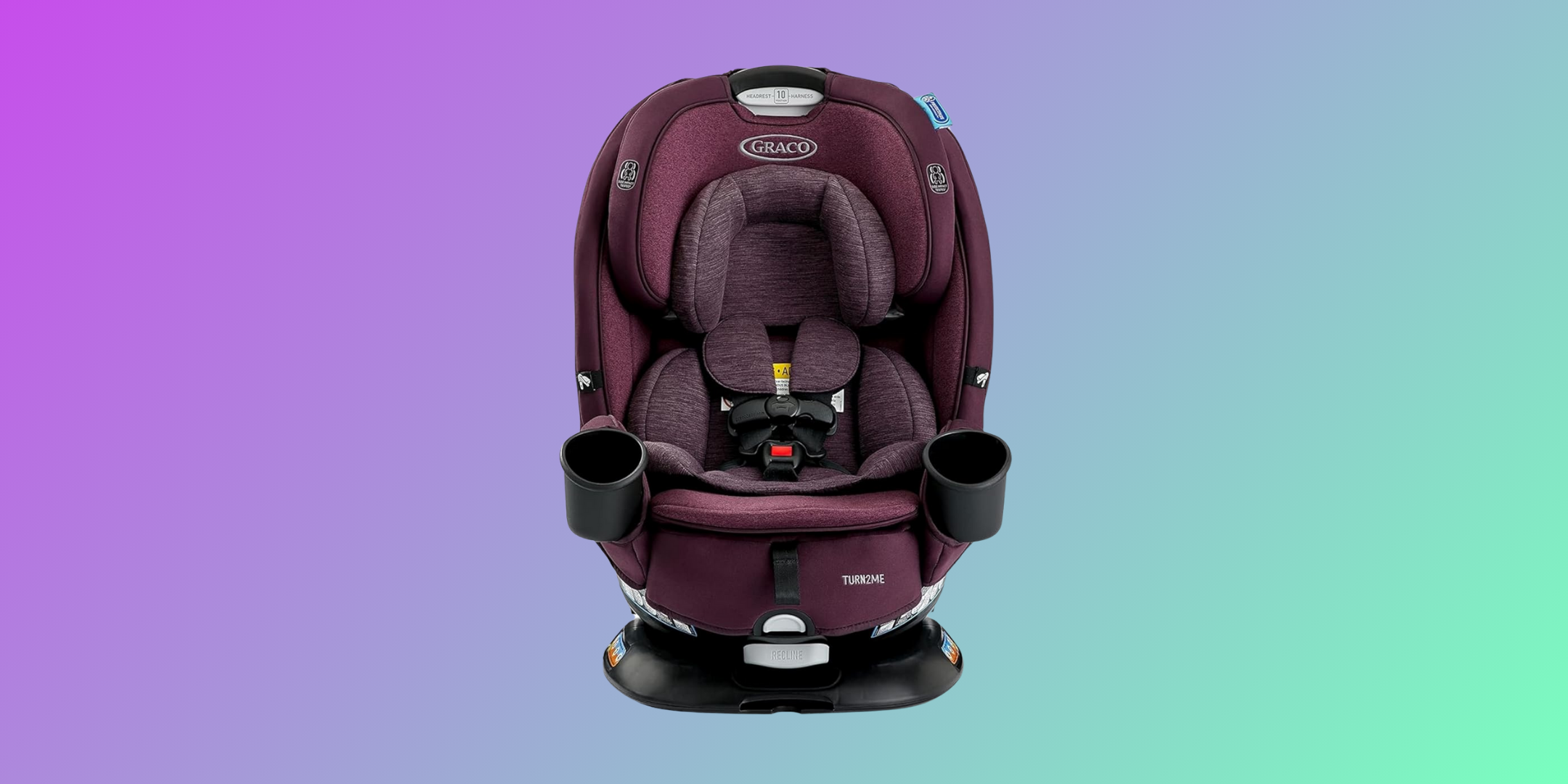
5. Graco Turn2Me 3-in-1 Rotating Car Seat
The Graco Turn2Me offers an accessible entry point to rotating technology, prioritizing rear-facing convenience.
- Rotation Mechanics: Rotates 180 degrees only when installed rear-facing. Once transformed into forward-facing mode, the seat locks into a permanent forward orientation and no longer swivels.
- Growth Capability: Functions as a 3-in-1 seat: rear-facing (4–40 lbs), forward-facing harness (22–65 lbs), and high-back booster (40–100 lbs).
- Installation: Uses Graco’s SnugLock® belt-tensioning technology for secure installation via vehicle seat belt or LATCH.
- Considerations: Parents seeking rotation in forward-facing mode must look to full 360-degree platforms, as the Turn2Me limits swivel operation strictly to the rear-facing stage.
Critical Selection Factors for Buyers
Choosing the correct revolving car seat requires balancing vehicle architecture, physical space constraints, child development metrics, and budget.
- Select Revolving Car Seat Type
- 360-Degree Dual Rotation
- Extended RF (Up to 50 lbs)
- Convertible to Booster Mode
- 180-Degree (Rear-Facing)
- Budget Friendly Design
- 3-in-1 System Design
- 360-Degree Dual Rotation
1. Vehicle Cabin Clearance and Footprint
Revolving car seats feature wider bases and deeper recline profiles than many standard convertible seats. Measure your vehicle’s back seat prior to purchasing:
- Front-to-Back Depth: Ensure the distance between the rear seat back cushion and the back of the front passenger seat provides adequate clearance when the revolving seat is in its fully reclined rear-facing mode.
- Door Opening Angle: Vehicles with door openings that do not swing wide (under 60 degrees) or have curved door frames can restrict the ease of turning the seat sideways.
2. Base Weight Limits: LATCH vs. Seat Belt Installation
Lower Anchors and Tethers for Children (LATCH) systems carry strict federal weight limits. In almost all car seat applications, the combined weight of the seat and the child cannot exceed 65 lbs when using lower LATCH anchors.
- Because revolving seats feature heavy bases (often weighing 28–35 lbs on their own), the lower LATCH anchor limit for the child is typically reached around 30 to 35 lbs child weight.
- Recommendation: Install the revolving car seat base using the vehicle seat belt and top tether from day one. Seat belt installation provides equal structural safety, avoids LATCH weight limits, and utilizes the advanced belt-tensioning lock-offs built into modern revolving bases.
3. Harness System and Adjustability
Look for seats with a no-rethread harness system. This allows caregivers to adjust the shoulder strap height and headrest simultaneously by pulling a single handle at the top of the seat. Ensure the harness offers smooth tightening mechanics and crisp chest clip engagement.
4. Fabric Maintenance and Mechanical Hygiene
Children frequently spill food, liquids, and crumbs in the vehicle. In a revolving seat, debris that falls down the harness slots can enter the internal gear tracks of the turntable base.
- Select seats with removable, machine-washable fabrics.
- Choose designs featuring sealed gear housings or protected rotation tracks to prevent crumbs from binding the swivel mechanism over time.
Installation Best Practices and Safety Warnings
Proper installation is paramount to car seat performance. Misuse significantly reduces a seat's protective capability during a crash.
- Position Base on Vehicle Cushion
- Thread & Lock Vehicle Seat Belt
- Engage Mechanical Lock-Off Lever
- Secure Top Tether to Anchor Point
- Verify < 1 Inch Movement at Base
- Lock Shell into Driving Position
Essential Safety Rules
- Never Drive in the Loading Position: It is extremely dangerous to operate a vehicle while the car seat is rotated sideways. The side-facing orientation is solely designed for stationary loading and unloading. The seat must be fully locked into rear-facing or forward-facing travel orientation before the engine starts.
- Verify 1-Inch Movement Limit: Grasp the car seat base at the belt path. The base should not move more than 1 inch side-to-side or front-to-back. If it moves more than 1 inch, open the tensioning lock-off, pull additional slack out of the vehicle belt, and re-clamp the lever.
- Always Anchor the Top Tether: If the manufacturer manual specifies top tether usage in rear-facing or forward-facing modes (e.g., Evenflo Revolve360), locate the designated tether anchor on the back of the vehicle seat, ceiling, or floor. Tighten the tether strap until taut.
For national child safety standards and child passenger seat check locator tools, consult the National Highway Traffic Safety Administration (NHTSA). For medical guidelines regarding extended rear-facing travel, refer to the American Academy of Pediatrics (AAP).
Frequently Asked Questions
Are revolving car seats as safe as fixed convertible car seats?
Yes. Revolving car seats must pass the exact same federal motor vehicle safety standards (FMVSS 213 in the U.S., UN R129 in Europe) as traditional fixed car seats. When correctly locked into a forward-facing or rear-facing driving position, their structural integrity and crash performance are fully certified.
Can you rotate the car seat while the vehicle is driving?
No. You must never rotate the seat while the vehicle is in motion. The rotation feature is engineered exclusively for stationary loading and unloading. Driving with a child in a side-facing position exposes them to severe injury risks in a collision because the seat's impact protection is calibrated only for front-facing or rear-facing travel positions.
Do revolving car seats fit in small or compact cars?
Revolving car seats can fit in compact sedans and small hatchbacks, but careful measurements are required. Because revolving seats have a fixed rotational axis and deep recline angles, they may require sliding the driver or front passenger seat forward. Measure your vehicle's rear legroom before purchasing, or select compact models such as the Nuna REVV or Chicco Fit360.
Why do some revolving seats only rotate in rear-facing mode?
Certain manufacturers, such as Graco with the Turn2Me, design their rotation mechanism specifically for the rear-facing stage. This limits mechanical complexity, reduces product weight, and keeps manufacturing costs lower while addressing the stage where loading a child sideways provides the greatest physical benefit to caregivers.
What should I do if crumbs get into the rotation track?
If food debris or liquids spill into the rotating base mechanism, vacuum the base thoroughly using a narrow crevice attachment. Wipe down exposed surfaces with a damp cloth and mild soap. Never spray liquid cleaners, solvents, or lubricants (like WD-40) into the mechanical turntable tracks, as chemical agents can degrade the plastic compounds or attract more dust and dirt.
Final Recommendations and Next Steps
Revolving car seats provide a substantial ergonomic upgrade for parents while upholding rigorous safety standards. To ensure you make the right investment for your vehicle and child:
- Check Height and Weight Growth Thresholds: If your priority is keeping your child rear-facing as long as possible, select a seat with a 50 lb rear-facing limit such as the Evenflo Revolve360 Extend or Cybex Sirona S. If you want a luxury compact footprint, consider the Nuna REVV.
- Confirm Vehicle Seat Belt Paths: Test or measure your vehicle's seating back depth to ensure your front-row seating capacity remains comfortable after installing the base.
- Schedule a Professional CPST Inspection: Once installed, take your vehicle to a certified Child Passenger Safety Technician (CPST) through local public health departments or fire stations to verify that the seat belt tensioning, tilt angle indicator, and harness fit meet all manufacturer instructions.
Image Gallery