Power On Self Test Card and Financial Compliance: Securing Hardware Integrity in 2026
A Power On Self Test (POST) card is a diagnostic hardware tool used to identify system failures during the boot process by displaying status codes from the motherboard. In the context of financial compliance, these cards are essential...
A Power On Self Test (POST) card is a diagnostic hardware tool used to identify system failures during the boot process by displaying status codes from the motherboard. In the context of financial compliance, these cards are essential for maintaining "Critical Financial Infrastructure" (CFI). They ensure operational resilience, physical security, and rapid disaster recovery, directly supporting mandates like PCI-DSS 4.0, DORA, and Sarbanes-Oxley hardware integrity requirements.
Contents
The Role of POST Cards in Modern Financial Infrastructure
As we navigate 2026, the financial sector’s reliance on high-availability hardware has never been higher. From edge computing nodes in high-frequency trading (HFT) to localized servers in retail banking branches, the underlying hardware must be beyond reproach. A POST card, often referred to as a "debug card," serves as the first line of defense when a system fails to initialize.
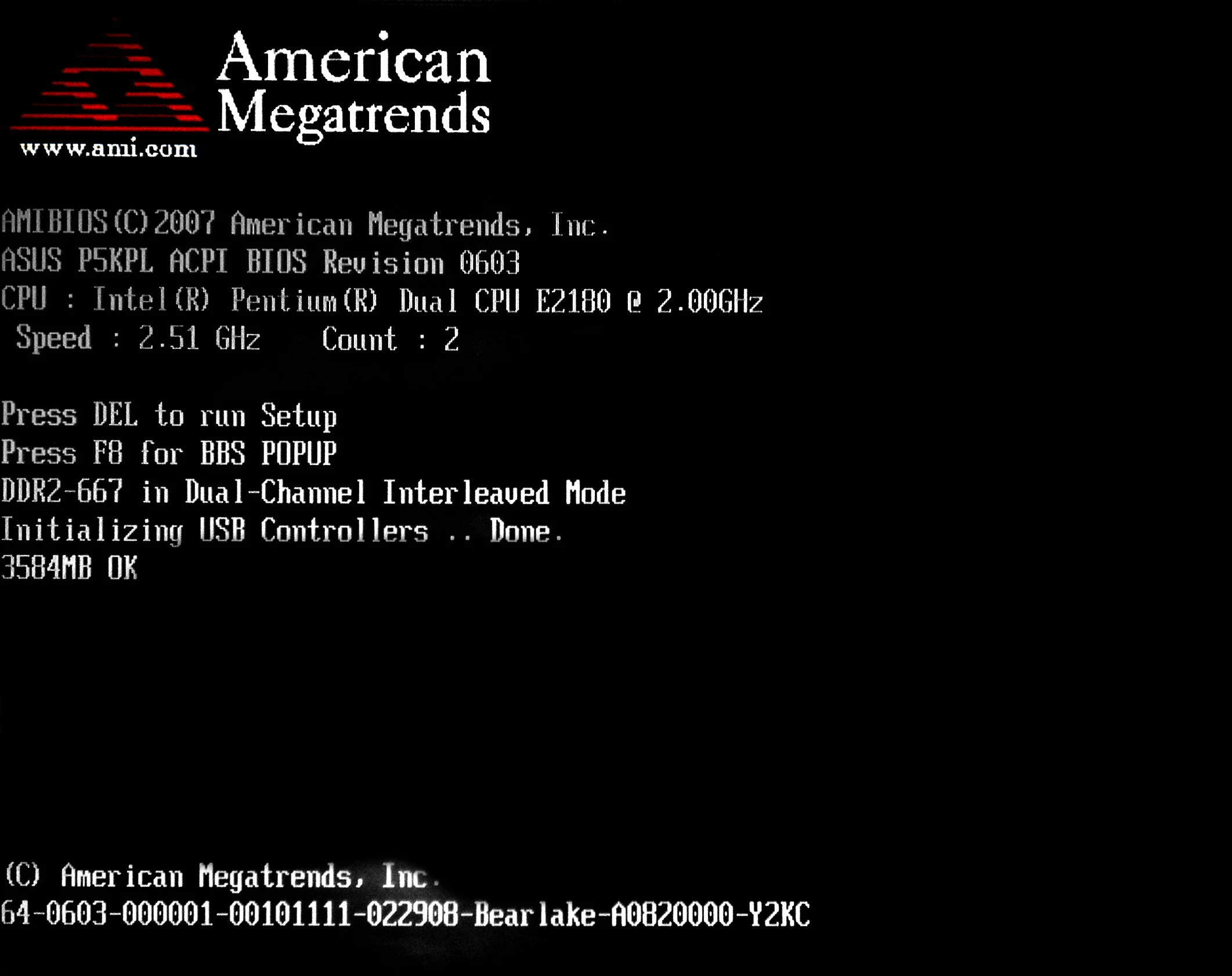
When a computer or server is powered on, the BIOS (Basic Input/Output System) or UEFI (Unified Extensible Firmware Interface) performs a series of diagnostic tests. This process checks the CPU, memory, chipset, and peripheral controllers. If a component is faulty, the boot process halts. In a standard consumer machine, this might result in a blank screen. In a regulated financial environment, this "black box" failure is unacceptable.
The POST card interfaces with the system—typically via PCIe, M.2, or LPC slots—and captures the hex codes sent to I/O Port 80h. These codes tell the technician exactly where the initialization failed. In 2026, advanced POST cards have evolved to include OLED displays that provide full-text descriptions of errors, remote logging capabilities over encrypted management networks, and even the ability to verify the digital signature of the firmware being executed.
Bridging Hardware Diagnostics and Regulatory Frameworks
Financial compliance is no longer strictly about software and data encryption. Modern regulations recognize that if the physical layer is compromised or unavailable, the digital safeguards are irrelevant.
PCI-DSS 4.0 and Physical Integrity
The Payment Card Industry Data Security Standard (PCI-DSS) version 4.0 places significant emphasis on the security of the environment that processes cardholder data. Requirement 9 focuses on physical security, while Requirement 12 mandates the maintenance of information security policies. POST cards assist in compliance by providing a verifiable method for troubleshooting hardware without compromising the machine’s internal storage. When a server fails, a technician can use a POST card to diagnose a RAM failure without needing to boot into an OS or access sensitive data drives, thereby maintaining the "least privilege" access model required by PCI standards.
DORA (Digital Operational Resilience Act)
In 2026, the Digital Operational Resilience Act (DORA) has fully matured as a standard for the European financial entity landscape. DORA requires firms to ensure they can withstand, respond to, and recover from all types of ICT-related disruptions. POST cards are a critical component of a firm’s ICT Business Continuity Policy. By reducing the "Mean Time to Repair" (MTTR), financial institutions can meet the strict uptime requirements dictated by DORA. A technician equipped with the correct diagnostic hardware can identify a failing motherboard or a faulty processor in minutes rather than hours, ensuring that critical financial services remain online.
Sarbanes-Oxley (SOX) Section 404
SOX compliance requires internal controls for financial reporting. While often viewed as an accounting regulation, it extends to the reliability of the systems generating those reports. If a server housing the general ledger fails to boot due to a hardware glitch, the delay in reporting can lead to compliance violations. POST cards provide the technical evidence needed for "root cause analysis" (RCA) reports, which are often required by auditors to prove that a system failure was a genuine hardware malfunction rather than a deliberate attempt to obstruct data access or hide a security breach.
Ensuring Physical Integrity and Anti-Tampering
One of the most significant risks in financial hardware security is the "Evil Maid" attack or the insertion of unauthorized hardware implants. In 2026, advanced POST diagnostics are used to verify the boot sequence’s integrity.
A standardized boot sequence in a secure financial environment should always produce the same series of POST codes in a predictable order. Security-conscious IT departments use POST cards to monitor for deviations. If a system suddenly pauses at a code that suggests an external device is attempting to hijack the PCI bus, or if the initialization sequence skips a memory training step, it could indicate that a hardware-level implant or a rootkit has been installed.
Furthermore, POST cards assist in Supply Chain Risk Management. When new server hardware is received from a vendor, financial institutions perform a "Gold Image" boot test. By recording the POST sequence of a known-good configuration, auditors can verify that subsequent shipments of the same hardware model behave identically at the chip level, ensuring no unauthorized modifications were made during transit.
Technical Specifications: Choosing POST Cards for Compliance
Not all diagnostic cards are created equal. For a financial institution to use these tools effectively within a compliance framework, they must meet certain technical criteria.
| Feature | Legacy POST Card | Compliance-Grade POST Card (2026) |
|---|---|---|
| Interface | PCI / ISA | PCIe x1/x4, M.2 (NVMe), LPC |
| Display | 2-Digit Hexadecimal | Multi-line OLED / Remote Web GUI |
| Logging | None (Visual only) | Non-volatile onboard memory / SIEM integration |
| Security | None | Hardware-encrypted management port |
| Compatibility | Legacy BIOS | UEFI 2.x+, Secure Boot, TPM-aware |
| Power Monitoring | None | Real-time voltage and thermal rail monitoring |
Compliance-grade cards in 2026 prioritize traceability. When a diagnostic event occurs, the card should log the error code, the timestamp, and the hardware ID. This log can then be exported to a Security Information and Event Management (SIEM) system. This creates a permanent record of hardware health, which is invaluable during a regulatory audit or a post-mortem investigation after a system crash.
Implementing a Hardware Audit Trail with POST Diagnostics
To satisfy modern auditors, "the server was broken" is no longer a sufficient explanation for downtime. Financial institutions must provide granular data. Integrating POST diagnostics into the broader audit trail involves several key steps:
- Standardization of Error Mapping: Financial IT teams must maintain a database of BIOS/UEFI error codes specific to their server fleet (e.g., Dell, HP, or custom-built HFT rigs). A POST code "0xAF" on one board might mean something entirely different on another.
- Chain of Custody: When a POST card is used, the technician’s ID and the reason for the intervention must be logged. This ensures that the use of a diagnostic tool—which involves physical access to the server's internals—is fully documented.
- Automated Reporting: Modern data centers utilize IPMI (Intelligent Platform Management Interface) to monitor servers. However, when the BMC (Baseboard Management Controller) fails, it cannot report its own death. An external POST card or a dedicated diagnostic module provides the "out-of-band" data necessary to complete the reporting loop.
By treating hardware diagnostics as a formal part of the security stack, firms move from a reactive "fix it when it breaks" mentality to a proactive "verify every state change" posture. This is a core tenet of Zero Trust Architecture at the hardware level.
Common Challenges in Financial Hardware Troubleshooting
Despite their utility, POST cards are not a panacea. The financial sector often struggles with a mix of cutting-edge technology and legacy systems that are too critical to decommission.
Legacy Hardware Constraints
Many core banking systems still run on hardware that predates modern PCIe standards. Troubleshooting these requires legacy-compatible POST cards that can interface with older buses. Compliance officers must ensure that these legacy diagnostic tools do not introduce their own vulnerabilities, as older diagnostic ports were rarely designed with security in mind.
UEFI Secure Boot Conflicts
Modern Secure Boot protocols are designed to prevent the execution of unauthorized code. In some instances, a POST card might be flagged as an unauthorized device if it attempts to interact too deeply with the system bus. Financial IT departments must configure their UEFI firmware to allow "Authorized Diagnostic Tools," ensuring that security measures do not accidentally hinder the ability to troubleshoot and maintain the system.
Training and Expertise
The data provided by a POST card is only as good as the technician interpreting it. In 2026, there is a growing gap between high-level software engineers and low-level hardware technicians. For financial institutions, maintaining a staff that understands the nuances of hexadecimal status codes and chipset initialization is a prerequisite for maintaining operational resilience under DORA and other frameworks.
Best Practices for Financial IT Technicians
To maximize the value of POST diagnostics while remaining compliant, organizations should adopt the following best practices:
- Maintain a "Clean Room" Diagnostic Kit: Diagnostic cards should be stored in anti-static, secure environments and should be periodically checked for malware or unauthorized firmware modifications.
- Encrypted Log Transmission: If using a POST card with network capabilities, ensure that all diagnostic data is transmitted over a dedicated, encrypted VLAN that is separate from the production data traffic.
- Integration with Disaster Recovery (DR) Plans: The use of POST cards should be explicitly written into the DR manual. Technicians should have pre-printed guides for the most common error codes associated with critical systems to expedite the recovery process.
- Physical Port Security: When a diagnostic card is not in use, internal diagnostic ports should be physically blocked or disabled in the BIOS/UEFI to prevent an attacker from using a POST card or similar device to extract low-level system information.
Conclusion and Next Actions
The intersection of hardware diagnostics and financial compliance is a critical area of focus for 2026. As regulations like DORA and PCI-DSS 4.0 demand higher levels of transparency and resilience, tools like the POST card evolve from simple technician's aids to essential components of the compliance and security stack.
Financial institutions should immediately audit their current hardware diagnostic capabilities. The transition from reactive repair to compliant, documented hardware lifecycle management requires investment in high-grade diagnostic tools and the training of personnel to interpret low-level system data. By ensuring that every boot cycle is verifiable and every failure is documented with technical precision, firms can safeguard their infrastructure against both accidental downtime and intentional tampering.
Recommended Next Steps:
- Inventory Check: Identify the diagnostic capabilities of your current server fleet. Determine if they rely on internal BMCs or if they have accessible ports for external POST cards.
- Policy Update: Integrate hardware-level diagnostic logging into your System Maintenance and Incident Response policies.
- Vendor Evaluation: Reach out to hardware vendors to ensure your next generation of servers supports advanced PCIe-based diagnostic reporting that is compatible with your SIEM.
FAQ
Does a POST card store sensitive financial data? No, a standard POST card does not have access to the operating system or the data stored on hard drives. It only reads status codes generated by the BIOS/UEFI during the initial hardware check. However, in 2026, it is important to use cards from trusted vendors to ensure no "spyware" firmware is present on the card itself.
Is using a POST card mandatory for PCI-DSS compliance? It is not explicitly named in the standard, but it is a "best practice" tool for meeting Requirement 9 (Physical Security) and Requirement 12 (Maintenance). It provides the technical evidence needed to prove hardware integrity and uptime, which are foundational to the overall compliance posture.
Can a POST card detect BIOS-level malware? Indirectly, yes. If a BIOS has been modified by a rootkit, the boot sequence may hang or skip certain steps (like TPM initialization). A POST card will show a code that deviates from the "Gold Image" sequence, alerting a technician that the hardware state has changed unexpectedly.
What is the difference between a POST card and a loopback plug? A POST card diagnoses the internal health of the motherboard and CPU during boot. A loopback plug is used to test the external ports (like Ethernet or Serial ports) to ensure they are sending and receiving data correctly. Both are part of a complete financial hardware diagnostic kit.
Image Gallery