Navigating the Shrine of Remembrance: History, Architecture, and Visitor Guide
The Shrine of Remembrance stands as Melbourne's and Victoria's most significant war memorial, honoring all Australians who have served in times of war. Located at Birdwood Avenue in Melbourne, Victoria, this iconic landmark blends clas...
The Shrine of Remembrance stands as Melbourne's and Victoria's most significant war memorial, honoring all Australians who have served in times of war. Located at Birdwood Avenue in Melbourne, Victoria, this iconic landmark blends classical architecture with deep historical reverence, serving as a solemn site for education, reflection, and national remembrance ceremonies.
Contents
Understanding the Historical Significance of the Shrine
The conceptualization of a permanent war memorial for Victorians began almost immediately after the cessation of hostilities in 1918. Designed by architects and World War I veterans Phillip Hudson and James Wardrop, the monument was conceived not merely as a decorative structure, but as a sacred space capable of holding thousands of visitors while maintaining an atmosphere of profound quietude.
Construction commenced in the late 1920s, and the site was officially dedicated on November 11, 1934. The primary motivation was to provide a tangible focus for grief and remembrance for families who had no graves to visit, as their loved ones were buried overseas in Gallipoli, the Western Front, the Middle East, and other global theaters. Over subsequent decades, the scope of the Shrine expanded to honor service personnel from World War II, the Vietnam War, Korea, and subsequent international peacekeeping and conflict missions up to the modern era.
Architectural Masterpieces and Classical Design Elements
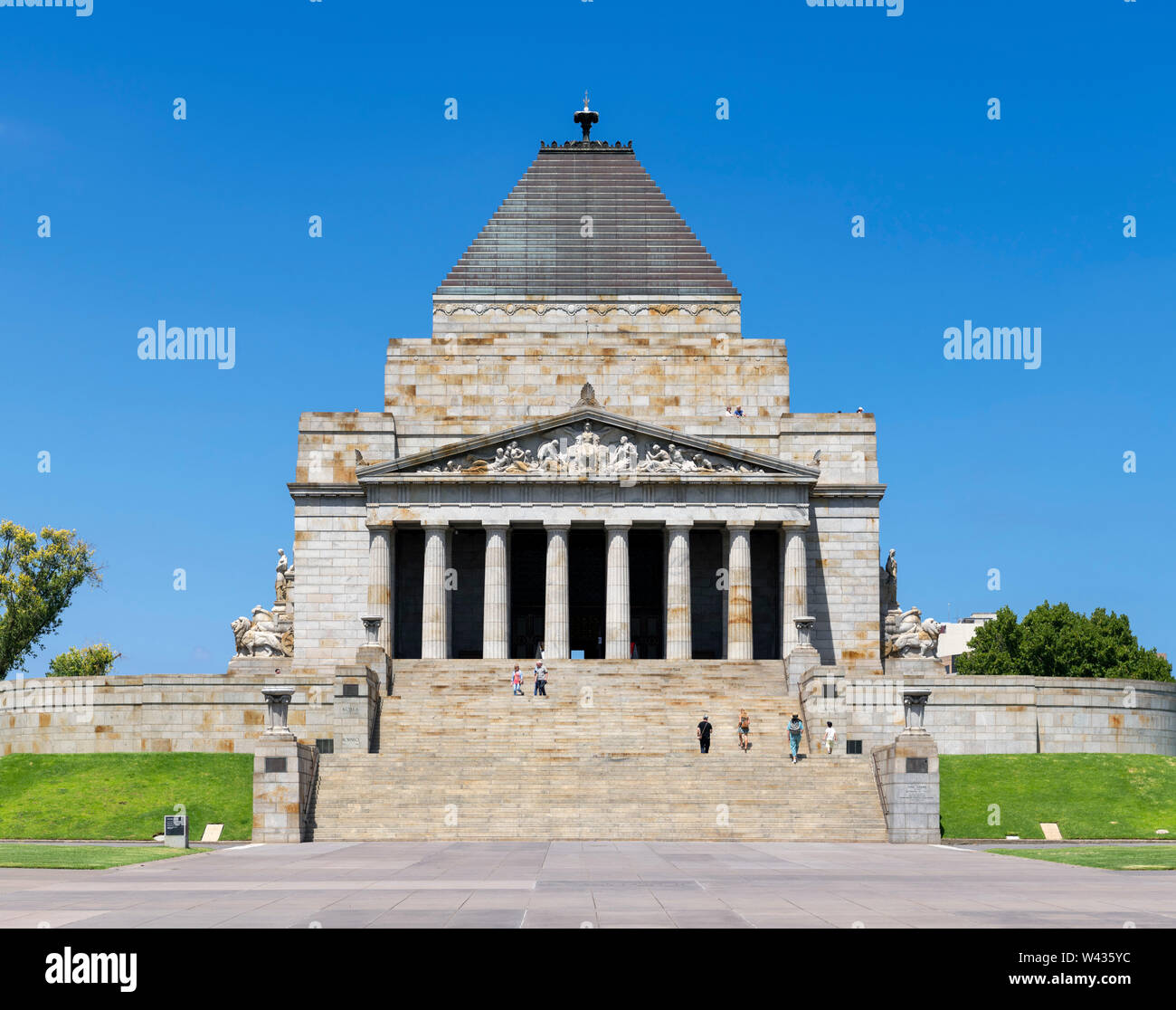
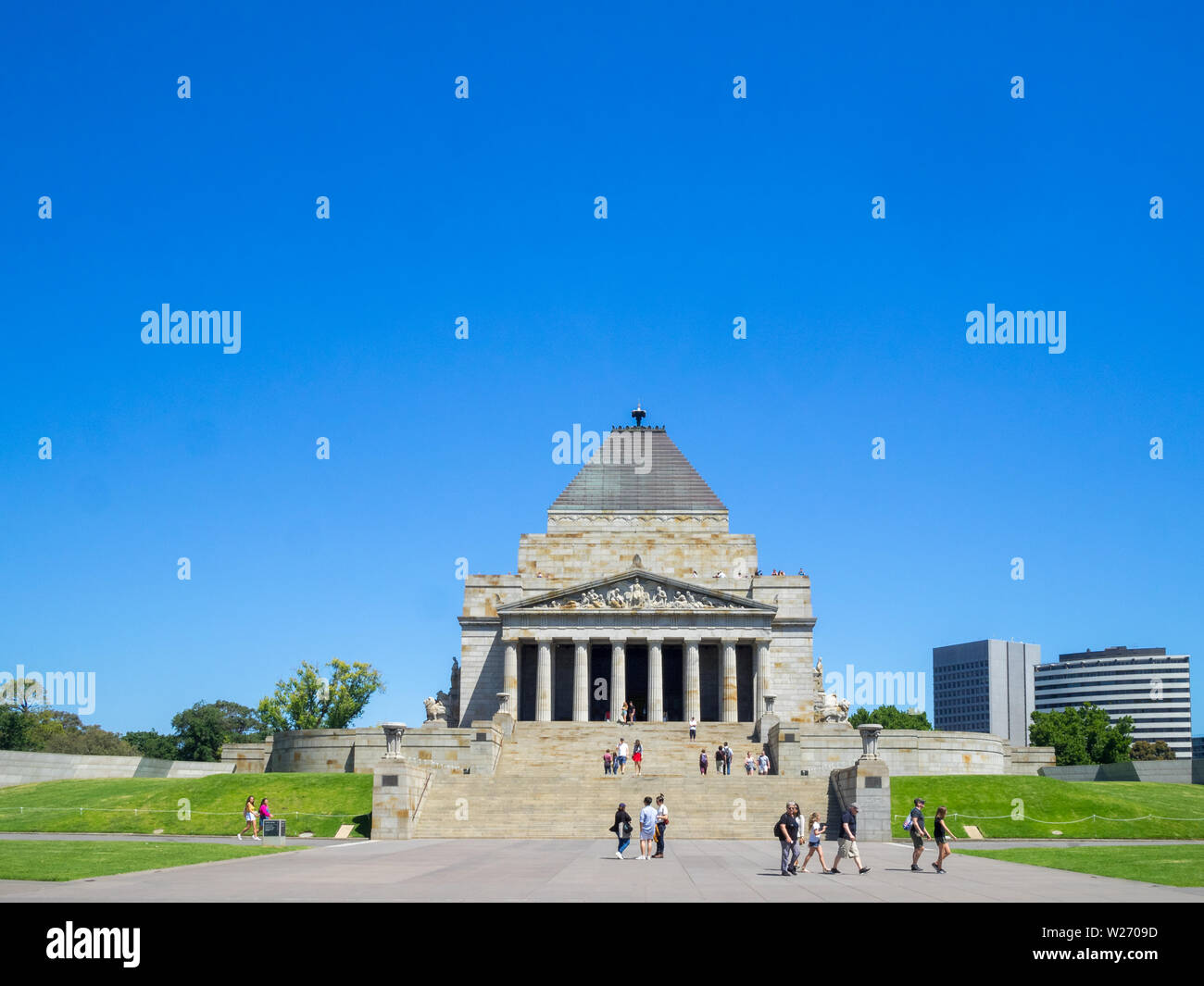
The architecture of the Shrine draws heavy inspiration from antiquity, specifically modeled after the ancient Mausoleum at Halicarnassus and the Parthenon in Athens. This classical Greek revival style imparts a sense of timeless dignity, endurance, and solemnity.
Architectural Symbolism: The design incorporates strict geometric proportions and classical symmetry. Every column, frieze, and sculptural element was chosen to communicate sacrifice, heroism, and eternal memory, anchoring the physical structure in centuries of Western architectural tradition regarding death and commemoration.
Key structural components include:
- The Peristyle: A ring of 32 Doric columns supporting the roof, representing the classic Greek temple form adapted for modern memorial architecture.
- The Sanctuary: The central interior space housing the Stone of Remembrance, positioned so that natural light strikes a specific point annually.
- The Crypt: Located beneath the Sanctuary, containing bronze plaques representing every Victorian unit that served in World War I, alongside individual memorial niches and historical artifacts.
- The Forecourt and Eternal Flame: An expansive outdoor gathering space featuring the Flame of Remembrance, which burns continuously to symbolize undying national gratitude.
The Ray of Light Phenomenon and Engineering Precision
One of the most remarkable features of the Shrine is the Ray of Light ceremony, an architectural and astronomical marvel engineered into the Sanctuary's design.
| Date | Time | Significance |
|---|---|---|
| November 11 | 11:00 AM | The exact moment of the 1918 Armistice, where a sun ray illuminates the word "LOVE" on the Stone of Remembrance. |
| Throughout the Year | Various Times | Specialized mirrors and apertures project natural sunlight across specific memorial plaques in the Crypt. |
Engineers calculated the precise solar angles for Melbourne's latitude to ensure that once a year, on Armistice Day, a shaft of sunlight passes through an aperture in the roof, slowly moving across the floor to highlight the single word carved into the stone tablet: "Greater love hath no man." While cloudy conditions occasionally obscure the direct beam during the live ceremony, computerized mirror systems and modern optical tracking now ensure visitors can witness a simulated or redirected beam inside the visitor center galleries regardless of weather conditions.
Exploring the Galleries of Remembrance and Exhibitions
Beneath the main monument lies the Galleries of Remembrance, a modern subterranean museum space developed to contextualize Australia's military history through personal stories, uniforms, weaponry, and interactive displays.
Navigating the galleries requires an understanding of how the exhibits are structured chronologically and thematically:
- Pre-1914 and Colonial Conflicts: Exploring early colonial engagements and Sudan deployments.
- First World War Galleries: Comprehensive coverage of the Gallipoli campaign, the Western Front, Sinai-Palestine, and the home front experience.
- Interwar Years and World War II: Documenting the Great Depression, the rise of global instability, and Australia's mobilization across the Pacific, Europe, and North Africa.
- Post-1945 Conflicts: Dedicated exhibits covering the Malayan Emergency, Korean War, Vietnam War, and Gulf conflicts.
- Peacekeeping and Contemporary Operations: Highlighting modern deployments in Somalia, East Timor, Rwanda, Iraq, and Afghanistan.
Practical Visitor Information and Accessibility
Planning a visit to the Shrine requires adherence to respectful visitor protocols and awareness of operational guidelines to ensure an educational and serene experience for all attendees.
- Location: Birdwood Avenue, Melbourne VIC 3004 (situated on the southern edge of the Melbourne CBD within the Kings Domain and Royal Botanic Gardens precinct).
- Operating Hours: Open daily from 10:00 AM to 5:00 PM (last entry to the monument is typically 4:30 PM). Closed on Good Friday and Christmas Day.
- Admission Fees: General admission to the Shrine and Visitor Centre is free of charge, though donations are encouraged to support ongoing conservation and educational programs.
- Accessibility: Wheelchair access is available via ramps and elevators leading from the Visitor Centre up to the Sanctuary and down into the Crypt. Accessible restroom facilities and loaner wheelchairs are available upon request at the front desk.
Comparative Analysis: Commemorative Sites in Australia
To understand the unique position of the Shrine of Remembrance, it helps to compare it with other major national commemorative institutions across Australia.
| Institution Name | Location | Primary Architectural Style | Main Focus |
|---|---|---|---|
| Shrine of Remembrance | Melbourne, VIC | Classical Greek Revival | Memorialization, solemn reflection, Victorian service history |
| Australian War Memorial | Canberra, ACT | Byzantine and Romanesque Revival | Comprehensive national museum, archive, and shrine |
| ANZAC War Memorial | Sydney, NSW | Art Deco | Art architectural tribute to New South Wales service personnel |
Frequently Asked Questions About the Shrine
What is the primary purpose of the Shrine of Remembrance?
The Shrine of Remembrance serves as Victoria's premier war memorial, dedicated to honoring Australians who have served in global conflicts, peacekeeping missions, and national defense operations. It provides a solemn physical space for remembrance, education, and commemorative ceremonies.
Is there an admission fee to enter the Shrine?
General admission to the Shrine, the Visitor Centre, and the Galleries of Remembrance is entirely free for all visitors. Guided tours and specialized educational programs may incur a nominal booking fee or rely on voluntary donations to sustain heritage preservation efforts.
How do I get to the Shrine using public transport?
The Shrine is easily accessible via Melbourne's public transport network, located a short walk from Flinders Street Station or via several tram routes traveling along St Kilda Road, including routes 3, 5, 6, 16, 64, 67, and 72, stopping at Domain Interchange.
Can visitors access the roof or balcony of the Shrine?
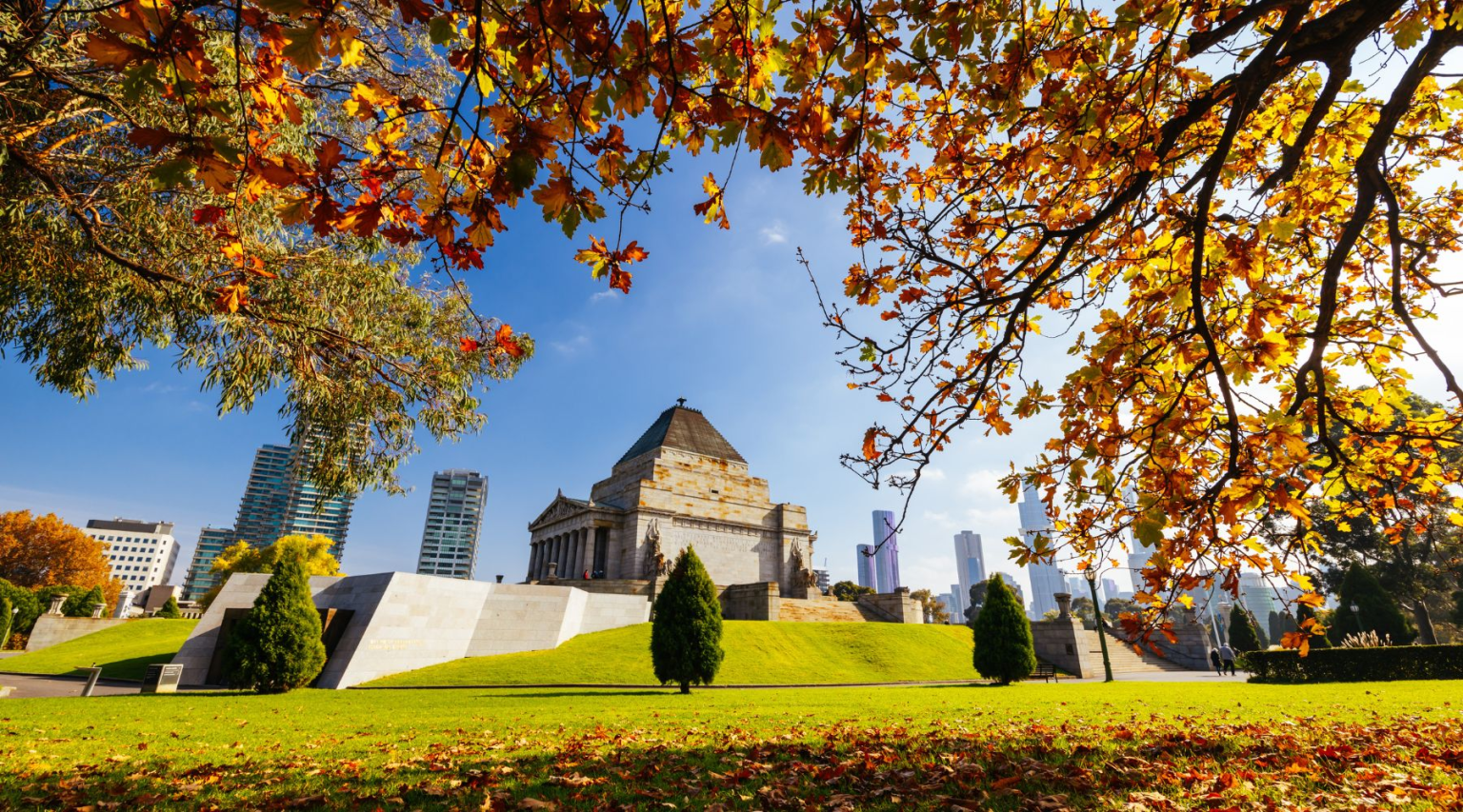
Yes, the balcony surrounding the Peristyle is open to the public, offering panoramic views across the Melbourne CBD skyline, the Royal Botanic Gardens, and Kings Domain. Access is available via exterior stairs or internal lifts for visitors with mobility requirements.
Are photography and videography permitted inside the building?
Photography and videography are generally permitted in the outdoor forecourt, galleries, and balcony areas for personal use. However, flash photography, tripods, and commercial filming are strictly prohibited inside the sacred Sanctuary and Crypt out of respect for the solemnity of the space.
Plan Your Visit to Melbourne's Historic Monument
Immerse yourself in Australia's rich and complex military heritage by planning a structured visit to the Shrine of Remembrance. Whether attending an annual commemorative service, exploring the extensive genealogical archives in the galleries, or simply viewing the city skyline from the classical peristyle, experiencing this monumental landmark offers deep insight into the nation's history. Check the official event calendar before your arrival to align your visit with daily guided tours, curator talks, or special commemorative exhibitions.
Image Gallery