Why the 320 km/h Shinkansen Wins for Speed Focused Travelers
For speed-focused travelers, the 320 km/h Shinkansen—specifically the Hayabusa service—wins by optimizing "total travel time" rather than just peak velocity. By eliminating airport security, check-in buffers, and long suburban transfer...
For speed-focused travelers, the 320 km/h Shinkansen—specifically the Hayabusa service—wins by optimizing "total travel time" rather than just peak velocity. By eliminating airport security, check-in buffers, and long suburban transfers, it delivers a seamless city-center-to-city-center experience that frequently outperforms domestic flights over distances up to 800 kilometers.
Contents
The Engineering of 320 km/h: More Than Just a Number
In the world of high-speed rail, 320 km/h (199 mph) represents a critical "sweet spot" for Japanese engineering. While other global systems, such as China’s CR400, may reach higher theoretical speeds, the Shinkansen E5 and H5 series trains operating on the Tohoku Shinkansen line are designed for a unique environment characterized by dense urban geography and strict environmental regulations.
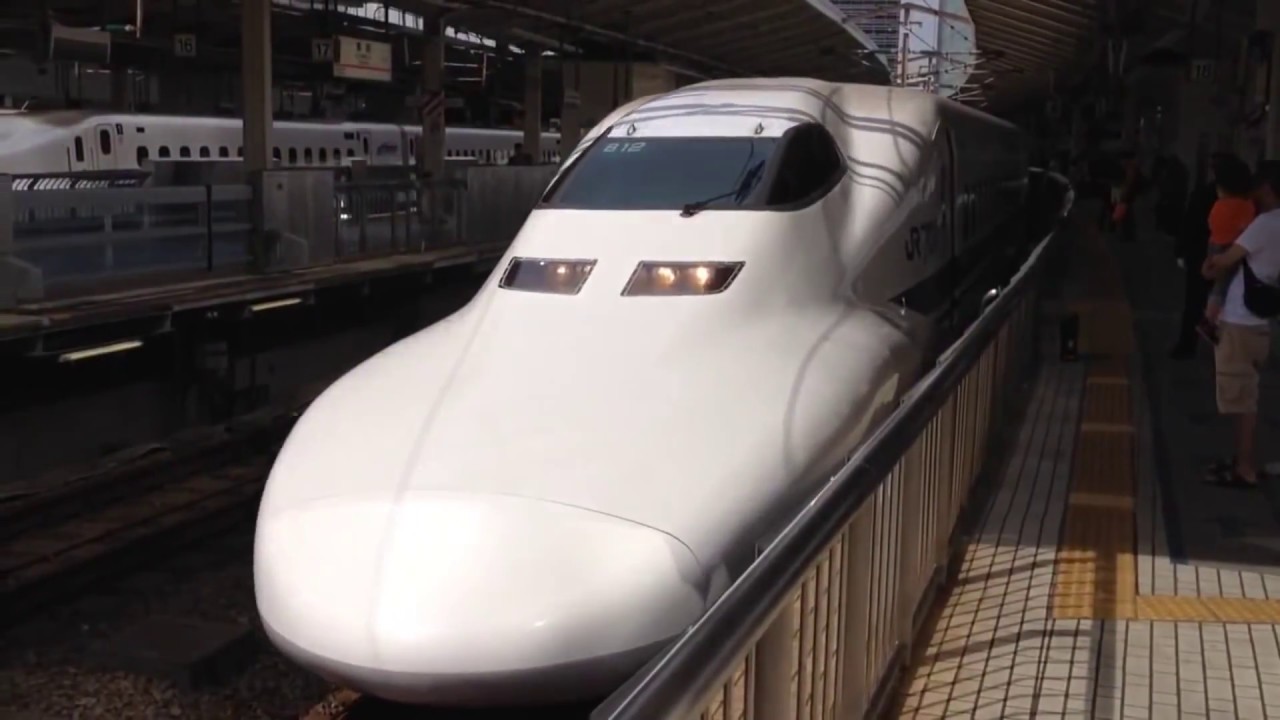
As of 2026, the 320 km/h operational speed remains the gold standard for the Tokyo-to-Shin-Aomori and Shin-Hakodate-Hokuto routes. Achieving this speed required solving the "tunnel boom" phenomenon. When a train enters a tunnel at high speed, it compresses the air ahead of it, creating a shockwave that exits the other end with a loud bang. To mitigate this, the E5 series features a distinct 15-meter "long nose" design. This aerodynamic profile gradually displaces air, allowing the train to maintain its 320 km/h cruise speed without violating noise pollution laws.
Furthermore, the "winning" factor for travelers isn't just the movement; it is the stability. At 320 km/h, the Shinkansen utilizes an active suspension system. This technology uses sensors to detect vibration and actuators to counter-move the carriage, effectively "smoothing out" the ride. For a business traveler attempting to type on a laptop or a tourist enjoying a meal, the lack of turbulence makes the 320 km/h Shinkansen a far more productive environment than an airplane cabin.
The "Total Travel Time" Advantage
When speed-focused travelers evaluate transportation, they often fall into the trap of comparing "cruise speeds" (900 km/h for a plane vs. 320 km/h for a train). However, the Shinkansen wins on Total Travel Time (TTT). The TTT includes the journey to the terminal, security clearance, boarding waits, and the final transfer to the destination.
The Four-Hour Rule
In transport economics, the "Four-Hour Rule" suggests that rail dominates the market whenever the total journey time is under four hours. For the 320 km/h Hayabusa service, the trip from Tokyo to Shin-Aomori takes approximately 3 hours and 10 minutes.
Contrast this with a flight:
- Transit to Haneda/Narita: 30–60 minutes.
- Security and Boarding: 60 minutes.
- Flight Time: 75 minutes.
- Disembarking and Transit from Aomori Airport: 45 minutes.
Even with a faster cruise speed, the "total" time for flying often exceeds four hours when door-to-door logistics are considered. The Shinkansen wins because Tokyo Station and regional hubs like Sendai or Shin-Aomori are located in the heart of the city, allowing travelers to walk off the train and directly into their first meeting or hotel.
Reliability: The Speed of Certainty
For a traveler focused on speed, a delay is the ultimate failure. The Shinkansen’s most formidable advantage in 2026 remains its legendary punctuality. The average delay for a Shinkansen train is consistently measured in seconds, not minutes. This reliability is built into the "ATC" (Automatic Train Control) system, which manages spacing and speed with surgical precision.
Unlike air travel, which is highly susceptible to "flow control" delays and terminal congestion, the Shinkansen operates on a dedicated track system. There is no interference from freight trains or local commuter lines. For the speed-focused traveler, this means the ability to schedule a meeting 15 minutes after arrival with total confidence—a feat nearly impossible when relying on domestic flights.
Technical Specifications and Passenger Comfort
The E5 and H5 series trains are masterpieces of high-speed ergonomics. To maintain 320 km/h through curves, these trains use a tilting mechanism. The carriages can tilt up to 1.5 degrees using air springs in the bogies. This allows the train to maintain higher speeds through bends without causing discomfort to passengers through centrifugal force.
| Feature | Shinkansen E5/H5 Series | Standard Domestic Flight (A320/B737) |
|---|---|---|
| Maximum Operating Speed | 320 km/h | ~850 km/h |
| Check-in Requirement | None (Arrival 5 mins before) | 45–60 Minutes |
| Seat Pitch (Standard) | ~1,040 mm | ~760 mm |
| Power Outlets | Every Seat | Limited/Varies |
| Connectivity | Continuous Wi-Fi / 5G | Intermittent / Paid |
| City-Center Access | Direct | Requires Transfer (Bus/Rail) |
The lack of a middle seat in most configurations and the generous legroom (even in standard class) mean that "speed" does not come at the expense of "space." In 2026, the inclusion of "Work-and-Stay" carriages on certain Tohoku routes further cements the Shinkansen’s lead, offering sound-isolated environments specifically for those who need to remain productive while moving at three miles per minute.
Safety and Environmental Efficiency
Speed is meaningless if it compromises safety. Japan’s high-speed rail network has maintained a record of zero passenger fatalities due to derailments or collisions in over 60 years of operation. For the traveler, the UrEDAS (Urgent Earthquake Detection and Alarm System) provides peace of mind. Sensors detect the primary waves (P-waves) of an earthquake and automatically cut power to the overhead lines, engaging emergency braking before the more destructive S-waves arrive.
From an environmental perspective, the 320 km/h Shinkansen is the responsible choice for the "fast" traveler. It emits approximately 80% less CO2 per seat than a domestic flight. As corporate travel mandates in 2026 increasingly prioritize carbon footprints, the ability to travel at high speed with minimal environmental impact is a significant "win" for the modern professional.
Where the 320 km/h Speed Matters Most
The 320 km/h capability is most impactful on the Tohoku Shinkansen line. South of Omiya, speeds are restricted due to urban density. However, once the train clears the northern suburbs of Saitama, the E5 series accelerates to its full 320 km/h potential.
- Tokyo to Sendai: The speed allows for a transit time of roughly 90 minutes, making it a viable daily commute for high-level executives.
- Tokyo to Shin-Hakodate-Hokuto: While the Seikan Tunnel section has speed restrictions for safety (sharing tracks with freight), the 320 km/h bursts on the mainland are what make a rail trip to Hokkaido competitive with the total time of a flight to Hakodate Airport.
Cost-Benefit Analysis for the Time-Sensitive
While Shinkansen tickets are generally fixed-price and can be more expensive than "LCC" (Low-Cost Carrier) airfare booked months in advance, they offer superior flexibility. In 2026, the digital integration of the "Smart EX" and "JR-East Train Reservation" systems allows travelers to change their departure time up to minutes before the train leaves, without the heavy change fees associated with airlines. For the speed-focused traveler whose schedule is fluid, this flexibility is a form of "temporal wealth."
Common Pitfalls to Avoid
Even with a system this efficient, speed-focused travelers should be aware of a few logistical nuances:
- The Wrong Train: Only the "Hayabusa" and "Komachi" services typically hit the 320 km/h mark. The "Yamabiko" and "Nasuno" services stop more frequently and often use older rolling stock limited to 275 km/h.
- Luggage Restrictions: While the Shinkansen is faster than the airport, oversized luggage (total dimensions over 160cm) now requires a specific seat reservation with a luggage area. Failing to book this can lead to delays during boarding.
- Station Navigation: Tokyo Station is massive. A traveler aiming for a "fast" departure should arrive at least 15 minutes early simply to navigate the walk from the Yaesu or Marunouchi entrances to the Shinkansen gates.
Frequently Asked Questions
Which specific Shinkansen models reach 320 km/h? Currently, the E5 series (operated by JR East) and the H5 series (operated by JR Hokkaido) are the primary models reaching 320 km/h in commercial service. These are easily identified by their vibrant "Tokiwa" green and white livery with a purple or pink stripe.
Is the Tokaido Shinkansen (Tokyo to Osaka) also 320 km/h? No. The Tokaido Shinkansen (N700S series) is currently capped at 285 km/h. This is due to the older curvature of the tracks and the extreme density of residential areas along the route, which makes 320 km/h noise mitigation more difficult.
How does the 320 km/h Shinkansen handle winter weather? The E5 series is specifically ruggedized for the heavy snow of Northern Japan. It features high-powered snowplows on the lead bogies and a centrifugal snow-monitored cooling system to prevent ice buildup in the engine components, ensuring that the 320 km/h speed is maintained even in mid-winter.
Will the speed increase to 360 km/h soon? While the experimental ALFA-X train has been testing at speeds up to 400 km/h, the current infrastructure and noise regulations in 2026 keep the commercial limit at 320 km/h. Any future increase to 360 km/h would require further advancements in pantograph noise reduction and tunnel-entrance aerodynamics.
Final Recommendation for Travelers
For any journey between 200 km and 800 km in Japan, the 320 km/h Shinkansen is the undisputed winner for speed-focused travelers. To maximize your efficiency, always book the Hayabusa service, use a digital IC card or QR ticket for "touch-and-go" entry, and utilize the Gran Class or Green Car if you require a guaranteed quiet environment to work while in transit. The Shinkansen doesn't just move you faster; it gives you back the hours that air travel consumes in logistics.
Image Gallery