Mastering the Principles of Life and Health Insurance Course in Indiana
Passing the principles of life and health insurance course in Indiana requires completing an approved pre-licensing education program, mastering core policy structures, and passing the state licensing examination administered by Pearso...
Passing the principles of life and health insurance course in Indiana requires completing an approved pre-licensing education program, mastering core policy structures, and passing the state licensing examination administered by Pearson VUE to legally sell insurance products.
Contents
Entering the insurance industry in Indiana requires a structured approach to education, testing, and state regulation. Whether you are aiming to become an independent broker, a captive agent, or a financial planner, mastering the fundamentals begins with an authorized pre-licensing curriculum. The principles of life and health insurance course in Indiana serves as the foundational stepping stone for aspiring professionals, bridging complex legal statutes with practical consumer protection concepts.
Navigating this educational and licensing path involves understanding specific state requirements, mastering intricate policy provisions, and preparing rigorously for the state examination. By approaching the process with a clear roadmap, candidates can streamline their path from initial enrollment to holding an active Indiana insurance producer license.
Regulatory Framework and Licensing Prerequisites in Indiana
The Indiana Department of Insurance (IDOI) regulates insurance licensing within the state, establishing strict guidelines for anyone wishing to market, sell, or negotiate life and accident and health insurance products. Before sitting for the state examination, candidates must satisfy mandatory educational prerequisites that ensure a baseline competency level.
Under Indiana insurance laws, prospective producers must complete a state-approved pre-licensing education (PE) course before they can take the licensing exam. For a combined life and health line of authority, this typically requires completing a specified number of classroom or online hours covering both federal regulations and Indiana-specific insurance statutes.
[Candidate Decisions] ---> [Approved Pre-Licensing Provider] ---> [Course Completion Certificate] ---> [Pearson VUE Exam Scheduling] ---> [IDOI License Issuance]
Choosing an approved education provider is critical. Providers authorized by the IDOI offer structured modules that align directly with the content outline tested on the state exam. Candidates can complete these hours through traditional classroom settings, self-paced online modules, or livestream virtual classes. Upon successful completion of the course, candidates receive a certificate of completion, which is generally valid for a limited window—typically six months—during which they must pass the state examination.
Core Curriculum: Understanding Life Insurance Principles
The life insurance segment of the Indiana pre-licensing curriculum dives deep into the mechanisms of risk management, policy construction, and legal compliance. Life insurance is designed to protect financial dependents against the economic loss created by the premature death of an insured individual.
Students must master various policy types, ranging from temporary term life insurance to permanent solutions like whole life, universal life, and variable life insurance. Each policy type carries distinct cash value accumulation properties, premium structures, and risk profiles. Furthermore, the curriculum covers policy provisions, riders, and options that allow consumers to customize coverage. Key concepts include:
- The Entire Contract Provision: Stipulates that the policy, application, and any attached riders constitute the entire legal contract between the insurer and the insured.
- Incontestability Clause: Protects the policyholder by stating that the insurer cannot contest the validity of the contract after it has been in force for a specific period (usually two years), except for non-payment of premiums.
- Accelerated Death Benefits: Allow terminally or chronically ill insureds to access a portion of their death benefit while still alive.
- Beneficiary Designations: Rules governing primary and contingent beneficiaries, revocable versus irrevocable designations, and common disaster provisions.
In addition to individual products, the course covers group life insurance mechanics, including employer-sponsored plans, conversion privileges, and underwriting standards that differ from individual medically underwritten policies.
Core Curriculum: Understanding Health Insurance Principles
The health insurance segment addresses the financial risks associated with medical expenses, disability, and long-term care needs. Given the complexity of modern healthcare finance, the curriculum emphasizes both individual and group health products, government programs, and statutory mandates.
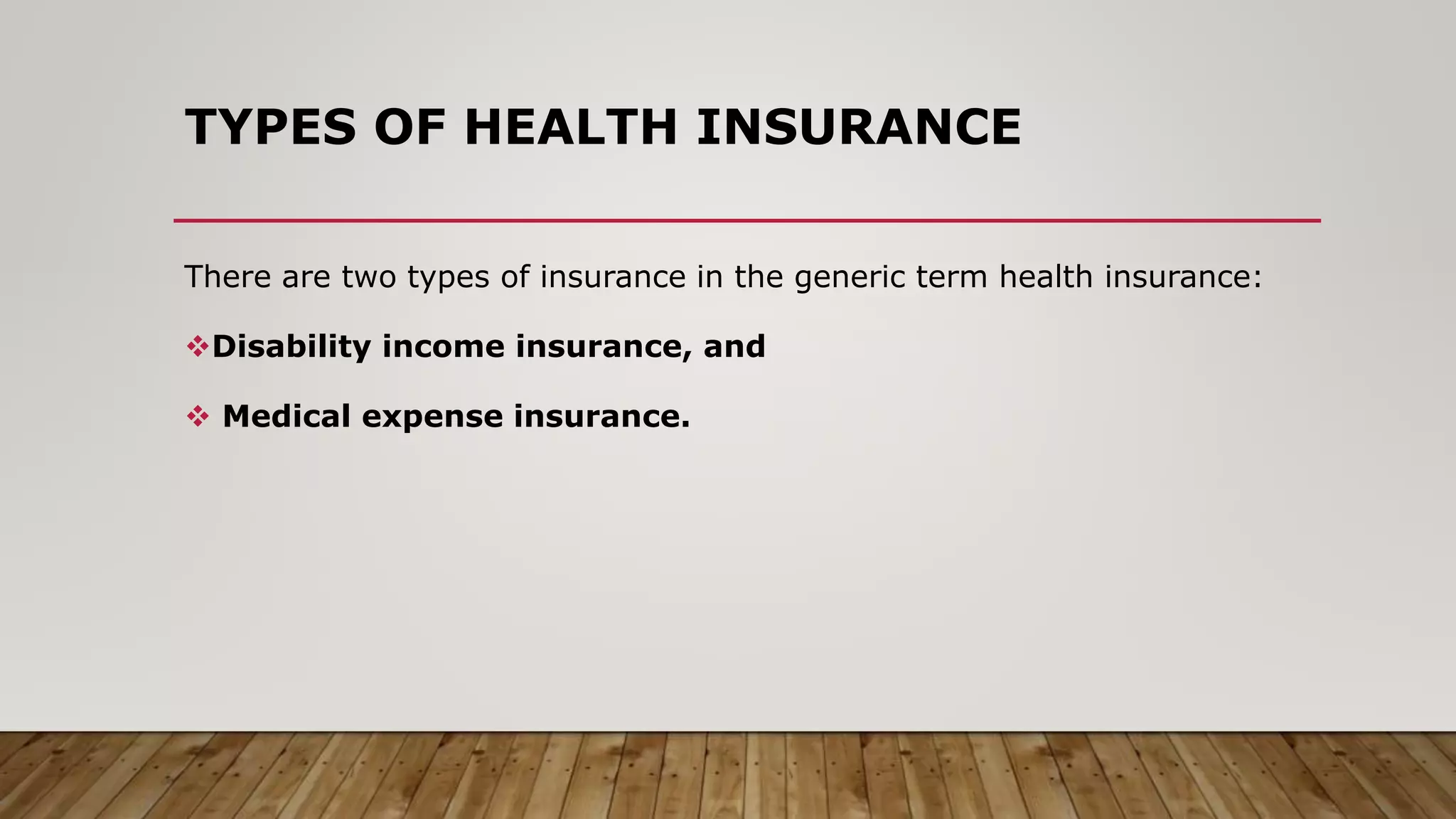
Candidates learn about medical expense insurance, including major medical plans, health maintenance organizations (HMOs), preferred provider organizations (PPOs), and high-deductible health plans (HDHPs) paired with health savings accounts (HSAs). The course also details disability income insurance—often called paycheck protection—and long-term care (LTC) insurance, which covers assistance with activities of daily living (ADLs) in a nursing home or home care setting.
Key regulatory topics within the health insurance module include provisions mandated by the Affordable Care Act (ACA), state-specific continuation rights (such as Indiana's continuation of group health insurance statutes), and coordination of benefits (COB) rules that prevent over-insurance when an individual is covered by multiple plans.
| Insurance Type | Primary Purpose | Key Funding Mechanism | Common Riders/Provisions |
|---|---|---|---|
| Term Life Insurance | Temporary income replacement | Level or increasing premiums; no cash value | Waiver of premium, term conversion |
| Whole Life Insurance | Lifetime protection and savings | Fixed premiums; guaranteed cash growth | Paid-up additions, policy loans |
| Group Health Insurance | Broad medical expense coverage | Employer/employee shared premiums | COBRA, coordination of benefits |
| Disability Income | Income replacement during injury/illness | Percentage of earned income | Residual disability, cost of living adjustment |
Navigating State-Specific Indiana Insurance Statutes
Beyond general insurance principles, the Indiana pre-licensing course dedicates significant attention to state-specific laws and regulations enforced by the IDOI. State law dictates how insurance producers must conduct business, handle consumer funds, and maintain professional ethics.
Indiana insurance statutes cover producer licensing maintenance, continuing education (CE) requirements, and unfair trade practices. Producers must understand what constitutes rebating, twisting, defamation, and misrepresentation—all of which are illegal practices that can result in license revocation, civil penalties, or criminal prosecution.
The course also highlights the Indiana Life and Health Insurance Guaranty Association, a statutory body designed to protect policyholders, insureds, and beneficiaries against the insolvency of member insurance companies. Understanding how guaranty associations operate provides agents with the context needed to explain risk and safety to skeptical consumers.
Exam Preparation and Passing Strategies
The Pearson VUE-administered Indiana Life and Health Insurance examination is a rigorous multiple-choice test that evaluates both general insurance concepts and state-specific regulations. Passing requires more than memorization; candidates must be able to apply concepts to hypothetical scenarios.
Effective preparation involves a disciplined study routine:
- Complete the Pre-Licensing Course Thoroughly: Do not skim through modules. Take detailed notes on technical formulas, such as calculation of policy nonforfeiture values or free-look periods.
- Utilize Practice Exam Question Banks: Consistent testing helps identify weak areas, such as group underwriting rules or Medicare supplement regulations.
- Focus on State-Specific Regulations: A significant portion of the exam tests Indiana administrative code and producer responsibilities. Dedicate extra review time to state rules.
- Manage Time During the Exam: The test is timed, requiring candidates to maintain a steady pace across both the life and health sections.
Upon passing the exam, candidates must submit their fingerprint background check and licensing application to the IDOI through the National Insurance Producer Registry (NIPR) portal.
Frequently Asked Questions
How many hours is the pre-licensing course for life and health insurance in Indiana?
The required pre-licensing education hours in Indiana typically total around 40 hours for a combined life and health course, or approximately 20 hours if taking a single line of authority (life only or health only). Check approved provider offerings for exact curriculum breakdowns.
What score is required to pass the Indiana insurance licensing exam?
Candidates must achieve a scaled score of at least 70 to pass the Pearson VUE life and health insurance examination in Indiana.
Can I take the Indiana insurance exam online from home?
Yes, Pearson VUE offers online proctored testing options (OnVUE) in addition to traditional testing center appointments, allowing candidates to complete the exam remotely under strict electronic monitoring conditions.
How long is my pre-licensing course completion certificate valid in Indiana?
Course completion certificates are generally valid for six months from the date of issuance. Candidates must schedule, take, and pass the licensing exam within this timeframe before the certificate expires.
What are the ongoing continuing education requirements for Indiana insurance producers?
Indiana licensed resident producers must complete 24 hours of continuing education (CE) every two-year licensing renewal cycle, which must include at least 3 hours of approved ethics instruction.
Next Steps and Professional Action Plan
Securing your license is the first step toward building a sustainable career in the insurance sector. Once your license is active through the IDOI, focus on selecting the right carrier appointments, establishing a professional network, and committing to ongoing professional development. Continuously reviewing policy forms and staying updated on regulatory changes ensures long-term compliance and high standards of client service.
Image Gallery